
In Greek mythology, a siren is neither a mermaid nor simply a bird. The original classical siren was a hybrid creature: part bird, part woman. Think of a large bird's body topped with a human female head and face. That's the standard form you'll find on ancient Greek pottery and tomb sculptures, including the famous Siren Vase at the British Museum, where the sirens are shown as bird-bodied, woman-headed figures with lips parted in song. The fish-tailed mermaid version came much later, a product of medieval reinterpretation rather than the original Greek myth. So if you're trying to pin down what a siren actually is, start with "bird-woman" for the classical version, and understand that the mermaid image is a later mix-up that stuck around.
Is a Siren a Mermaid or a Bird? Myth vs Biology

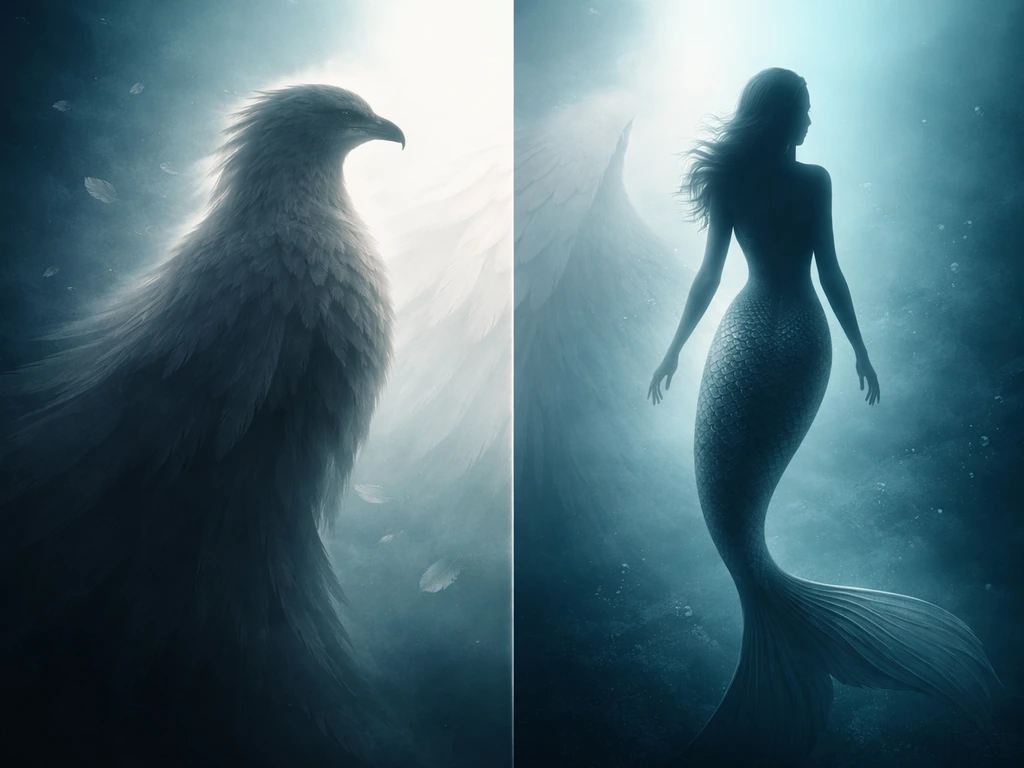
What people actually mean when they say "siren"
The word "siren" does a lot of different work depending on the context. Here are the main meanings you'll run into:
- Greek mythology: a half-bird, half-woman creature whose irresistible singing lured sailors to their deaths. Homer's Odyssey is the most famous source. The sirens lived on an island between Circe's island and the rocks of Scylla.
- Classical art and iconography: bird-bodied, woman-headed figures shown in ceramic paintings and terracotta sculptures, often with feathered wings and taloned feet.
- Medieval bestiary tradition: a blended image where illustrators started giving sirens fish tails (mermaid-style) even while the written descriptions still called them bird-like. This is where the modern confusion originates.
- Modern idiom: "siren song" is now a common metaphor meaning an appealing but dangerous temptation, completely detached from any creature.
- Warning device: a siren is also the noise-making alarm used by emergency vehicles and in civil defense systems. This meaning is etymologically connected to the myth (same luring, piercing sound idea) but refers to a piece of technology, not any creature at all.
When you're trying to figure out which "siren" a source is talking about, check the context fast. Is it referencing Homer, ancient Greece, or mythology? That's the bird-woman. Is it talking about fish tails and the ocean? That's the medieval mermaid-influenced version. Is it describing a loud alarm? Completely unrelated to any creature classification.
Siren vs. mermaid: are they really the same thing?
They're related in folklore history but they are not the same creature. A mermaid, by definition, has the upper body of a woman and the tail of a fish. That's the consistent definition across Britannica, Cambridge Dictionary, and pretty much every authoritative source. The classical Greek siren had a bird's body and a woman's head, which is basically the opposite configuration. No fish tail, no fins: wings, feathers, and talons.
The overlap crept in during the medieval period. Artists in the ninth century onward started illustrating sirens with fish tails, possibly because both sirens and mermaids were associated with the sea and danger. A particularly clear example: an English-made Latin bestiary from around 1220 to 1250 depicted sirens as fish-tailed creatures swimming in the sea, even though the accompanying text still described them as resembling winged birds. That kind of text-versus-image mismatch is exactly how the two creatures got fused in popular imagination. By the time modern pop culture picked it up (think Disney's The Little Mermaid and similar), the fish-tail image had almost completely replaced the bird-body original.
So the honest answer is: in classical Greek mythology, sirens and mermaids are distinct creatures. In later medieval and modern usage, the line between them blurred significantly, and many people now use "siren" and "mermaid" interchangeably. Neither usage is biologically real, but if you want the historically accurate version, the siren started as a bird-woman, not a fish-woman.
What actually makes something a bird
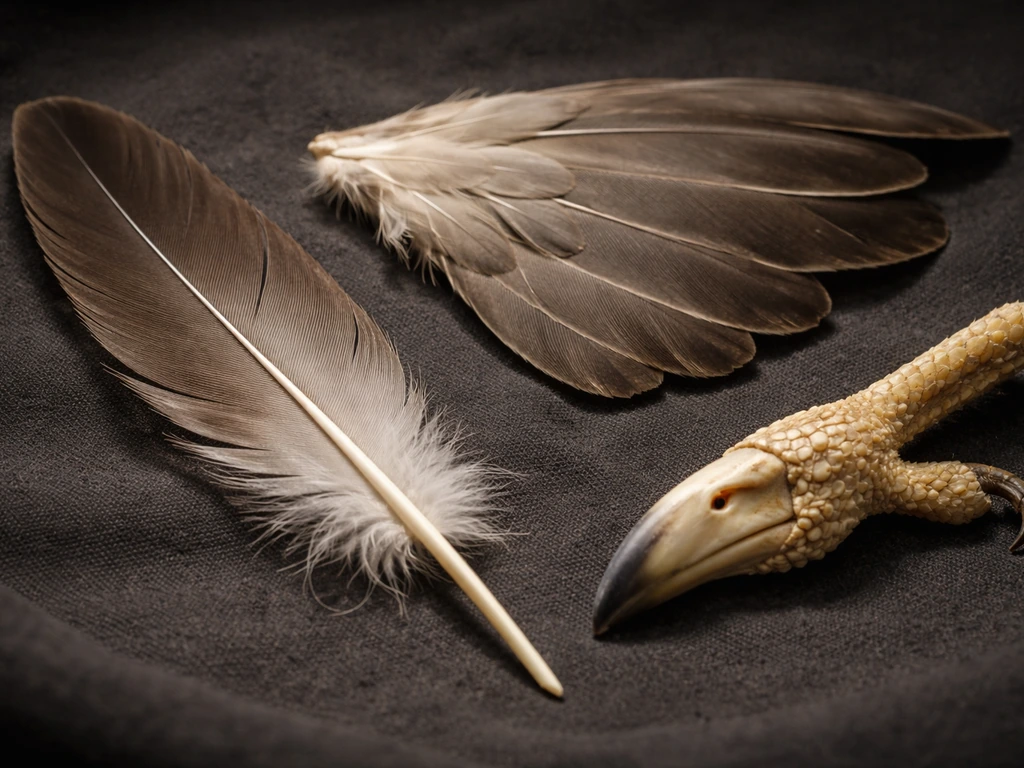
Before we look at why sirens and mermaids don't qualify as birds, it's worth being clear about what biologists actually use to define a bird. Birds belong to the class Aves, and they share a specific set of traits that no other group of animals has all at once:
- Feathers: made of keratin (the same fibrous protein found in hair and fingernails). Feathers are the single most defining feature of birds. No other living animal group has them.
- Warm-blooded (endothermic): birds regulate their own body temperature internally.
- Four-chambered heart: keeps oxygenated and deoxygenated blood completely separate, supporting high activity levels.
- Forelimbs modified into wings: even flightless birds like penguins and ostriches have modified forelimbs, not separate arms and wings.
- Hard-shelled eggs: birds reproduce by laying eggs that are incubated by one or both parents.
- A beak (bill): birds have no teeth; the beak is made of keratin.
- Hollow bones: in most species, bones are lightweight and hollow, an adaptation that aids flight.
The Cornell Lab of Ornithology puts feathers at the top of that list for a reason: feathers are the one trait that is uniquely and exclusively avian. If an animal has feathers, it's a bird. So, when you’re asking “is teal a bird,” the answer comes down to whether it has the defining traits of birds, like feathers. If it doesn't, it isn't, no matter how many other traits it might share. This is a useful shortcut when you're trying to sort out whether something belongs in class Aves.
Why sirens and mermaids don't qualify as birds
Let's run both creatures through the bird checklist directly.
| Trait | Bird (class Aves) | Classical Siren (bird-woman) | Mermaid (fish-woman) |
|---|---|---|---|
| Feathers | Yes, all over the body | Partial (wings/body may be feathered, but human parts are not) | No feathers at all |
| Beak | Yes, keratin bill, no teeth | No, has a human face and mouth | No, has a human face and mouth |
| Forelimbs as wings | Yes, exclusively | Ambiguous: depicted with wings alongside human arms | No wings, no forelimbs modified for flight |
| Hard-shelled eggs | Yes, always | Not established in mythology | Not established in mythology |
| Fish tail | No | No (in classical form) | Yes, defining feature |
| Fully avian body plan | Yes | No, hybrid human/bird | No, hybrid human/fish |
| Biologically real | Yes | No, mythological | No, mythological |
The classical siren comes closest to a bird, because it does have wings and feathers in its iconography. But "closest" still isn't close enough. A real bird is entirely avian: its forelimbs are wings, its face has a beak, and its whole body is covered in feathers. The siren has a fully human head and face, which means no beak and no feathers on the upper portion of the creature. Britannica's own characterization of the siren as "half-bird and half-woman" makes this explicit: it's a hybrid, not a bird. The half that isn't bird disqualifies it from the class Aves entirely.
The mermaid is even further from bird classification. It has no feathers, no beak, no wings, and no avian anatomy whatsoever. Its defining feature is a fish tail, which places it conceptually closer to aquatic vertebrates than to birds. Neither creature lays hard-shelled eggs in any established mythological tradition, either. Britannica notes that bird reproduction involves hard-shelled eggs that are nearly always incubated by one or both parents. Bottom line: a siren is not a bird, and a mermaid is not a bird. The siren has some bird-inspired imagery; the mermaid has none.
Why people get confused in the first place
The confusion around sirens has several distinct causes, and it's worth knowing which one is tripping you up.
The medieval art switch
As noted above, medieval illustrators began drawing sirens with fish tails while the texts they were illustrating still described bird features. Over centuries, the visual image (fish tail) dominated over the written description (bird body), and the two mythological creatures effectively merged in popular memory. National Geographic traces the bird-body depictions as persisting into Roman times, with Pliny the Elder still referencing bird-like sirens around A.D. 77, and the fish-tail shift becoming more pronounced after that.
Similar half-human, half-animal creatures
Greek mythology has several winged, bird-like hybrid creatures, and they're easy to mix up. Harpies, for example, are also described as half-human, half-bird monsters. Sirens and harpies share enough visual DNA that even ancient and medieval writers sometimes blurred the boundary. If you've encountered a winged woman from Greek myth and aren't sure which creature it is, the context of luring sailors with song points to a siren; snatching food or carrying off the dead points to a harpy.
The word "siren" doing too many jobs
Modern search results for "siren" will pull up the mythological creature, the emergency alarm device, the idiomatic phrase "siren song," and pop-culture mermaids all at once. The alarm device meaning is completely unrelated to any animal or creature classification. Britannica defines “siren” (non-myth usage) as a noisemaking or warning device that produces a piercing sound of definite pitch emergency alarm device. The idiom "siren song" is a metaphor. Pop culture sirens are usually fish-tailed mermaids. None of those are the original Greek bird-woman. When you're looking up sirens for classification purposes, make sure the source explicitly identifies the Greek mythology context and describes the physical form.
Sounds and association with the sea
Both sirens and mermaids are associated with the sea, with beautiful or dangerous voices, and with luring sailors. That thematic overlap makes it easy for people to assume they're the same creature. They share a role in maritime folklore but not a body plan, at least not in their earliest forms. The shared theme is what caused the artistic fusion, not any original equivalence in the myths themselves.
How to figure out which creature a source is actually describing
If you're reading something that mentions a siren and you want to know whether it means the bird-woman or the mermaid version, here's a quick process that works reliably: Some animals that undergo metamorphosis include frogs and many other amphibians.
- Check the date and cultural context of the source. Pre-medieval Greek or Roman sources: expect a bird-bodied, woman-headed creature. Medieval European sources: expect either a bird-woman or an early hybrid with fish elements. Modern pop culture: almost certainly a fish-tailed mermaid-style figure.
- Look for the physical description. Wings and taloned feet mean the classical bird-woman siren. Fish tail means the mermaid-influenced siren. No physical description at all, just a sound: you may be dealing with the alarm device meaning.
- Check a primary reference for the Greek myth version. Britannica's entry on "Siren (Greek mythology)" is explicit that the original form was half-bird, half-woman. The British Museum's Siren Vase entry and the Metropolitan Museum of Art's collection notes confirm the bird-bodied iconography for antiquity.
- For the mermaid definition, verify against a source that specifies "upper body of a woman and the tail of a fish." That rules out any bird classification immediately.
- If the source is about the alarm device, it's not a creature at all. Etymology connects the word "siren" back to the myth (same idea of a piercing, attention-grabbing sound), but the alarm is a piece of technology, not an animal.
One last practical note: this kind of creature-classification confusion comes up with real animals too, not just mythological ones. People ask whether seals are birds, or whether bats qualify as birds, for the same reason: surface features (swimming, flying, living near water) get mistaken for biological classification. The rule is always the same: check the defining traits of class Aves (feathers above all), and see whether the creature actually has them across its whole body. Sirens and mermaids fail that test, fictional or not, because neither is a fully avian organism with feathers, a beak, and the full bird body plan.
FAQ
If I see a “siren” in an old painting, how can I tell whether it’s the bird-woman or the fish-tailed type?
It depends on which era the author is describing. If the source is Homer or classical Greek art, treat a siren as the bird-woman (winged, feathered body with a human head). If it is a medieval bestiary, later European art, or modern retellings, the “fish-tailed mermaid” look is often what they mean by siren, even if the wording is still inconsistent.
Does “siren song” or a “siren” alarm device count as evidence that sirens are mermaids or birds?
No, because “siren” has multiple unrelated meanings. The phrase “siren song” is metaphor, and a siren as an alarm device is technology, not mythology. When classifying the creature, confirm the text is about mythological beings and includes physical description like wings/feathers or a fish tail.
Why isn’t a winged siren considered a bird if it has feathers and wings in some art?
A siren can appear “birdlike” without being a bird. Even in classical depictions that show wings and feathers, the human face and head are not avian anatomy, so the organism still fails the bird definition based on having the defining traits across the whole body (especially beak and full feather coverage).
What are the quickest visual clues that a mermaid figure is not a bird?
The easiest check is the head and the limbs. Bird classification requires avian facial structure (typically a beak) and wings that are the forelimbs, plus feather coverage. Mermaid imagery instead centers on a fish tail and lacks both beak and bird-style feathered wings, so it cannot be classified as a bird by any consistent definition.
How do I avoid confusing sirens with harpies or other half-human, half-animal myth creatures?
Yes, people often mix up sirens with other Greek hybrids that have human and animal traits, especially harpies. A practical distinction is behavior in the story: sirens are associated with luring sailors with song, while harpies are linked to snatching or carrying away victims.
If both sirens and mermaids lure sailors, why are they still distinct creatures?
Use the specific body plan described, not the sea theme. Sea association and dangerous beauty show up in both, and those shared themes fueled artistic fusion. But the defining difference is physical anatomy, bird-woman form versus fish-tailed form, not the setting (ocean or ships).
What should I look for in the source to decide whether it’s using the historically accurate “siren” concept?
If you want historical accuracy, try to identify the work’s date and tradition (Greek classical sources versus medieval European reinterpretations). A lot of “siren equals mermaid” modern assumptions trace to the later fish-tail depiction taking over, so context matters more than the word alone.
Could a fictional siren or mermaid be classified as a bird by biological standards?
No, it is not accurate to call either a siren or a mermaid a “real bird” in biology terms. Biology uses a strict set of defining traits for class Aves, most famously feathers. Sirens and mermaids lack the full avian body plan (and mermaids have no avian traits at all), so they fail the bird checklist.