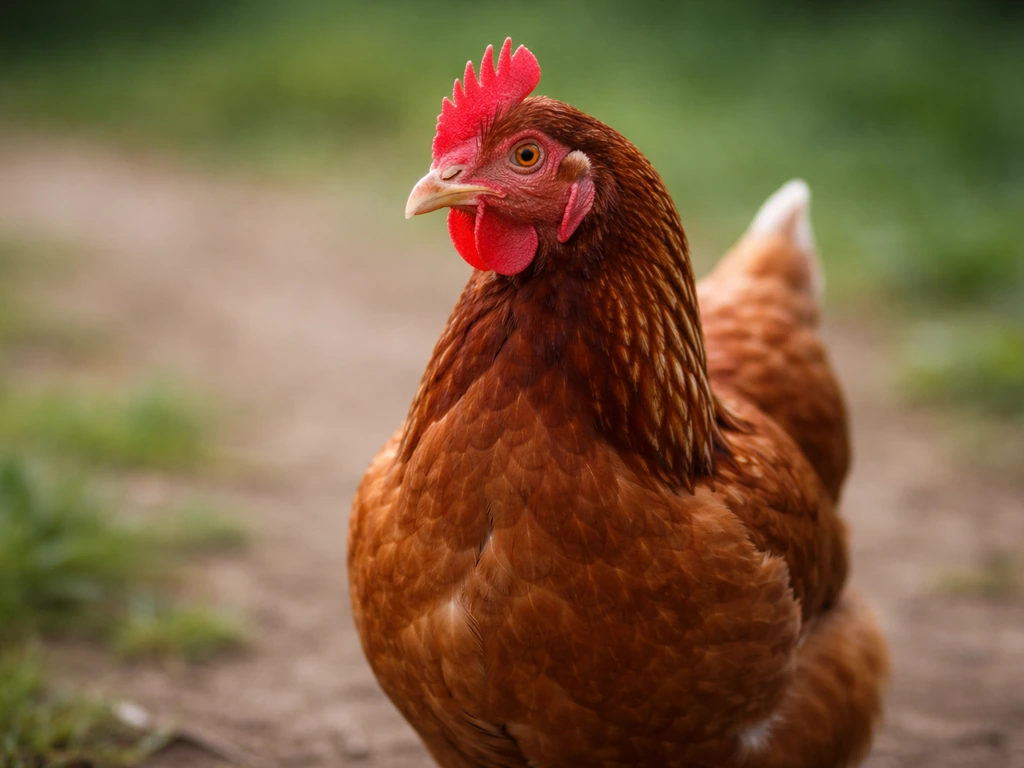
No, a turtle is not a bird. Turtles are reptiles, classified under Order Testudines within Class Reptilia. Birds belong to a completely separate class called Aves, defined by features turtles simply don't have: feathers, hollow bones, and warm-blooded physiology. The two animals share a few surface-level traits (both lay eggs, both have keratin-based outer coverings) but those similarities don't come close to meeting the biological threshold for being a bird.
Is a Turtle a Bird? Simple Taxonomy Checklist and Facts

Sarah Chen
5 Jun 2026
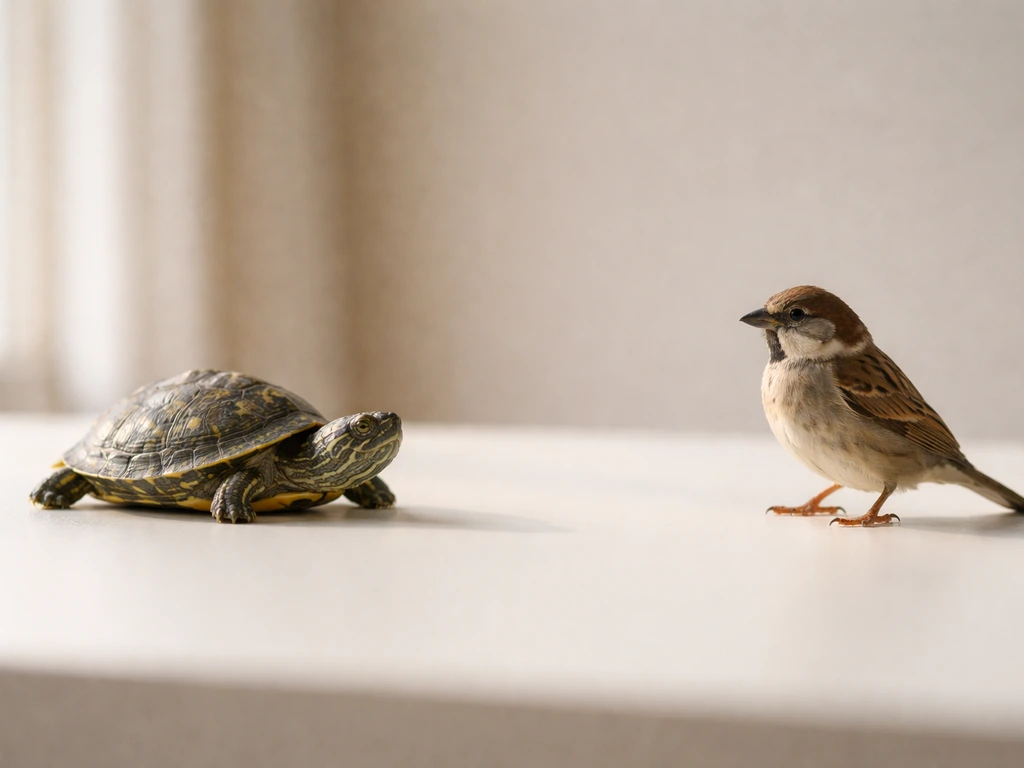
Turtle vs bird: the direct answer
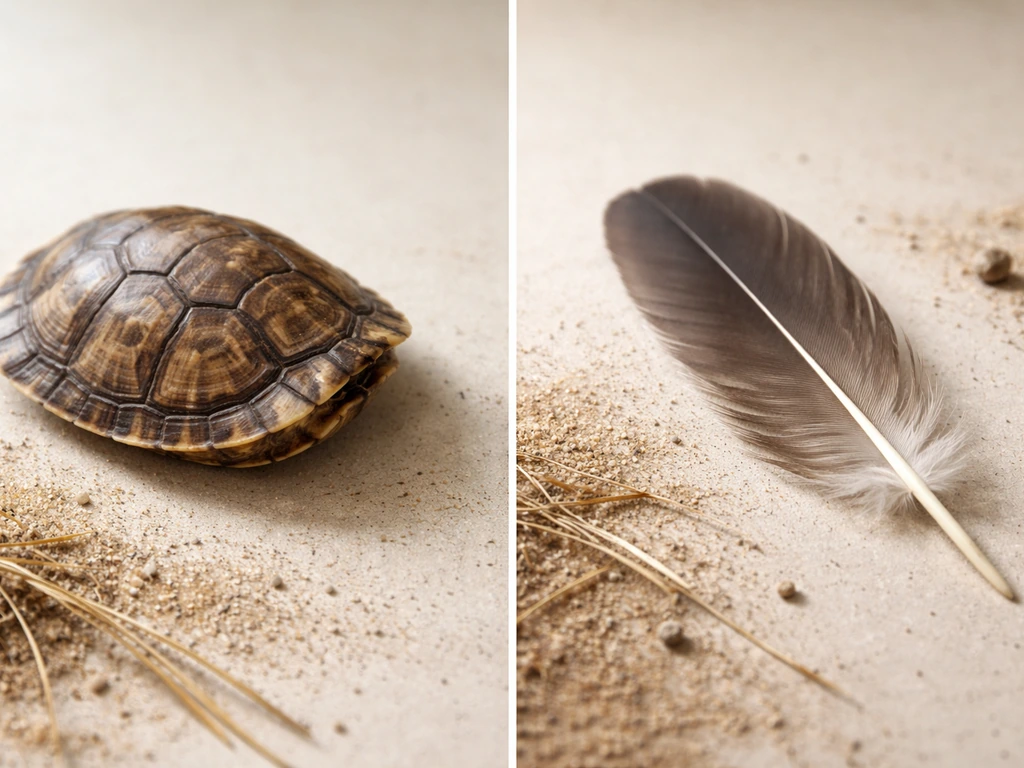
Turtles and birds are not even in the same class of animals. A turtle is a reptile. A bird is, well, a bird (Class Aves). These two groups diverged hundreds of millions of years ago and have completely different body plans, metabolisms, and life strategies. Calling a turtle a bird would be like calling a snake a mammal: the surface features just don't line up with what biologists use to define the group.
| Trait | Turtles (Reptilia: Testudines) | Birds (Aves) |
|---|---|---|
| Body covering | Keratin scutes and a bony shell | Feathers (also made of keratin) |
| Skeleton | Fused ribs/vertebrae forming the shell | Hollow (pneumatic) lightweight bones |
| Body temperature | Ectotherm (cold-blooded) | Endotherm (warm-blooded) |
| Metabolism | Low metabolic rate | High metabolic rate |
| Eggs | Soft to hard-shelled, laid on land | Hard-shelled, laid in nests |
| Beak/jaws | Toothless beak-like jaw (in some) | Toothless beaked jaws |
| Heart | Three-chambered (mostly) | Four-chambered |
| Flight | Never | Most can fly; all have wing-adapted forelimbs |
What actually makes an animal a bird
The Smithsonian National Museum of Natural History identifies three core diagnostic features that all birds share: feathers, hollow bones, and hard-shelled eggs. GBIF's formal definition of Class Aves expands that list slightly to include warm-bloodedness, a high metabolic rate, a four-chambered heart, and toothless beaked jaws. Every single species in Class Aves has all of these. Penguins can't fly but they still have feathers, hollow bones, and lay hard-shelled eggs, so they're birds. Ostriches are the same story. The feathers are the most important external marker, and no living reptile (including turtles) has them.
Feathers themselves are made of keratin, the same protein found in reptile scales and turtle scutes. That shared chemistry is one reason birds and reptiles are more closely related to each other than either is to mammals. But having keratin in your body covering doesn't make you a bird. What matters is the specific structure: feathers are complex, branched structures attached to specialized points on the skeleton (like the carpometacarpus, the fused wrist-hand bone). Turtle scutes are flat, plate-like, and fused into a shell. There's no structural overlap there.
Why turtles are reptiles, not birds
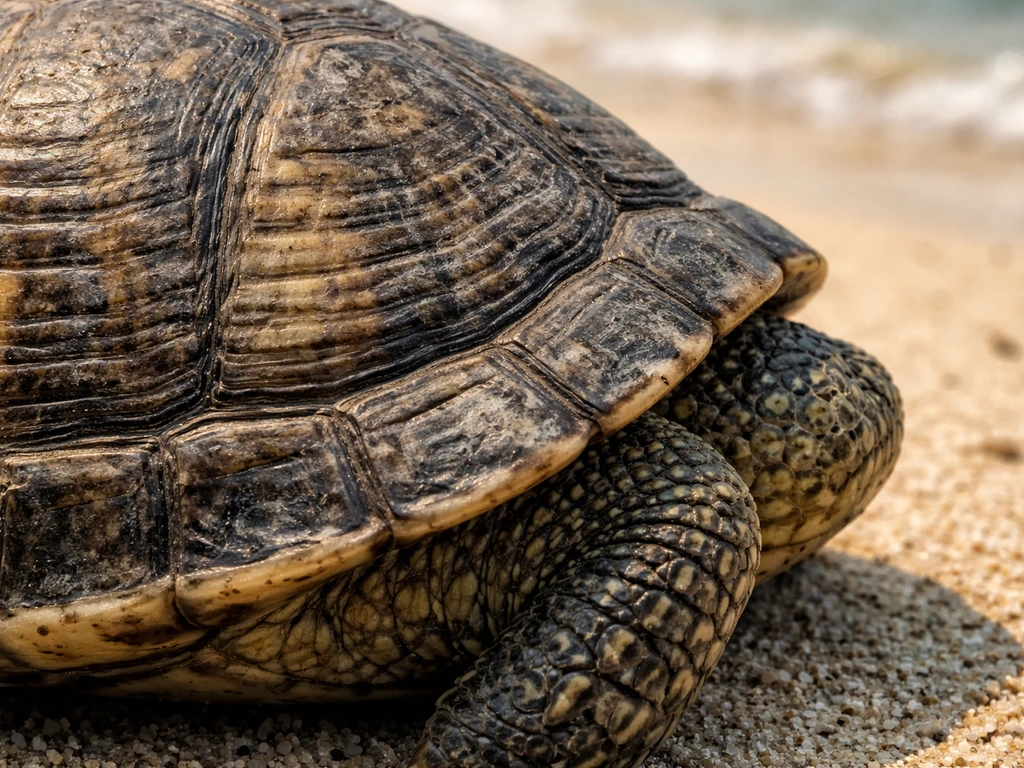
Turtles are classified under blank" rel="noopener noreferrer">Class Reptilia, Order Testudines. The IUCN Red List assessment supporting information notes that higher-taxonomy details are provided using a taxon’s Class, Order, and Family, which can help with practical verification blank" rel="noopener noreferrer">Class Reptilia, Order Testudines.. That order covers all living turtles and tortoises, and it's one of the oldest surviving reptile lineages on Earth. The defining feature of Testudines is the shell, which isn't an external accessory like a crab's exoskeleton. According to the Animal Diversity Web, a turtle's shell is actually a modified rib cage: the ribs and vertebrae broaden and fuse with dermal bone plates to form the carapace (top) and plastron (bottom). You literally cannot remove a turtle from its shell because the shell is part of its skeleton.
Beyond the shell, turtles check every box for reptile classification and none of the boxes for birds. They are ectotherms, meaning they rely on external heat sources to regulate body temperature rather than generating their own (birds are the opposite). Their metabolic rate is low compared to birds. Most turtles have a three-chambered heart, while birds have a four-chambered heart that supports their high-energy, warm-blooded lifestyle. And critically, turtles have no feathers. Not modified ones, not vestigial ones. None.
Traits that look similar but don't mean 'bird'
A few things about turtles genuinely do overlap with birds, and it's worth addressing those directly rather than glossing over them, because they're the real source of confusion.
Egg-laying
Yes, turtles lay eggs. Britannica states plainly that all turtles lay their eggs on land, including sea turtles, which come ashore specifically to bury their eggs in sandy nests. Birds also lay hard-shelled eggs. But egg-laying alone doesn't make an animal a bird. Plenty of reptiles, fish, and even a couple of mammals (platypuses, echidnas) lay eggs. Eggs are an amniote trait, not a bird-exclusive trait. What distinguishes bird eggs from turtle eggs is that bird eggs are reliably hard-shelled and incubated in a nest, but more importantly, the animal laying them also has feathers and hollow bones. Turtles don't.
Keratin coverings (scales, scutes, and feathers)
Both turtles and birds have keratin-based body coverings. Turtle shells are covered by keratin scutes (the leatherback turtle is an exception, with a leathery skin instead). Bird feathers are also made of keratin. But the structures are completely different in form and function. Feathers are complex, multi-layered, and aerodynamically functional. Turtle scutes are rigid plates that form protective armor. Sharing the same protein doesn't put them in the same classification any more than human fingernails and rhino horns make those animals close relatives.
Moving on land and having a hard outer covering
People sometimes notice that both turtles and certain birds (like tortoises next to penguins, or terrestrial birds like chickens) move around on land and seem heavily built. This is why tortoise specifically should be treated as a reptile, not a bird tortoises. That's a behavioral and ecological coincidence, not a taxonomic relationship. The shell of a turtle is integrated bone. A bird's 'outer covering' is feathers over a lightweight, hollow-boned skeleton built for flight or speed. The underlying architecture is completely different.
Where other animals fall short of being birds too
Turtles aren't alone in being mistaken for birds or compared to them. Squirrels are animals in their own group and are not classified as birds. The same core checklist catches other common cases. Snakes are reptiles with scales but no feathers, no hollow bones, no eggs with hard shells (many give live birth), and no warm-bloodedness: not birds. Rabbits are mammals that give live birth, have fur, and are endotherms but lack feathers entirely: not birds. Monkeys are primates: not birds. Even the closely related tortoise (which is simply a land-dwelling turtle within Testudines) is a reptile by the same logic that rules out turtles.
The borderline cases that genuinely require a second look are animals that share one or two bird features but still miss the full set. Bats are warm-blooded and can fly, but they have fur instead of feathers and give live birth: they're mammals. Pterosaurs (extinct flying reptiles) had wing-like forelimbs and possibly some filamentous body covering, but they weren't feathered in the way birds are and belong to a separate reptile lineage entirely. The rule holds: if it doesn't have feathers, it's not a bird, no matter what else it does. Some people wonder about “is a monk a bird” as a joke, but classification still comes down to biological traits like feathers, hollow bones, and hard-shelled eggs.
How to verify an animal's classification yourself
If you want to check where any animal sits in the taxonomic tree, a few reliable and free tools make it straightforward. You don't need a biology degree to use them.
- Start with GBIF (gbif.org): search the animal's common or scientific name and check the 'Classification' panel. It shows Kingdom, Phylum, Class, Order, Family, and Genus. For a turtle, you'll see Class: Reptilia, Order: Testudines. For any bird, you'll see Class: Aves.
- Use the IUCN Red List (iucnredlist.org): every assessed species has a taxonomy section listing its Class, Order, and Family. It's authoritative and easy to read.
- Try the Catalogue of Life (catalogueoflife.org): it's the backbone taxonomy used by many global databases. Search any species and you'll get a full hierarchical classification.
- Check ITIS (itis.gov): the Integrated Taxonomic Information System lets you search by common name and retrieves the full taxonomy hierarchy from kingdom down to species.
- For a quick gut-check on the animal itself: look for feathers (external, branched, attached to wing bones). If there are feathers, it's a bird. If there are scales, scutes, fur, or bare skin instead, work through Class: no feathers means it's not Aves.
The practical takeaway is simple. When you're unsure whether something is a bird, lead with feathers. That single trait has never been found in any non-bird living animal. After that, check hollow bones and warm-bloodedness if you want to be thorough. Turtles fail on all three counts: no feathers, no pneumatic skeleton, and cold-blooded. They're reptiles, and they've been classified that way since the formal naming of Order Testudines. The next time you see a turtle hauling itself across a beach or basking on a log, you're watching a reptile doing reptile things, just one that happens to share the planet with birds.
FAQ
If a turtle lays eggs, doesn’t that make it a bird?
No. “Bird” is a taxonomic class (Aves), so even a turtle that lives near water, builds nests, or has a “bird-like” silhouette is still a reptile because it lacks feathers and the other core bird traits.
Do hard-shelled eggs mean a turtle is a bird?
No, because egg-laying is widespread among reptiles and other amniotes. For a bird classification you need the full set of diagnostic traits, especially feathers plus the associated hollow-bone and warm-blooded physiology package.
Could turtle scutes be considered a type of feather?
No. Feathers are made to create insulation and, in most species, aerodynamic flight surfaces. Turtle scutes are rigid plates for armor, they do not form branched feather structures that attach to specific flight-adapted skeleton points.
Since penguins are birds without flying, why can’t turtles be birds too?
No. Penguins are birds even though they cannot fly, and that example highlights that “bird” is not defined by flying. Turtles cannot be birds because they do not have feathers, and they also do not have the bird-specific skeletal and metabolic traits.
What’s the fastest reliable checklist to decide if something is a bird?
Use feathers first. If you are looking at an animal with no feathers anywhere on its body, it cannot be a bird, even if it has bird-like behavior (digging, walking upright, or basking). Then, if needed, check for hollow bones and warm-bloodedness.
Is a turtle’s shell like a bird’s feathers, something that could be “added on”?
Not really. A turtle’s shell is part of its skeleton, ribs and vertebrae integrate into the carapace and plastron. If an animal’s “shell” is removable like outer armor, that is a different situation, but for turtles it is true skeletal integration.
Do sea turtles nest like birds, and does that affect classification?
Sea turtles do come ashore to bury eggs, which can look superficially similar to nesting birds. The key difference is that nesting behavior alone does not change the classification, because sea turtles still lack feathers and the bird physiology package.
Are bats sometimes mistaken for birds because they fly?
No. Bats are mammals because they have fur and give live birth, not because they can fly. The decision hinge is not “how it moves,” it is the presence of feathers plus bird-level physiology, which bats do not have.
If both turtles and birds have keratin, why aren’t they related as birds?
Focusing on “keratin” can mislead you. Keratin exists in many body coverings across animals, but birds have feathers made in a specific structural way and attached within a bird skeletal plan. Similar protein does not equal close taxonomic match.
Are tortoises birds because they live on land like many birds?
No. Tortoises are simply land-dwelling turtles within the same reptile order (Testudines). If it is a tortoise, the answer to “is a turtle a bird” still stays “no.”
What should I do if online sources disagree about whether turtles are birds?
No, classification does not depend on popularity or appearance. If you are unsure, you can confirm with the trait rule: living birds have feathers, pneumatic (hollow) bones, and warm-blooded metabolism. Turtles fail all three major checks.
Next Article
Is a Hen a Bird or an Animal? Simple Answer and Check
A hen is an animal, specifically a bird. Use a quick checklist to spot bird traits and clear common classification confu