
In their original Greek mythology, sirens are half-bird, not half-fish. The classical siren had the body of a bird and the head of a woman, and that is the version ancient sources actually describe. The half-fish image came much later, mostly through medieval art and the gradual blending of sirens with mermaids in popular culture. If you have seen sirens depicted with fish tails, you are looking at a much newer, heavily adapted version of the myth.
Are Sirens Half-Bird or Half-Fish? The Myth Explained

Sarah Chen
23 May 2026

What "sirens" usually refers to: myth vs biology
When most people search this question, they mean mythological sirens from ancient Greek tradition, not any real animal. There is no creature in biology called a siren that is half-bird or half-fish. (There is a genus of aquatic salamanders called Siren, but that is a completely separate subject and has nothing to do with the mythological figure.) The sirens of Greek myth are supernatural beings, famous for their irresistible singing that lured sailors to their deaths. Homer's Odyssey is one of the earliest written references, describing sailors compelled by the sirens' song to steer toward them, leaving behind only a heap of bones. Homer's text does not actually specify what sirens look like physically, which is part of why their appearance has varied so much across different retellings and artworks over the centuries.
Why sirens get described as "half-bird" in some versions

The bird-siren is the original. Both Encyclopaedia Britannica and the World History Encyclopedia are clear on this: classical Greek sirens were hybrid creatures with the body of a bird and the head of a woman. In the earliest artistic depictions, they appear as literal birds with human faces. Later Greek and Roman art evolved the image slightly, sometimes showing them as women with bird legs or wings, but the bird element stayed central. The association makes sense within the myth's own logic: birds sing, and the siren's power was entirely in its voice. Wings also gave sirens their perch on rocky outcroppings above the sea. The bird-form is the one backed up by ancient sources, and it is the version scholars and encyclopedias treat as canonical.
Why sirens get described as "half-fish" in other versions
The fish-tail siren is a product of cultural drift, not ancient texts. Over the medieval period, sirens and mermaids got progressively tangled together in European art and literature. Mermaids, which were already depicted as half-woman, half-fish, were enormously popular and visually striking. As the siren myth spread and was reinterpreted by artists who may not have had direct access to the original Greek sources, the two figures started merging. By the medieval period, you regularly see sirens illustrated with fish tails in manuscripts and heraldry. This version stuck hard in modern pop culture: think Disney's The Little Mermaid, where Ariel is frequently called a siren despite having a fish tail. Today, the half-fish image is probably more common in everyday usage, even though it is the historically newer and less accurate form.
Half-bird or half-fish: the direct answer
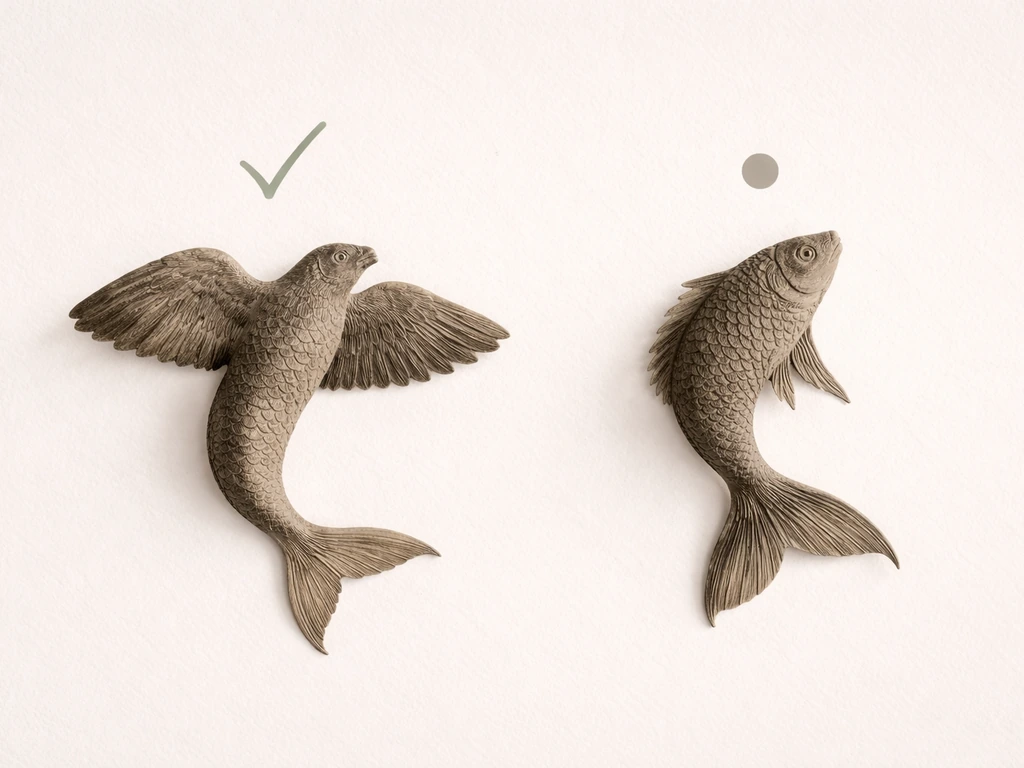
If you are asking about the historically accurate, classically sourced mythological siren, the answer is half-bird (specifically, bird-bodied with a human head or face). If you are asking about the version that dominates modern storytelling, film, and fantasy, the answer leans toward half-fish because of centuries of blending with the mermaid archetype. Neither version describes a real animal. They are both purely mythological constructs, and which one you encounter depends almost entirely on the source and time period you are looking at. So, is sigilyph a bird, too? So, is teal a bird, too? That idea comes from how people label animals, rather than from biology. In most cases, it is not treated as a literal bird in the way mythological sirens are described half-bird or half-fish.
Bird-like vs fish-like features: a quick taxonomy note
From a biological classification standpoint, the bird traits and fish traits associated with sirens belong to completely different animal classes, and neither applies to a real creature in the way myth uses them. Real birds (class Aves) are defined by feathers, hollow bones, a beak, and laying hard-shelled eggs. Fish are aquatic vertebrates that breathe through gills and typically have scales and fins. A creature that is literally half one and half the other cannot exist biologically, which is exactly the point of a mythological hybrid: it borrows the most symbolically powerful feature from each animal without worrying about biological coherence.
The bird-siren borrows flight and song, both features that make sense for a creature that perches and lures. The fish-siren borrows the aquatic, luring-from-the-water quality that also fits the sailors-at-sea story. Both versions work symbolically even though neither version represents anything that could be classified in modern zoology. This is the same interpretive challenge that comes up with other mythological creatures people sometimes ask about in terms of animal classification, including questions like whether a siren is more closely related to a mermaid as a cultural concept.
How to figure out which version you are looking at
The easiest way to identify which siren version you have encountered is to check the source directly. Here is a practical approach:
- Look at the artwork or illustration. If the siren has visible wings, feathers, talons, or bird legs, you are looking at the classical Greek version. If it has a fish tail below the waist, you are looking at the medieval or modern mermaid-influenced version.
- Check the date and origin of the source. Ancient Greek and Roman sources (pre-500 CE) almost always use the bird form. Medieval European manuscripts and art (500–1500 CE) increasingly shift to the fish-tail version. Modern books, films, and games can use either, often mixing both freely.
- Check the label the source itself uses. Some texts use 'siren' and 'mermaid' interchangeably, which is a sign you are dealing with the blended, popular-culture version rather than the classical myth.
- Look for the defining trait: song or beauty. Classical sirens are about their deadly singing first, physical form second. If a source emphasizes the singing as the source of danger, it is closer to the Greek original. If it emphasizes appearance and seduction without the song, it has likely drifted toward the mermaid archetype.
- When in doubt, cross-reference with an encyclopedic source like Britannica or World History Encyclopedia, both of which describe the classical siren clearly as the bird-woman hybrid.
The bottom line: sirens started as bird creatures and became fish creatures over time through cultural blending. If a source says half-bird, it is being historically accurate. To help with identification, you may also see questions like which animal undergoes metamorphosis in common biology examples, depending on the context being discussed half-bird. If it says half-fish, it is reflecting the more modern, mermaid-influenced retelling. Both are mythological, neither is biological, and now you know exactly which version you are dealing with when you see one.
FAQ
If Homer does not describe their physical look, how can we still say “half-bird” is the original?
Even when early texts focus on the singing and the danger, later Greek and Roman art and descriptions still present sirens with strong bird features (human face plus bird body, wings, or bird legs). Scholars treat that longer classical evidence as the consistent default representation, rather than the later fish-tail blending.
Why do so many modern books and movies show sirens with fish tails even if that is historically later?
Because “siren” has been culturally merged with “mermaid,” and audiences recognize mermaids visually as water-bound seducers. Over centuries of retellings, creators used the familiar fish-tail mermaid template to signal the same kind of lure, even if it diverges from older Greek imagery.
Are sirens and mermaids the same creature in mythology, or just mixed together later?
In Greek tradition, sirens are typically a distinct kind of supernatural being tied to song and sailors, while mermaids are a separate folkloric and literary development that becomes more common in later European storytelling. The overlap you see in modern media is mainly an adaptation choice, not a single unified original creature description.
How can I tell whether a depiction is “half-bird” or “half-fish” without reading a long summary?
Check the body form first: bird-bodied elements (wings, talons, perched-on-rock imagery) indicate the classical bird version. Fish-tail elements (scales, fins, fully aquatic tails) indicate the medieval or modern mermaid-influenced version.
Does the phrase “half-bird, half-fish” ever appear as a specific historical type?
Not as a standard ancient or medieval model of sirens. When you see both traits in one character, it is usually a modern designer interpretation, combining visual cues from different myth retellings rather than reflecting a single historically documented hybrid.
Are there any real animals called “siren” that are related to the myth?
No for the myth itself. The genus Siren refers to aquatic salamanders, but it is named through taxonomy conventions and is unrelated to the Greek supernatural siren. If you are doing research, keep the mythological context separate from the biological naming.
If a source is inconsistent, like describing song but giving a fish tail, what should I trust?
Trust the image or the explicit physical description for the visual type, and trust the narrative details (like luring sailors by singing) for the function. A single work can mix elements, so the safest approach is to classify by what it explicitly shows or states.
Does biology support the idea that a “half-bird, half-fish” creature could exist?
No. Birds and fish fall into fundamentally different animal categories with incompatible anatomy for what “half and half” would require (for example, bird respiratory and egg traits versus fish gills and aquatic life systems). The myth’s whole point is symbolic hybrid imagery, not biological plausibility.
Why do some people ask whether sirens are more closely related to birds or fish culturally?
Because the siren’s powers map symbolically onto both worlds: birds connect to song, flight, and perching, while fish connect to sea-based allure and danger from the water. The “closer” answer depends on which retelling you are using, classical tradition versus modern mermaid-influenced versions.
What is the most accurate one-sentence answer I can use for a quiz or trivia question?
Historically and in classical depictions, sirens are half-bird (bird body with a human face), while the half-fish form is a later, mermaid-blended adaptation that became common in modern storytelling.