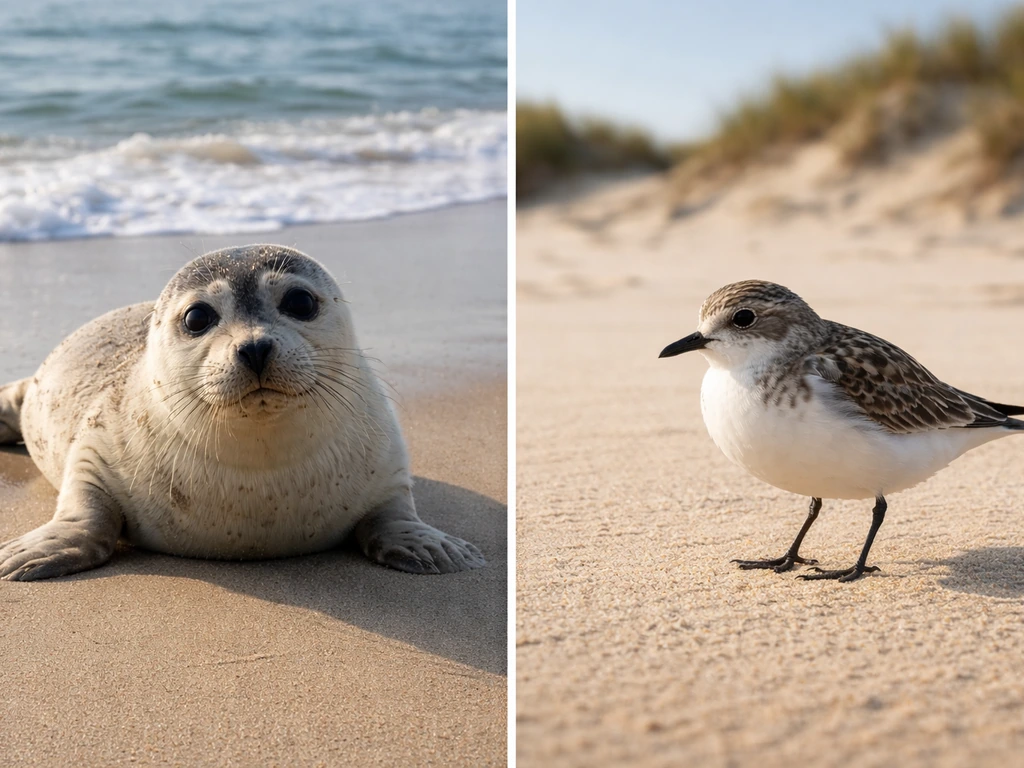
No, a seal is not a bird. Seals are mammals, classified under Class Mammalia, the same biological class as dogs, whales, and humans. Birds belong to Class Aves and have a completely different set of defining traits. There is no overlap in taxonomy between the two groups, and nothing about a seal's biology, anatomy, or evolutionary history puts it anywhere near birdhood.
Is a Seal a Bird? How to Tell Birds vs Seals

Sarah Chen
9 Jun 2026
What actually makes something a bird
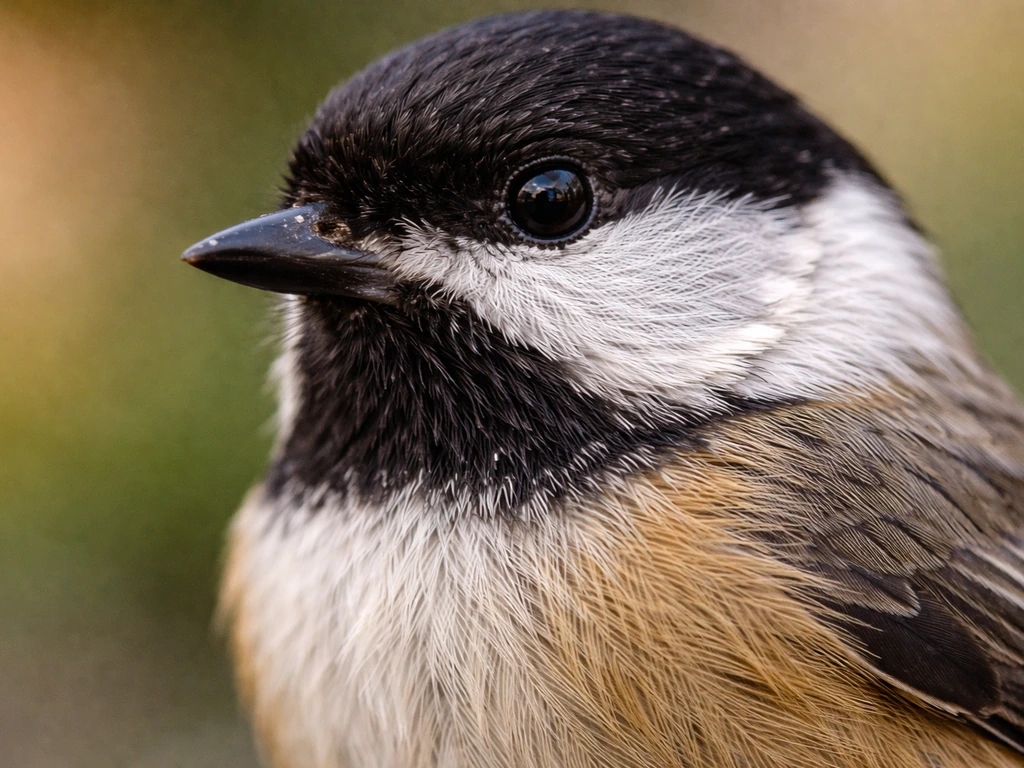
To understand why seals are not birds, it helps to know what birds actually are. Every bird, without exception, belongs to Class Aves. That classification comes with a specific set of biological traits that no other animal group shares.
- Feathers: Birds are the only living animals with feathers. These are made of keratin (the same protein in your fingernails and hair) and come in several distinct types, including flight feathers, down, and contour feathers.
- Beaks with no teeth: All modern birds have a beak or bill instead of teeth.
- Laying hard-shelled eggs: Birds reproduce by laying eggs with a hard or leathery shell.
- Hollow bones: Most birds have lightweight, partially hollow bones that reduce body weight for flight.
- Unique respiratory system: Bird lungs connect to a series of air sacs that create unidirectional airflow, meaning air moves in one direction through the lung during both inhaling and exhaling. This is found in no other animal group.
- Warm-blooded metabolism: Birds regulate their own body temperature internally.
That unidirectional airflow system is particularly distinctive. Unlike mammal lungs, which work like bellows (air in, air out through the same path), a bird's lung-air-sac system keeps air flowing continuously in one direction through tiny tubes called parabronchi. It's a fundamentally different piece of engineering, and seals don't have it.
Why seals are mammals, not birds
Seals belong to a group called pinnipeds (from the Latin for 'fin-footed'), which sits firmly within Class Mammalia. There are 34 pinniped species split across three families: Otariidae (eared seals, including sea lions and fur seals), Phocidae (true or earless seals), and Odobenidae (walruses). Every one of those species is a mammal, full stop.
Here is what makes seals unmistakably mammals rather than birds:
- Fur or hair: Seals have fur, not feathers. Even when wet, their coats are clearly hair-based rather than feather-based.
- Mammary glands and milk: Female seals nurse their pups with milk, and pinniped milk is exceptionally high in fat to help pups build blubber quickly. Milk production is a core mammal trait, completely absent in birds.
- Live birth on land or ice: Seals give birth to live young rather than laying eggs.
- Mammalian breathing: Seals are air-breathers that hold their breath while diving. They can dive to great depths on a single breath, but they must surface to breathe. This is breath-hold diving, a mammal strategy, not the avian air-sac system.
- Four limbs modified into flippers: Seals' large flippers are modified forelimbs and hindlimbs, not wings. There are no feathers on them.
In short, if you run a seal against every defining bird trait, it fails every single check. Feathers? No. Beak? No. Hard-shelled egg? No. Hollow bones? No. Unidirectional airflow lungs? No. Milk for young? Yes, and that alone puts it firmly in mammal territory.
Animals people commonly mix up with birds (and why seals are in that company)
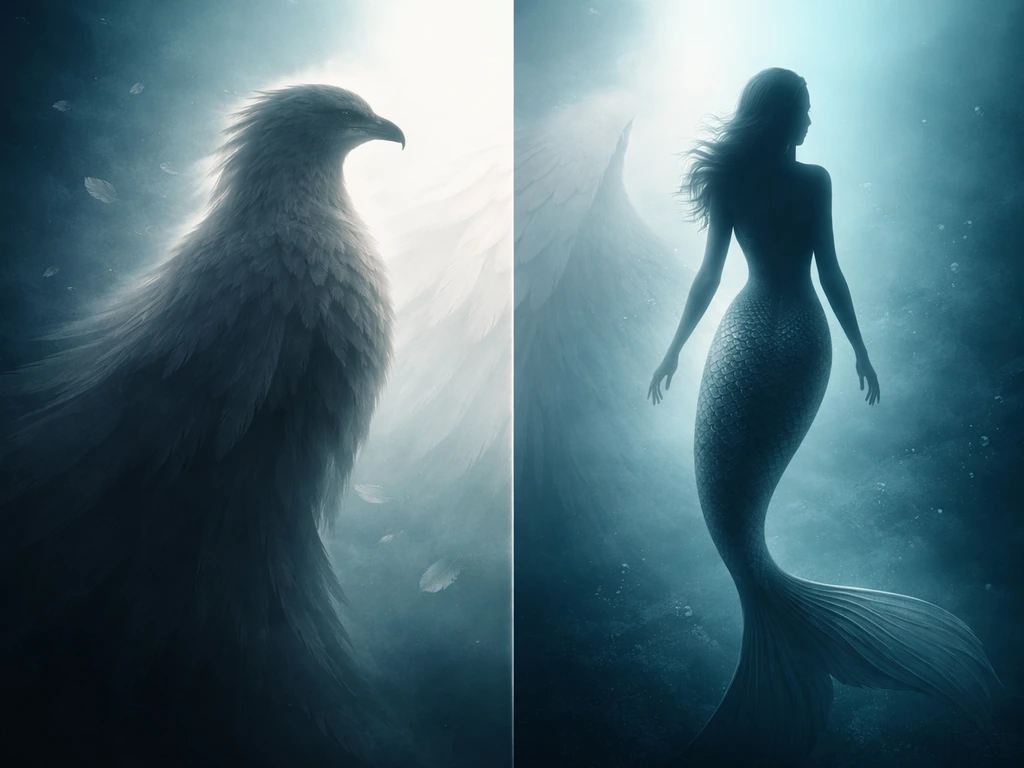
Seals are streamlined, they swim gracefully, they live near coasts where seabirds also gather, and at a distance their flipper movement can look vaguely wing-like. That is probably the visual trigger behind the confusion. People also sometimes wonder, for similar reasons, whether a siren is a mermaid or a bird visual trigger. But seals are far from the only animals that get mistakenly lumped in with birds. Here are the biggest look-alike cases worth knowing.
Penguins (actually birds, despite looking like seals)
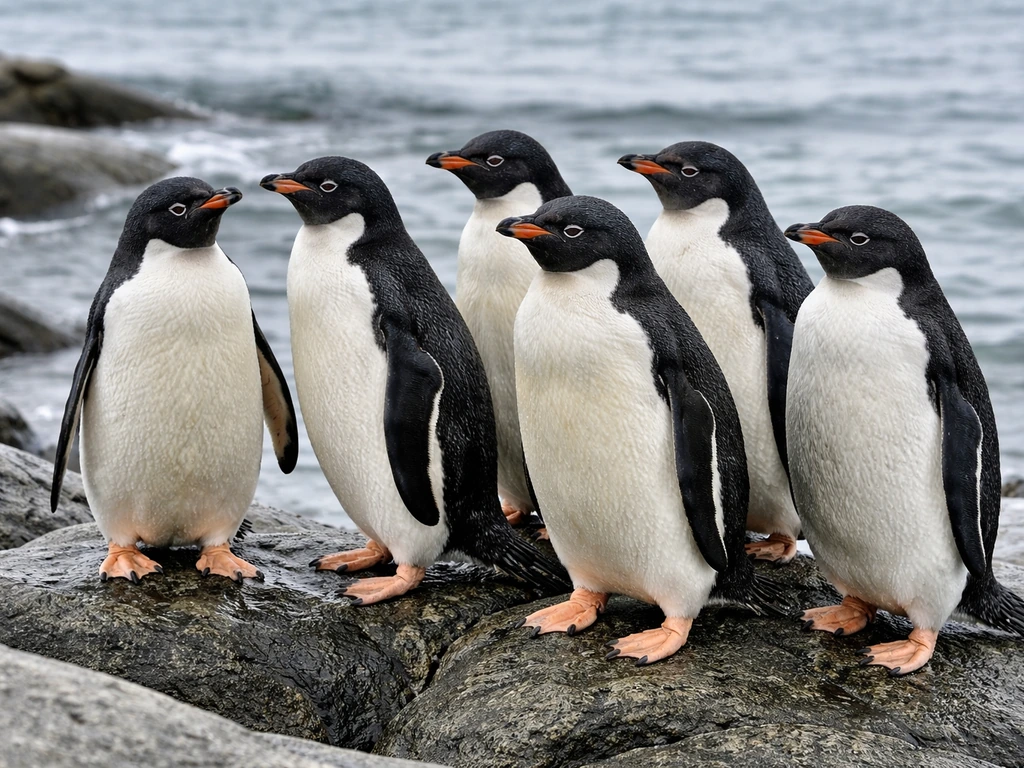
Penguins are the classic example that runs in the opposite direction: they are birds, but people sometimes doubt it because they cannot fly. Penguins belong to the order Sphenisciformes within Class Aves. They have feathers (dense, small, and tightly packed for waterproofing), lay eggs, and have wings modified into stiff flippers. Those flippers are driven by large pectoral muscles attached to a keeled sternum, exactly as in other birds. The confusion around penguins is understandable because they look almost seal-like in the water, but the feathers and egg-laying settle it immediately.
Bats (winged mammals, not birds)
Bats fly and are sometimes mistaken for birds, especially at dusk. But bats are mammals. Their wings are modified forelimbs covered in a thin skin membrane stretched across four elongated fingers, nothing like a feathered bird wing. Bats have fur, give birth to live young, and nurse them with milk. The quick test: feathers or fur? Bats have fur. Not a bird.
Sea lions (close seal relatives, also mammals)
Sea lions are often confused with seals, and both are sometimes loosely associated with seabirds in coastal environments. Sea lions are eared seals (family Otariidae) with visible external ear flaps and front flippers strong enough to rotate so they can 'walk' on land. True seals (Phocidae) lack those ear flaps and have tiny openings on the sides of their heads instead. Neither group has any bird characteristics.
Walruses
Walruses are the third pinniped family (Odobenidae) and share all the same mammal traits as seals and sea lions. Nobody really thinks a walrus is a bird, but they are worth mentioning as part of the pinniped picture to show that the entire group is solidly mammalian.
Quick checklist: is this animal a bird or not?

You can run through this checklist for nearly any animal you are trying to classify. Of the animals people commonly mix up with birds, the question of which undergo metamorphosis does not apply to birds, seals, toads, bears, or birds. If you are wondering about a specific animal like teal, use the same bird checklist to decide whether it really belongs in Class Aves. If an animal passes all five bird checks, it is a bird. If it fails even one, it is not. The same logic applies to the question of whether sirens are half bird or half fish sirens are half bird or half-fish.
| Question | Bird answer | Seal answer |
|---|---|---|
| Does it have feathers? | Yes, always | No, it has fur |
| Does it lay hard-shelled eggs? | Yes | No, gives live birth |
| Does it have a beak instead of teeth? | Yes | No, has teeth |
| Does it belong to Class Aves? | Yes | No, Class Mammalia |
| Does it nurse young with milk? | No | Yes (mammal trait) |
| Does it have unidirectional lung airflow? | Yes | No, breath-hold diving |
The feathers check is the fastest single test. No living animal outside Class Aves has feathers. If you see feathers, it is a bird. If you do not, it is not a bird, no matter how it moves, where it lives, or how much it resembles one from a distance.
How to verify any animal's classification quickly
If you ever want to double-check where an animal falls in taxonomy, the process is straightforward and does not require a zoology degree. Start with the class level: is it Class Aves or something else? For most animals you will encounter, the class is easy to confirm with a quick look at a reliable source like Encyclopedia of Life, Britannica, or the NOAA Fisheries species pages. Both seals and sea lions are listed as Class Mammalia on every credible source, including PBS Nature's seal fact sheet and NOAA's pinniped pages.
From there, cross-reference against the core traits. Mammary glands producing milk, hair or fur at some life stage, and live birth are the three mammal anchors that the Mammal Diversity Database (run by the American Society of Mammalogists) uses to verify classification. Seals check all three. Birds check none of those three but instead check feathers, beak, and egg-laying.
If you are curious about other animals that sit closer to the bird-or-not boundary, penguins and bats are the most instructive cases to study because they genuinely cause confusion. Penguins look aquatic and flippered (like seals) but are true birds. Bats fly (like birds) but are true mammals. Working through those two examples will sharpen your instinct for spotting the real dividing line, which is always feathers versus fur, and Class Aves versus everything else.
Seals are fascinating animals, but they are about as far from birds as an animal can get. They are warm-blooded, fur-covered, milk-producing, live-birth marine mammals that hold their breath to dive. University of Puget Sound notes that harbor seals, as pinnipeds, rely on breath-holding diving physiology consistent with mammalian air-breathing hold their breath to dive. The only thing they share with seabirds is a coastal habitat. Classification-wise, they belong in a completely different class of life.
FAQ
Can a seal ever be called a “bird” in a scientific sense, for example in a common name?
No. In scientific taxonomy, seals fall under Class Mammalia, while birds are Class Aves, so “seal” does not map to any bird category. The only time you might see confusing wording is in non-scientific common names or old folk terms, and those are not used for classification.
Do seals have any traits that look similar to birds, like feathers or egg-laying?
No. Seals do not have feathers, do not lay hard-shelled eggs, and do not have bird-type beaks. The superficial similarity people notice is mainly shape and motion in water (flippers looking like wings), but the underlying biology is mammalian, including fur and milk for young.
What is the fastest real-world test if I’m unsure whether something is a bird or a seal from a distance?
Look for feathers. Feathers are a decisive indicator for birds, and an animal without feathers is not a bird, even if it looks “wingy” or swims like a bird. For seals, you can also watch for fur-covered bodies and mammal-style breathing and diving behavior (holding breath to dive).
Why do people confuse seals with seabirds, especially around beaches?
Because they share habitat and viewpoint cues. Seals and seabirds often both appear near coasts, and from far away, seal flippers can resemble wing movements. Also, seals do not fly, so the visual context (bird watching) can bias people toward assuming any flippered animal is a bird.
Are sea lions or walruses birds, since they are pinnipeds like seals?
No. Sea lions and walruses are also pinnipeds, and pinnipeds are mammals. Sea lions have visible external ear flaps, true seals lack them, and walruses have distinct tusk features, but none of the pinniped families belong to Class Aves.
Are penguins a special case where the seal-versus-bird rule breaks down?
Penguins are a bird, so the seal rule does not apply. The key reason is that penguins have feathers, lay eggs, and have bird anatomy for bird lungs and skeleton structure. They are flightless, but flightlessness is not what makes something a bird.
Are there any mammals that fly like birds and could be mistaken for them?
Yes, bats are the main example. Bats fly using a skin membrane across elongated fingers, and they have fur and nurse live young with milk. If the animal has fur instead of feathers, it is not a bird.
If an animal has “bird-like” behavior, does that guarantee it is a bird?
No. Behavior can mislead, especially for animals that swim, glide, or move in ways that resemble birds. Classification is based on anatomy and reproduction traits, not just movement or habitat.
How can I double-check the classification of a specific animal if I’m still unsure?
Start at the class level (Class Aves or not) and then confirm core traits. For quick anchor checks, birds align with feathers and egg-laying, while mammals align with milk for young and fur or hair (at least at some life stage). If it fails even one of the defining anchors, it is not a bird.
Could “feathers” mean something different, like scales or stiff fur, and still be a bird?
Not in the biological sense used for classification. Scales, bristles, or fur are not feathers. If you do not see true feathers (bird-type structures), the safest conclusion is that it is not a bird.
Next Article
Is a Siren a Mermaid or a Bird? Myth vs Biology
Myth and biology clarify if a siren is a mermaid or bird, plus the animal traits that make something truly a bird.