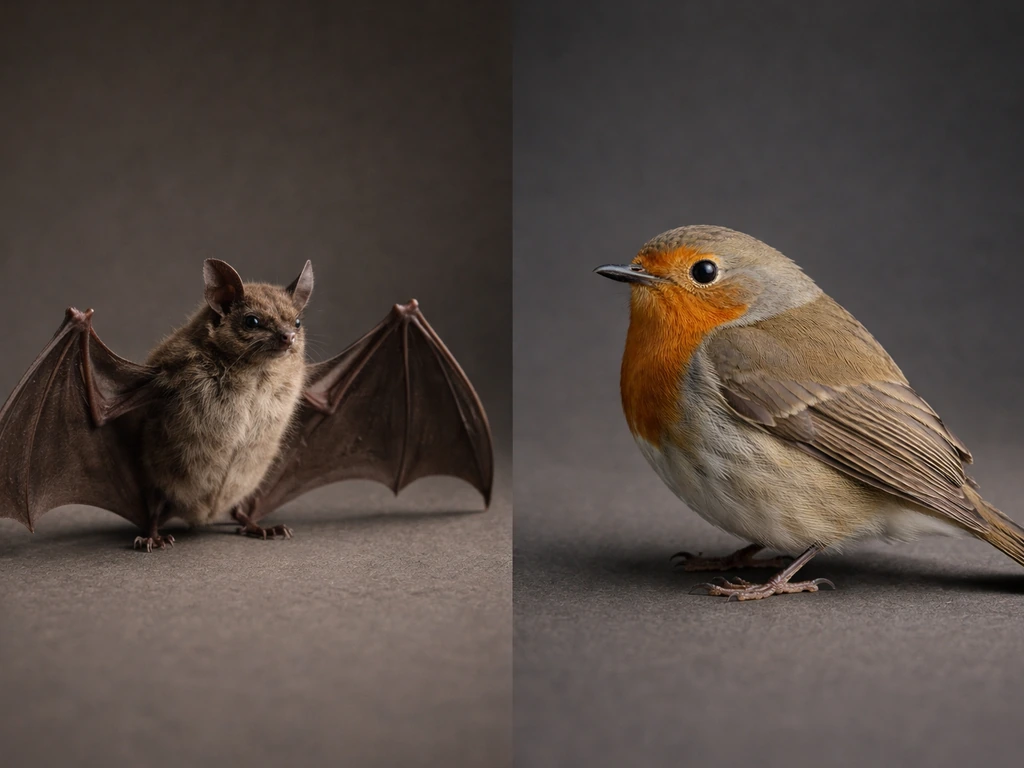
A brown bat is not a bird. It is a mammal, full stop. Whether you are looking at a little brown bat (genus Myotis) or a big brown bat (Eptesicus fuscus), both are classified under Class Mammalia and Order Chiroptera. They have fur, give live birth, and blank" rel="noopener noreferrer">nurse their pups with milk. None of those things happen in birds, and no brown bat has ever had a feather.
Is a Brown Bat a Bird? Key Differences Explained

Sarah Chen
11 Jun 2026
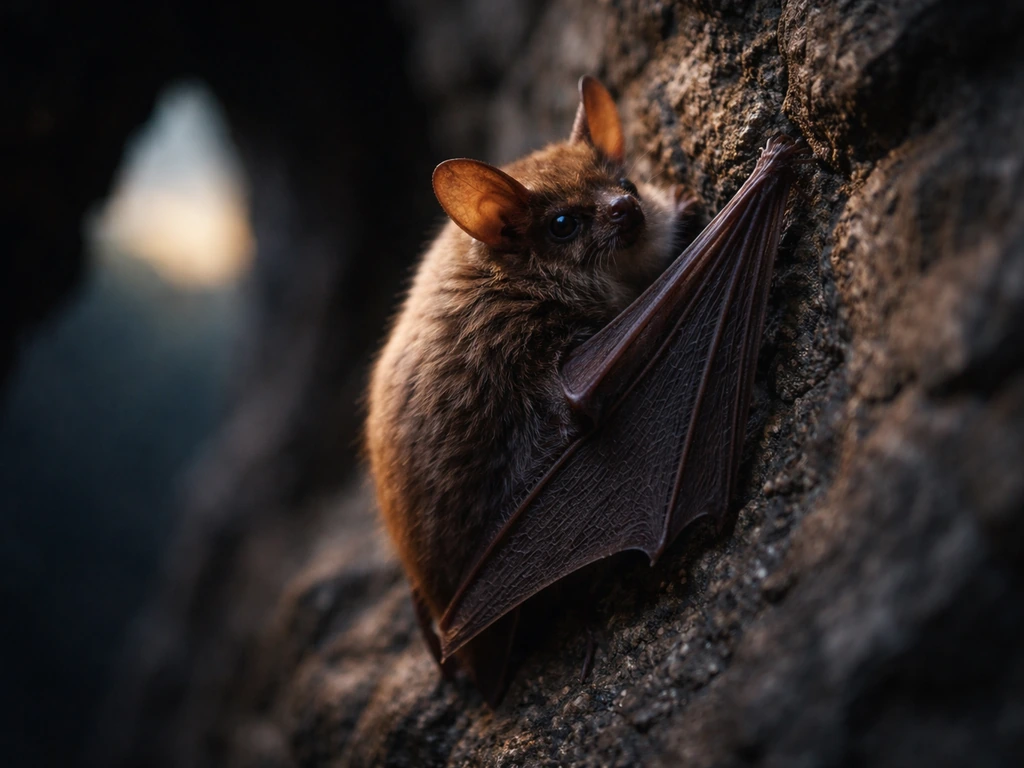
Why a brown bat is definitely not a bird
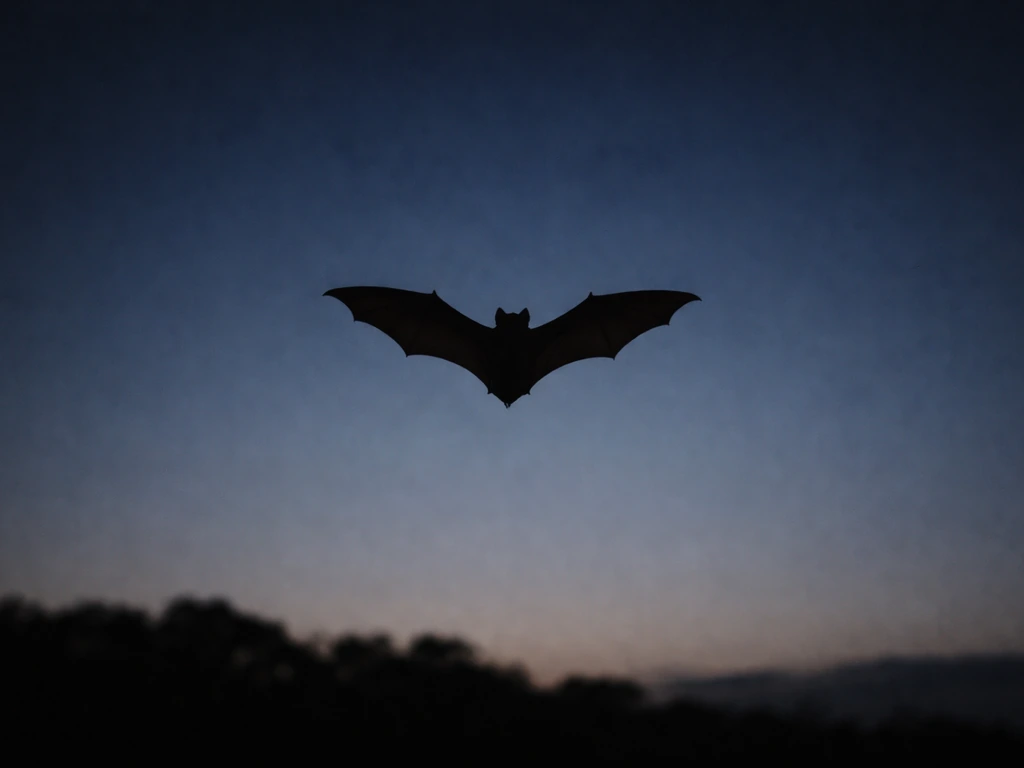
The confusion is understandable. Brown bats fly, they are roughly bird-sized, and at dusk their silhouette can look eerily similar to a swallow or swift darting after insects. But looking similar in the air does not make them birds any more than a flying squirrel gliding between trees makes it a bird. Classification comes down to biology, and on every biological criterion that defines a bird, brown bats come up empty.
Taxonomically, the big brown bat sits in Kingdom Animalia, Class Mammalia, Order Chiroptera. That is the same class as dogs, whales, and humans. Birds belong to Class Aves, a completely separate branch of the vertebrate family tree. No brown bat has ever been placed in Class Aves by any scientific authority, including Britannica, the Smithsonian, or the Animal Diversity Web.
What actually defines a bird
Birds share a specific set of traits that no other living animal group has all at once. The Smithsonian identifies feathers, hollow bones, and hard-shelled eggs as the hallmark features. Feathers are genuinely unique to birds: Britannica notes that feathers grow in arranged tracts on bird skin, which is structurally unlike mammalian hair. A penguin that cannot fly still has feathers and lays hard-shelled eggs, so it is a bird. An ostrich that runs instead of flying still has feathers and lays eggs, so it is a bird. Flight is not the defining feature, feathers and egg-laying are.
- Feathers covering the body (unique to birds among living animals)
- Hollow, lightweight bones adapted for flight or running
- Hard-shelled eggs laid outside the body
- Warm-blooded metabolism with a high resting body temperature
- A beak or bill with no teeth (in all modern birds)
A brown bat has none of these. It has fur instead of feathers, solid bones adapted for a very different wing structure, and it gives birth to live young rather than laying eggs.
What a brown bat actually is
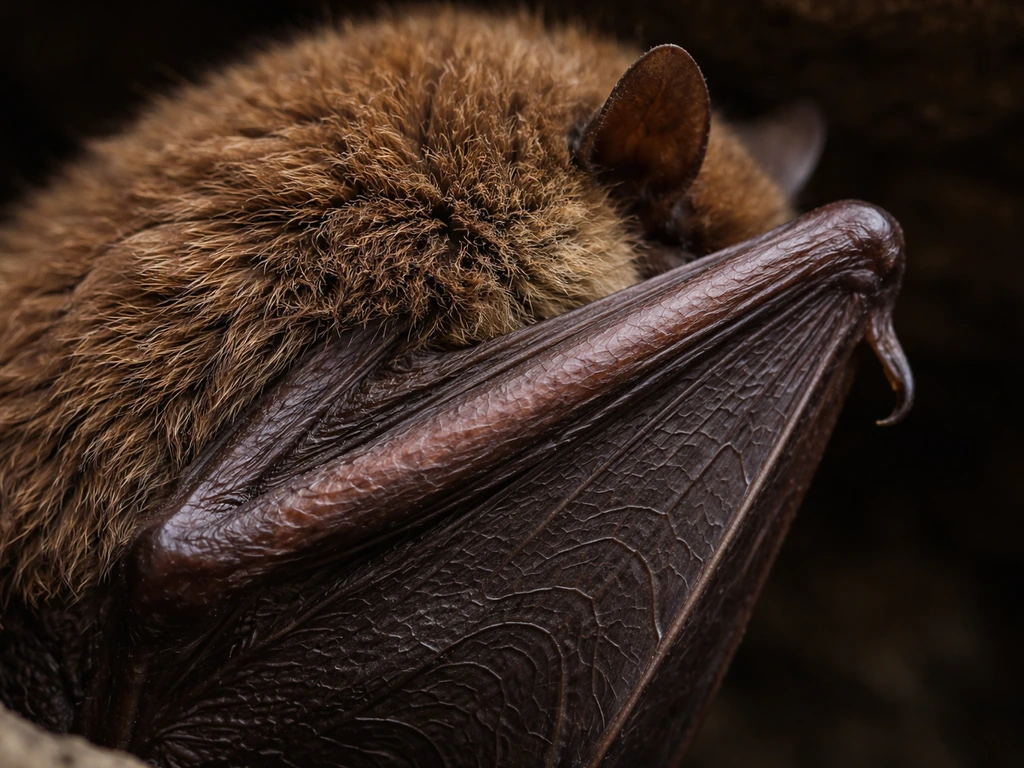
Brown bats are mammals in the order Chiroptera, a name that literally means "hand-wing" in Greek. That name is the first clue to what makes bat flight so different from bird flight. According to the National Park Service and Lincoln Park Zoo, a bat's wing is made of five elongated finger bones connected by a thin, flexible membrane called the patagium. Imagine your hand stretched out flat with a sheet of skin connecting your fingers and running down to your ankle: that is essentially a bat wing. There is no feather anywhere in that structure.
Beyond wing anatomy, brown bats check every mammal box. The NPS confirms they have fur, give live birth, and feed milk to their young. Britannica's definition of a mammal centers on milk production from mammary glands, and bats do exactly that. Female big brown bats typically give birth to one or two pups per year and nurse them. That reproductive pattern is completely alien to birds.
Brown bats are also the only mammals on Earth capable of true powered flight, which Britannica explicitly notes. That is a remarkable evolutionary feat, but it does not make them birds. It just makes them extraordinary mammals. On top of flight, most brown bats use echolocation: they emit high-frequency sound pulses and interpret the returning echoes to navigate and hunt insects in total darkness, as described by both the NPS and Britannica. No bird uses echolocation in the same way.
Why people mix bats up with birds
The Smithsonian's bat fact sheet exists specifically because bats generate so many misconceptions, and the bird confusion is one of the most persistent. Here is what drives it:
- Flight: Bats are the only mammals that truly fly under their own power, so when people see a flying animal they instinctively think "bird."
- Silhouette similarity: At dusk, a brown bat banking and diving after insects looks a lot like a swift or a nighthawk doing the same thing. The body size and erratic movement pattern genuinely overlap.
- Shared habitat: Bats and insect-eating birds often share the same airspace at dawn and dusk, which reinforces the visual association.
- The "blind as a bat" myth: Because bats use echolocation, many people assume they rely on some mysterious non-visual sense that seems more animal-like than birdlike, but this actually has nothing to do with their classification.
- Lack of a clear mental category: Most people learn "things with wings that fly" as a single informal category, but biology draws a sharp line between Class Aves and Class Mammalia.
The same question pops up in related forms constantly: whether bats count as birds generally, whether they belong to the bird family, or simply how to tell a bat from a bird on the wing. Bats are not part of the bird family, even though they can fly through the air. The answer is always the same biological fact: bats are mammals and birds are a completely separate class of vertebrates.
How to tell a bat from a bird quickly, in the field or in photos
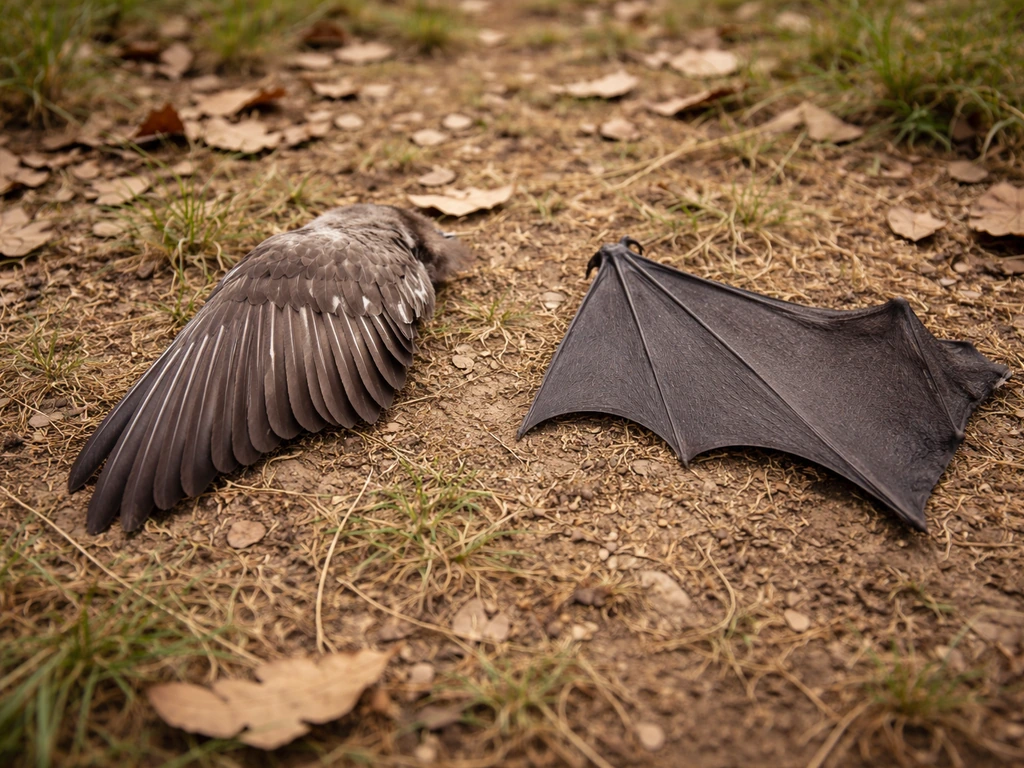
You do not need a biology degree to separate them. These are the fastest visual checks:
- Look at the wings: Bird wings have visible feathers along the trailing edge. Bat wings look like a continuous, leathery or papery membrane with no feather structure visible.
- Check where the wing meets the body: Zoo.org points out that bat wings connect all the way down to the ankles, giving the animal a cloaked or caped look in flight. Bird wings connect at the shoulder and leave the legs free and dangling (or tucked up separately).
- Watch the flight path: Bats tend to make sharp, erratic turns while chasing insects. Many birds can do the same, but insect-hawking bats tend to do it in tighter, more unpredictable loops.
- Look for a tail fan: Birds typically have a visible fanned tail used for steering. Bats have a membrane between their legs (the uropatagium) that serves a similar aerodynamic purpose but looks nothing like a feathered tail fan.
- Time of day: Seeing a small, fast-flying animal after dark or at deep dusk strongly suggests a bat. Most birds (except owls and nightjars) are not active in true darkness.
In photos, zoom in on the wing edge. If you can see individual feathers, it is a bird. If the wing looks like a thin sheet of skin stretched between elongated fingers (you can sometimes see the finger-bone silhouette in backlit photos), it is a bat.
Where bats fit compared to other animals people confuse with birds
Bats are not the only flying animals that get mistaken for birds. Situating them in context makes the whole classification picture clearer.
| Animal | Class | Wings made of | Lays eggs? | Has feathers? | Nurses young with milk? |
|---|---|---|---|---|---|
| Brown bat | Mammalia (Chiroptera) | Skin membrane over elongated finger bones | No (live birth) | No (fur) | Yes |
| Robin / sparrow / eagle | Aves (birds) | Feathers over fused arm bones | Yes (hard shell) | Yes | No |
| Penguin | Aves (birds) | Feathers (flippers, not for flight) | Yes (hard shell) | Yes | No |
| Pterosaur (extinct) | Reptilia (non-dinosaur archosaur) | Skin membrane over single elongated finger | Likely eggs | No (some had pycnofibers) | No |
| Flying squirrel | Mammalia (Rodentia) | Skin membrane (gliding only, no true flight) | No (live birth) | No (fur) | Yes |
Pterosaurs deserve a special mention because they come up in these conversations often. The NPS is clear that pterosaurs were not birds and were not even dinosaurs: they were a separate lineage of non-dinosaurian reptiles that happened to evolve flight independently. National Geographic's wing-comparison materials show how different the three wing types are: pterosaurs used one extended finger bone to support their membrane, bats use five elongated fingers, and birds use feathers on a heavily modified arm.
National Geographic's wing-comparison handout explicitly contrasts bat wing anatomy with pterosaur and bird wings, reinforcing that wing structure differs across these groups National Geographic's wing-comparison materials show how different the three wing types are.
Three completely different engineering solutions to the same problem of getting airborne.
Penguins are the classic example on the bird side of the ledger. People sometimes question whether penguins are birds because they cannot fly and look almost mammal-like waddling around on land. But the Smithsonian is unambiguous: penguins are birds. They have feathers, they lay hard-shelled eggs, and they brood their chicks in exactly the way other birds do. A brown bat, by contrast, fails every single one of those tests.
The bottom line and your next steps
If you came here because you saw something flying and wondered whether it was a bat or a bird, the fastest check is the wing surface: feathers mean bird, membrane means bat. If you want a quick answer, the key question is whether you see feathers or a thin membrane wing stretched between fingers bat or bird. If you are trying to settle a taxonomy question, the answer is definitive.
Brown bats (whether little brown bats in the genus Myotis or big brown bats classified as Eptesicus fuscus) are mammals in Order Chiroptera, not birds in Class Aves. They have fur, nurse live-born pups with milk, fly on hand-wing membranes, and navigate by echolocation. Not one of those traits belongs to birds. The only thing bats share with birds is the airspace, and sharing the sky with something does not make you the same kind of animal.
FAQ
Can a brown bat be “called a bird” in everyday language, even though it is not one scientifically?
Yes for casual speech, people sometimes say “bird-like” because bats fly and hunt at dusk, but biologically it would be inaccurate. If you are trying to be precise, use “bat” and, if needed, the species or genus name (for example, little brown bat or big brown bat).
What should I look for if I cannot see the bat clearly, but it is moving like a bird at dusk?
Use behavior and time context. Brown bats often become active soon after sunset and make insect-hunting passes in a more looping pattern than most birds. Still, the deciding clue is physical structure, so try to catch a silhouette against backlight to check for a membrane-style wing edge versus visible feather outlines.
Do brown bats have feathers at all, even if they are not “bird feathers”?
No. Brown bats do not have feathers. They have fur, and their wing surface is a thin membrane supported by elongated finger bones, so there is no feather tract or hard, keratin-based feather structure like birds have.
Are brown bats more closely related to birds or to other mammals like dogs?
They are more closely related to other mammals, including dogs, whales, and humans, because they are in Class Mammalia. Birds are in a separate class (Class Aves), so bats and birds diverged long ago on the vertebrate family tree.
If flight style is different, can flight alone ever prove an animal is a bird?
No. Birds can glide, soar, or flap in different ways, and some non-birds can also fly. Flight type is not the defining trait. The reliable split is body coverings and reproduction, feathers and hard-shelled eggs versus fur and live birth with milk.
How can I tell the difference between a bat and a pterosaur if I see something only as a fossil or illustration?
In real-world sightings, you will only be seeing bats and birds, but for fossils or models, the wing-support anatomy matters. Pterosaurs typically have a single elongated finger supporting the membrane, bats have five finger-like supports, and birds have feathered wings attached to a modified arm.
What about birds that look “mammal-like,” like flightless ones, does that change the classification rules?
No. Flightless birds still meet bird criteria because they have feathers and lay hard-shelled eggs. A penguin can waddle and cannot fly well, but it remains a bird. Brown bats remain bats because they have fur, membrane wings, and live-born pups nursed with milk.
Do brown bats use echolocation like other bats, and is it ever a clue for identifying birds?
Many brown bats do use echolocation to navigate and hunt insects, emitting sound pulses and interpreting echoes. Birds may use hearing and vision, but they do not use echolocation in the same way, so echolocation strongly points to a bat rather than a bird.
Next Article
Are Bats a Type of Bird? How to Tell Mammals From Birds
Answer if bats are birds: no, bats are mammals. Learn simple traits to separate mammals from birds.