Bats are not birds because they are mammals, full stop. They belong to Class Mammalia, not Class Aves. That single class-level difference settles the question, and every biological trait backs it up: bats have fur, give birth to live young, and feed their babies milk from mammary glands. Birds have feathers, lay eggs with hard calcium shells, and have beaks. The fact that bats fly and have wing-like structures does not change any of that. Flight is not what defines a bird.
Why Bat Is Not a Bird: Mammal vs Bird Traits

Sarah Chen
28 Apr 2026
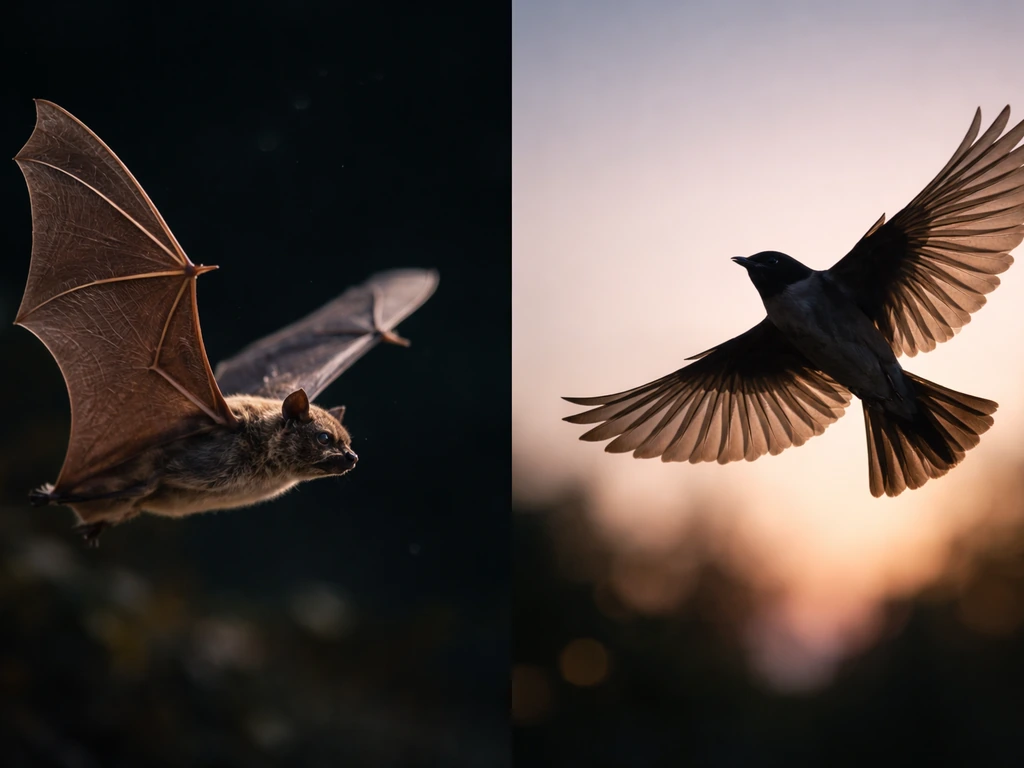
Bat traits that prove it's a mammal, not a bird
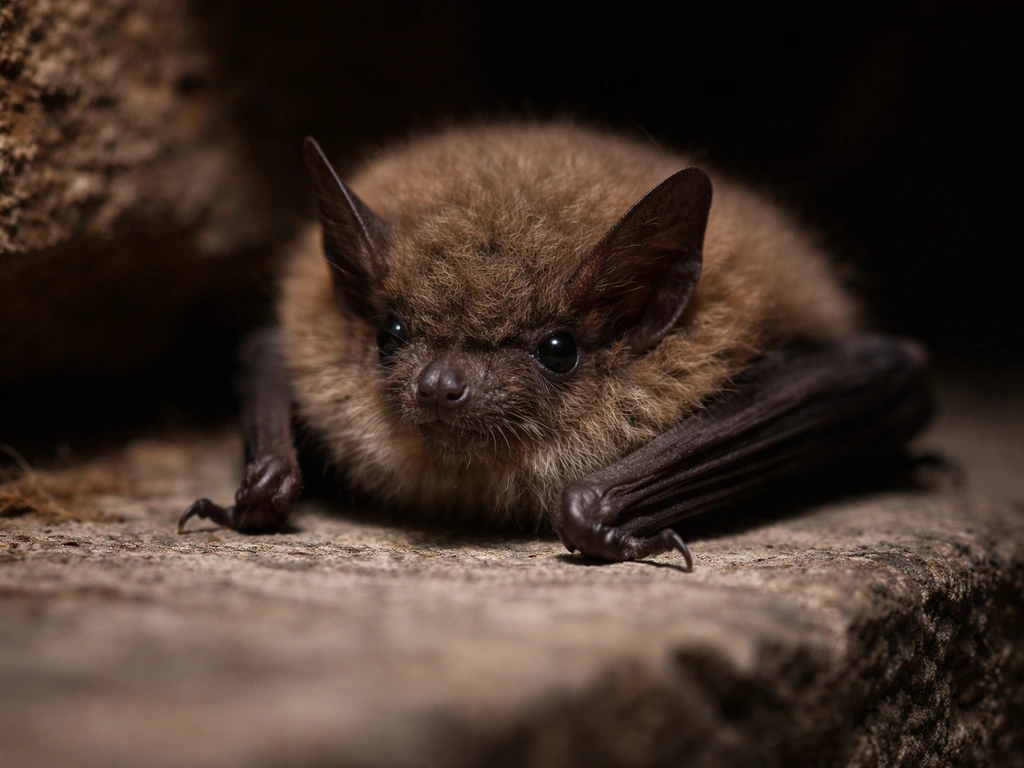
The simplest way to settle this is to run bats through the mammal checklist. According to the California Department of Public Health and standard zoological sources, bats check every box: they have fur or hair covering their bodies, they give birth to live young (called pups), and they feed those pups milk produced by mammary glands. Baby bats literally drink their mother's milk, the same way a puppy or kitten does. That is the defining mammal trait, and no bird does this.
Taxonomically, bats sit in the order Chiroptera, which itself sits inside Class Mammalia. The name Chiroptera means 'hand-wing' in Greek, a reference to how their wings are actually modified forelimbs with elongated finger bones stretched across a thin membrane of skin. It is the same underlying limb structure you find in a human arm or a dog's front leg, just dramatically reshaped by evolution. That modified hand is a mammal structure, not a bird structure.
Beyond fur and milk, bats also share the three middle ear bones (malleus, incus, and stapes) that define mammals at a structural level. Birds have a completely different ear anatomy. And bat reproduction follows the mammal pattern: gestation inside the mother, live birth, and a period of lactation where the pup depends entirely on the mother's milk. Most bat species give birth to just one pup per year, which means a lot of maternal investment, very different from the egg-incubation strategy birds use.
What actually makes something a bird
Birds are warm-blooded, beaked vertebrates of Class Aves. Three traits you can actually observe tell you almost everything you need to know.
- Feathers: Every single bird species has feathers. No mammal has feathers. If an animal has feathers, it is a bird. If it does not, it is not.
- A beak (bill): Birds have a keratinous beak with no teeth (in modern species). Bats have a jaw with teeth, like other mammals.
- Egg-laying (oviparity): Birds lay eggs with calcium-rich, hard shells. After laying, the parents keep the eggs warm while the embryo develops inside. Bats do not lay eggs.
You can apply this to any animal quickly. A penguin looks nothing like a sparrow, but it has feathers, a beak, and lays eggs, so it is a bird. An ostrich cannot fly, but it has feathers, a beak, and lays eggs, so it is also a bird. A bat can fly, but it has fur, teeth, and gives birth to live young, so it is a mammal. The checklist is that reliable.
Where bats actually sit in animal classification

Here is the big picture so the separation makes intuitive sense. The animal kingdom splits into major groups called classes. Birds occupy Class Aves. Bats occupy Class Mammalia alongside dogs, whales, horses, and humans. These two classes are separated by hundreds of millions of years of evolutionary divergence. They are not close relatives in any practical sense.
| Feature | Bats (Mammalia, Chiroptera) | Birds (Aves) |
|---|---|---|
| Body covering | Fur / hair | Feathers |
| Reproduction | Live birth (viviparous) | Lay hard-shelled eggs |
| Feeding young | Milk from mammary glands | Regurgitated food or foraging |
| Wing structure | Modified forelimb, skin membrane | Modified forelimb, feather-covered |
| Jaw | Toothed jaw (like other mammals) | Toothless beak |
| Ear bones | Three middle ear bones | Different ear anatomy |
| Class | Mammalia | Aves |
One thing the table makes clear: both bats and birds evolved flight independently, using modified forelimbs. But the underlying anatomy and the covering material are completely different. A bat wing is skin stretched over elongated finger bones. A bird wing is a forelimb covered in feathers with fused and reduced finger bones. Same function, completely different engineering, and completely different class.
Misconceptions that cause the confusion
"Bats fly, so they must be birds"
Flight does not make an animal a bird. Bats fly. Flying squirrels glide. Insects fly. None of them are birds. Flight is a behavior and a mechanical capability, not a classification criterion. What matters is anatomy, reproduction, and lineage, and on all three counts, bats belong with mammals.
"Bats have wings, like birds"
The word 'wing' is doing a lot of lifting here. Bat wings and bird wings both allow flight, but they are structurally different at the anatomical level. A bat wing is a patagium, a thin membrane of skin stretched between greatly elongated finger bones, the arm, the body, and often the tail. A bird wing is a feather-covered forelimb with heavily modified and fused bones. Calling them both 'wings' is accurate in the functional sense but misleading if it suggests they represent the same biological feature.
"Bats use echolocation, which sounds like a bird ability"
Echolocation is not a bird trait. Bats use echolocation to navigate in the dark and hunt insects, producing rapid high-frequency calls and interpreting the returning echoes to pinpoint prey before swooping in. Some bird species (like oilbirds and certain swiftlets) also use a rudimentary form of echolocation, but it is not a defining bird characteristic. More importantly, echolocation in bats evolved entirely within the mammal lineage. It is a mammal behavior that some bats developed, not evidence of a bird-like nature.
"Bats look kind of like birds at dusk"
At a distance in low light, a bat's silhouette can look similar to a small bird. The erratic, darting flight pattern is actually one of the giveaways that you are looking at a bat rather than a bird: bats tend to make sharp, rapid direction changes while hunting insects, compared to the smoother flight paths of most birds. But visual similarity at dusk has nothing to do with biological classification. If you are trying to figure out whether it is a bat or bird, focus on the mammal traits versus the bird traits is it a bat or bird. So if you are wondering whether bats are a type of bird, the answer is no. A bat up close, in good light, looks nothing like a bird: fur, clawed feet, a mammal face with ears, and a leathery membrane wing are immediately obvious.
Flying animals that are also not birds: pterosaurs and the boundary logic
Bats are not the only flying animals that people sometimes lump in with birds. Pterosaurs are probably the most famous example. These were extinct flying reptiles (order Pterosauria) that lived alongside dinosaurs. They could fly, some were enormous, and they are often called 'flying dinosaurs' in popular media, which is technically incorrect since they were a separate group of archosaurs, not dinosaurs. Critically, they were reptiles, not birds and not mammals. The Natural History Museum and the National Park Service both note that pterosaurs are clearly separated from modern birds by their anatomy, lineage, and behavior (they likely walked on four limbs on the ground, unlike birds).
The useful principle here is that flight evolved multiple times in different animal lineages: in insects, in pterosaurs (reptiles), in bats (mammals), and in birds (Aves). The fact that all of these animals can or could fly tells you about aerodynamics and survival pressure, not about shared ancestry or classification. Every time you see a flying animal, the question to ask is not 'does it fly?' but 'what class does it belong to, and what are its reproductive and anatomical traits?'
Questions about whether specific bat species are birds, whether brown bats count as birds, or whether bats belong to the bird family all resolve the same way: no bat species is a bird, no matter the size, color, or behavior. When people ask whether a bat is in the bird family, the classification answer stays the same: it is not. The class-level separation between Mammalia and Aves is absolute. A brown bat is just as much a mammal as a grizzly bear.
How to remember this and spot the category yourself
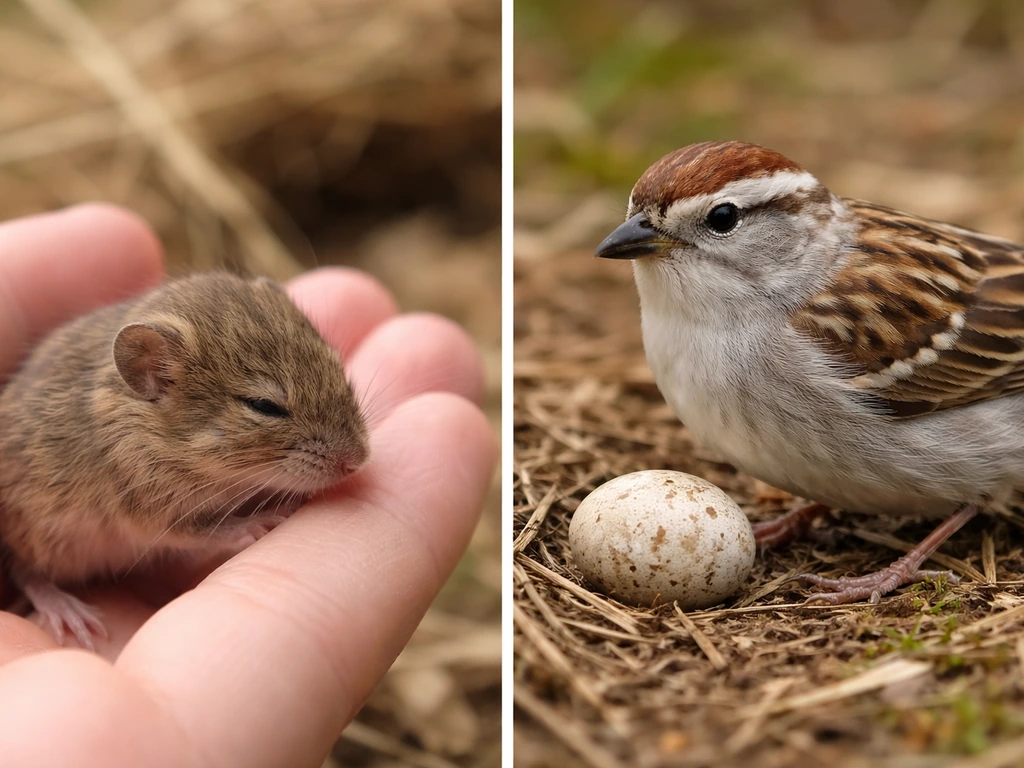
The easiest memory anchor is the three-trait mammal test: fur, live young, milk. If an animal has all three, it is a mammal. Bats have all three. No bird has any of them. For birds, use the three-trait bird test: feathers, beak, eggs. If an animal has all three, it is a bird. No bat has any of them.
Here is a quick checklist you can run through the next time you see a flying animal and want to know what it actually is:
- Does it have feathers? Yes = bird. No = keep going.
- Does it have a beak (no teeth)? Yes = strong bird indicator. No = not a bird.
- Does it have fur or hair anywhere on its body? Yes = mammal.
- Does the female nurse young with milk? Yes = definitely a mammal.
- Does it lay hard-shelled eggs and incubate them? Yes = bird (or reptile, but not a mammal).
- Is the wing a skin membrane over elongated fingers? Yes = bat (mammal, order Chiroptera).
- Is the wing feather-covered with a modified, fused forelimb? Yes = bird.
Run any animal through that list and the classification becomes obvious fast. Bats fail every bird test and pass every mammal test. That is why a bat is not a bird, and that is the answer that biology has given us for as long as we have been classifying animals.
FAQ
If a bat lays eggs, would that make it a bird?
No. In birds, egg-laying is paired with feathers and beaks, and the overall class placement is still Aves. Bats do not lay eggs, and their reproduction is based on gestation, live birth, and lactation, which are mammal traits.
Are bats and birds ever considered “related” because they both have wings?
They are related only in the broad sense that both are animals with forelimb-based structures that evolved for flight. Their shared flight is an example of convergent evolution, not close lineage, and their defining traits (milk and live birth versus feathers and eggs) keep them in separate classes.
What should I look for if I cannot see fur or milk glands but I suspect it is a bat?
Check for live-young behavior and feeding. In the field, that often means observing a mother carrying pups or nursing-like dependence. Also look for dental and face features consistent with mammals, such as teeth and mammal-like ear structures, rather than bird traits like a beak.
Do all bats echolocate, and does that affect whether they are birds?
No, not all bat species use echolocation to the same degree, but echolocation itself does not change classification. Even when some birds have rudimentary sound-based navigation, birds still differ fundamentally by having feathers, beaks, and egg-based reproduction.
Could a baby bat look like a chick, and how can I tell them apart?
At a glance, small young animals can confuse people. Baby bats are mammals, so they depend on milk and are typically associated with a mother’s roost behavior, while chicks are birds with down feathers and originate from hard-shelled eggs. Closest confirmation comes from whether the young are being nursed (milk) versus hatched from eggs.
Why do some bats have claws and others do not, does that mean they are not mammals?
Claws vary by species and wing-foot structure, and that variation does not override the mammal definition. The mammal checklist is about fur, live young, and milk. If an animal has those mammal fundamentals, differences in claws are just anatomy variation within mammals.
Is a bat a “bird” if it nests in a similar place like a barn roof?
Location and nesting behavior are not classification criteria. Many animals nest in the same types of structures, but classification depends on anatomy and reproduction. A bat’s reproductive pattern (live birth and lactation) keeps it firmly out of birds.
Do flying squirrels being called “flying” mean they are related to bats or birds?
No. “Flying” squirrel gliding is not the same as powered flight and does not imply shared ancestry with bats. Like other non-bird fliers, they differ by mammal traits such as fur and live birth, but bats remain mammals and not birds for the same reasons.
Are there any exceptions or edge cases where a bat could be classified as a bird?
There are no legitimate classification exceptions at the level the question matters, class. Bats are in Mammalia and birds are in Aves, and bats consistently show mammal anatomy and reproduction across all species.
Next Articles
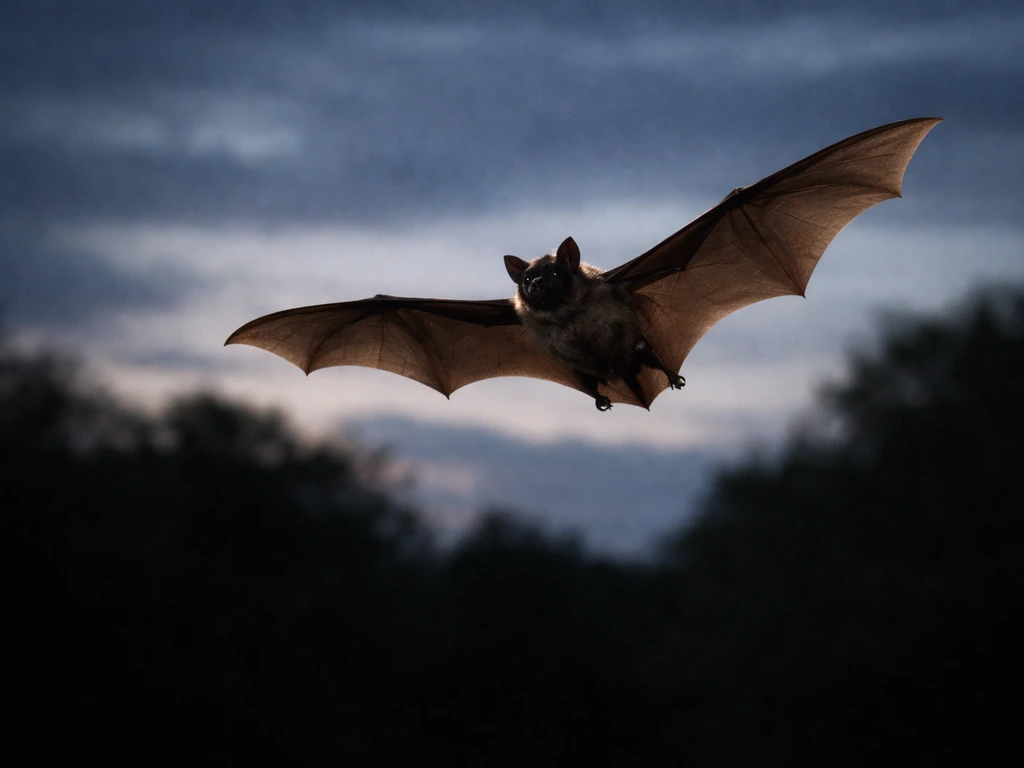
Is a Bat Considered a Bird? Yes or No, Explained
No. Bats are mammals, not birds, explained with key traits like feathers vs fur and live young vs eggs.
Is Squirrel Animal or Bird? Clear Answer and Classification
Squirrels are mammals, not birds, class Mammalia, order Rodentia. Quick traits, comparison table, checklist & FAQ.
Is a Turtle a Bird? Simple Taxonomy Checklist and Facts
No, turtles are not birds. Learn the traits that define birds versus reptiles and fix common shell and egg misconception