Bats are not in the bird family. Not even close. Bats belong to the order Chiroptera, which sits firmly inside class Mammalia, the mammals. Birds belong to class Aves, a completely separate branch of the animal kingdom. The confusion is understandable because bats fly and have wing-like structures, but flight alone does not make something a bird. A bat has far more in common with a dog or a whale than it does with a robin or an eagle.
Is a Bat in the Bird Family? How Bats Differ From Birds

Sarah Chen
18 Jun 2026
Why bats look like birds: the flight and wing confusion
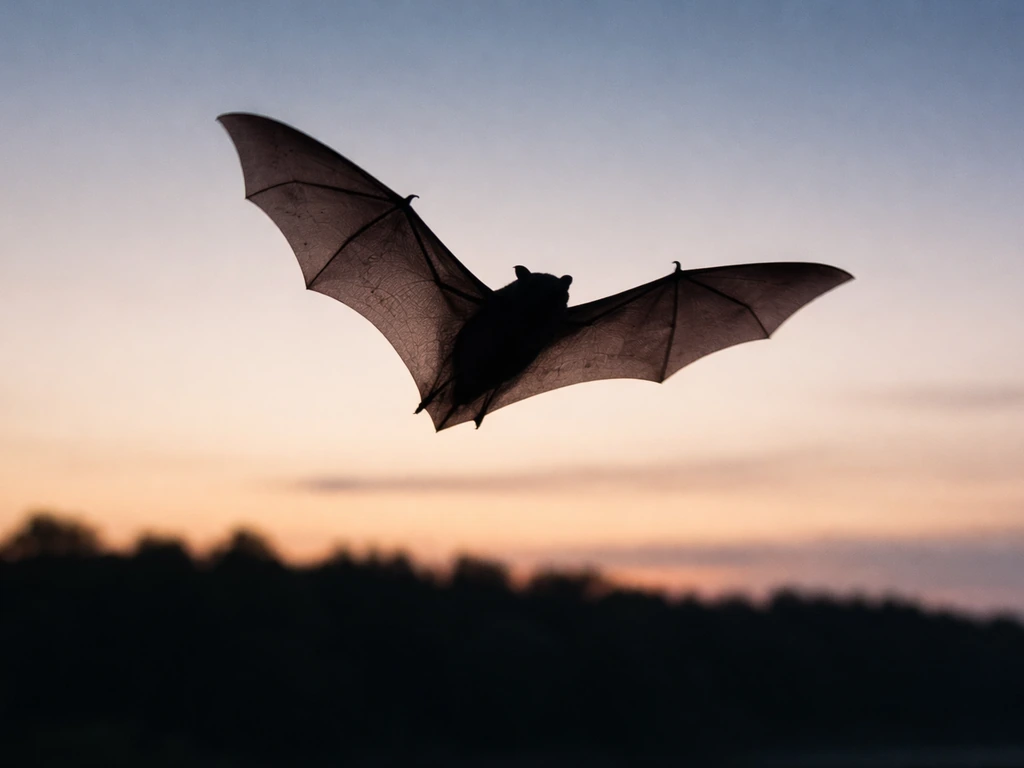
When most people spot a bat at dusk, their brain files it under 'flying animal with wings', and since birds are the most common flying animals we encounter, the mental shortcut feels reasonable. Bats and birds do share some surface-level similarities: both are warm-blooded, both fly under their own power, and both have limbs that function as wings. That's pretty much where the overlap ends.
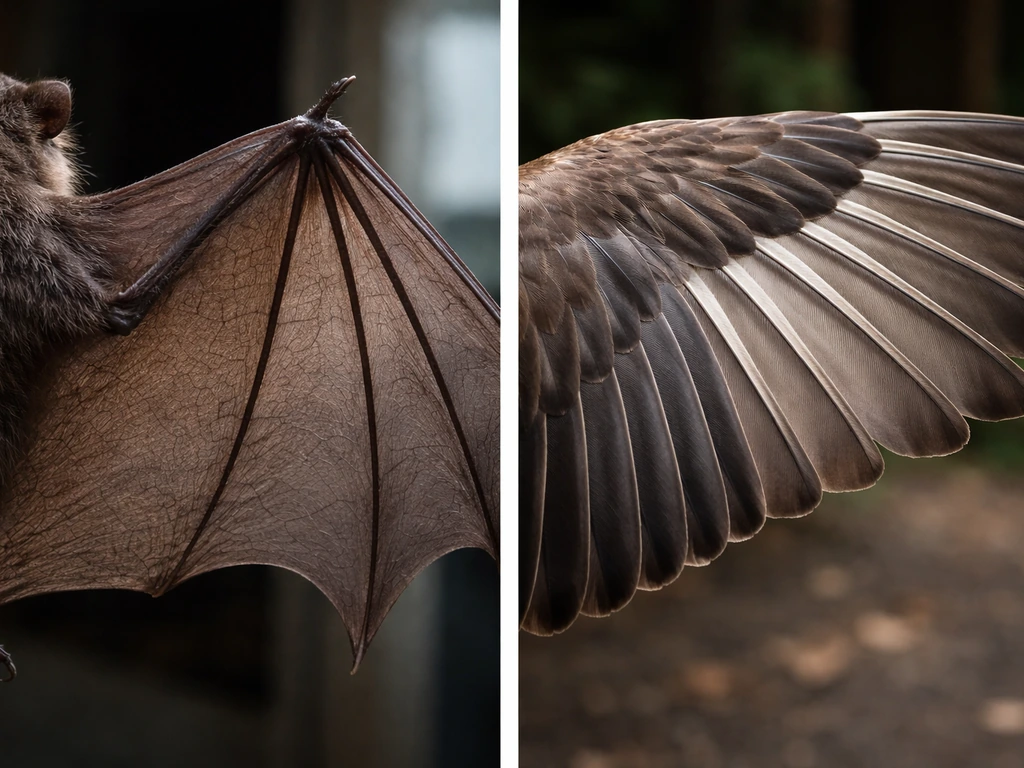
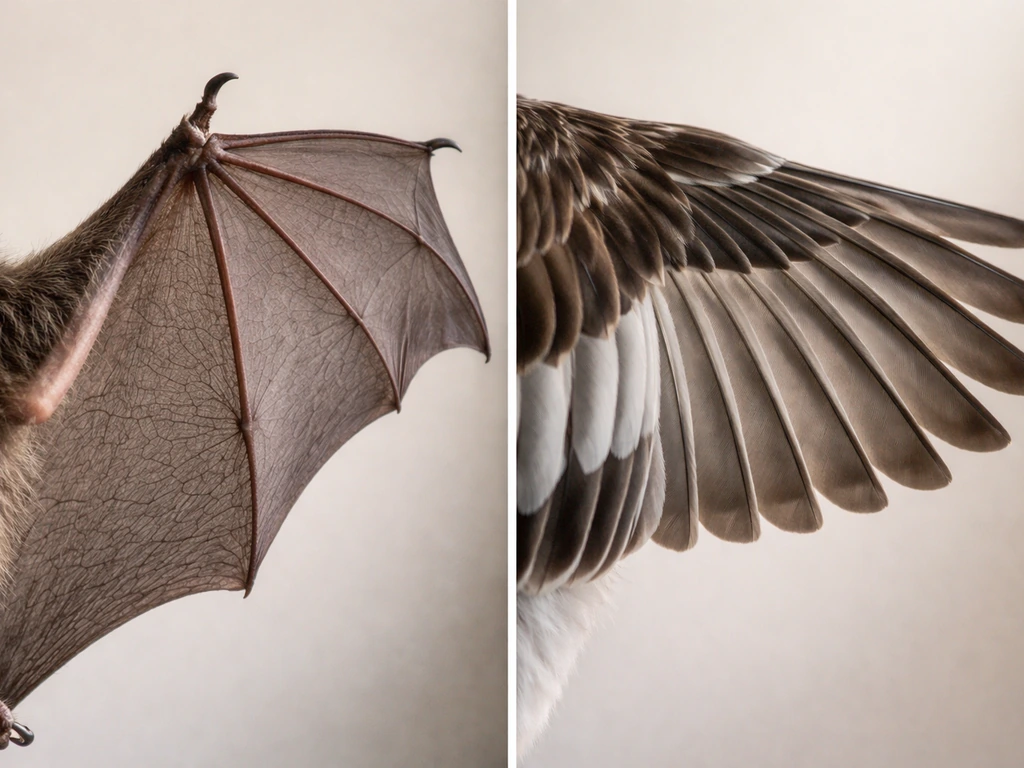
What looks like a bat's 'wing' is actually a thin skin membrane called the patagium, stretched between enormously elongated finger bones. Scientists have identified several distinct sections of this membrane, the dactylopatagium between the digits, the plagiopatagium along the body, the propatagium near the shoulder, and the uropatagium between the hind legs and tail. The bat is essentially flying on the skin between its fingers. A bird's wing is something else entirely: it's a modified forelimb covered with flight feathers that provide over 85% of the wing's aerodynamic surface area, according to research on bird wing morphology. Same end result (powered flight), completely different engineering.
This is what biologists call convergent evolution, two unrelated lineages independently arriving at a similar solution (flight) through very different biological paths. Bats and birds are both extraordinary fliers, but they got there by completely separate routes over millions of years of evolution. Oxford Academic’s review of On the Wing explicitly groups birds, bats, pterosaurs, and other fliers as independent evolution cases for powered flight adaptations independently arriving at a similar solution (flight) through very different biological paths.
What actually makes something a bird
If you want a reliable checklist, birds (class Aves) share a specific set of traits that no other living animal group has all at once. Feathers are the single most diagnostic feature. According to the Natural History Museum in London, throughout the entire history of life on Earth, only dinosaurs and birds have ever grown feathers. No mammal, bat or otherwise, has ever had a feather. Bats have fur, which is a mammal trait.
Beyond feathers, birds lay hard-shelled eggs, have toothless beaked jaws, a four-chambered heart, a high metabolic rate, and a lightweight skeleton. Their respiratory system is also uniquely efficient: bird lungs connect to a series of air sacs that produce continuous, unidirectional airflow, a design found nowhere else in the animal kingdom. Bats breathe with conventional mammalian lungs and nothing like this system.
Bats vs birds: a direct trait comparison
| Trait | Bats | Birds |
|---|---|---|
| Scientific classification | Class Mammalia, Order Chiroptera | Class Aves |
| Body covering | Fur/hair | Feathers |
| Wing structure | Skin membrane over elongated finger bones | Flight feathers over modified forelimb |
| Reproduction | Live birth (viviparous) | Hard-shelled eggs |
| Feeding young | Mammary glands, nurse with milk | Regurgitation or foraging for food |
| Respiratory system | Conventional mammalian lungs | Lungs with air sacs (unidirectional airflow) |
| Teeth | Yes, typically | No — toothless beaked jaws |
| Middle ear bones | Three (mammalian ossicles) | Different ear structure |
The reproduction difference alone is a strong tell. Bats give birth to live young and nurse them with milk from mammary glands, female bats have one mammary gland on each side of the chest. After birth, young mammals are nourished by milk secreted by the female’s mammary glands milk from mammary glands. Mammary glands are literally where the name 'mammal' comes from. No bird does this. Birds lay eggs, then feed their hatchlings in other ways. A simple rule that holds up well: 'All birds have feathers, bats have fur, therefore bats are not birds.'
Where bats actually fit in the animal kingdom
Bats are mammals, order Chiroptera, and the Smithsonian's National Museum of Natural History puts it plainly: bats are the only mammals on Earth capable of true powered flight. They share all the classic mammal traits, hair on their bodies, regulated internal body temperature, live birth, and mammary milk. The GBIF Backbone Taxonomy (the global standard for biological classification) and the Animal Diversity Web both classify Chiroptera under class Mammalia with no ambiguity.
It also helps to understand what 'family' means in everyday speech versus in science. When someone asks 'are bats in the bird family?', they usually mean 'are bats and birds in the same group?' In scientific classification, 'family' is a specific rank (below order, above genus), and there is no family that contains both bats and birds. Bats and birds are separated at the class level, one of the broadest divisions in animal taxonomy. They're about as different in classification as you can get while still both being vertebrates.
Other fliers people confuse with birds: pterosaurs and beyond
Bats aren't the only flying animals that get mistakenly filed under 'bird.' Pterosaurs are another common one. These were flying reptiles, order Pterosauria, that lived alongside dinosaurs and went extinct about 66 million years ago. Pterosaurs were archosaurs, the same broad group that includes birds and crocodiles, but they were not birds and they were not dinosaurs. Like bats, they flew on skin membrane wings supported by elongated digits (specifically an enormously enlarged fourth finger), rather than feathers. The American Museum of Natural History is clear that pterosaurs are more closely related to dinosaurs than to crocodiles, but they are still their own separate group.
The pattern here is useful: every time a flying animal turns out NOT to be a bird, you'll find it's missing feathers. Pterosaurs had membranes. Bats have membranes and fur. Flying squirrels glide on skin flaps. Flying fish use fins. None of these have feathers, so none of them are birds. It really does come back to feathers every time.
This also touches on questions like whether a brown bat is a bird, or whether something that looks vaguely bird-like in flight actually belongs to class Aves. The answer follows the same logic regardless of the species: check for feathers, check for hard-shelled eggs, check for a beak. If those aren't there, it's not a bird.
A fast checklist for deciding if an animal is a bird
If you're ever unsure whether an animal belongs in class Aves, run through these questions in order. You only need one 'no' to rule it out as a bird.
- Does it have feathers? (If no, it's not a bird — full stop. This alone eliminates bats, pterosaurs, flying squirrels, and every other non-bird flier.)
- Does it have a beak with no teeth? (Birds have toothless beaks; bats and most reptiles have teeth.)
- Does it lay hard-shelled eggs? (Birds always do; bats give birth to live young and nurse them with milk.)
- Does it have a bird-style respiratory system with air sacs? (Unique to birds among living animals.)
- Is it classified under class Aves in a scientific taxonomy database like GBIF or Animal Diversity Web? (When in doubt, look it up — the classification is settled science for all living species.)
Bats fail the very first question, so there's no need to go further. A bat has fur instead of feathers, teeth instead of a beak, gives birth to live young instead of laying eggs, and is classified as a mammal in every credible taxonomy on the planet. It is not a bird, it is not in the bird family, and no amount of impressive nighttime flying changes that.
FAQ
Can a bat and a bird ever be in the same “family” in everyday speech?
In everyday language, “family” can mean a loose group of similar animals, so people may say “bird family” to mean “animals that look like birds.” In scientific terms, family is a specific taxonomic rank and there is no bat family that includes birds, because they are separated at the class level (Mammalia vs Aves).
If a bat has wings, does that make it a type of bird?
No. “Wing” describes a function (flight), but the structure matters. Bat “wings” are a membrane stretched between elongated finger bones, while bird wings are modified forelimbs covered with flight feathers. Same outcome, different biology.
Do bats have feathers at some point in life?
Bats do not develop feathers as a body covering. They have fur, and their juveniles are mammals that nurse with milk, not hatchlings with feather growth like birds.
What should I check first if I find an animal that looks like a bird in the air but I am unsure?
Start with the fastest diagnostic: look for feathers. If there are no feathers, check for beak and hard-shelled eggs, then confirm whether it gives birth to live young and nurses with milk. For bats, the no-feathers and mammal traits rule it out quickly.
Are vampire bats, or other bat species, still not birds?
Yes. Species like vampire bats are still mammals in the order Chiroptera. Their diet or behavior changes, but the core traits that define mammals versus birds, fur and milk-based live birth, do not.
Could a bat be confused with a “bird” because of its size or flight style?
Definitely. Some bats fly like small birds, especially when maneuvering close to vegetation or buildings. Flight pattern alone is unreliable, because convergent evolution can produce similar flying behaviors in unrelated groups.
Do bats lay eggs that could make them seem closer to birds?
No. Bats give birth to live young and lactate using mammary glands. If you ever see an “egg-like” object associated with a bat, it is not a true bat egg in the bird sense.
Do bats have a beak like birds?
Bats do not have a bird beak. Their faces may look “snout-like” and can be specialized by species, but the defining bird jaw traits (toothless beaked jaw) are not the same as mammalian mouths.
What about pterosaurs, were they birds or bats?
Pterosaurs were not birds and not bats. They were extinct flying reptiles, and like bats they used membrane wings. The key difference is that bats are mammals with fur, while pterosaurs were reptiles, not mammals.
If feathers are the main clue, what if I see a small flying animal that might have some feather-like structures?
“Feather-like” can be misleading from distance, especially with wings held at odd angles or in low light. Use the decisive check: feathers are a full body covering feature in birds and they are part of bird wing structure. If the structure is membrane stretched over fingers, it is not a bird.
Next Articles
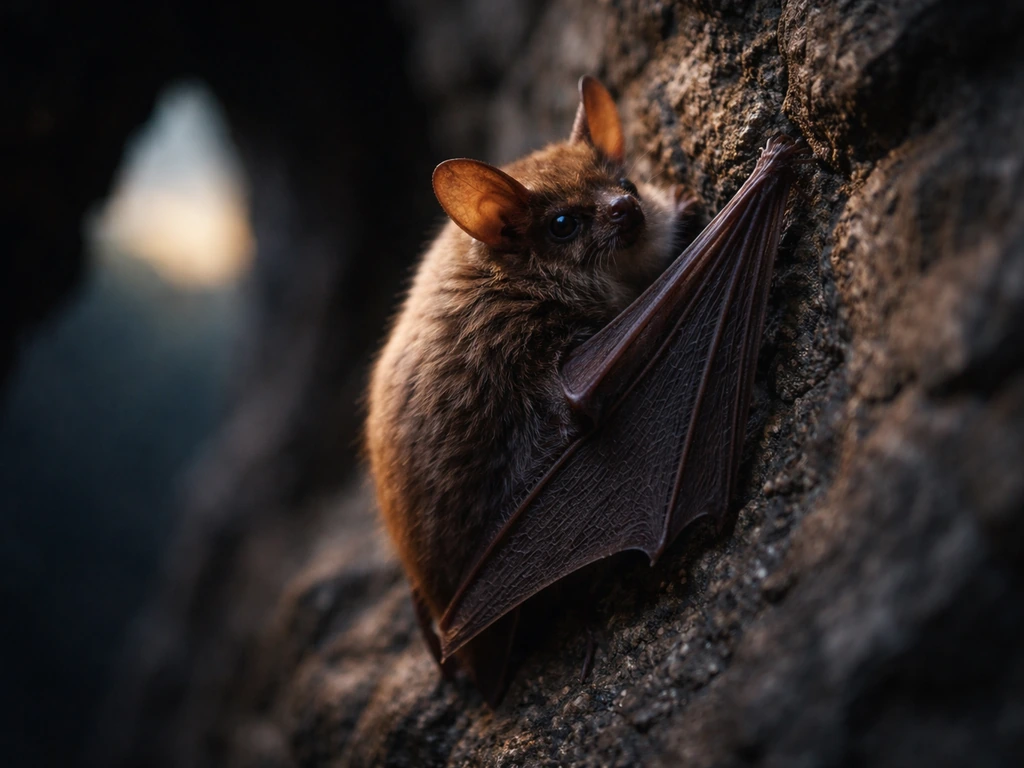
Is a Brown Bat a Bird? Key Differences Explained
No. A brown bat is a mammal with fur and milk, not a bird; see the key differences like reproduction and echolocation.
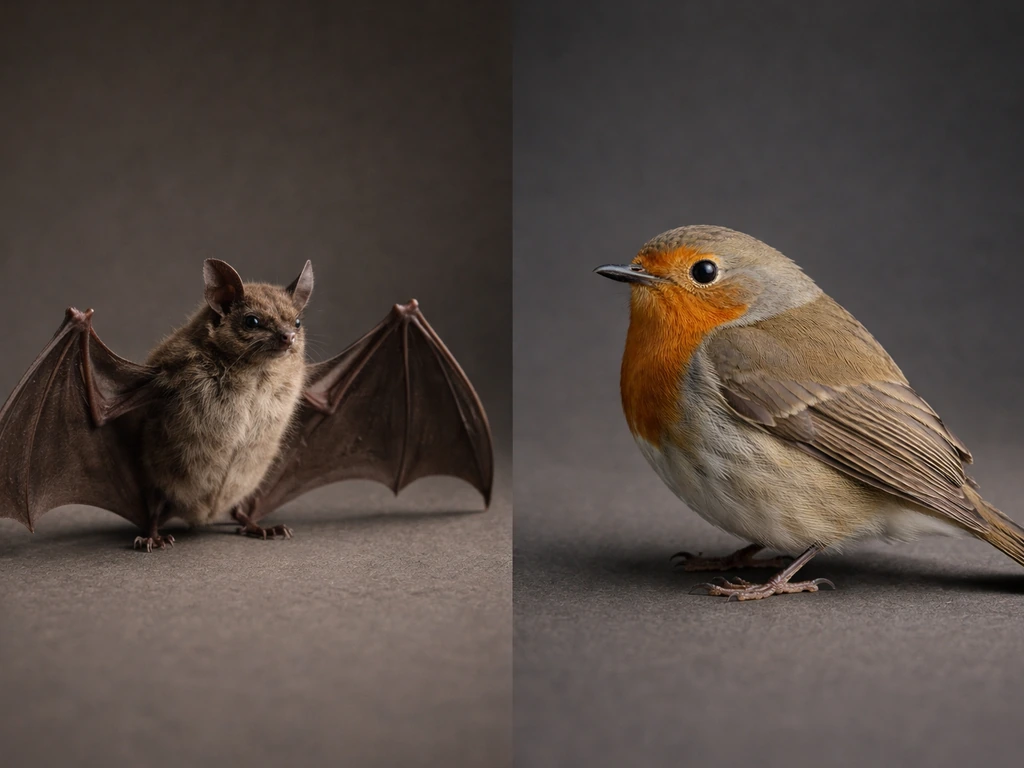
Are Bats a Type of Bird? How to Tell Mammals From Birds
Answer if bats are birds: no, bats are mammals. Learn simple traits to separate mammals from birds.
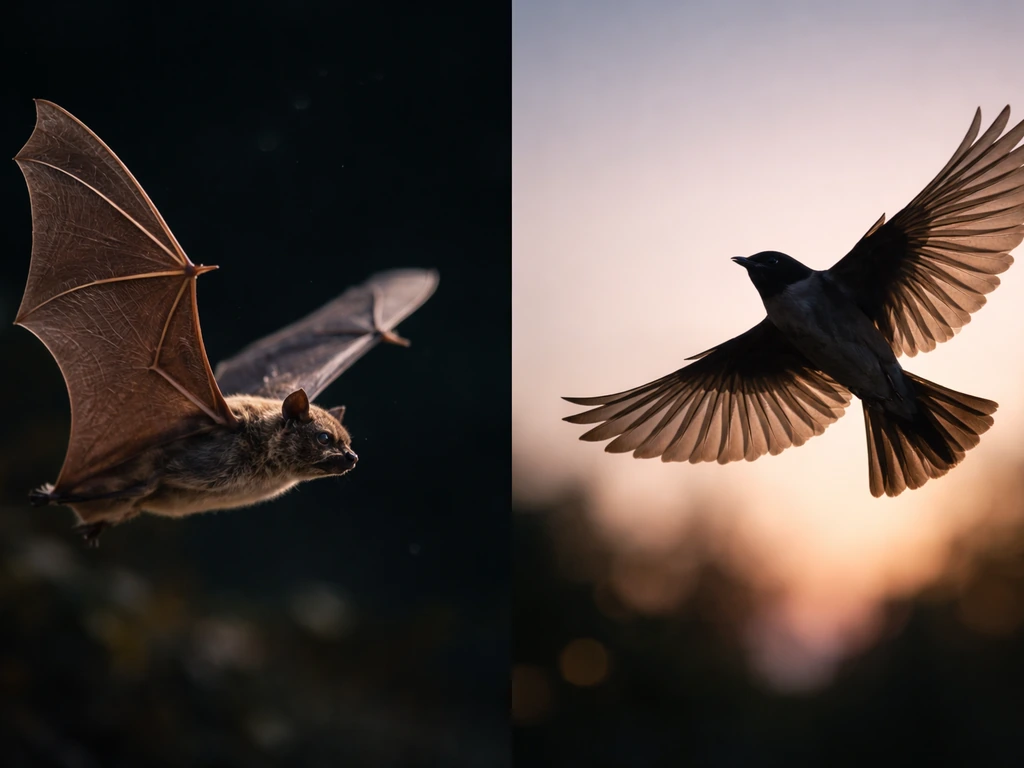
Why Bat Is Not a Bird: Mammal vs Bird Traits
Bats fly but are mammals, not birds: compare fur, live birth, and mammary glands vs feathers and eggs.