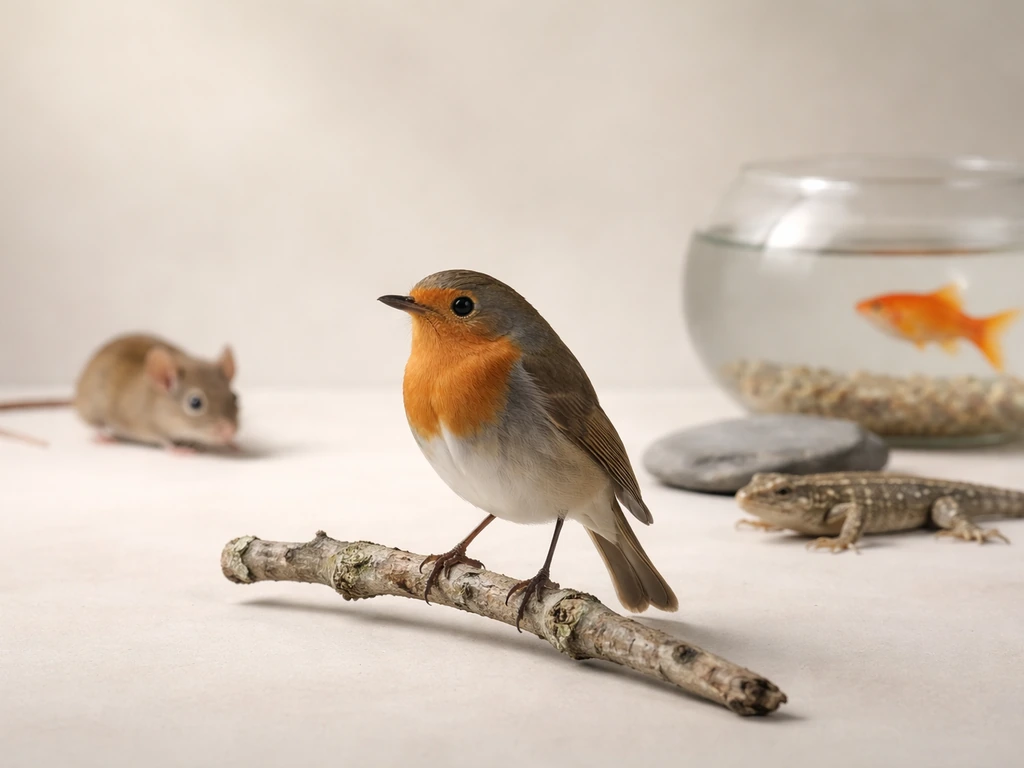
Feathers are not exclusive to birds. Several non-avian dinosaurs (extinct relatives of birds like Velociraptor and Microraptor) had true feathers, and pterosaurs had complex filamentous coverings called pycnofibres that look feather-like under a microscope. Today, no living animal outside of birds has confirmed true feathers, but plenty of animals sport structures that get mistaken for them: bat fur, porcupine quills, and even some fish fin-rays have tricked people. The key is understanding that "feathered" alone does not make something a bird.
What Has Feathers But Is Not a Bird: Quick Guide

Sarah Chen
14 Jun 2026
What actually makes something a bird
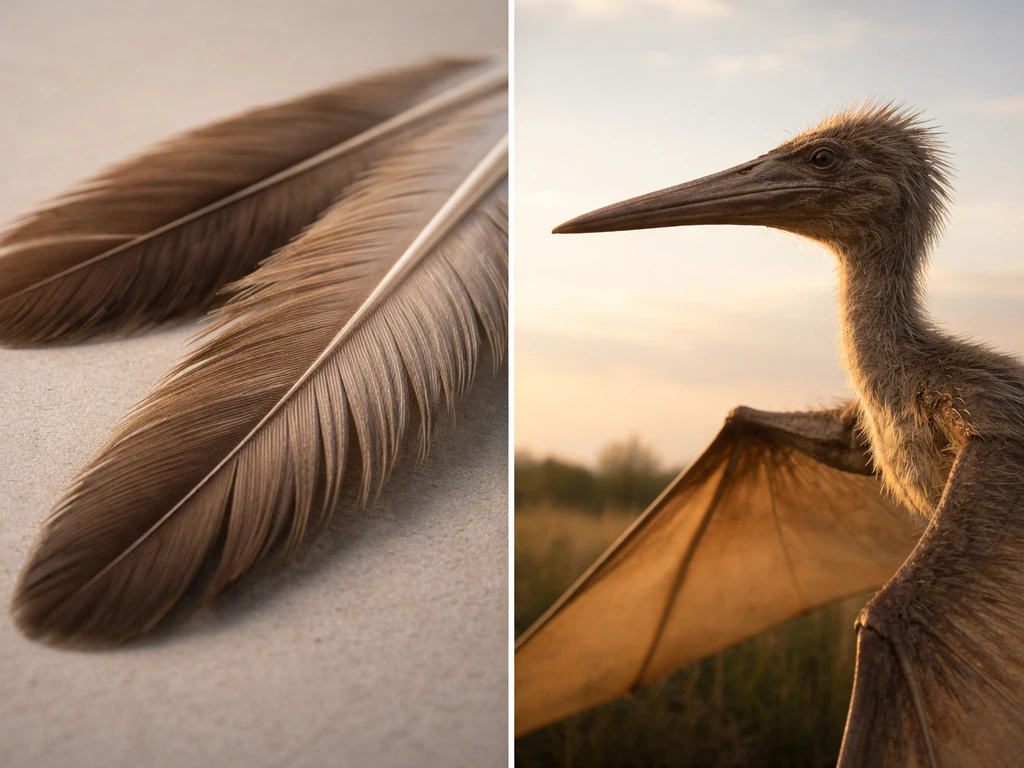
In standard taxonomy, birds belong to Class Aves. Feathers are a core trait, but they are not the only one. To be classified as a bird, an animal needs to check several boxes, not just one. So, if you are trying to answer which of the following is not a bird, focus on the checklist for classifying Aves rather than on whether something looks feathered. According to GBIF's definition of Aves and Britannica's classification overview, the full checklist looks like this:
- True feathers: a hierarchical structure with a hollow shaft (the rachis), paired barbs branching off it, and interlocking barbules that zip the vane together via tiny hooks
- A toothless beak or bill (no teeth, unlike most other vertebrates)
- Hard-shelled eggs
- Warm-blooded metabolism with a high metabolic rate
- A four-chambered heart
- A lightweight but strong skeleton, often with hollow bones
- Placement within the avian clade (Aves) in phylogenetic classification
That last point matters more than it sounds. Even if a prehistoric animal had feathers, scientists may still place it outside Aves depending on which phylogenetic definition they use. Some researchers define Aves as the crown group only: the last common ancestor of all living birds and all its descendants. Under that strict definition, feathered theropods like Microraptor fall just outside the club, sitting in the broader clade called Avialae instead.
So when someone asks "is it a bird? That kind of question also comes up when people ask whether there is a bird without a beak, and the answer depends on what you mean by “bird” and “beak. ” is it a bird? .
", the honest answer sometimes depends on which rulebook the researcher is using.
Non-bird animals people most often think of as "feathered"
Feathered non-avian dinosaurs
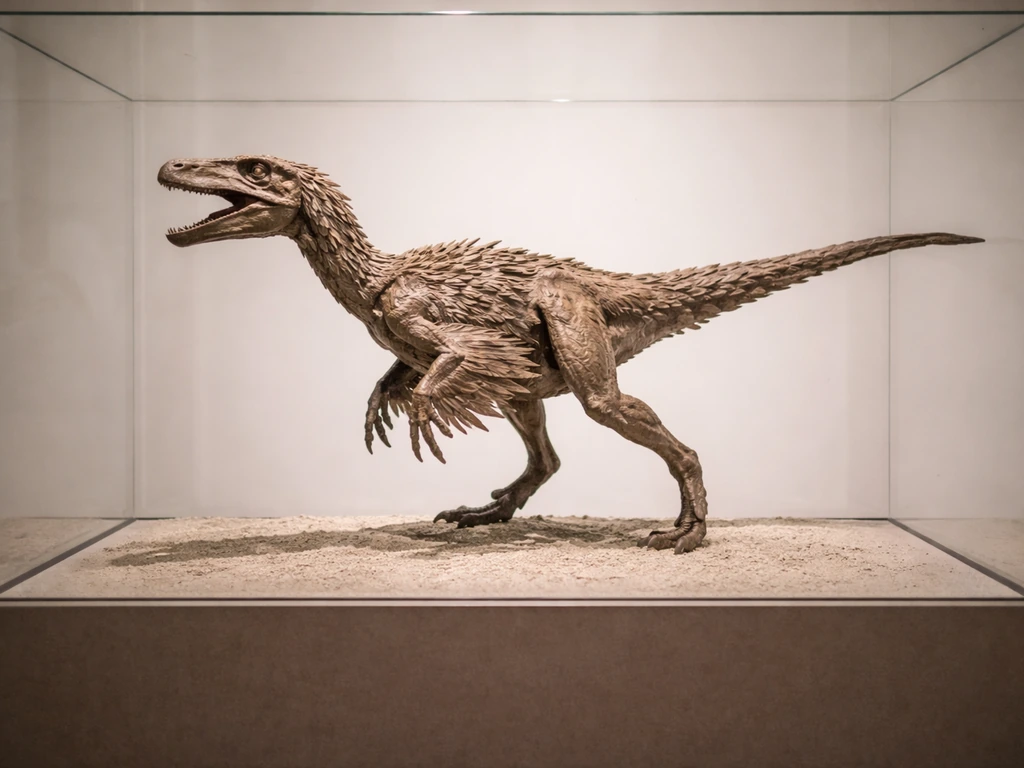
This is the biggest and most legitimate category. Britannica confirms that theropod dinosaurs evolved feathers from filamentous coverings by at least the Late Jurassic, roughly 163 to 145 million years ago. Animals like Velociraptor, Microraptor, and Anchiornis had true feathers with barbs and, in some cases, barbules. They are not birds in the crown-group sense, but they are the closest non-avian animals to have had the real thing. Birds themselves evolved from within this theropod lineage, which is why the line between "feathered dinosaur" and "early bird" is genuinely blurry at the fossil edges. If you are looking at a feathered animal and wondering whether it counts, the dinosaur family tree is where you need to look first.
Pterosaurs
Pterosaurs are flying reptiles from the Mesozoic era, and they are a genuine borderline case. A 2018 study published in Nature Ecology and Evolution found that pterosaur pycnofibres (their skin filaments) show complex branching patterns and preserved melanosomes that resemble feather architecture. This was a big deal because it suggested the structures were more than simple fur. However, pycnofibres still do not match the full rachis-barb-barbule hierarchy of true feathers, and pterosaurs belong to a completely separate reptile lineage from birds. They are fascinating, and the science is still active, but pterosaurs are not birds.
Bats
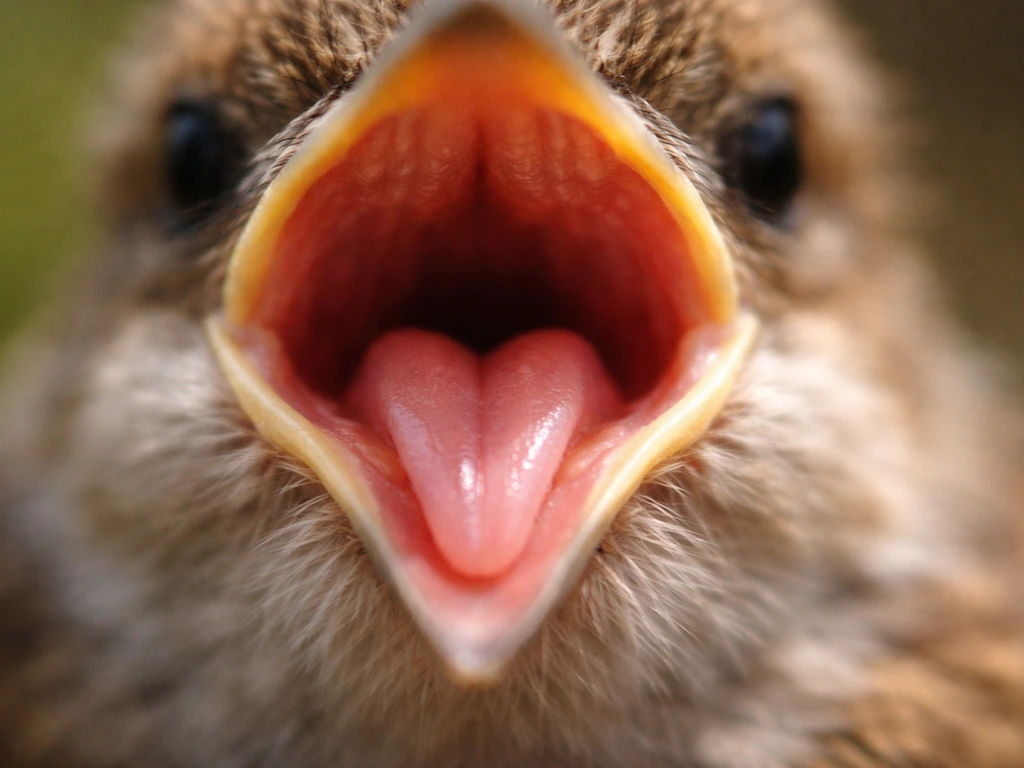
Bats come up in this conversation mainly because they fly and have fuzzy bodies, which people sometimes loosely describe as "feathery. Birds, unlike bats, have a tongue and use it in feeding and swallowing a bird's wings. " They do not have feathers. Bats are mammals in the order Chiroptera, and their flight surface is a thin membrane of skin stretched over elongated finger bones, not feathers.
Their body covering is hair and fur, the same protein-based integument all mammals have. A bat's wings and a bird's wings solve the same engineering problem (powered flight) using completely different materials. The opposite of a bird is an animal that does not have true feathers and is not classified within Aves.
True feathers vs feather-like structures: how to tell them apart
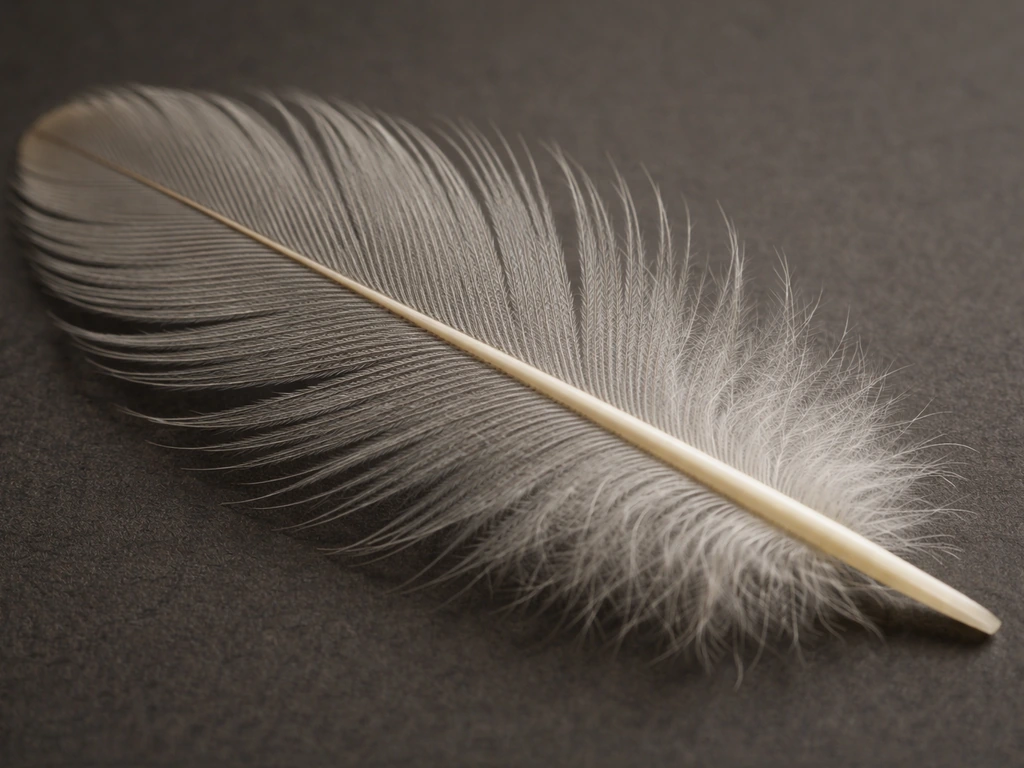
A true feather has a very specific architecture. At the center is the rachis, the stiff central shaft. Branching off the rachis are rows of barbs, and branching off each barb are even smaller structures called barbules. The barbules of adjacent barbs lock together using tiny hook-like connections, which is what creates the smooth, flat vane you see on a flight feather. This interlocking system is what makes feathers so good at catching air and shedding water. Nothing else in nature does exactly this.
Here is a quick comparison of structures that get confused with feathers:
| Structure | Found on | Has rachis? | Has interlocking barbs/barbules? | True feather? |
|---|---|---|---|---|
| True feather | Birds, some theropod dinosaurs | Yes | Yes (in contour/flight feathers) | Yes |
| Pycnofibre | Pterosaurs | No clear rachis | Complex branching but no barbule hooks | Debated, likely no |
| Hair / fur | Bats, mammals | No | No | No |
| Quill | Porcupines | Hollow but no barbs | No | No |
| Filamentous integument | Some early theropods | Varies by species | Partially in derived forms | Transitional / context-dependent |
If you are looking at a real specimen or a photograph and trying to decide, the practical test is: can you see a distinct central shaft with visible side branches (barbs) coming off it? If yes, you might be looking at a true feather. If the covering looks more like dense fur, a single spike, or uniform fuzz without structure, it is almost certainly not a feather in the biological sense.
The genuinely tricky edge cases
Dinosaurs, pterosaurs, and bats each sit in a slightly different "awkward" zone, and it is worth being precise about why each one is tricky rather than lumping them together.
Feathered theropod dinosaurs are the hardest case because the evidence for true feathers is strong, and the evolutionary distance from modern birds is small. Microraptor, for instance, had four wings with flight feathers that had barbs and, in some specimens, barbules. Whether Microraptor counts as a bird depends almost entirely on which phylogenetic definition of Aves a researcher uses. Under the crown-group definition it is not a bird; under broader definitions of Avialae it may be included. This is not a flaw in the science; it is just the messiness that comes from drawing lines on a continuous evolutionary tree.
Pterosaurs are trickier in a different way. The 2018 pycnofibre study genuinely complicated the old idea that feathers were a bird-and-close-relatives-only innovation. If pterosaur pycnofibres are homologous to feathers (meaning they share a common developmental origin), it would push the origin of feather-like structures much earlier in reptile evolution. The scientific community has not fully settled this yet, so treat pterosaurs as an honest open question rather than a closed case.
Bats are the easiest of the three: they are simply mammals. There is no structural or phylogenetic ambiguity. If you have ever wondered about other animals that have wings but are not birds, bats are the clearest example. Bats have wings, but they are mammals, not birds other animals that have wings but are not birds.
If you are looking for the answer to “what animal has wings but is not a bird? ”, bats are the clearest example other animals that have wings but are not birds. Their wings are skin, their bodies are covered in fur, and they give birth to live young and nurse them with milk. Nothing about a bat overlaps with the bird checklist except the ability to fly.
How to quickly verify whether an animal is a bird
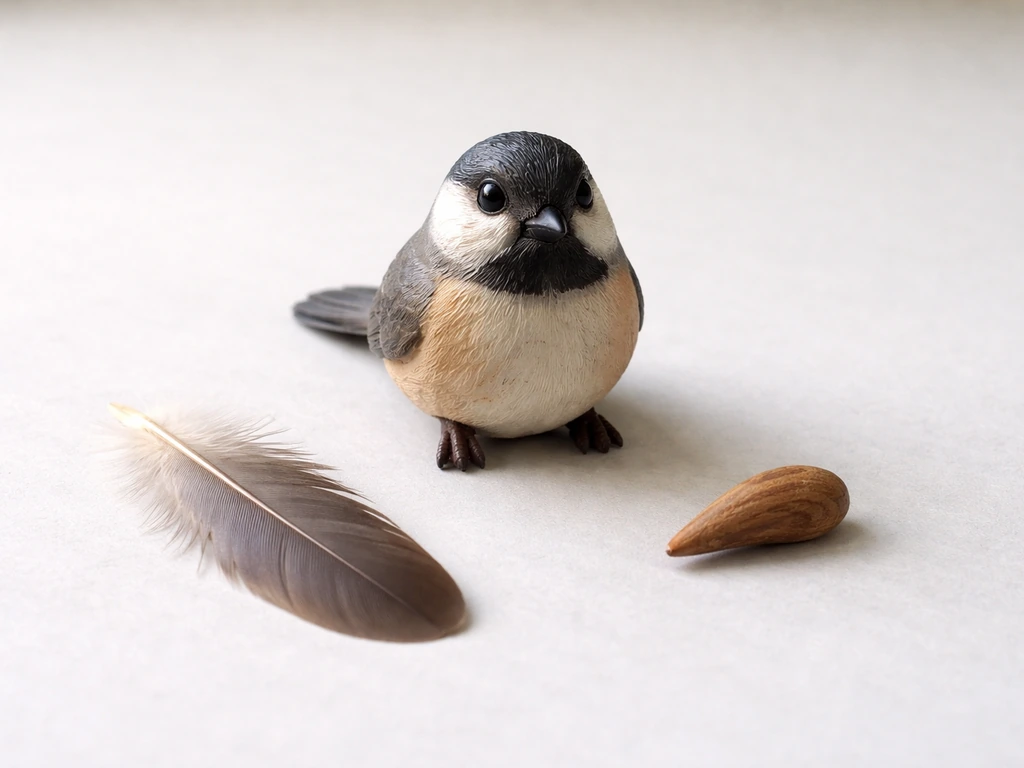
If you come across an animal and need to classify it fast, run through this checklist in order. You can usually get a confident answer before you reach the end.
- Check for a beak and feathers together: both need to be present. Feathers alone are not enough, and a beak-like structure (think of a platypus bill) does not make something a bird.
- Look up the animal's class in a reputable taxonomy database. The IOC World Bird List maintains a versioned master list of all recognized bird species and is the standard reference in ornithology. If the animal is not on it, it is not a recognized bird.
- Cross-check with BirdLife DataZone, which follows the HBW and BirdLife International Illustrated Checklist of the Birds of the World and is updated annually. Two independent lists agreeing is a strong confirmation.
- For extinct animals, check the phylogenetic placement on a reputable source like Britannica or a peer-reviewed paleontology database. Ask specifically whether the taxon falls within the crown group Aves or only within the broader Avialae.
- If the covering looks feather-like but you are not sure, look for the rachis-barb-barbule structure. A hand lens or photograph with good resolution will usually show whether there are lateral branches (barbs) off a central shaft. Fur and quills will not have this.
For living animals, the classification is almost always settled and easy to look up. The genuinely hard calls involve Mesozoic fossils, where the feather evidence is real but the phylogenetic placement is still being refined. In those cases, the honest answer is often "it depends on which definition of Aves you use," and that is a perfectly valid conclusion to reach. The science is good; the categories are just doing their best to describe a process (evolution) that did not care about our labels.
FAQ
How can I tell if something has true feathers versus feather-like fur or filaments?
Probably neither. Many animals look “featherlike” because of filamentous hairs or spines, but true feathers have a central rachis, side barbs, and often barbules that interlock. If the structure is just fuzz, a single spike, or a smooth uniform coat, it is almost certainly not a true feather.
If a living animal is called “feathered,” does that mean it has true feathers?
Not necessarily. In living animals, the “no living non-bird has confirmed true feathers” rule is the safe default, but the practical check is whether the structure shows feather-specific architecture, not whether it is called “feathers” in a common name or in popular media.
Why do some paleontology sources disagree about whether a feathered dinosaur is a bird?
A helpful way is to separate “looks like a bird” from “is classified as a bird.” For fossils, experts usually weigh anatomical traits plus phylogenetic placement, and the label “Aves” can shift depending on whether someone uses a strict crown-group definition or a broader lineage definition.
Can an animal have a single feather-like feature but still not be considered a bird?
Yes, if the “feather” you are thinking of is actually part of a bird-like display rather than a structural covering. Classification depends on the organism’s lineage and complete set of traits, not just one visible feature like plumage or a single feather-like appendage.
What is the fastest way to distinguish bat wings from bird wings in photos?
Try to classify wings by material and anatomy. Bat wings are skin membranes stretched over elongated finger bones, and bat bodies are covered in fur. “Feathery wings” belong to birds, and other flying reptiles show very different integument types than mammal fur.
Are pterosaur pycnofibres just regular feathers?
Careful with “pterodactyl” style examples. Pterosaur pycnofibres can branch and show microstructures that look feather-analogous, but they do not reproduce the full feather system (rachis, barbs, barbules) used to define true feathers.
When someone asks “is it a bird,” which definition should I use to avoid confusion?
Yes, because taxonomic terms can be defined differently by authors. If you want consistency, always check how the source defines Aves (crown group only versus broader inclusion of close relatives) and whether it is making a claim about classification or just evolutionary relatedness.
What are the most common mistakes people make when answering “what has feathers but is not a bird”?
There are two common pitfalls. One is using the word “feathered” as the only criterion, the other is ignoring evolutionary continuity at fossil boundaries where “early bird” versus “non-avian theropod” can be fuzzy.
What should I look for in a real feathered-looking specimen (or a picture) before I conclude it is a true feather?
If you have a specimen in hand, look for the feather-specific shaft-and-branching pattern. For photographs, zoom in mentally on whether you can detect a central shaft and distinct side branches, or whether you just see a diffuse coat.