A bird does not always have a nest. That is the most defensible answer to the classic multiple-choice version of this question, and it is also genuinely true in biology. Every bird has eyes, feet, and a bill (beak), and the vast majority have wings, but nests are entirely optional depending on species. Beyond that one clean answer, though, this question opens up a much more useful conversation: which traits do people assume all birds share, and where do those assumptions actually break down?
A Bird Does Not Always Have Every Trait: Quick Guide

Sarah Chen
27 Jun 2026
What people are really asking
The fragment "a bird does not always have" shows up most often in school worksheets and Q&A platforms as a fill-in or multiple-choice prompt. “A bird does not always have” followed by a list of typical bird features appears in example Q&A prompts, indicating the question is about which trait is not always true for every bird.
The candidate answers are typically: wings, eyes, feet, a bill, and a nest. The exercise is testing whether you know which of those is not a guaranteed, universal feature of every bird. But many people who search this phrase are also asking something broader: they have an animal in front of them, or a concept in their head, and they want to know whether it qualifies as a bird. That is where this guide is really useful.
The traits birds actually share (and which ones have exceptions)
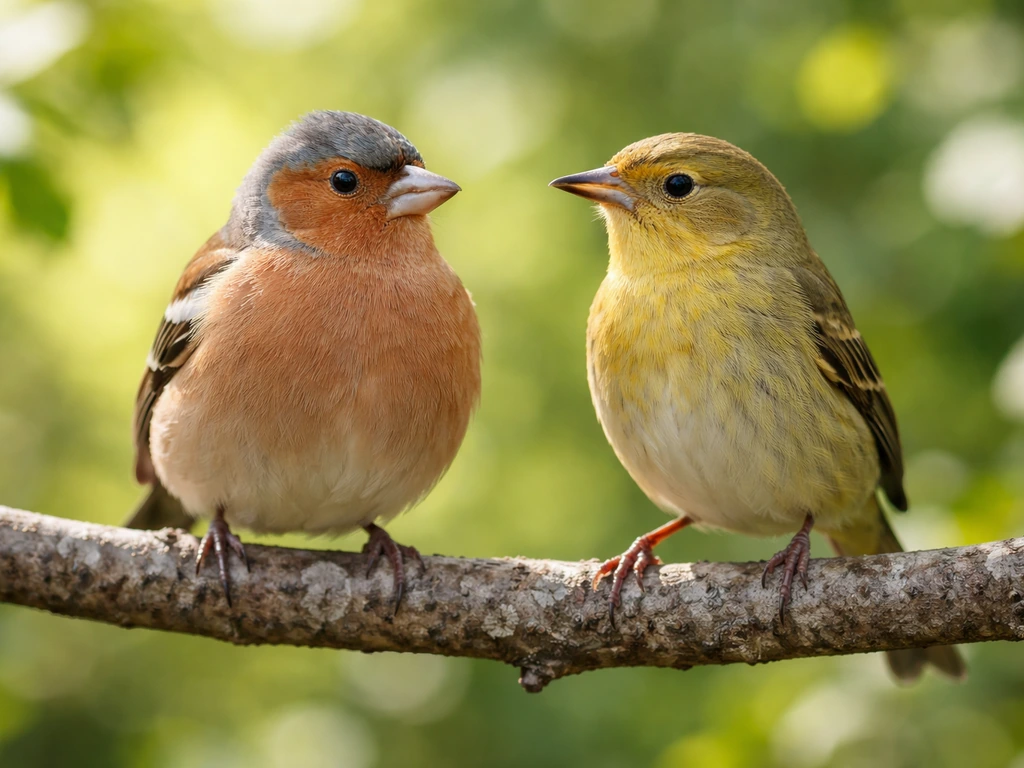
All birds belong to the class Aves, and they share a reliable set of biological features. Feathers are the single most definitive trait: no other living animal group produces feathers. All birds also have a beak (no teeth in living species), lay hard-shelled eggs, are warm-blooded, have a four-chambered heart, and possess hollow bones that reduce weight. These are the core anchors of the classification.
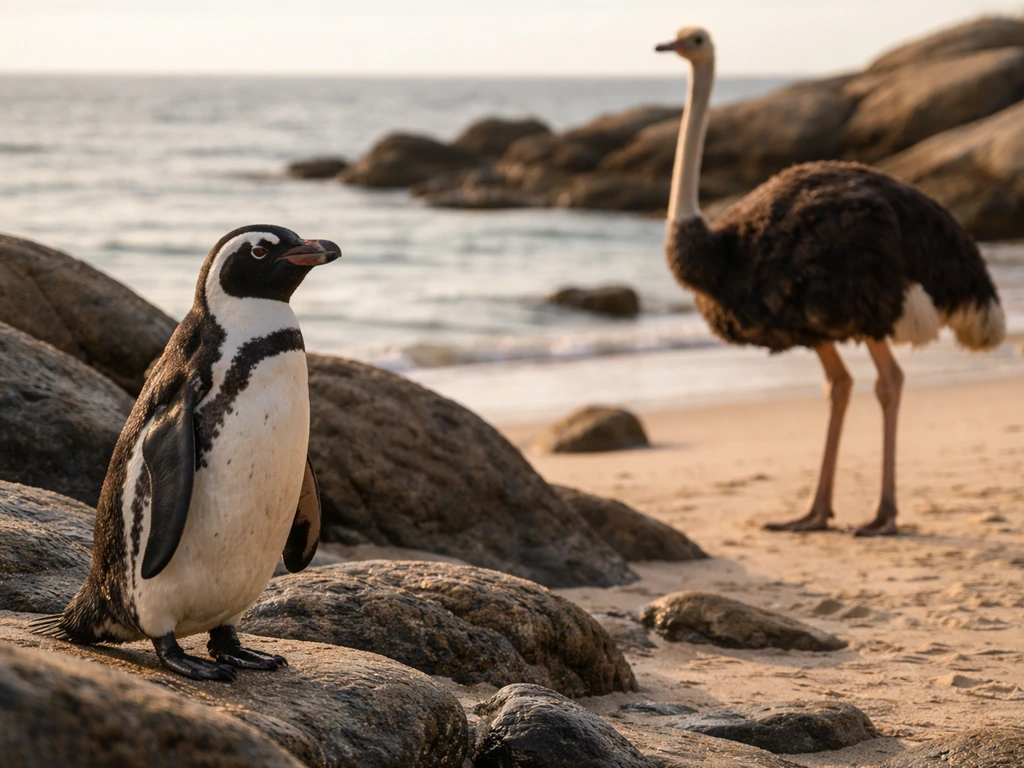
Now here is where the "not always" part gets interesting. Wings are present in almost every living bird, but they are not always flight-capable. Penguins have wings that function as flippers. Ostriches and emus have wings too small and weak for flight. So while "has wings" is technically true for nearly all birds, "can fly" is absolutely not a universal bird trait. A nest, on the other hand, is purely behavioral and optional. Many bird species lay their eggs directly on bare ground, rocky ledges, or in burrows. Emperor penguins balance eggs on their feet. Some cuckoo species lay eggs in other birds' nests and never build one at all.
| Trait | Universal for all birds? | Notable exceptions |
|---|---|---|
| Feathers | Yes | None among living birds |
| Beak/Bill | Yes | None among living birds |
| Eyes | Yes | None among living birds |
| Feet | Yes | None among living birds |
| Wings | Almost always | Vestigial in some flightless species, but still present |
| Flight ability | No | Penguins, ostriches, emus, kiwis, cassowaries |
| Nest | No | Many species skip nest-building entirely |
| Laying eggs | Yes | No known exceptions among living birds |
Animals people frequently confuse with birds
The confusion usually comes from one of two directions: either an animal looks or behaves like a bird but is not one, or an animal looks too unlike the mental image of a bird for people to believe it qualifies. Bats fly and are sometimes called "flying animals" in the same breath as birds, but they are mammals with fur and live birth. Pterosaurs had wings and flew, but they were reptiles, not birds.
One of the classic real-world answers to what animal has wings but is not a bird is the pterosaur Pterosaurs had wings. On the other side, ostriches look nothing like a robin or a sparrow, yet they are unambiguously birds. This is why relying on a single trait, like flight or appearance, leads people astray.
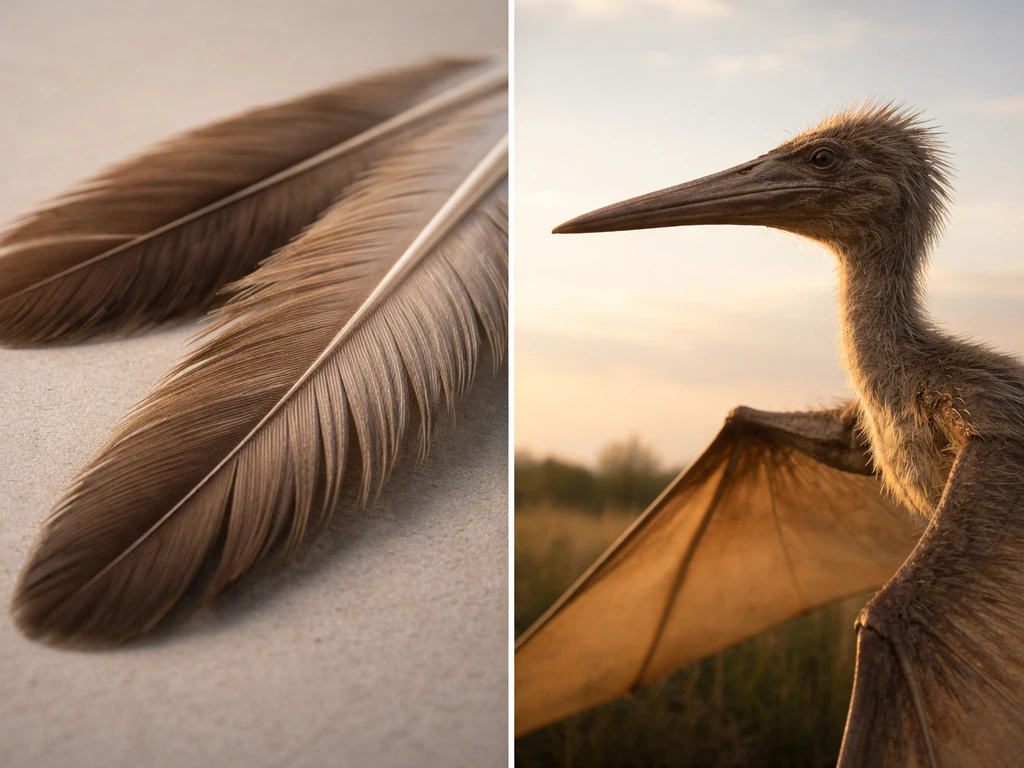
There is also the feathers question, which is related to a sibling confusion: what has feathers but is not a bird? Some non-avian dinosaurs had feathers, which means feathers alone are not sufficient to confirm a living animal is a bird, though in practice today, if you see feathers on a living creature, it is a bird.
How to quickly tell a bird from a non-bird
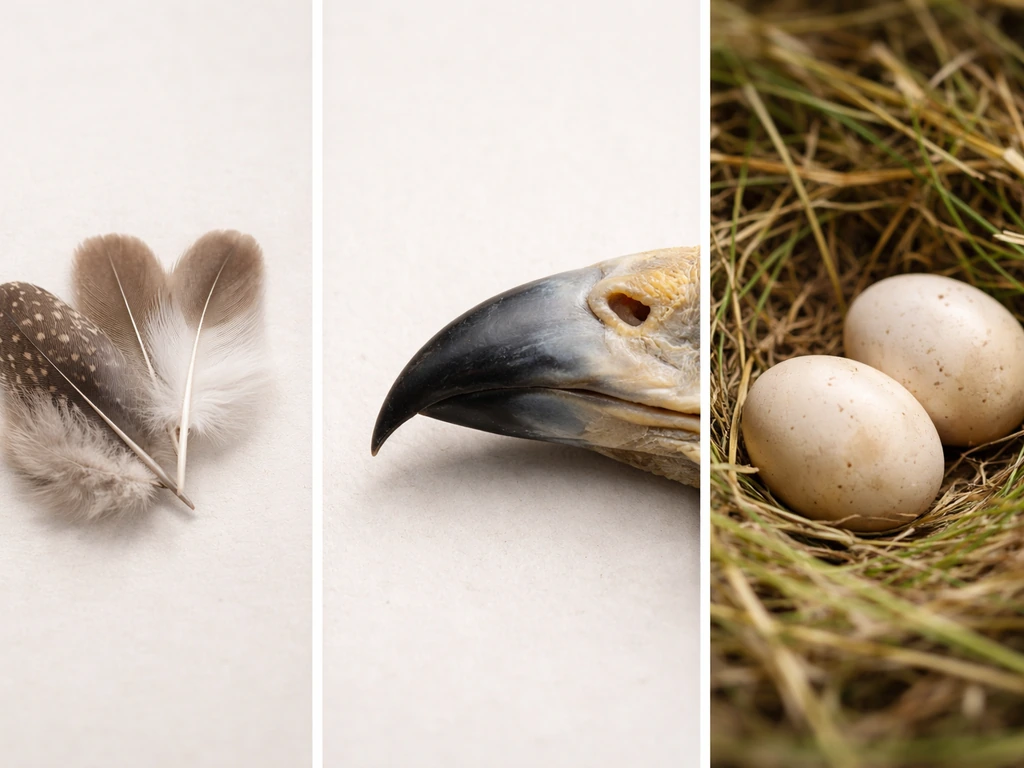
For a living animal, the fastest checklist is this: check for feathers first, then a beak, then confirm it lays eggs. If all three apply, it is a bird. If the animal has fur or hair, it is a mammal, regardless of whether it flies (bats) or swims (seals). If it has scales and no feathers, it is a reptile. These three checks rule out nearly every common confusion case.
- Does it have feathers? If yes, it is almost certainly a bird.
- Does it have a beak with no teeth, rather than a jaw with teeth or a mammalian snout? That points to class Aves.
- Does it lay hard-shelled eggs? Combined with the above, this confirms it.
- Does it have fur or nurse young with milk? Then it is a mammal, not a bird, even if it can fly.
- Is it an extinct animal from fossil records? Then you need more than wings or feathers to classify it.
The cases that trip people up most often
Penguins
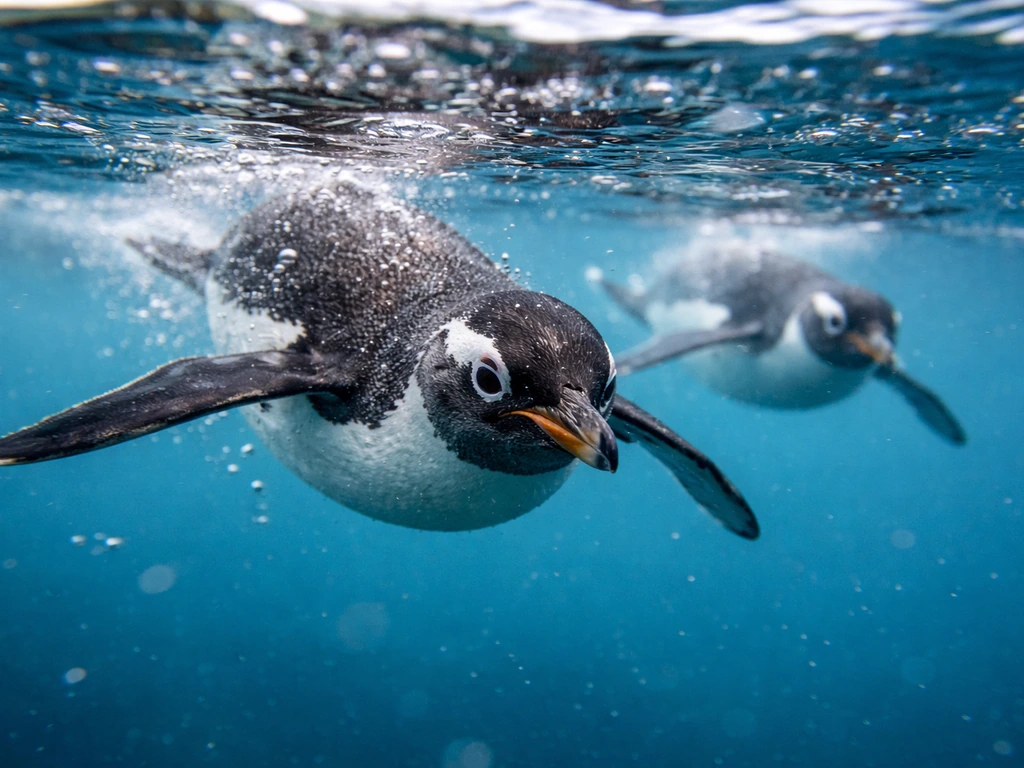
Penguins are birds, full stop. They have feathers, beaks, lay eggs, and are warm-blooded. Their wings evolved into flippers for swimming, but the wings are still there. The fact that they cannot fly is irrelevant to their classification. Flight is not a defining trait of birds, and penguins are a textbook example of why.
Ostriches
Ostriches are the largest living birds, and they cannot fly either. They have feathers, beaks, and lay the largest eggs of any living bird. Their legs are so powerful they can run at sustained speeds of around 45 mph, but none of that changes their classification. They are birds by every biological criterion.
Bats
Bats are mammals. They have fur, give birth to live young, and nurse with milk. The fact that they have wings and fly makes them the most bird-like mammal in everyday perception, but anatomically they have nothing in common with birds beyond locomotion through air. Their wings are made of stretched skin membrane supported by elongated finger bones, which is completely different from a bird's feathered wing structure. If you are wondering what animal has wings but is not a bird, bats are the most common real-world answer. The opposite of a bird is typically a non-bird, like a bat, reptile, or other animal that does not belong to the class Aves.
Pterosaurs
Pterosaurs were flying reptiles that lived alongside dinosaurs and went extinct about 66 million years ago. They were not birds and were not even closely related to birds. They had a leathery wing membrane, not feathers, and they belong to a completely separate branch of the reptile family tree. People sometimes group them with birds because they flew, but flight evolved independently in multiple animal lineages. Pterosaurs are a classic case of convergent evolution, where unrelated animals develop similar abilities through different biological means.
Dinosaurs
Here is where it gets genuinely interesting. Birds are, in the strict scientific sense, a group of theropod dinosaurs that survived the mass extinction event 66 million years ago. Saying birds are not dinosaurs is technically incorrect by modern taxonomy. But the reverse is not true: not all dinosaurs were birds. Most dinosaurs were not birds. Some theropod dinosaurs, like Velociraptor and Microraptor, had feathers, and this is why the question of what has feathers but is not a bird has a fossil-record answer. For the purpose of classifying living animals today, though, birds are the only living dinosaur lineage, and every other dinosaur group is extinct.
How to verify an animal's classification right now
If you are trying to confirm whether a specific animal is a bird today, here is the most reliable path. Start with the Integrated Taxonomic Information System (ITIS) at itis.gov or the Cornell Lab of Ornithology's All About Birds site (allaboutbirds.org). Both are free, authoritative, and updated regularly. Search the animal's common name and check its listed class. If it says Aves, it is a bird. If it says Mammalia, it is a mammal. If it says Reptilia or a related class, it is a reptile.
For extinct animals, the Paleobiology Database (paleobiodb.org) is the go-to source. It catalogs fossil taxa with their phylogenetic classification, so you can check whether an ancient creature falls within Aves or somewhere else on the reptile or archosaur tree.
If you want a faster check without a database, apply the three-question test from earlier: feathers, beak, hard-shelled eggs. For any living animal, that combination is definitive. And if the question you are really trying to answer is whether a bird has a particular feature, like whether all birds have tongues, or whether every bird builds a nest, remember that behavioral and anatomical variation within Aves is much wider than most people expect. The one thing every bird reliably has is feathers. Everything else, including flight, nests, and even the full use of wings, can vary.
FAQ
If I see an animal with feathers, does that automatically mean it is a bird?
For living birds, the three-question test is the quickest: check for feathers, a beak, and egg-laying with a hard shell. If you have an animal that appears to have feathers but it also has fur or mammal-style teeth, stop and re-check, because some animals can look “feathered” due to specialized scales, quills, or grooming habits.
Which trait is the one most likely to be truly universal across birds, even when I cannot clearly see it?
Yes, the “universal” part is the feathered body covering. However, feathers can be difficult to see in some birds because of molt stage, very small feather size (as in some nestlings), or reduced feather coverage in certain body regions. If feathers are unclear, rely on the beak and egg-laying checks rather than appearance alone.
How should I interpret the phrase “a bird does not always have” when the answer choices include flight-related features?
“Bird has wings” is almost always true, but “bird can fly” is not. Penguins, emus, and ostriches demonstrate that wing presence does not guarantee flight capability, wing shape, or wing use. When a question is phrased with “can fly,” treat it as a non-universal trait unless the species is known.
Do all birds build nests, or are there exceptions beyond what I might see around birds near my home?
Egg-laying is universal within Aves for living species, but details vary. Some birds lay in burrows or on rock, others use nests, and some rely on mates or cooperative strategies. If you are testing a specific species, you should focus on egg-laying and hard shells, not on whether it builds a nest.
What is the best way to answer “a bird does not always have” for extinct creatures like dinosaurs?
If the animal is extinct, you need classification by phylogeny, not by outward traits like flight or feathers. Some extinct animals had feather-like structures and still were not birds. For fossil questions, use a fossil database or check whether the taxon is placed within Aves or outside it.
Can I use behavior, like flying or singing, instead of anatomy to tell whether something is a bird?
Yes, you can get misled by “bird-like” behavior. Flying, perching, or courtship displays can occur in non-birds, and some birds have unusual locomotion (running, swimming, or flipper-like wing use). Behavior is helpful for observation, but classification should be based on feathers, beak, and egg-laying for living animals.
What should I watch out for if a bird appears to lack feathers or has patchy feather coverage?
Not necessarily. Certain parasites, injuries, or life stages can make a bird temporarily look featherless or unevenly feathered. If the beak and egg-laying traits are not present (or cannot be verified), do not conclude it is not a bird just because it lacks visible plumage at the moment.
Are there any common “every bird has…” claims that are likely to be wrong because traits vary by species?
Tongues are variable. Some birds have tongues with different shapes and functions, and some show reduced or specialized tongue structures depending on feeding ecology. If your question is “do all birds have tongues,” do not assume yes based on general bird imagery, verify with a species-level reference rather than a universal-statement mindset.
Next Article
What Has Feathers But Is Not a Bird: Quick Guide
Learn what counts as true feathers and which animals seem feathered but are not birds, plus a quick bird checklist.