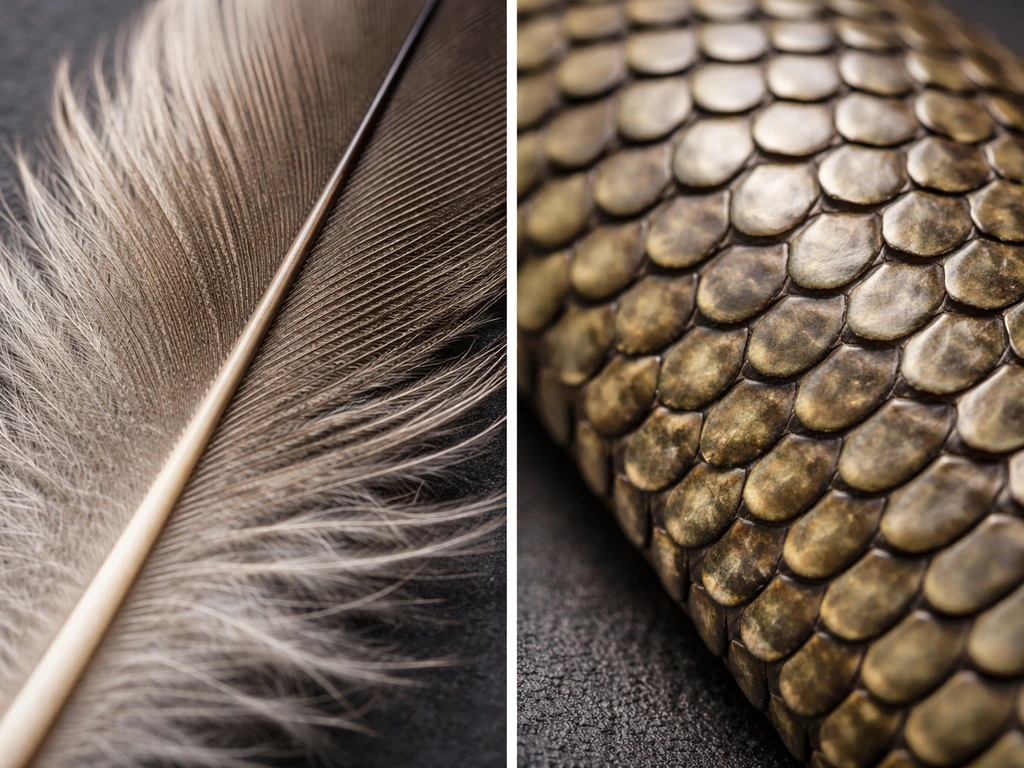
The answer is fish. "Feather is to bird as fin is to fish" because the analogy is testing a trait-to-category relationship: a feather is the defining physical trait of a bird, and a fin is the defining physical trait of a fish. That's the whole pattern. Once you see it, you can apply it to almost any similar puzzle instantly.
Feather is to bird as fin is to what (taxonomy guide)

Sarah Chen
28 Jun 2026
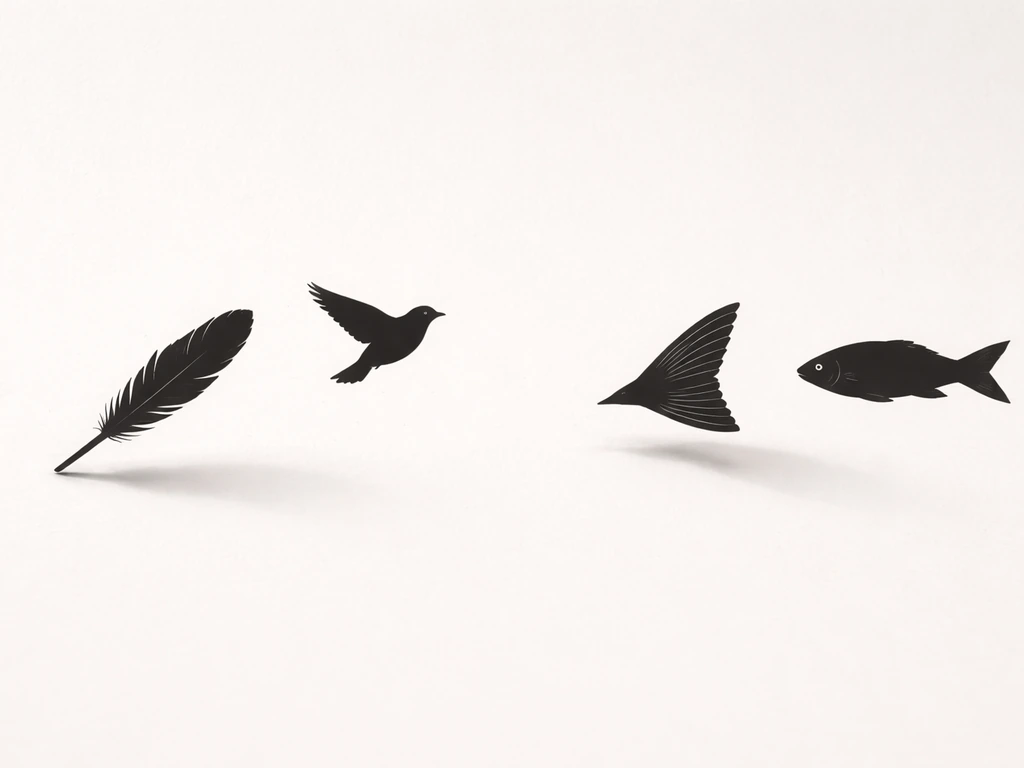
Figure out what the analogy is actually testing
Analogy questions like this follow a simple "A is to B as C is to D" structure, and the key is identifying the relationship type before you guess the answer. In this case, the relationship is trait to category. A feather is not a bird, it's a feature that belongs to and defines a bird. So the question is really asking: what category is defined by having fins the same way birds are defined by having feathers?
This is different from a part-to-whole relationship (like "wheel is to car") or a cause-and-effect relationship. Here, the trait is being used as a classification marker. If you can identify which animal group is most fundamentally associated with fins, you have your answer. That's fish. The analogy isn't asking you to name every animal that has anything resembling a fin. It's asking for the category that "owns" the trait the way birds own feathers.
Feathers and wings: why these point straight to birds
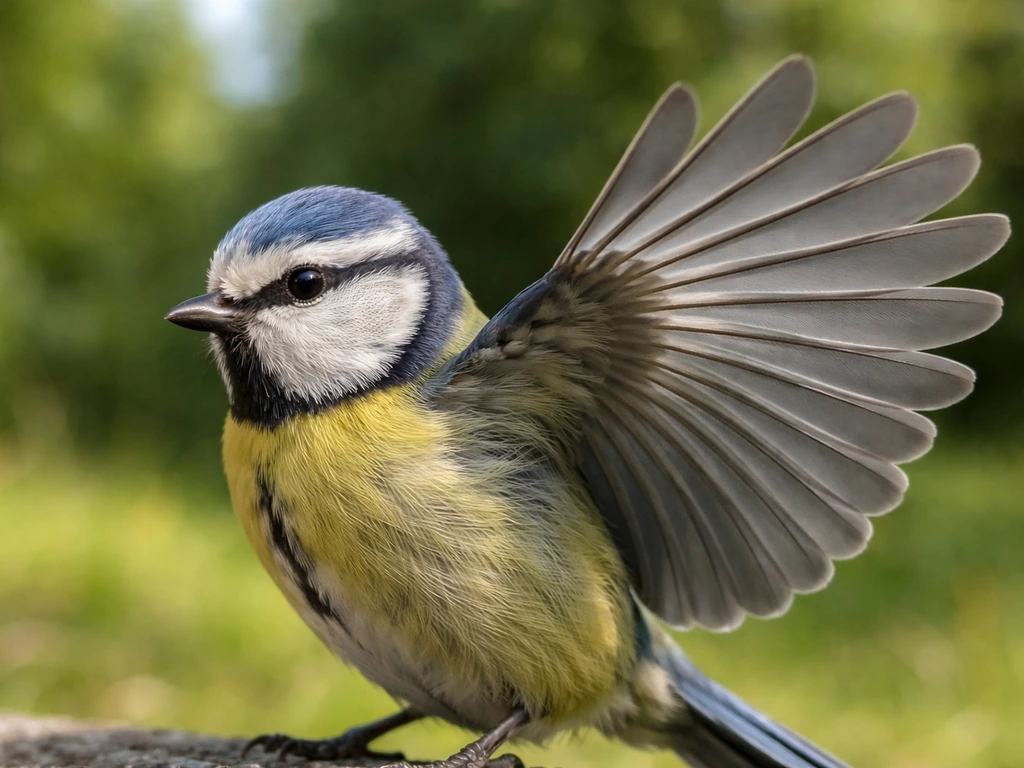
Feathers are genuinely unique to birds. Cornell Lab of Ornithology’s Academy explains that feathers are specialized air-trapping, insulating surfaces, which helps explain why feathers are so distinctive for birds in basic classification blank" rel="noopener noreferrer">feathers specialized air-trapping, insulating surfaces. No other living animal has them. The Smithsonian puts it plainly: birds are distinguished from other vertebrates by three traits, feathers, hollow bones, and hard-shelled eggs. The Smithsonian National Museum of Natural History describes birds as distinguished from other living vertebrates by three features: blank" rel="noopener noreferrer">feathers, hollow bones, and hard-shelled eggs. Audubon takes it even further, stating that feathers are inherently what makes a bird a bird. That's a strong claim, but it holds up biologically. Feathers are modified scales made of keratin, and while reptile scales are also keratin-based, no reptile, mammal, or fish produces feathers.
Wings sometimes get swapped into this same analogy slot. "Wing is to bird as fin is to" works just as well, because wings are also a defining structural feature of birds, even though bats and insects have wings too. The difference is that bird wings are specifically feathered forelimbs, which keeps the trait exclusive to class Aves. Penguins are a good example worth remembering here: their wings look nothing like a typical bird's, they can't fly, but they're absolutely birds because they have feathers and lay hard-shelled eggs. The trait is the identifier, not the function.
What actually counts as a fin, biologically speaking
In strict biological terms, a fin is a membrane-and-ray structure used for movement and stability in water, and it belongs to fish. Fish have two categories of fins: paired fins (pectoral and pelvic, located on the sides of the body) and unpaired median fins (dorsal on the top, anal on the bottom, and caudal, which is the tail fin). The caudal fin drives forward movement; the dorsal and anal fins provide balance. These aren't just appendages. They're the anatomical signature of fish as a group, the same way feathers are the anatomical signature of birds.
The Merck Veterinary Manual includes fins explicitly in its basic description of fish: true fish have a backbone and fins. That pairing is important. It means fins aren't just something fish happen to have. They're part of what defines a fish in introductory biology, right alongside the backbone.
The best answer for the analogy, and why it's fish
The answer is fish, and past-question databases from university entrance exams confirm this is the expected answer in standardized testing contexts. The logic is clean: feather defines bird, fin defines fish. You don't need to go further than that for the analogy to work. Saying the answer is "aquatic animals" or "marine life" is too broad, because plenty of aquatic animals (whales, sea turtles, penguins) don't have fins in the biological sense. Saying the answer is "shark" is too narrow, because you need the category, not a single example.
Some variations of this analogy swap in "scale" for "fin" as the fish trait, or "gills" instead, and those work for the same reason: they're identifying the trait that most uniquely marks a category. Fin just happens to be the most visually recognizable and commonly tested fish trait in analogy puzzles, which is why it keeps showing up.
Borderline cases: animals with fin-like structures that aren't fish
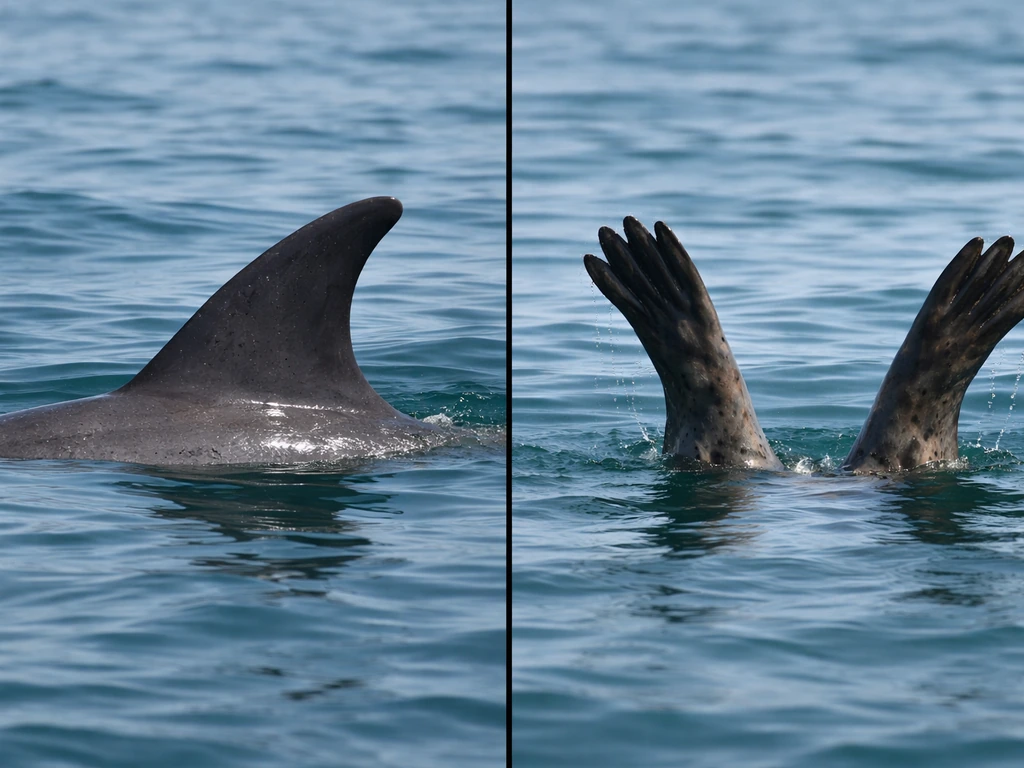
Here's where it gets genuinely interesting, especially if you're trying to build solid classification instincts. Several animals have structures that look exactly like fins but aren't classified as fish fins biologically.
Marine mammals: dolphins, whales, and seals
Dolphins and whales have a dorsal fin and a tail structure that looks almost identical to a fish's caudal fin. But these are not fins in the biological sense. They're flippers and flukes, structures derived from tetrapod (four-limbed vertebrate) limbs through convergent evolution. The same bone structure as a human hand is inside a dolphin's pectoral flipper. Seals are another common confusion point: their limbs are often called flippers colloquially, but they're modified legs, not true fins. The rule of thumb is: if the structure evolved from a limb, it's a flipper, not a fin.
Ancient marine reptiles: ichthyosaurs
Ichthyosaurs are prehistoric marine reptiles that looked remarkably fish-like, with a dorsal fin and a crescent-shaped tail. The Natural History Museum notes that some ichthyosaur forms had a dorsal fin and fish-like streamlining. But they were reptiles, not fish. Their fin-like structures were convergent adaptations, not true fish fins. They're a textbook example of why you can't classify an animal by shape alone. Classification follows ancestry and anatomy, not appearance.
Why this matters for the analogy
The analogy isn't asking "what animals have fin-shaped things?" It's asking what category is defined by fins the way birds are defined by feathers. Dolphins have fin-like structures, but their defining traits point to mammals (warm-blooded, breathe air, nurse young with milk). Ichthyosaurs had fin-like structures, but they were reptiles. Fish are the category where fins are the primary classification marker, which is exactly what the analogy is testing.
A quick checklist for cracking similar analogy questions
Once you understand the trait-to-category pattern, these questions get much easier. Here's a short process you can apply to any analogy of this type.
- Identify the relationship type first. Is the first pair showing trait-to-category, part-to-whole, cause-and-effect, or something else? In "feather is to bird," the answer is trait-to-category.
- Ask: which category "owns" the trait in the question? Feathers belong uniquely to birds. Fins belong uniquely to fish. Don't settle for a category that merely includes the trait.
- Watch for look-alike structures. Dolphins have things that look like fins. But their defining traits are mammalian, so "mammal" would be wrong if the analogy were "flipper is to dolphin as fin is to _".
- Check that your answer is a category, not an example. "Salmon" is too specific. "Fish" is the right level of abstraction for this type of analogy.
- If you're unsure, reverse the logic. Say your answer out loud both ways: "fins define fish" and "fish are defined by fins." If both directions hold up, you've got the right relationship.
| Trait | Category it defines | Lookalike structures to watch for |
|---|---|---|
| Feather | Bird | Bat wings, insect wings (not feathered) |
| Fin | Fish | Dolphin flippers, whale flukes, ichthyosaur fins |
| Scale (fish-type) | Fish | Reptile scales (similar material, different structure) |
| Gill | Fish | Some amphibian larvae have external gills temporarily |
If you've been digging into related questions on this site, you might notice that these analogy-style questions overlap heavily with real classification challenges. Whether something is "a bird" or "a fish" isn't always obvious from how it looks, which is exactly why understanding the defining traits matters so much. Feathers and scales are actually made of the same base material (keratin), and some animals like finches are birds despite looking very different from one another. Finches are birds, so the analogy that uses a fin would point to fish, not finch-like animals. The trait-to-category logic that cracks this analogy is the same logic that helps you answer those bigger classification questions too.
FAQ
Why can’t the answer be something like “aquatic animals” or “marine life”?
No. “As C is to D” means the relationship is the mapping between a defining trait and the category it identifies. In this analogy, “feather” stands for the trait marker of the bird category, so the correct mapping is “fin” as the marker for the fish category, not a broad water-living group.
If dolphins have dorsal fins, why aren’t they the answer?
Because fin and feather are not meant as “anything that resembles.” For example, dolphins and whales have dorsal and tail structures that look fin-like, but they are flippers and flukes evolved from tetrapod limbs. The analogy wants the biological fin structure associated with fish ancestry, not shape alone.
Is “shark” acceptable, or does the analogy require the category?
If the puzzle is written strictly as “fin is to ___,” the expected slot is fish as the category that defines what a fin is in the biological sense. If you instead answer “shark,” you are naming one example, not the category that “owns” the trait.
Would the answer change if the prompt used “wing” instead of “feather”?
Not in typical test analogies. The intended mapping is trait-to-category, where the trait is the classification marker. “Wing” can replace “feather” because bird wings are feathered forelimbs that keep the marker tied to birds, while generic wings or arms would weaken the category link.
You mentioned “gills” as a possible swap, so when would “gills” be preferred over “fin”?
Not usually. If the question is about the “fin” trait marker, gills can be plausible in some variations, but the pairing must stay consistent as trait versus category. Gills relate to respiration and are strongly tied to fish biology, yet they are not always presented as the defining fin-like classification marker.
How does the feather logic handle flightless birds like penguins?
Because some animals are birds even if they do not fly. Penguins are birds because they have feathers and other bird-defining traits, so the analogy uses structural markers (and ancestry) rather than function like flying.
What’s the quickest way to avoid confusing true fins with flippers?
It’s a common mistake to treat “fin” as “fin-shaped body part.” A better check is, “Did this structure evolve as a fish fin (membrane and rays as part of fish anatomy)?” If the structure traces to limb-based evolution, it’s a flipper, not the fin category marker.
What decision rule should I use for any “A is to B as C is to D” biology analogy like this?
The safest approach is to identify the relationship type first, then match trait to category. If you decide it is trait-to-category, then “feather” maps to “bird,” so “fin” maps to the category where fins are the defining marker, which is fish.
Next Article
Bird Feathers and Scales Are Made of the Same Things
Learn how feathers and reptile scales share keratin origins, their functions, and how to tell birds from lookalikes.