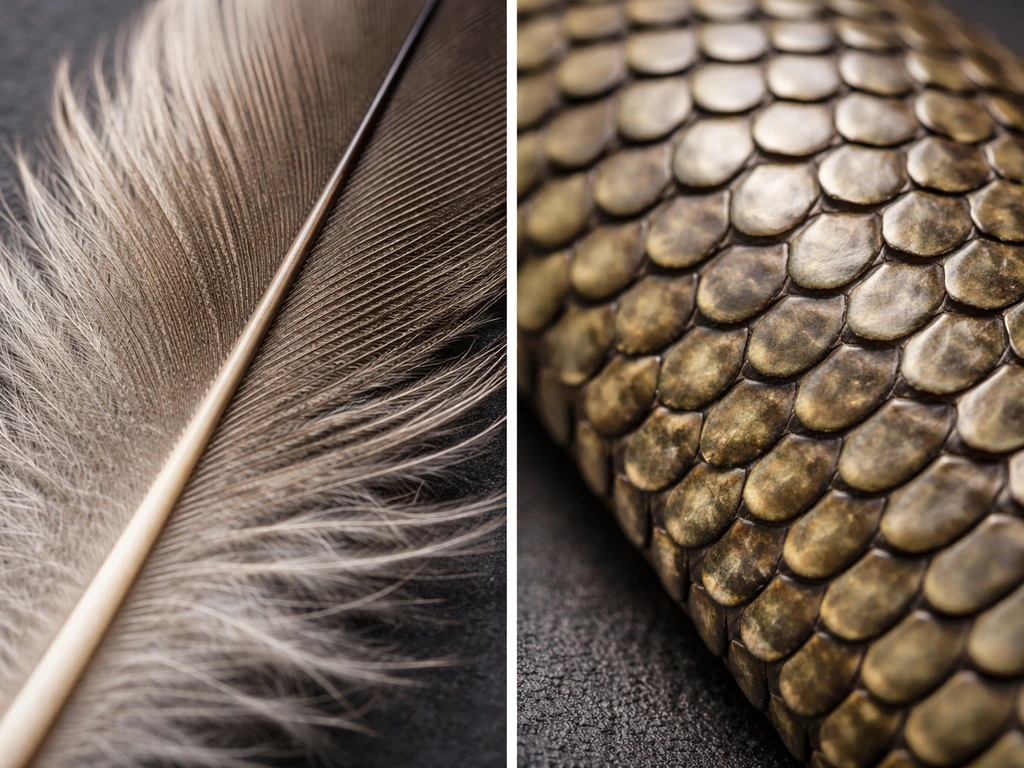
Yes, bird feathers and reptile scales are made of the same core material: keratin, a tough structural protein. Both are epidermal (skin-derived) structures built primarily from β-keratin in birds and keratinous proteins in reptiles. But "made of the same things" only tells part of the story. Feathers and scales are not the same structure, and one did not simply evolve into the other by getting fancier. They share a deep ancestral developmental origin, which is genuinely fascinating, but they are distinct in form, function, and the molecular pathways that build them.
Bird Feathers and Scales Are Made of the Same Things

Sarah Chen
20 Jun 2026
What feathers are actually made of
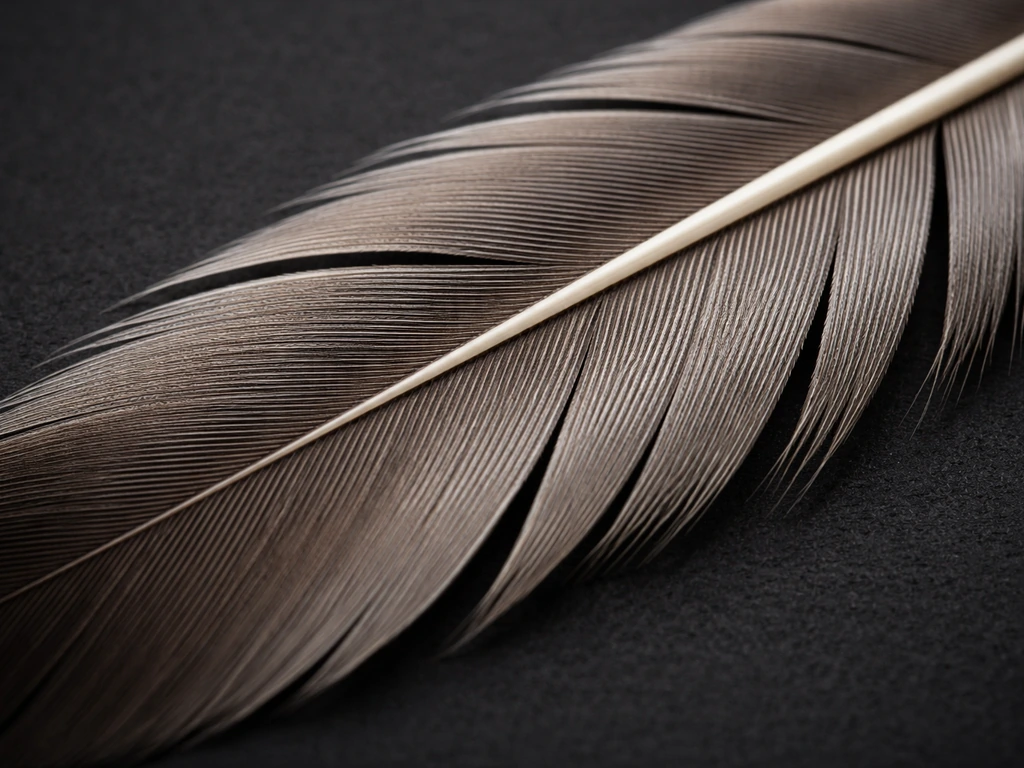
Feathers are built almost entirely from β-keratin (beta-keratin), which is an extremely tough, lightweight structural protein. If you have ever held a feather and noticed how stiff yet flexible the central shaft feels, that is β-keratin doing its job. The architecture of a feather is more intricate than most people realize. At the center is the rachis, the main shaft running down the length of the feather. Branching off the rachis are barbs, and branching off each barb are even smaller barbules. In flight and contour feathers (called pennaceous feathers), those barbules have tiny hooks that zip together like Velcro to form a smooth, cohesive surface called a vane. That interlocking vane is what makes a wing aerodynamic. Down feathers (plumulaceous feathers) skip the hooks entirely, leaving the barbules loose and fluffy, which is why down is such an effective insulator: it traps air.
Feathers grow in defined tracts on a bird's body called pterylae, with bare patches of skin called apteria in between. They serve multiple roles: insulation, flight, body contouring, camouflage, display (think peacock tail feathers), and even sensory reception in some species. The same basic material, β-keratin, underlies all of these, but the structure varies dramatically by feather type and function. That same kind of keratin-based material is also what makes reptile scales related to feathers β-keratin.
What reptile scales are made of
Reptile scales are also keratinous epidermal structures, meaning they grow from the outer layer of skin and are made of keratin-based proteins. Structurally, they are overlapping folds of skin with hinge-like regions between them, which allows the animal to move while still being covered by a protective armor. Think of them like overlapping roof shingles that can flex at the joints.
One term worth knowing: scutes. Scutes are the larger, often plate-like scales you see on a turtle's shell or on a bird's lower leg and foot. Yes, birds actually have scutes on their legs, which is one of the more visible reminders that birds and reptiles share ancestry. Scales and scutes both fall under the umbrella of keratinous skin coverings, but they differ in size, shape, and location on the body. The key functional role of reptile scales is protection, though they also help with water retention, which is critical for land-living animals.
Are feathers and scales related by evolution, or just similar?
This is where it gets genuinely interesting. Feathers and scales are considered homologous at the level of early development, meaning they share an ancestral origin rather than just independently arriving at a similar solution. Research has shown that reptile scales develop from a structure called an anatomical placode, a localized grouping of cells that initiates the growth of a skin appendage. That same placode-based developmental program is shared with feathers in birds and hair in mammals. The signaling pathways involved, including Hedgehog, BMP, and Wnt signaling, are conserved across all of these skin appendages in amniotes (the group that includes reptiles, birds, and mammals).
So feathers and scales do not just happen to be made of keratin by coincidence. They share a deep developmental ancestry, which is why biologists call them homologous structures at the level of their early developmental organization. However, and this is important, feathers did not evolve directly from reptilian scales. That older idea, that a scale simply frayed at the edges and became a feather over time, has been largely dismissed. The molecular pathways that build feathers are different from those that build scales. Feathers likely evolved through a distinct process involving epidermal invagination (skin folding inward around a papilla), producing something genuinely new rather than a modified scale.
What this means for how you think about birds versus reptiles
Here is the part that surprises a lot of people: birds are reptiles. Not metaphorically or loosely, but in the strict evolutionary sense. Birds evolved from theropod dinosaurs, and dinosaurs are a branch of the reptile family tree. So when we talk about the clade Reptilia in a modern, phylogenetic sense, birds sit inside it. Cambridge's teaching materials on the tree of life frame it exactly this way: "Birds are reptiles, birds are theropod dinosaurs." That framing is accurate and reflects the scientific consensus.
But that does not mean all reptiles have feathers. Snakes, lizards, turtles, and crocodilians are also reptiles, and they have scales, not feathers. The feature that defines birds within the reptile tree is feathers (along with other traits like beaks, hollow bones, and a specific skeletal structure). This is the sort of surprising natural history idea captured in the phrase “a fish may love a bird.” birds within the reptile tree. So the statement "feathers and scales are made of the same things" is true in the sense that both are keratin-based, developmentally related skin appendages produced by a shared ancestral genetic program. But feathers are a uniquely avian innovation that arose within the reptile lineage, not a feature all reptiles share.
How feathers and scales compare in function
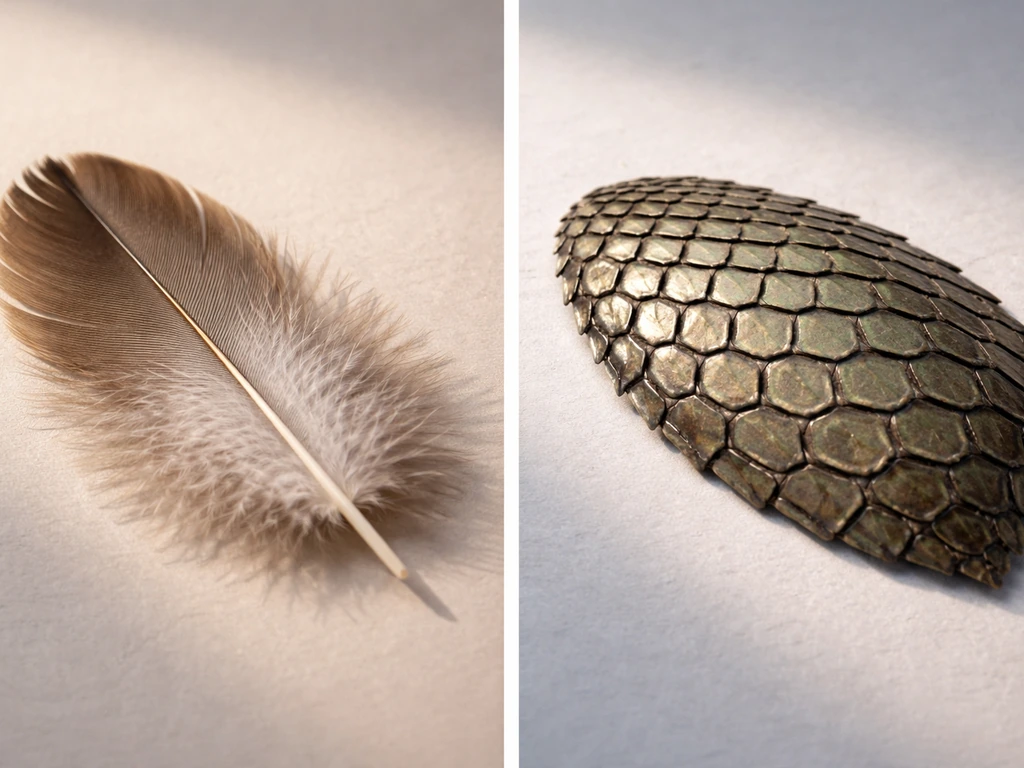
Even though feathers and scales share a material and a developmental ancestry, their functions have diverged dramatically. Here is a practical side-by-side:
| Function | Feathers (birds) | Scales (reptiles) |
|---|---|---|
| Insulation | Highly effective, especially down feathers that trap air | Minimal; reptiles are ectothermic and rely on external heat |
| Flight | Pennaceous feathers form aerodynamic vanes; essential for most birds | Not applicable |
| Protection | Some protection, but not the primary role | Primary role; overlapping armor against abrasion and predators |
| Flexibility | Highly flexible; barbule zipping allows vane to repair itself | Hinge regions allow movement while maintaining coverage |
| Display | Major role; color, iridescence, and shape used in mating | Limited; color can signal warning or camouflage |
| Water management | Some waterproofing via preen oil; down traps warm air | Critical for water retention in land-dwelling reptiles |
The most striking functional difference is insulation. Feathers, especially down, are among the best natural insulators on the planet. Reptile scales offer almost none. This reflects the fundamental difference in metabolism: birds are endothermic (warm-blooded) and need to retain body heat, while reptiles are ectothermic (cold-blooded) and manage heat through behavior rather than insulation.
Borderline cases that confuse the feather-scale question
A few animals come up repeatedly when people wrestle with the feathers-versus-scales question, and it is worth addressing them directly.
Penguins
Penguins are birds. Full stop. They belong to the order Sphenisciformes and have feathers, just short and densely packed ones. Their wings have evolved into rigid flippers for swimming rather than aerial flight, and those flippers are covered with short, scale-like feathers. People sometimes look at a penguin's flipper and think it looks scaly, but those are modified feathers, not scales. The scutes on a penguin's leg are the actual scale-equivalent structures, and seeing them next to feathers on the same animal is a perfect illustration of how both exist simultaneously in birds.
Ostriches
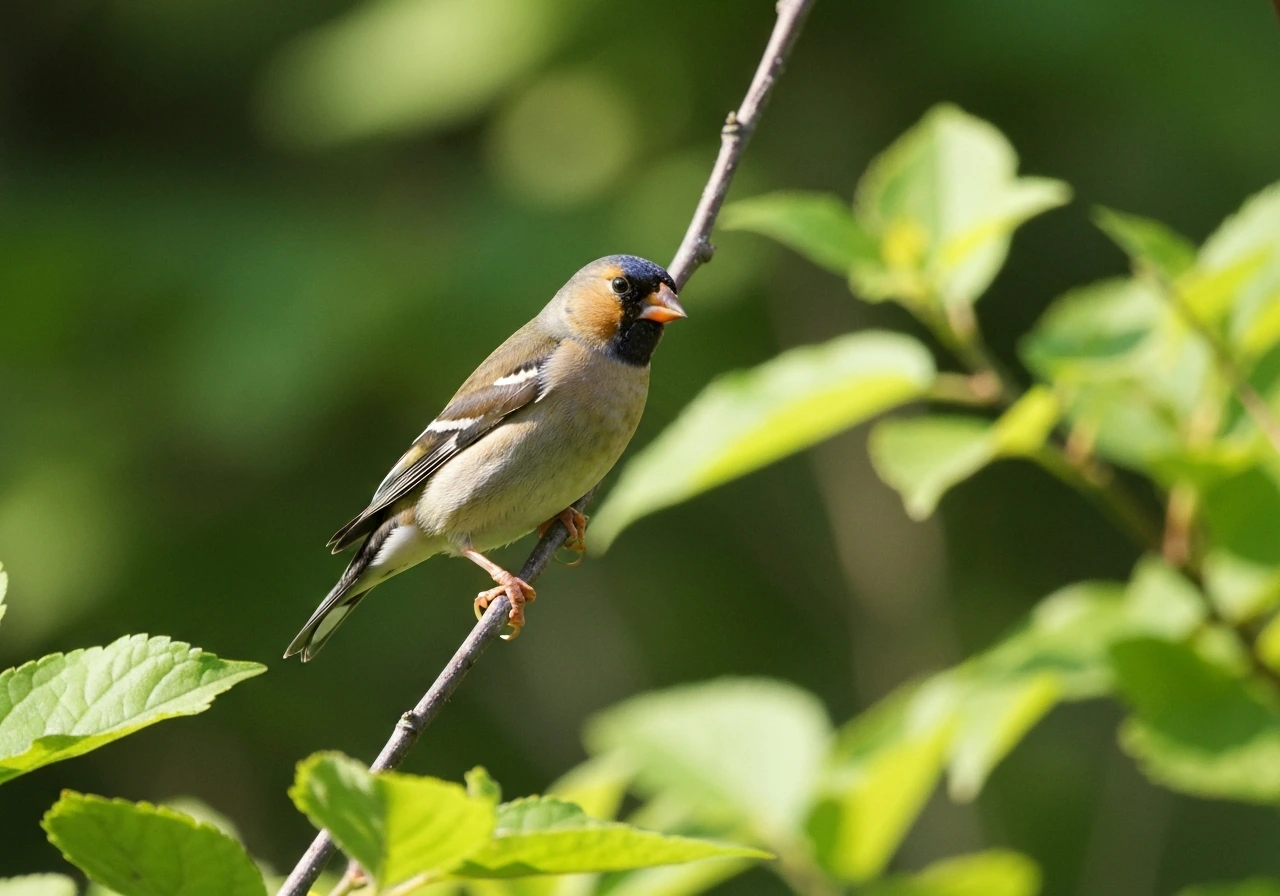
Ostriches are also unambiguously birds. They are flightless, but they have feathers (loosely structured, plumulaceous ones), lay eggs, have beaks, and are classified in class Aves. A finch is a bird, so its body would be expected to have feathers made from β-keratin is a finch a bird. Their legs have prominent scutes, again a reminder of bird-reptile shared ancestry, but the body is covered in feathers. Flightlessness does not remove a bird from the bird category any more than a penguin's inability to fly does.
Bats
Bats are mammals, not birds, and the distinction is clear at the structural level. A bat's wing is a patagium, a thin membrane of skin stretched between elongated finger bones. There are no feathers, no rachis, no barbules. Bats are covered in fur (made of hair, not feathers), nurse their young with milk, and are warm-blooded mammals. The only thing bats share with birds in everyday terms is flight, but the mechanism is completely different.
Pterosaurs
Pterosaurs are extinct flying reptiles that are neither birds nor dinosaurs in the strict sense, though they lived alongside dinosaurs. Some pterosaur fossils show structures called pycnofibers that look filamentous or even branched, which has led to debate about whether these might be homologous to feathers. Researchers are genuinely divided on this: some argue the branched structures could indicate a shared developmental origin with feathers, while others dispute whether they are truly homologous at all. What is clear is that pterosaurs did not have feathers in the way birds do, and they are not classified as birds. They are an interesting borderline case precisely because they blur the scale-versus-feather line in ways that scientists are still working through.
The one-sentence answer you were looking for
Bird feathers and reptile scales are both made of keratin and share an ancestral developmental program, so the claim that they are "made of the same things" is broadly correct at the materials level, but feathers are a distinctly avian structure with a different molecular developmental pathway and a far more complex architecture than any scale. Fish is to ocean as bird is to air. If you are trying to decide whether something is a bird, the presence of feathers (not scales, not membranes, not fur) is your clearest diagnostic feature, and even flightless birds like penguins and ostriches qualify because they have feathers and belong to class Aves. The scutes on a bird's leg are your visible reminder that birds and reptiles share ancestry, and the feathers covering the rest of the body are your reminder that birds took that shared starting point somewhere entirely new.
FAQ
If feathers and scales are both keratin, does that mean you can swap them in a biological experiment and they will grow the same way?
No. The shared material does not guarantee the same growth program. Feather formation relies on specific early skin signaling and outgrowth patterning (for example, placode-based initiation and distinct invagination behavior), so simply providing keratin alone would not recreate a feather’s rachis, barbs, and vane structure.
Are bird scutes on the legs actually scales like reptile scales?
They are scale-like structures, both produced from keratinized epidermis, but they are not identical to reptile scales in size, shape, and detailed development. A quick check is location and coverage, scutes are localized plates on bird legs/feet, while reptile scales form broader overlapping fields across the body.
Why do some reptile scales seem “fuzzy” or look like they have texture that resembles feathers?
Texture can come from micro-architecture and surface patterning, like ridges, grooves, or keratin thickness differences, without implying feather homology. Feathers have a distinct branching system (rachis, barbs, barbules) and, in most flight feathers, interlocking barbule hooks that build a sealed vane.
Do crocodilians have feathers-like structures or any feather ancestor traits?
Crocodilians have keratinized scales, not feathered skin appendages. Even though the signaling networks are related across amniotes, the downstream structural outcome (overlapping protective scales versus branching feather branches with a vane) is not the same.
How can I tell a feather from a hair or a fur tuft if I only see an animal’s outer covering?
Feathers show a central shaft with branching side structures, and many have a defined contour and layered surface. Hair or fur arises from follicles as separate hairs, typically without a rachis-barb-barbule hierarchy and without vane-like interlocking surfaces.
If birds are reptiles, why don’t all reptiles have feathers?
Because the shared developmental starting point did not automatically produce feather-type appendages. Birds evolved feathers as a lineage-specific innovation, so other reptile groups retained scale-like epidermal appendages rather than switching to the feather-building developmental pathway.
Are penguin “flipper feathers” the same as bird flight feathers?
They are modified feathers adapted for swimming. They are covered with short, densely packed feather structures that resemble the look of scales, but they are still feathers, and you would not expect the same vane geometry or flight role as in typical aerial contour feathers.
Could a fossil skin imprint show whether a structure was a feather or a scale?
Sometimes, but it can be challenging. True feather impressions usually preserve filament branching and, depending on preservation, a shaft and barbs. Scale impressions more often show plate-like or overlapping patterns. Borderline cases, such as filamentous integumentary structures in extinct reptiles, may still be debated.
Does “beta-keratin” mean every keratinized structure in reptiles is the same protein as bird beta-keratin?
Not necessarily. Birds are well known for β-keratin in feathers, but reptiles have keratinous proteins that may not be identical in type or proportion. The conservative claim is that both sides use keratin-based epidermal proteins, while the exact protein composition and molecular assembly can differ.
If feathers evolved for flight, why do down feathers and fluffy insulation structures exist in flightless birds too?
Because insulation serves endothermy and thermal balance, not only flight. Flightlessness does not remove the need to retain body heat, so down-like and insulating feather types are still strongly favored when birds need to manage temperature, especially in cold environments.
Next Article
Is a Finch a Bird? Yes, Here’s Why It Counts
Yes, a finch is a bird. Learn bird traits, finch classification, and quick rules to spot lookalikes.