
"A fish may love a bird" is not a standalone proverb or biological claim. It's a word-flipped variant of a genuine, sourced quote that originated in Fiddler on the Roof (1964) and was later popularized by the 1998 film Ever After. The original wording goes: "A bird may love a fish, but where would they build a home together?" The meaning is entirely metaphorical: two people (or creatures) can feel genuine affection for each other but still be fundamentally incompatible because they belong to different worlds.
A Fish May Love a Bird Quote Meaning and Origin Check

Sarah Chen
4 May 2026
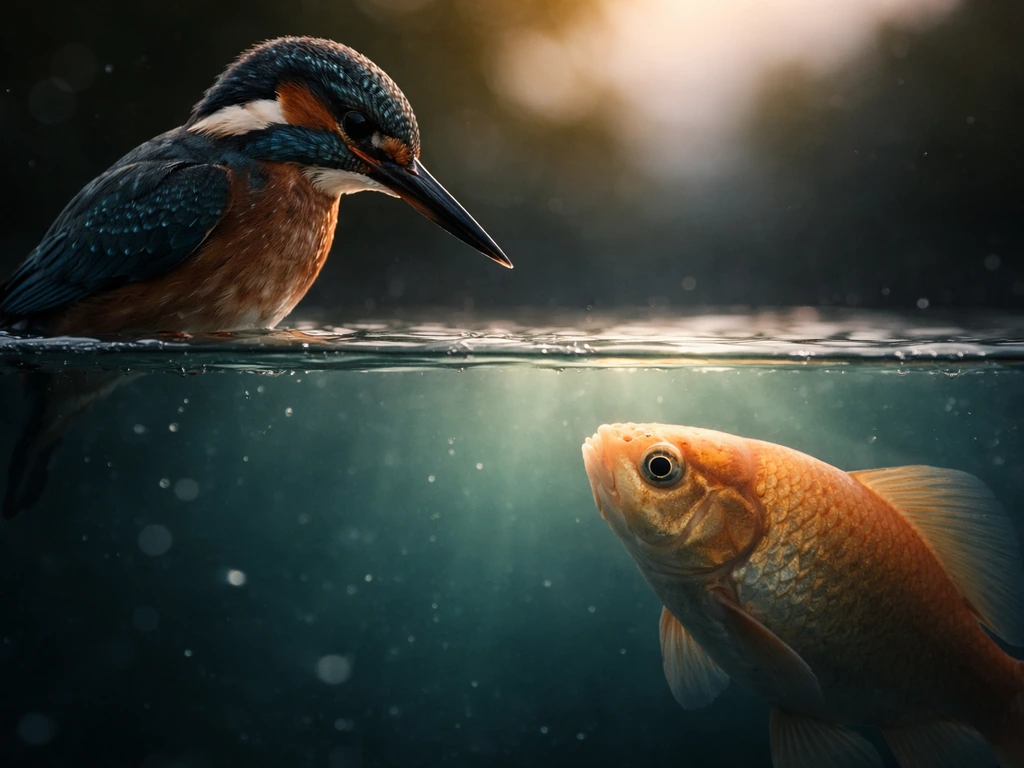
What kind of phrase is this, exactly?
This is a genuine quote, not a folk proverb or a misquote from nowhere. It has a traceable origin, a specific author, and a documented theatrical context. However, if you searched for "a fish may love a bird," you're likely working with a word-order flip of the original line. That flipped version circulates widely online, appears on quote sites like BrainyQuote and Goodreads, and is frequently attributed to Drew Barrymore. Those attributions are misleading: Barrymore performed the line in a film, but she didn't write it. The phrase also gets tagged "attributed-no-source" on some Goodreads entries, which is a signal that the internet has muddied the water on who actually said it first.
To be clear about what this article is not: this is not a biology question. Fish and birds are distinct animal classes, and the idea of one "loving" the other is purely literary language. This site normally focuses on what makes a bird a bird (feathers, hollow bones, laying amniotic eggs, classification in class Aves) and why certain animals get misclassified. Feathers are also part of what makes the feather-to-bird comparison so intuitive in everyday explanations feather is to bird. This phrase doesn't belong to that world. It belongs to the world of quotes and metaphor, and that's exactly how it should be read.
Where the line actually comes from
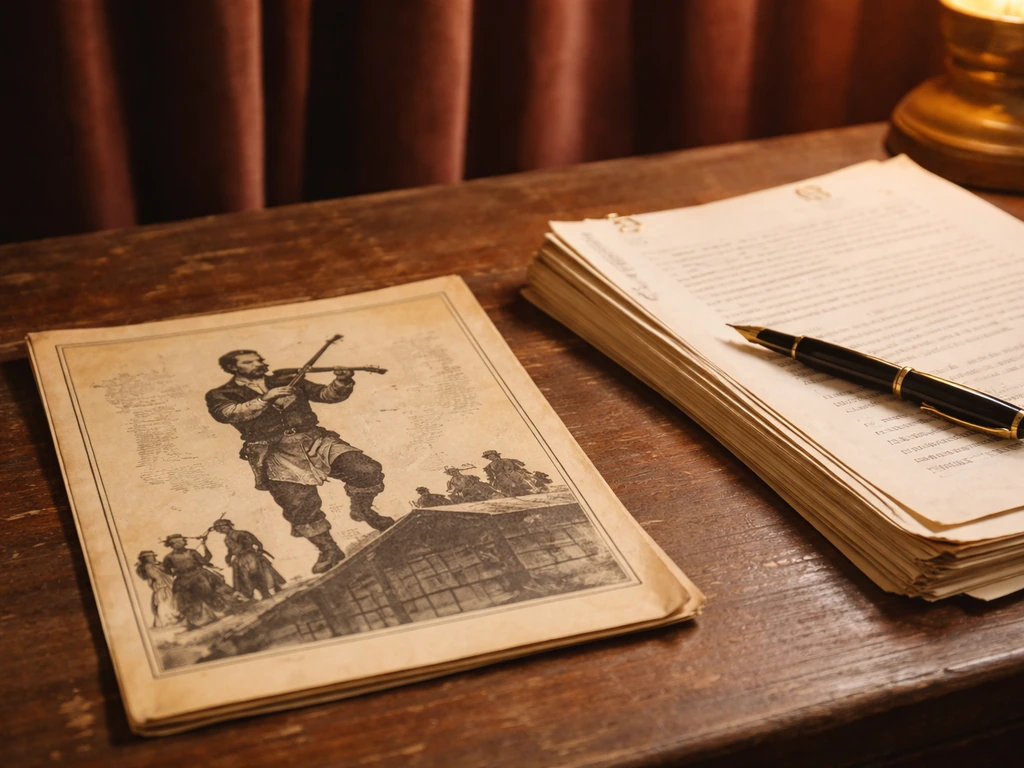
The earliest documented source is the musical Fiddler on the Roof, with the book written by Joseph Stein. The show opened on Broadway in 1964, and the line appears in the script spoken by Tevye. The full version, as it appears in the libretto, reads: "A bird may love a fish, but where would they build a home together?
" Proverb scholar Wolfgang Mieder documented this line in his Dictionary of Authentic American Proverbs and dated the first published appearance to 1964, which aligns with the musical's debut. Mieder also noted variant endings in his research, including "build a nest" and simply "live," showing the line adapted naturally over decades of retelling. In his Dictionary of Authentic American Proverbs, Wolfgang Mieder also documents variant endings such as “build a home” and “a nest.
” variant endings in his research, including "build a nest" and simply "live".
In Fiddler on the Roof, Tevye uses the line in the context of tradition and life's constraints. The bird and fish metaphor fits his broader argument that love, however real, doesn't override the practical incompatibilities of two very different lives. It's a moment of weary wisdom, not cruelty.
The line got a second wave of cultural exposure through the blank" rel="noopener noreferrer">1998 film Ever After, a Cinderella retelling starring Drew Barrymore. In that film, Barrymore's character Danielle says: "A bird may love a fish, Signore, but where would they live?" That performance planted the quote firmly in the memories of a generation of moviegoers, and over time the internet collapsed the distinction between "the person who said the line in the movie" and "the person who wrote the line." Barrymore performed it; Stein wrote it.
What it means in plain English
The metaphor works because birds and fish inhabit genuinely incompatible environments. A bird lives in air and on land. A fish lives in water. You can imagine a deep emotional connection between them, but the moment you ask "where would they actually live together? This same bird-and-fish comparison is often used as a quick shorthand for how incompatible worlds can limit real connection. ", the problem becomes obvious. Neither can survive in the other's world for long. The question at the end of the quote is rhetorical: the answer is implied to be "nowhere," or at least "nowhere sustainable."
In human terms, the quote is typically used to describe two people who genuinely care for each other but whose lives, backgrounds, values, or circumstances are so fundamentally different that building a shared life together would be nearly impossible. It's not saying love is impossible or fake. It's saying love alone doesn't solve incompatibility. The tone is melancholy rather than cynical, which is probably why it keeps resonating.
People use it in conversation when talking about relationships that feel doomed by circumstance rather than by lack of feeling. It works as a gentle, poetic way to name a painful reality without being harsh about it.
Does the word order matter? Bird first vs. fish first
The original Fiddler on the Roof line and the Ever After film line both put the bird first: "A bird may love a fish." The flipped version, "A fish may love a bird," circulates just as widely online and appears on major quote databases. The core meaning doesn't change with the flip. Both versions are asking the same rhetorical question and making the same point about incompatible worlds. What does shift slightly is the implied perspective.
| Wording | Who's in the active role | Implied perspective | Common source |
|---|---|---|---|
| A bird may love a fish | The bird | The creature of air reaching toward the water world | Fiddler on the Roof (1964), Ever After (1998) |
| A fish may love a bird | The fish | The creature of water reaching toward the sky | Online quote sites, BrainyQuote, Goodreads |
Neither version is more correct than the other as a metaphor, but the bird-first version is the documented original. If you're quoting this in writing and want to cite a source accurately, "A bird may love a fish, but where would they build a home together?" attributed to Joseph Stein (Fiddler on the Roof, 1964) is the most defensible form. If you want to credit the film, the Ever After (1998) wording is "A bird may love a fish, Signore, but where would they live?"
Common mix-ups and near-miss interpretations
The biggest mix-up is the Drew Barrymore attribution. She did not originate this line. She performed it in a film. This distinction matters if you're citing the quote in writing or trying to trace its origin. When you see "Drew Barrymore" listed as the author on a quote site, treat that as "associated with" rather than "written by."
A second common confusion is treating the phrase as a biological or scientific statement. This is not asking whether a finch is a bird, or making any claim about how finches live is a finch a bird. It isn't. The pairing of fish and birds in literature goes back further than Fiddler on the Roof: ancient texts include "debate" genres pitting birds against fish as symbolic characters in disputes about nature and habitat.
In fact, bird feathers and reptile scales share the same basic chemical building blocks bird feathers and scales are made of the same things. World History Encyclopedia documents an ancient "debate between bird and fish" as a genre of illustrative argument. But none of that historical tradition is making a claim about animal behavior or taxonomy. It's always been a literary device.
The same applies here.
A third mix-up involves the ending of the quote. Some versions say "where would they live?", others say "where would they build a home together?", and still others say "where would they build a nest?" These are all variant endings of the same original idea. The proverb scholar Mieder explicitly documented these variants, noting that the core meaning stays consistent regardless of how the question is phrased. If you're trying to identify a quote someone half-remembered, any of these endings should lead you back to the same source.
Finally, some people encounter this line and read it as a statement about loving across difference in a positive, aspirational sense, like a celebration of unlikely affection. That's a reasonable emotional reading, but it misses the rhetorical structure. The question at the end is the point. The love is acknowledged, then the practical impossibility is foregrounded. It's closer to a warning or a lament than a celebration.
Quick reference: the key facts
- Original wording: "A bird may love a fish, but where would they build a home together?"
- Author: Joseph Stein, from the Fiddler on the Roof libretto
- First documented appearance: 1964 (Broadway opening of Fiddler on the Roof)
- Film version: Ever After (1998), spoken by Drew Barrymore's character Danielle
- "Fish may love a bird" is a word-order flip; it carries the same meaning but is not the original phrasing
- The quote is metaphorical, not biological
- Variant endings ("where would they live," "build a nest," "build a home") are all documented by proverb scholars and all point to the same source
FAQ
Is “a fish may love a bird” the exact wording from the original production?
No. The documented original is bird-first (from Fiddler on the Roof), and it includes a specific rhetorical follow-up about building a home. If you need accuracy, use the bird-first line with the “build a home together” ending rather than the flipped fish-first version.
Why do some sources say it was written by Drew Barrymore?
Because she performed the film line in Ever After, many quote sites list her as the associated name. She is not the author, Joseph Stein is. A good check is whether the attribution matches a writing credit (Joseph Stein) versus a performance credit (Drew Barrymore).
If I want to cite it in a paper, what wording should I use?
Use the most defensible source text: “A bird may love a fish, but where would they build a home together?” and attribute it to Joseph Stein in connection with Fiddler on the Roof (1964). If you quote a film version, cite the film wording and production context separately.
Do the different endings (“live,” “build a nest,” “build a home together”) change the meaning?
Not really. They are variant endings that keep the same rhetorical function, acknowledge affection, then stress incompatibility. The “home” versus “nest” wording mainly shifts tone slightly, home being broader and nest sounding more literal and domestic.
Is this ever meant as a positive quote about unlikely love?
Some people read it that way, but the structure is rhetorical and melancholy. The line is designed to say love does not remove the practical barriers between two incompatible lives. If you use it positively, consider pairing it with additional context so the warning tone is not lost.
Can it be used for non-romantic relationships, like friends or family?
Yes. The “two different worlds” idea is often applied to any bond where circumstances, values, or routines make a shared life unrealistic. It works best when you can point to the mismatch, not just the affection.
What is the best way to use it in everyday conversation without sounding harsh?
Frame it as a recognition of reality, not a dismissal of feelings. For example, you can say the quote fits because the situation makes a shared future difficult, then pivot to what you still can do (maintain contact, set expectations, or choose a different kind of relationship).
Is there any animal or science meaning to “fish” and “bird” here?
No. It is metaphor and wordplay, not taxonomy or behavior. Treat it as literature only, because comparing animals this way is about environments and symbolic incompatibility, not about whether one creature can survive in another’s world.
If I only remember the “fish may love a bird” version, how can I still confirm the origin?
Look for the shared rhetorical question regardless of word order. If the text includes the “where would they…” follow-up, it points back to the same Fiddler on the Roof line family. Word order flips usually come from internet reuse, not from separate original sources.
Next Article
Fish is to ocean as bird is to sky or air
Fill in fish to ocean as bird to sky or air, plus traits to identify real birds vs bats, penguins, and pterosaurs.