"Opila" is not a recognized bird species. It appears in no major taxonomic database, including the IOC World Bird List or GBIF. The name is best known as a fictional character from the video game Garten of Banban, where Opila Bird is portrayed with a female identity. So if you are asking whether Opila Bird is female because of the game, the answer is yes, within that fictional context. But if you are asking about a real bird you own, found, or heard called "Opila," then "Opila" is almost certainly a pet name, a misspelling, or a local nickname, and its sex cannot be assumed from the name alone. Determining the sex of a real bird requires biology, not a label.
Is Opila Bird a Female? Clear Answer and How to Tell

Sarah Chen
21 Jul 2026
The verdict: is "Opila" a female bird?
There is no bird taxon called Opila in any credible global checklist. I checked the IOC World Bird List (v15.2), which is one of the most rigorously maintained expert-curated databases of living and recently extinct bird species, and found no entry for Opila as either a scientific name or a standardized English common name. GBIF, the Global Biodiversity Information Facility, returns only an insect genus called Opilo (a beetle, order Coleoptera) when you search that string. No citizen-science observation platforms like iNaturalist or eBird carry verified sightings tagged to a species called Opila. The dominant results you get from searching "Opila Bird" online are fan wikis, fan art, and 3D model files from the Garten of Banban game universe.
In that game, Opila Bird is a character with a female identity according to the Banbanpedia fandom wiki. That is a cultural fact about a fictional creation, not a biological one. Treating it as a statement about real bird taxonomy would be like asking whether a parrot named "Polly" is always female because of the famous phrase. The name carries no taxonomic weight.
What the name "Opila" most likely means
When a bird name does not appear in any scientific checklist, there are a few common explanations. First, it could be a misspelling of a real species name. Second, it could be a regional or vernacular nickname that a local community uses but that has never been formally standardized. Third, it could be a pet name that an owner gave to an individual bird, the way someone might call their cockatoo "Snowball" without implying that all cockatoos are named that. Fourth, as is the case here, it can be a name borrowed from fiction or popular culture.
If someone told you your bird is an "Opila," I would ask them for the scientific name or look for a close visual match on eBird or iNaturalist. A scientific name in the format Genus species (e.g., Melopsittacus undulatus for the budgerigar) is the reliable anchor. Common names vary by country, by community, and even by family, so they can mislead you. The science does not.
How bird naming and taxonomy actually work
Every recognized bird species carries a two-part scientific name under the Linnaean binomial system: a genus name and a species epithet. These names are governed internationally and appear consistently across databases. A common English name like "robin" can refer to completely different species depending on whether you are in North America or Europe, but Turdus migratorius (the American Robin) and Erithacus rubecula (the European Robin) are unambiguous.
To check whether a bird name is real, the fastest approach is to search the IOC World Bird List at worldbirdnames.org or enter the name into GBIF. eBird from Cornell Lab of Ornithology is another reliable resource, particularly if you want to cross-check a name against regional observations. If none of these return a matching entry for the name you have been given, treat that name as informal. This is exactly what happened with "Opila": zero matches across all three platforms for a bird taxon.
- Search the IOC World Bird List (worldbirdnames.org) using the name as both a common name and a scientific name.
- Search GBIF (gbif.org) and filter results to class Aves to exclude insects, plants, and other organisms.
- Search eBird (ebird.org) for observation records tied to that name.
- If the name only returns fandom pages, game wikis, or no results at all, it is not a recognized species.
- Ask whoever gave you the name for the scientific name or a verified photo identification from a field guide or iNaturalist.
The biology of bird sex: what sexual dimorphism actually tells you
Once you know what species your bird actually is, the next question is whether you can tell its sex visually. This depends entirely on the species, because birds vary enormously in how different males and females look from each other. This variation is called sexual dimorphism, which simply means that the two sexes have different physical forms.
In strongly dimorphic species, the difference is obvious. Male mallard ducks have that iridescent green head; females are mottled brown. Male peacocks carry extravagant tail feathers that females lack entirely. In those cases a careful look is enough. But in monomorphic species, males and females look essentially identical to the human eye. Many parrots fall into this category, including African grey parrots and most cockatoos. You cannot reliably sex them by appearance alone.
Plumage can also be misleading because it changes with season and age. Many birds wear breeding plumage only during mating season and look quite different outside of it. A young bird may not show adult male or female coloring for months or even years. Size differences between sexes (with females often larger in raptors, males larger in many songbirds) exist, but measuring a single bird tells you little without a comparison population.
| Cue | Reliable for sexing? | Notes |
|---|---|---|
| Plumage color | Species-dependent | Reliable in strongly dimorphic species; useless in monomorphic ones |
| Body size | Weak on its own | Useful as a population trend, not for a single individual |
| Cere color (budgerigars) | Yes, in adults | Blue cere = typically male; brown/pink = typically female; unreliable in juveniles |
| Egg-laying | Definitive for female | Observing an egg is conclusive proof of female sex |
| Seasonal plumage change | Tricky | Birds can look different across seasons; always compare to species-specific references |
Behavioral and vocal clues to a bird's sex
Behavior can offer supporting evidence, though it is rarely definitive on its own. In many songbird species, males do most of the elaborate singing, particularly during breeding season, because song serves to attract mates and defend territory. A bird that sings long, complex songs repeatedly is more likely to be male in those species. But "more likely" is not certainty, and some females sing too.
Nesting and brooding behavior can indicate female sex: a bird sitting consistently on a nest or eggs is very likely female, though in some species like certain shorebirds and the emu, males take on incubation duties. Courtship displays, mounting behavior, and territorial aggression can also suggest male sex in many common species. These clues are useful when combined with visual observation, but they should be seen as supporting evidence rather than proof.
It is also worth noting here that same-sex pairing behavior has been observed in many bird species. Penguins, gulls, and flamingos have all been documented forming same-sex bonds, including raising chicks together. This is normal avian biology, not a misclassification of sex. A bird engaging in courtship toward another bird of the same sex has a sex; it is simply expressing a behavioral pattern that exists across the animal kingdom. This is a factual biological observation, distinct from applying human frameworks of sexual orientation to animals.
The most reliable methods: DNA testing and veterinary examination
DNA sexing: how it works
For species where visual sexing is unreliable, DNA testing is the gold standard. Reviews confirm CHD-based PCR is the dominant, validated approach for molecular sexing across many bird orders and sample types (blood, fresh feather quill/pulp, eggshell membranes, buccal swabs or feces) with high accuracy when protocols and sample types are appropriate; see Molecular sexing of birds: A comparative review of PCR-based methods (review article, ScienceDirect). The method used in most commercial and research labs targets the CHD gene (chromodomain helicase DNA-binding gene), which exists in two forms in birds: CHD-W (found only on the female W sex chromosome) and CHD-Z (found on both sex chromosomes). A PCR amplification of these regions produces one band in males (ZZ) and two bands in females (ZW). This approach, developed and validated by Fridolfsson and Ellegren in 1999 and Griffiths et al. in 1998, works across most non-ratite bird orders and is accurate when correct sample types are used.
Acceptable sample types typically include freshly plucked feathers with intact quill/pulp, a small blood spot on FTA card paper, or an EDTA blood sample collected by a vet. One important practical note: do not use naturally shed or moulted feathers from the floor. The root pulp on moulted feathers is often degraded and does not yield enough DNA for a reliable result. Many labs are explicit about this in their submission instructions.
Commercial services like Avian DNA Gender, iQBirdTesting, and Avigenics offer mail-in testing with step-by-step collection guides. University veterinary genetics labs, including UC Davis Veterinary Genetics Laboratory, also accept avian samples with published submission instructions. Pricing for a single-bird test commonly falls in the range of roughly US$15 to $50, depending on provider, turnaround time, and country. Clinic fees may add to that total if a veterinarian collects the sample.
Endoscopy: when and why a vet uses it
Endoscopic sexing, also called laparoscopy or coelioscopy, involves a veterinarian making a small incision and using a tiny camera to visually inspect the gonads directly. It provides unambiguous confirmation and can also assess reproductive health and detect disease at the same time. However, it requires general anaesthesia, specialist equipment, and a trained avian surgeon. It carries real anesthetic and surgical risk, and it costs more than a DNA test. Authoritative sources (Clinical/Avian Medicine textbooks and reviews, guidance on endoscopy, cloacal examination and surgical sexing) advise that endoscopy and cloacal procedures carry risks of trauma and infection and should be performed only by trained veterinarians in appropriate clinical settings Clinical/Avian Medicine textbooks and reviews — guidance on endoscopy, cloacal examination and surgical sexing. It is appropriate when a veterinarian has a specific clinical reason to need direct confirmation, not as a first-choice method for routine sexing of a pet bird.
| Method | Accuracy | Invasiveness | Approximate cost | Best for |
|---|---|---|---|---|
| Visual/plumage | Species-dependent | None | Free | Strongly dimorphic species only |
| Behavioral observation | Supporting evidence only | None | Free | Useful alongside other methods |
| DNA (CHD PCR) — mail-in | High (validated method) | Minimal (feather pluck) | US$15–$50 | Most species, especially monomorphic parrots |
| DNA — vet-collected blood | High | Low (blood draw) | US$25–$50 plus clinic fees | When vet visit already planned |
| Endoscopy/laparoscopy | Definitive | Surgical | Higher (specialist procedure) | Clinical confirmation, health assessment |
Step-by-step: how to determine the sex of your individual bird
- Identify the species first. Look up the bird's physical features on eBird, iNaturalist, or a field guide to get a confirmed scientific name. Without knowing the species, no sexing method can be interpreted correctly.
- Check whether that species is sexually dimorphic. Search the species name alongside "sexual dimorphism" or look at the species account on Cornell's Birds of the World or a field guide. If males and females look different, compare your bird carefully to reference images.
- Look for definitive biological evidence. Has the bird laid an egg? Female, confirmed. Does it show a species-specific male-only trait like a budgerigar's blue cere or a male eclectus parrot's bright red and green plumage? Use those markers.
- Observe behavior during breeding season. Long, repetitive song; mounting behavior; territorial display can suggest male sex in many species. A bird incubating eggs is almost certainly female (check species to confirm).
- If visual and behavioral methods are inconclusive, order a DNA test. Choose a reputable lab, follow their sample collection instructions exactly (freshly plucked feathers with quill, not floor feathers), label your sample clearly, and ship according to their packaging guidance.
- If you need results urgently or have a health concern, consult an avian veterinarian. They can collect a blood sample for DNA testing or, if clinically appropriate, arrange endoscopic examination.
- Never attempt vent probing or surgical procedures yourself. These carry a serious risk of injury or infection and must be performed only by a qualified avian vet.
If you found or have an unfamiliar bird: safety first, species ID second
If you encountered the name "Opila Bird" because you found or acquired a bird you cannot identify, the first priority is safety and welfare, not determining sex. An unfamiliar bird is not a monster. The vast majority of birds encountered by people are perfectly ordinary species that look unusual to an untrained eye. A juvenile bird mid-moult, a species outside its typical range, or simply an uncommon local species can all look strange and trigger confusion. The sibling topic on this site covering whether an unfamiliar bird is a monster addresses this framing directly and is worth reading if that fear is in the back of your mind.
For wild birds you have found injured or grounded, follow these steps rather than trying to identify sex or species on your own.
- Do not handle the bird with bare hands if you can avoid it. Use gloves or a towel. Wild birds can carry external parasites, and some may bite or scratch defensively.
- Place the bird in a dark, ventilated box (a cardboard box with air holes works) to reduce stress. Keep it warm and quiet.
- Do not offer food or water unless advised by a professional. Incorrect feeding, especially bread or cow's milk, can be actively harmful.
- Contact a licensed wildlife rehabilitator or wildlife rescue line in your area as soon as possible. In the US, the National Wildlife Rehabilitators Association (NWRA) has a finder tool. In the UK, the RSPCA operates a wildlife line.
- If the bird appears to be a pet (a ring on its leg, unusual tame behavior, non-native plumage), contact a local avian vet or animal shelter to report it as a found bird.
- Take a clear photo from a safe distance before handling to help with species identification later.
Once the bird is safe and with a professional, they can identify the species, assess its health, and tell you the sex if that is relevant to its care. Trying to determine sex before species is like trying to read page 10 before page 1. Get the taxonomy right first, and the rest follows much more easily.
As a final note: a booby is a real bird (a large seabird in the genus Sula), a word like "bird" does not carry grammatical gender the way nouns do in French or Spanish, and whether a bird displays same-sex behavior does not change its biological sex classification. See Is "bird" a common gender for a brief explanation of how grammatical gender works (and why English nouns like "bird" do not have grammatical gender). These are all questions that come up alongside the kind of confusion that leads people to search for "Opila Bird," and each has a clear, factual answer rooted in the same principle: classification starts with biology, not with names, labels, or fictional characters.
FAQ
Is “Opila” a recognized bird species and therefore inherently female or male?
Short answer: No — “Opila” is not a recognized bird taxon in major global checklists, so the name alone does not indicate a species or sex. Searches of authoritative lists (IOC World Bird List, GBIF and major citizen‑science repositories) find no documented wild bird species or standard English common name “Opila.” The term mainly appears in fandom/game contexts as a fictional character. Because it’s not an established taxonomic name, you cannot conclude that any “Opila” bird is female (or male) without more context.
Why can’t I decide sex from a name like “Opila”?
Common names and invented names (brand, character or local nicknames) don’t carry biological sex information. Taxonomic names (scientific or standardized English common names) identify a species; sex is an attribute of an individual. If “Opila” is a fictional or local label rather than a formal species name, the label gives no biological information about sex.
What biological methods reliably determine the sex of an individual bird?
Reliable methods include: - Molecular DNA sexing (PCR of CHD genes) from blood or freshly plucked feather quill pulp — widely used and validated for non‑ratite birds. - Veterinary endoscopy (laparoscopy/coelioscopy) to visualize gonads under general anesthesia — definitive but invasive and requires an avian surgeon. - Species‑specific visual cues (sexual dimorphism in plumage, size, cere color) and behavior can be diagnostic for some species but are not universally reliable. For many pet species (many parrots, monomorphic passerines) external appearance and behavior are insufficient; DNA testing or vet examination is recommended.
Step‑by‑step: how can I determine the sex of a bird I call “Opila” (pet or found bird)?
1) Clarify what “Opila” refers to: is it a fictional character, a pet nickname, or a claimed common name? 2) If it’s a known species (identify scientific name or clear photo): check field guides or species accounts to see if the species is sexually dimorphic. 3) If the species is monomorphic or identification is uncertain, choose DNA sexing: contact an avian vet or a commercial/academic lab that offers CHD‑PCR sexing and follow their sample instructions (freshly plucked feathers with quill pulp or a small blood sample). 4) If immediate surgical confirmation is needed (rare), consult an avian surgeon about endoscopy; understand risks and costs. 5) Follow lab or vet guidance exactly when collecting and shipping samples; do not attempt invasive procedures yourself.
What are practical sample and cost considerations for DNA sexing?
Accepted sample types: freshly plucked feathers with intact quill pulp or small EDTA blood samples (many labs will not accept naturally shed/moulted feathers due to low DNA). Turnaround and price vary: typical commercial single‑bird tests commonly range roughly US$15–$50, excluding vet visit fees. Use accredited labs or university veterinary genetics services and follow their collection/shipping instructions.
Can birds be “gay” — does same‑sex behavior mean a bird’s sex or sexual orientation like humans?
Short answer: birds can and do show same‑sex sexual and pair‑bonding behaviors in the wild and captivity. These behaviors are documented across many species and are distinct from human concepts of sexual orientation. Same‑sex behavior in birds does not affect their biological sex; sex is a binary trait in most birds (ZZ male, ZW female) determined genetically and measurable by DNA or gonadal examination.
Next Articles
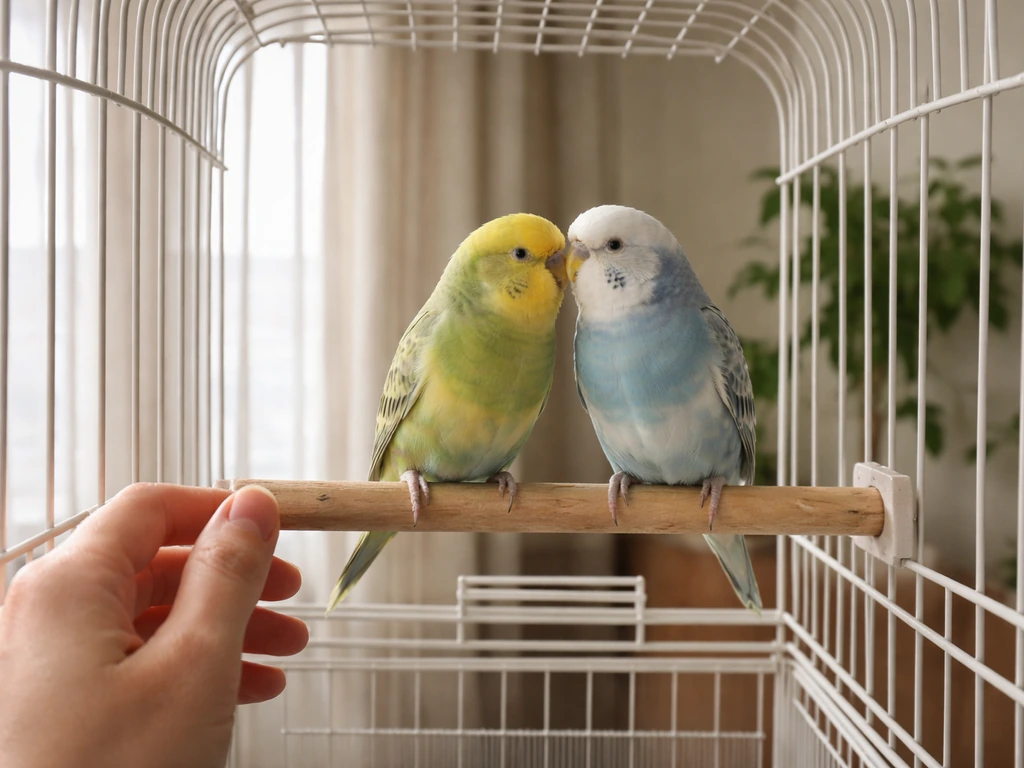
Is My Bird Gay? Same-Sex Bonding Explained for Owners
Answers is my bird gay by explaining same-sex bonding cues, sexing tips, and next steps for happy, healthy behavior.
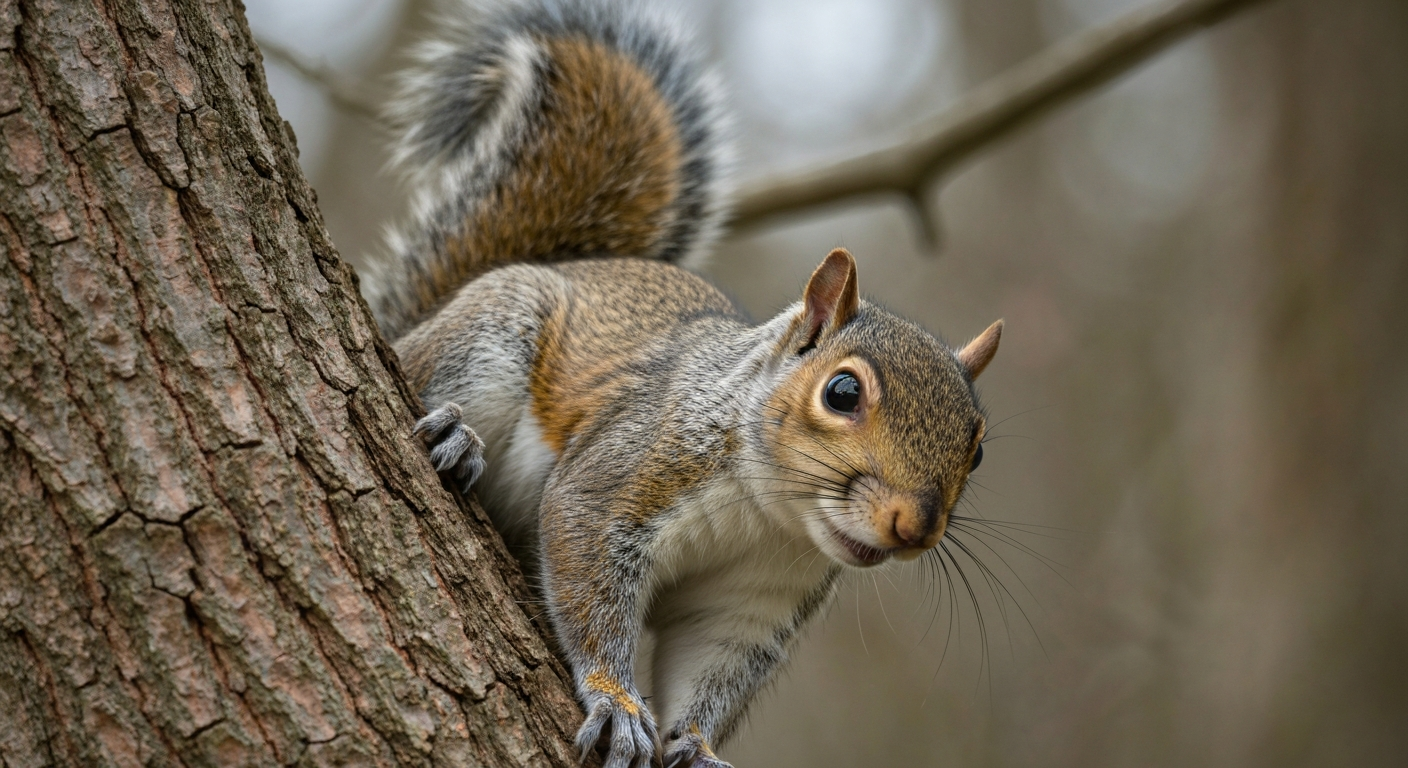
Is Squirrel Animal or Bird? Clear Answer and Classification
Squirrels are mammals, not birds, class Mammalia, order Rodentia. Quick traits, comparison table, checklist & FAQ.
Is a Turtle a Bird? Simple Taxonomy Checklist and Facts
No, turtles are not birds. Learn the traits that define birds versus reptiles and fix common shell and egg misconception