No, 'Quill' is not a bird. In everyday English, 'quill' is a word for a large bird feather or the hollow shaft at its base, and historically it refers to the writing pen made from such a feather. It is also a fairly common surname, given name, and fictional character name. No recognized species of bird carries the single common name 'Quill' on any major ornithological checklist, including the IOC World Bird List, the eBird/Clements Checklist, or the BirdLife International database. For example, the IOC World Bird Names entry for the Blue-faced Honeyeater uses the adjectival form 'white‑quilled' on its page, illustrating that 'quill' appears inside compound descriptors rather than as a standalone species common name Blue-faced Honeyeater — World Bird Names (IOC) — example showing 'white‑quilled' usage. If you searched 'is quill a bird,' the answer almost certainly depends on which sense of the word you had in mind, so this article walks through each possibility.
Is Quill a Bird? Clear Answers for Bird Classification

What 'Quill' Most Likely Means
The word 'quill' has a handful of distinct meanings in modern English, and knowing which one you encountered changes everything about how to answer this question. When I look at how people actually use the word, three scenarios come up again and again.
- A feather or feather shaft: The most common dictionary definition. A quill is the hollow, tubular base of a bird feather, or more loosely any large flight or tail feather. Merriam-Webster and the Oxford Learner's Dictionaries both lead with this meaning.
- A proper name or fictional character: 'Quill' appears as a surname (Peter Quill, the Marvel character Star-Lord, for instance), a given name, a software project name, and various brand names. Name databases confirm it sees real use as a personal name.
- A typo or mishearing of 'quail': This is a genuine and common slip. The words look and sound similar enough that a quick search for 'quill bird' often reflects someone who meant to type 'quail.' Quails are real birds; quills are not.
The fastest way to figure out which meaning applies to your situation is to look at the context: was 'Quill' capitalized as a name, used in a sentence about writing, or mentioned alongside other birds? That context narrows it down immediately.
Why a Quill Is Not a Bird
If you came across 'quill' in its literal, lowercase sense, it is describing a part of a bird, not the bird itself. The quill is the integumentary structure, specifically the calamus (the hollow base) and rachis (the central shaft) of a feather. Feathers are, as it happens, the single most important defining feature of birds. They are the synapomorphy, the shared derived trait, that distinguishes the class Aves from every other group of animals alive today. So ironically, a quill is one of the most 'bird-associated' objects in nature, while not being a bird at all. Think of it this way: a claw is very cat-like, but a claw is not a cat.
Historically, large flight feathers (usually from geese, swans, or turkeys) were trimmed and hardened to make writing instruments, which is why an old-fashioned pen is also called a quill. That association sticks around in language even though most people today will never write with an actual feather. When you see 'quill' used in this pen-related sense, it is doubly removed from being a bird.
When 'Quill' Is a Proper Name or Fictional Character
Proper names work differently from dictionary words, and 'Quill' is a legitimately popular one. Here are the most common contexts where you might see it.
- Peter Quill (Star-Lord): A human character from the Marvel Comics universe and the Guardians of the Galaxy films. Fully human, zero avian biology.
- Quill (software): A text editor and other software projects have used the name. Obviously not a bird.
- Quill as a surname or given name: Name databases record real people with the surname Quill, particularly in English-speaking countries with Irish heritage. No bird classification applies.
- Quill in media titles: Films, books, and games have used the name Quill. Context determines meaning every time.
The simple rule for fictional or named characters is to check what class of being the character belongs to in their own story. Peter Quill is a human. A character named Quill in a fantasy novel might be an elf or a wizard. Unless the creator explicitly wrote that character as a bird, the name carries no ornithological implication. This same logic applies to questions like whether Charizard or Pikachu are birds: you check the source material rather than the name, because names alone tell you nothing about biological class. If you specifically want to know whether Charizard is considered a bird, see is Charizard a bird for an explanation within the Pokémon universe.
Did You Mean 'Quail'? Correcting the Typo
If you typed 'quill' but were thinking of a small ground-dwelling bird, you almost certainly meant 'quail.' Quails are real birds belonging to several families in the order Galliformes, which also includes pheasants and partridges. They have feathers, lay eggs, maintain a constant body temperature, and meet every criterion for class Aves. The Northern Bobwhite (Colinus virginianus) in North America and the Common Quail (Coturnix coturnix) across Europe and Asia are two well-known examples. Quails are definitively birds. Quills are definitively not.
The Scientific Definition of a True Bird
Birds belong to the class Aves, which sits within the theropod dinosaur lineage. Yes, birds are technically living dinosaurs, a conclusion supported by fossil evidence from sites like the Jehol/Liaoning formations in China, where feathered theropods like Microraptor and Anchiornis show the evolutionary transition step by step. BirdLife International summarizes that birds are the surviving lineage of theropod dinosaurs, citing Jehol/Liaoning feathered fossils such as Microraptor and Anchiornis as central evidence. Biologists use a specific set of anatomical features to diagnose a bird, and every living species in class Aves shares all of them.
- Feathers: The defining integumentary feature, present in all birds and no other living animals.
- Beak (bill): A toothless, keratinous structure that replaced the toothed jaws of earlier avian ancestors.
- Wishbone (furcula): The fused clavicles that give the chest its distinctive shape and aid in flight mechanics.
- Pygostyle: The fused tail vertebrae that anchor tail feathers, replacing the long bony tail of non-avian dinosaurs.
- Hollow (pneumatic) bones: Lightweight bones connected to the respiratory system, reducing overall body mass.
- Egg-laying with amniotic eggs: All birds reproduce by laying eggs with hard or leathery shells.
- Endothermy (warm-bloodedness): Birds regulate their own body temperature internally.
- Four-chambered heart: A fully divided heart, shared with mammals but not with most reptiles.
An animal needs to tick all of these boxes, not just a few, to qualify as a bird. A bat has a four-chambered heart and is warm-blooded, but it has fur instead of feathers, gives birth to live young in most species, and lacks a beak and wishbone, so it is a mammal (order Chiroptera). A pterosaur had wings, but those wings were a skin membrane stretched over an enormously elongated fourth finger, not feathered forelimbs, and pterosaurs are classified as flying reptiles, not birds. Ancestry and anatomy together determine classification, not superficial appearance or the ability to fly.
A Practical Checklist for Identifying Any Bird
When you encounter an unfamiliar name or creature and want to know whether it is a bird, Cornell Lab's recommended approach works well both in the field and on paper. I use a condensed version of it whenever readers ask me about ambiguous names or creatures.
- Check size and shape: Does it have a beak, two wings structured from feathered forelimbs, and two legs? Basic body plan matters.
- Look for feathers: No feathers, no bird. Fur means mammal; scales without feathers mean reptile.
- Check for a beak vs. teeth or lips: A toothless, keratinous bill is a strong bird indicator.
- Ask whether it lays eggs: All birds do. But this alone is not enough, since reptiles do too.
- Verify against an official checklist: Search the IOC World Bird List or eBird/Clements for the exact common name. If the name does not appear there, it is not an officially recognized bird species.
- For fictional or mythological entities: Consult the source material. Classification follows in-universe biology, not real taxonomy.
- For proper names (surnames, given names): Treat them as labels only. A person or character named 'Quill' or 'Robin' is not necessarily a bird.
Borderline and Surprising Cases: Penguins, Ostriches, and Hoopoes
Some genuine birds confuse people precisely because they deviate from the mental image of a 'typical' bird. These are the cases worth knowing, because they reinforce what the diagnostic criteria actually mean.
| Animal | Looks unusual because... | Still a bird because... | Verdict |
|---|---|---|---|
| Penguin (Spheniscidae) | Flippers instead of wings, cannot fly, swims underwater | Has feathers, lays eggs, has a beak, warm-blooded, has furcula and pneumatic bones | Bird |
| Ostrich (Struthio camelus) | Flightless, reduced keel on breastbone, long bare neck and legs | Has feathers (including large flight and body feathers), lays eggs, has a beak, full avian skeleton | Bird |
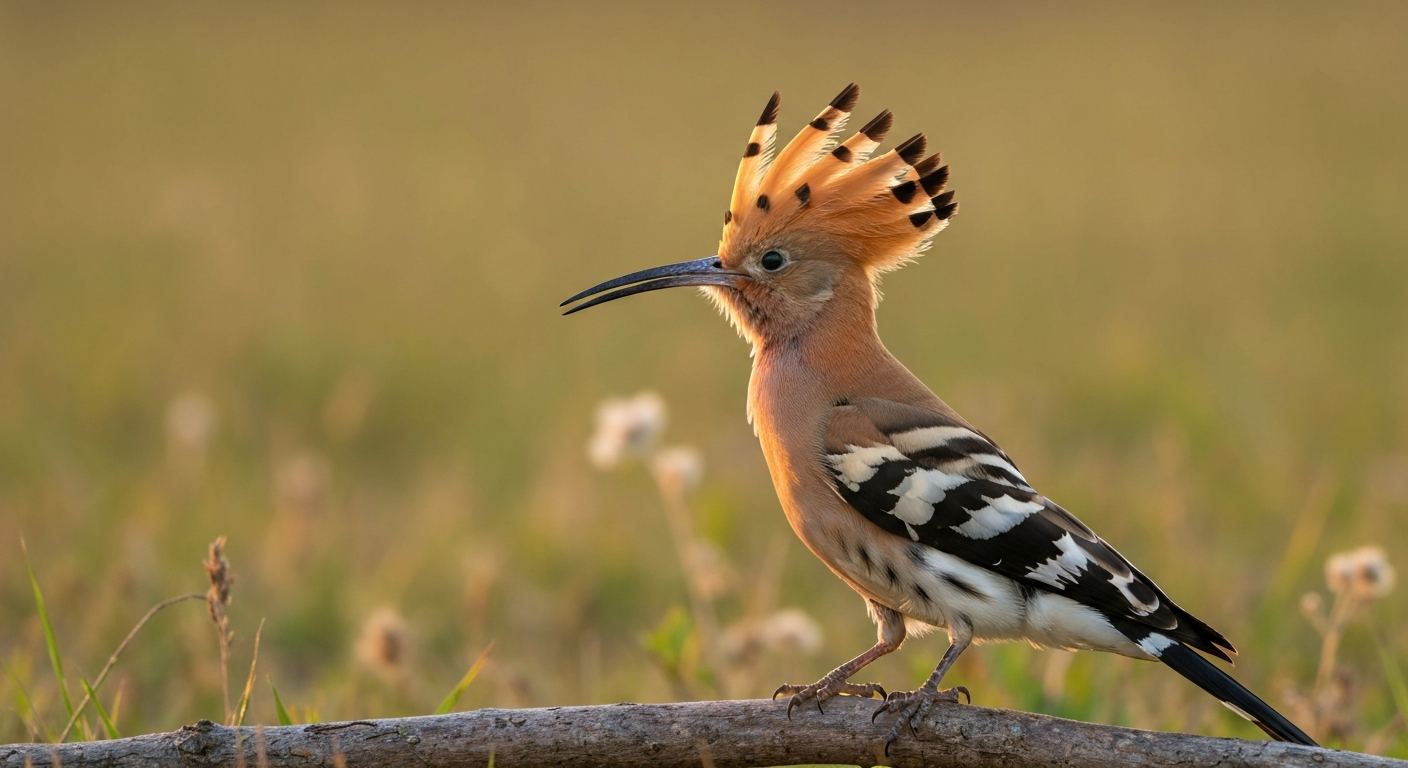
| Hoopoe (Upupa epops) | Dramatic erectile crest, unusual musculature, probes soil like a mammal might | Has feathers, beak, wishbone, lays eggs, full class Aves morphology | Bird |
| Bat (Chiroptera) | Flies, some species roost like birds, echolocates | Has fur not feathers, gives live birth (mostly), has mammalian ear bones and mammary glands | Mammal, not a bird |
| Pterosaur (extinct) | Flew, had a beak-like snout in some species | Membrane wing on elongated digit 4, no feathers (in most), reptilian skeleton | Flying reptile, not a bird |
Penguins are probably the most-questioned case I encounter. People see flippers and assume 'not a bird,' but penguin wings are modified forelimbs with the same underlying bone structure as any other bird wing, and their bodies are covered in short, dense, waterproof feathers. The Smithsonian Ocean program describes penguin bones as unusually dense (the opposite of most birds' hollow bones) because density helps them dive, yet penguins still pass every other avian diagnostic. They are unambiguously birds.
Hoopoes (Upupa epops) are another fun example. With their bold black-and-white striped wings and that dramatic fan-like crest, they look almost theatrical. Some readers wonder if they are 'climbing birds' given how they probe and hop around vertical surfaces. They are not woodpeckers and do not technically climb in the way a nuthatch does, but they are straightforward birds in the order Bucerotiformes. Their anatomy is textbook Aves.
Mythological and fictional creatures come up in similar conversations. The Vermilion Bird of Chinese mythology, for example, is a phoenix-like divine creature that resembles a bird but exists outside biological taxonomy entirely. Charizard and Pikachu from the Pokemon franchise are designed around real animals but are not classified as birds in any scientific sense, since they do not exist in the biological world. For a specific example about a fictional creature, see the discussion on whether Pikachu is a bird (search 'is Pikachu a bird'). When a name or entity is mythological or fictional, the question 'is it a bird? For questions about specific fictional creatures classified as wyverns, see the article "Is Quematrice a Bird (Wyvern)". ' has to be answered within the rules of that mythology or fictional universe, not by consulting a real ornithological checklist.
How to Settle Any 'Is X a Bird?' Question
Whenever a name or term is ambiguous, the taxonomy-first approach resolves it cleanly. Start with the dictionary and proper-name databases to understand what the word actually refers to. Then, if it refers to a real living animal, search the IOC World Bird List or eBird/Clements by its common name or scientific name. If it is a fictional entity, look to its source material. If it is a mythological creature, understand that mythology and taxonomy are separate systems. For 'Quill' specifically: it is a feather, a name, or a near-typo for 'quail,' and none of those three things is a bird species. If you're wondering whether 'Venus' might be a bird name, see the related article 'Is Venus a bird' for the same taxonomy-first approach.
FAQ
Direct answer: Is "Quill" a bird?
No—most commonly 'quill' is not the name of a bird species. In modern English 'quill' usually means the hollow shaft or a large flight feather (or a pen made from one). 'Quill' is widely used as a surname, a given name, a character or brand name, and appears in compounds (e.g., 'white‑quilled'), but it is not an established single‑word common name for any species in major global bird checklists (IOC, eBird/Clements, BirdLife). Context can still make a particular "Quill" (a fictional character or nickname) refer to a bird-like entity, so check the source.
What are the likely meanings when you see the word "Quill"?
1) The feather/shaft of a bird (primary dictionary sense). 2) A writing implement made from a feather (historical). 3) A proper name: surname, given name, fictional character, product, or title. 4) A typo or misspelling of 'quail' or another bird name. Determine which by reading surrounding context (sentence, image, species list).
How do scientists define a "true bird" (class Aves)? — concise diagnostic criteria
True birds are diagnosed by an anatomical and evolutionary suite including: feathers (feathered integument), forelimbs modified as wings with remiges (flight feathers), a furcula (wishbone), a pygostyle (shortened tail supporting tail feathers), hollow/pneumatized bones to varying degrees, and the placement within the avian (theropod) lineage. Practically, field identification also relies on external features: beak/bill (no teeth), scales on legs/feet, feather types, and avian behavior (perching, hopping, flight patterns).
Quick field identification checklist to decide whether an animal named "Quill" is a bird
Use these steps: 1) Look for feathers covering the body (not fur or skin membrane). 2) Check for a bill/beak (no external mammalian muzzle). 3) Note limb structure: wings with feathers, not skin membranes supported by fingers. 4) Observe reproduction/young if possible (eggs with hard shells vs. live young). 5) Listen for birdlike vocalizations (songs, calls). 6) Consider habitat and behavior (perching, waddling, flight). If most answers point to feathers, beak, wings, and egg-laying, it is a bird.
How do unusual birds compare to the checklist? (penguins, ostriches, hoopoes)
These are all unambiguous birds despite odd traits because they meet the avian criteria: - Penguins: flightless wings modified into flippers but retain feathers, beaks, pygostyle and other bird skeleton characters. - Ostriches (ratites): large flightless birds with reduced keel but classic bird anatomy and genetics. - Hoopoes: odd crest and bill shape but clearly feathered and avian in skeleton and behavior. Unusual function or loss of flight does not remove avian status if feathers and core anatomy are present.
How do commonly confused non-birds compare (bats, pterosaurs, dinosaurs)?
- Bats: mammals with fur, mammary glands, different ear/middle‑ear anatomy, wing membrane supported by multiple digits—so not birds. - Pterosaurs (extinct): flying reptiles with skin membrane wings supported by an elongated fourth finger—distinct from feathered avian wings. - Non‑avian dinosaurs: most are extinct; some were feathered and are ancestors/relatives of birds. Modern birds are the only living lineage of theropod (avian) dinosaurs; calling a modern animal a "bird" requires the living‑bird diagnostic features (feathers, avian skeleton).
Is a hoopoe a climbing bird? Short, evidence-based verdict with anatomy, behavior, checklist and climbing comparisons.
Is Quematrice a bird wyvern? Get a clear bird vs reptile verdict, traits to verify it, and how to check the name source.
Explore whether the Vermilion Bird is a phoenix, plus myth sources and why neither is real bird taxonomy.