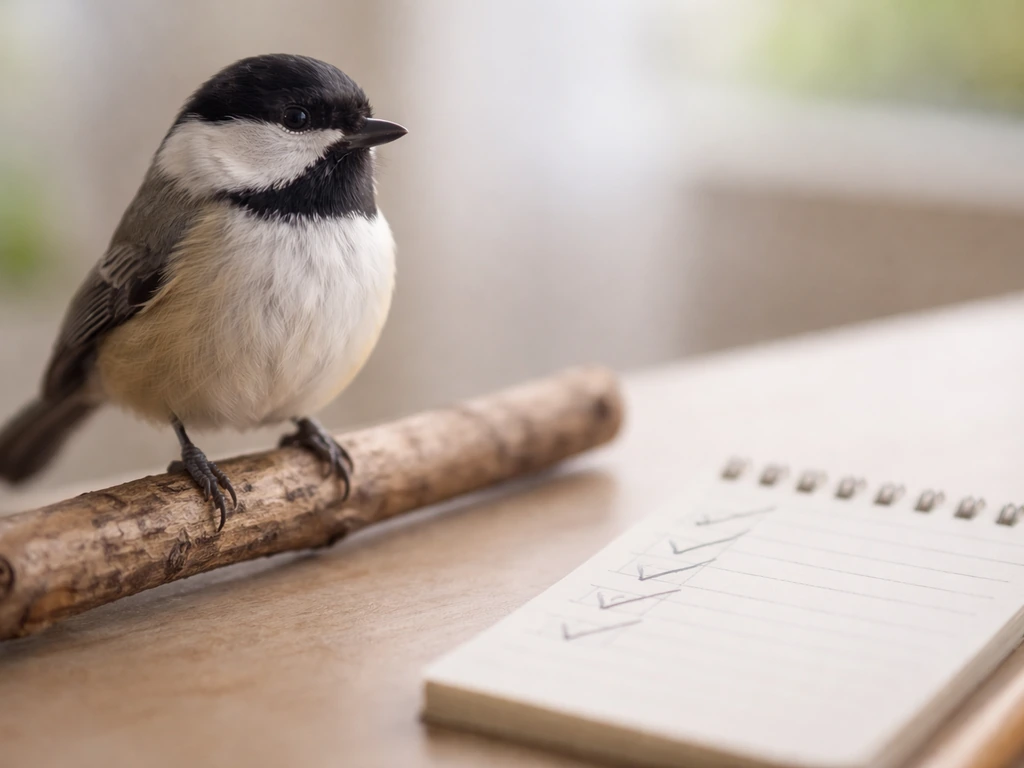
Yes, 'avian' means bird. If you are wondering “is a bird an avian,” the answer is yes in everyday usage, since avian simply means relating to birds. Every major dictionary agrees: Merriam-Webster, Britannica, and Oxford all define avian as 'of or relating to birds. ' The word comes from the Latin avis, meaning bird.
Does Avian Mean Bird? Meaning and Correct Usage

Sarah Chen
16 Jun 2026
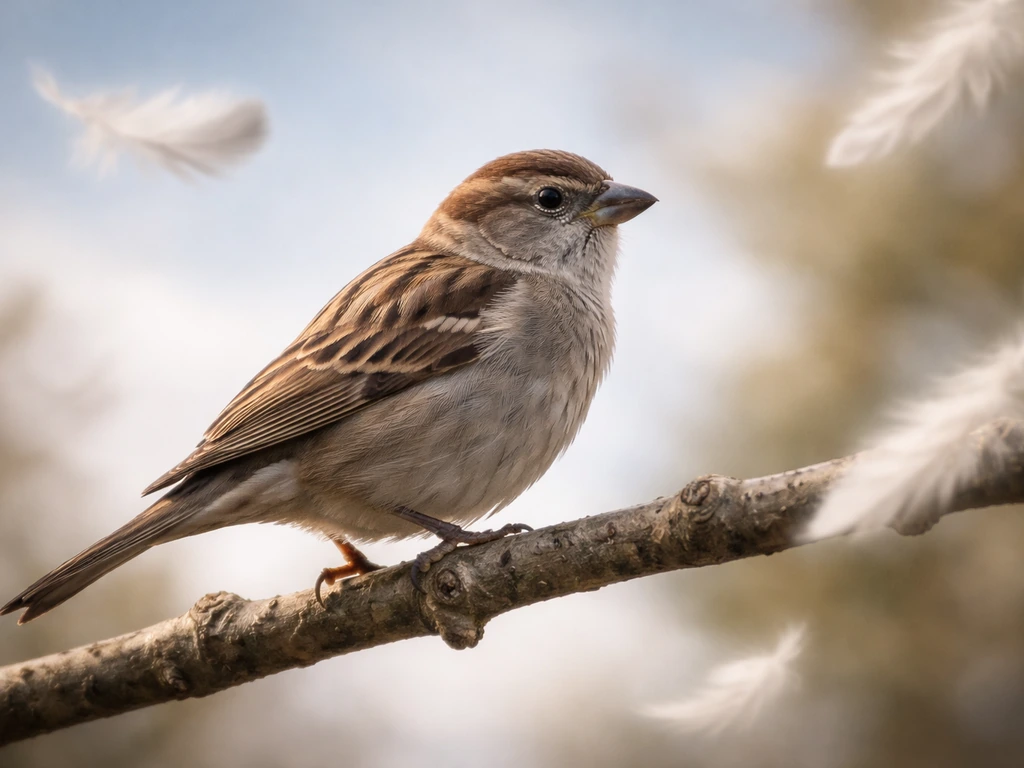
So whenever you see 'avian' on a news headline, a product label, or in a biology textbook, it is simply the adjective form of 'bird. ' Avian flu means bird flu. The WHO defines “avian influenza” as a disease caused by influenza A viruses of birds, commonly called “bird flu. ” [Avian flu means bird flu](https://www.
who. int/news-room/questions-and-answers/item/influenza-avian). Avian species means bird species. That's the whole answer, but there's a lot worth knowing about how the word is used in practice and what actually counts as a bird in the first place.
What 'avian' actually means in plain English

Avian is an adjective, not a noun. You wouldn't say 'look at that avian' the way you'd say 'look at that bird.' Instead, you use it to describe something connected to birds: avian behavior, avian anatomy, avian species. The word is more formal and technical than 'bird,' which is why you mostly see it in scientific writing, medical documents, and regulatory language rather than in casual conversation.
The Latin root avis shows up in a few other English words too. 'Aviation,' for example, literally traces back to that same root, which is why early aviators were sometimes described poetically as 'taking flight like birds.' That linguistic connection is a useful memory anchor: avian, aviation, avis all circle the same idea of birds and flight.
How 'avian' gets used in biology and everyday phrases
In biology, 'avian' almost always functions as a stand-in for the adjective form of Class Aves, which is the formal taxonomic class that includes all birds. A biologist studying nest construction would write 'avian nesting behavior.' A field ecologist tracking population changes would reference 'avian species diversity. Extension (UNH) explains how to think about bird presence and movement, which helps frame how terms like “avian” are used in bird-focused materials avian species diversity. ' In those contexts, swapping in 'bird' would mean exactly the same thing, but 'avian' signals a more precise, scientific register.
Outside of pure biology, here are the contexts where you will most commonly encounter the word:
- Avian influenza (bird flu): The most common everyday use. Public-health agencies like the WHO, CDC, and USDA all use 'avian influenza' and 'bird flu' interchangeably. Specific subtypes like A(H5N1) and A(H7N9) are classified as avian influenza viruses because they originate in birds, particularly wild waterfowl, shorebirds, and domestic poultry like chickens and turkeys.
- Avian species: Used in conservation reports, environmental impact assessments, and wildlife surveys to mean 'bird species.'
- Avian behavior or avian ecology: Standard phrasing in ornithology (the science of birds) for everything from migration patterns to nesting habits.
- Avian veterinary care: Vets who treat birds are often called avian vets, and products formulated for birds may be labeled for 'avian use.'
One important nuance in biology: paleontologists sometimes use 'avian' in a narrower technical sense to separate modern birds from their dinosaur relatives. You might read about 'non-avian theropod dinosaurs,' meaning the dinosaur relatives of birds that were not themselves birds. In that context, 'avian' is doing precise taxonomic work, distinguishing the lineage that survived and became today's birds from the branches that went extinct.
What actually makes something a bird
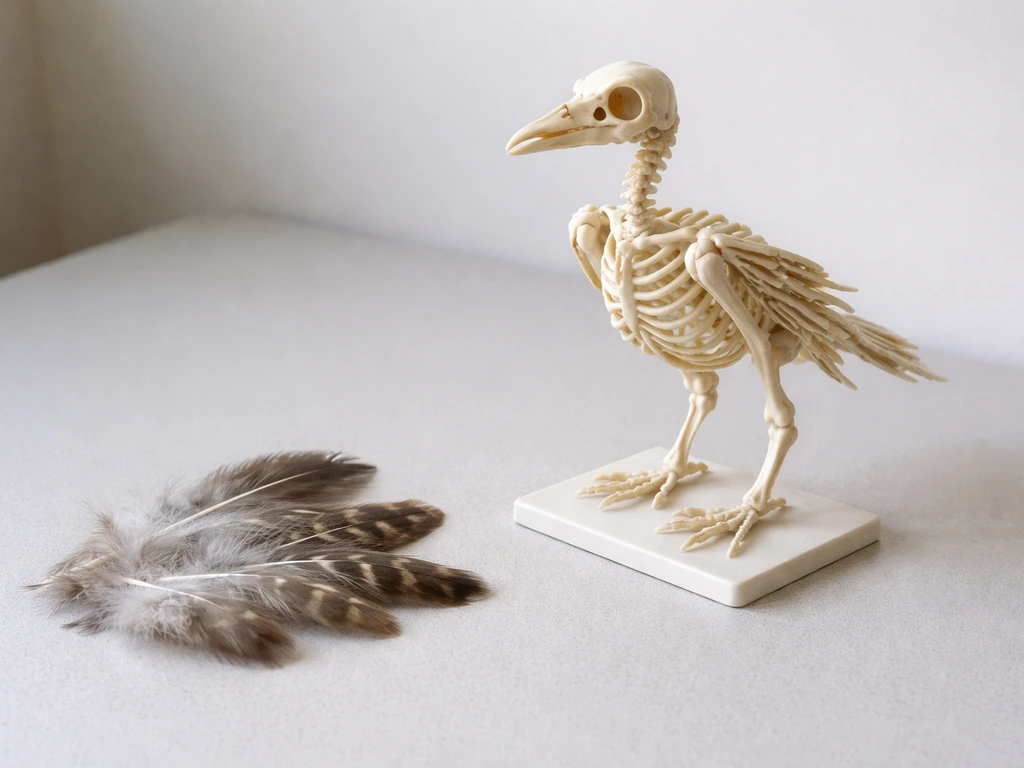
Since 'avian' means 'relating to birds,' it helps to know what biologists mean by 'bird' in the first place. That same idea of what counts as a bird is used for real-world cases like “a can that is also a bird. ”. Birds belong to Class Aves and are vertebrates, meaning they have a backbone.
But plenty of other animals have backbones, so the distinguishing features are more specific. According to the Smithsonian's National Museum of Natural History, birds are set apart from all other living vertebrates by three key traits: feathers, hollow bones, and hard-shelled eggs. Britannica adds two more to the checklist: birds are warm-blooded (homeothermic, maintaining a body temperature around 41°C or 106°F) and have a four-chambered heart.
That combination of traits is what matters, not any single feature on its own. A penguin can't fly, but it has feathers, lays hard-shelled eggs, has hollow bones, and is warm-blooded, so it is absolutely a bird. An ostrich is the same story. Meanwhile, a bat can fly, but it has none of those bird features. That's the dividing line.
Birds are also clearly distinct from mammals and reptiles, even though they share an evolutionary history with both. Mammals have fur or hair, give birth to live young in most cases, and nurse young with milk. Reptiles are typically cold-blooded (ectothermic) and do not have feathers. Birds split from the reptile family tree long ago, which is why they are sometimes described as 'living dinosaurs' but are still their own distinct class today.
The borderline cases that trip people up
Bats: flyers, but not avian
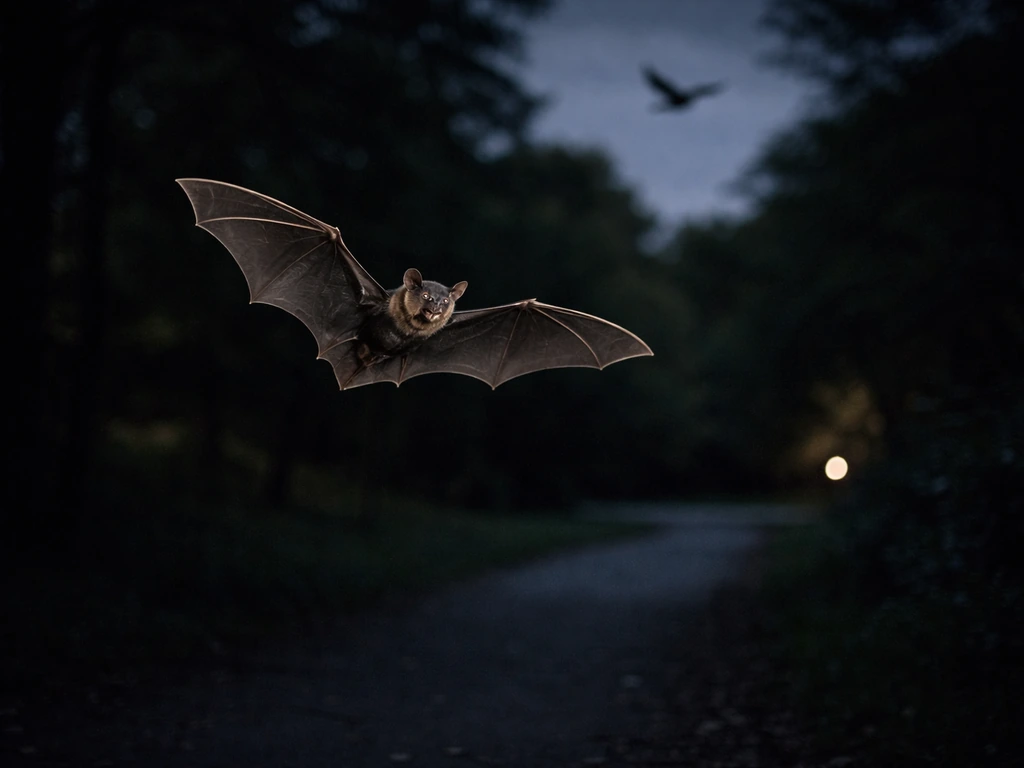
Bats are the most common source of confusion here. They fly, they're active in ways that remind people of birds, and people sometimes call them 'flying rats' or lump them with birds casually. But bats are mammals, full stop. They have fur, they nurse their pups with milk, and they give birth to live young rather than laying eggs. The National Park Service notes that bats are the only mammals capable of true sustained flight, which makes them extraordinary, but it doesn't make them avian. Nothing about a bat is 'of or relating to birds.'
Pterosaurs: ancient flyers, not birds either
Pterosaurs are prehistoric flying reptiles, and they cause real confusion because they look bird-like in reconstructions and because people often see them lumped with dinosaurs in museum exhibits. But pterosaurs were neither birds nor dinosaurs. The American Museum of Natural History describes them explicitly as 'not a bird, not a dinosaur.' Their wings were made of a thin skin membrane supported by an elongated finger bone, not feathers. The Natural History Museum of Utah makes the same point: the wing membrane, not feathers, is the defining structural feature of pterosaur flight. No feathers, no hollow bird-bones, no Class Aves membership.
Feathered dinosaurs: close, but still not 'avian' in the full sense
Here's where it gets genuinely interesting. Britannica notes that at least nine Cretaceous dinosaurs had feather-like structures, and feather evolution is now traced back to at least the Late Jurassic. So feathers alone don't automatically mean 'bird.' In strict paleontological usage, the term 'avian theropods' refers specifically to the dinosaur lineage that gave rise to modern birds, while all the other feathered dinosaurs (Velociraptor, for example) are called 'non-avian theropods.' When you see 'avian' used this way in dinosaur discussions, it's doing precise scientific work, not casual labeling.
How to read 'avian' on news headlines, health alerts, and product labels
Most of the time you encounter 'avian' outside a biology classroom, it will be in one of three contexts: public health news, veterinary or agricultural products, and occasionally regulatory documents. Here's how to interpret it in each.
| Context | What 'avian' means here | Practical implication |
|---|---|---|
| News headline (e.g., 'avian flu outbreak') | Bird flu, caused by influenza A viruses originating in birds | The disease started in birds; check if human transmission is reported separately |
| Veterinary product label ('for avian use') | Formulated for birds, not mammals or other animals | Do not use on dogs, cats, or other non-bird pets without vet guidance |
| Agricultural/USDA documents | Refers to poultry (chickens, turkeys, ducks, geese) and wild birds | Regulations or advisories likely apply to farms or properties with birds |
| EPA pesticide label ('against avian influenza A') | Product tested or approved for disinfecting against bird flu virus | Usage restrictions apply; read label for permitted surfaces and settings |
| Biology or conservation report | Relating to birds in Class Aves | Counts, data, or findings apply to bird species specifically |
One thing worth knowing about avian influenza specifically: the WHO notes that while these viruses mainly affect birds, some strains can infect mammals including humans. So when you read 'avian influenza,' it means the virus is bird-origin, but that doesn't mean it is limited to birds in a given outbreak. Check the specific reporting to see whether human or mammal cases are involved.
Quick self-checks for using 'avian' correctly
If you're trying to decide whether 'avian' applies to something you're reading about or writing about, run through these checks:
- Is the animal in question a member of Class Aves? If yes, it is a bird and 'avian' applies. If you're unsure, look for the three core traits: feathers, hollow bones, and hard-shelled eggs.
- Is the creature a bat? If yes, it is a mammal, not avian. Flight alone does not make something a bird.
- Is the creature a pterosaur or another prehistoric flying reptile? If yes, it is not avian. Wing membranes, not feathers, defined pterosaur flight.
- Does the label or headline say 'avian influenza' or 'avian flu'? Both terms mean the same thing: a flu caused by influenza A viruses from birds. Assume it started in birds; check separately whether it has crossed into other animals.
- Does a product say 'for avian use'? That means it is formulated for birds. If you have a non-bird pet, consult a vet before using it.
- Are you reading about 'non-avian dinosaurs' or 'non-avian theropods'? That phrasing means dinosaurs that are NOT on the direct evolutionary line to modern birds. 'Avian theropods' are the ones that are ancestral to birds.
The bottom line is straightforward: avian means bird, always. If you wonder about the different words used for living things, those same classification ideas are what help answer what a bird, a fruit, and a person are avians means bird, always. . The context changes how specifically the word is being used, but the core meaning never shifts.
Whether you're reading a WHO health advisory, a wildlife conservation report, or a vet's prescription label, 'avian' is pointing you to birds or something directly connected to birds. Those biological distinctions are what determine whether something is a bird and animal, not just how it looks or how it flies.
If you're exploring adjacent questions about how birds are classified alongside other animals, or whether something specific counts as a bird, those distinctions always come back to the biological features of Class Aves: feathers, hollow bones, warm blood, and hard-shelled eggs.
FAQ
Is “avian” ever used as a noun (for example, “look at that avian”)?
No. “Avian” is an adjective, so it must modify a noun (like avian influenza, avian nesting, avian species). If you want to name an animal, use “bird,” or, in technical writing, “members of Class Aves.”
If a headline says “avian influenza,” does it mean humans cannot be infected?
Often, but not always. In public health reporting, “avian” usually means the pathogen is bird-associated or bird-origin, yet outbreaks can still involve mammals in certain strains. Check whether the document mentions human or other mammal cases, not just the headline term.
Does “avian” mean just modern birds, or does it include extinct relatives too?
In biology, “avian” often signals “of or relating to birds” or, in some evolutionary discussions, “the lineage leading to modern birds.” To avoid confusion, follow the paper’s wording for whether it means “birds generally” or “birds plus their defining evolutionary lineage,” especially in dinosaur contexts.
Can I safely replace “avian behavior” with “bird behavior” in most writing?
Usually yes. If you see “avian” modifying a body part or behavior (avian anatomy, avian locomotion, avian incubation), it refers to traits expected in birds or birds specifically. If the source is discussing dinosaur anatomy, the term may be narrower (for example, “avian theropods”).
What are common mistakes people make when they assume something is “avian” just because it looks like a bird?
Not reliably. Because “avian” is about the bird-related traits and classification, something can look bird-like (for example, a flying reptile in a reconstruction) without being avian in the biological sense. Look for the defining traits of birds (feathers, hollow bones, hard-shelled eggs, and warm-blooded physiology) or the author’s taxonomic definition.
Does “avian” in a regulation or product label always mean all birds?
In scientific and regulatory contexts, “avian” can indicate scope. For instance, “avian species” may mean birds broadly, while a regulation might specifically target poultry or certain bird groups. If you need legal or compliance accuracy, don’t stop at the general meaning, check the document’s definitions section.
Are “avian” and “aviation” interchangeable because they share the same root?
No. “Aviation” is related etymologically to the Latin root, but it is not the same word meaning. “Aviation” refers to flight and aircraft activity, while “avian” refers to birds or bird-related characteristics.
If a paper uses “avian” broadly, how do I find out the exact species being discussed?
Yes. The word “avian” will not tell you whether the species is a specific kind of bird, just that it is bird-related. For precise identification, you still need the rest of the phrase or the species name (for example, “avian species diversity” does not specify which species).
When should I use “avian” versus “bird” in everyday writing?
For non-experts, “bird” is usually the correct everyday term, and “avian” should be reserved for formal topics like medicine, veterinary guidance, ecology, or taxonomy. A quick rule, if you are writing casually and not dealing with classification, “bird” is clearer and less technical.
Next Article
One Is a Bird: How to Tell If It’s Really a Bird
Use a simple checklist to confirm if something is a true bird, and sort out bats, reptiles, penguins, and dinosaurs.