A bird is a warm-blooded vertebrate in Class Aves, covered in feathers, equipped with a toothless beak, and reproducing by hard-shelled eggs. A fruit is a seed-bearing structure produced by a flowering plant. A person is a human being, classified biologically as a mammal. These three things belong to completely separate categories: an animal, a plant structure, and another kind of animal. None of them overlap, and none of them is a bird except the bird itself.
What Is a Bird, a Fruit, and a Person? Clear Definitions

Sarah Chen
14 May 2026
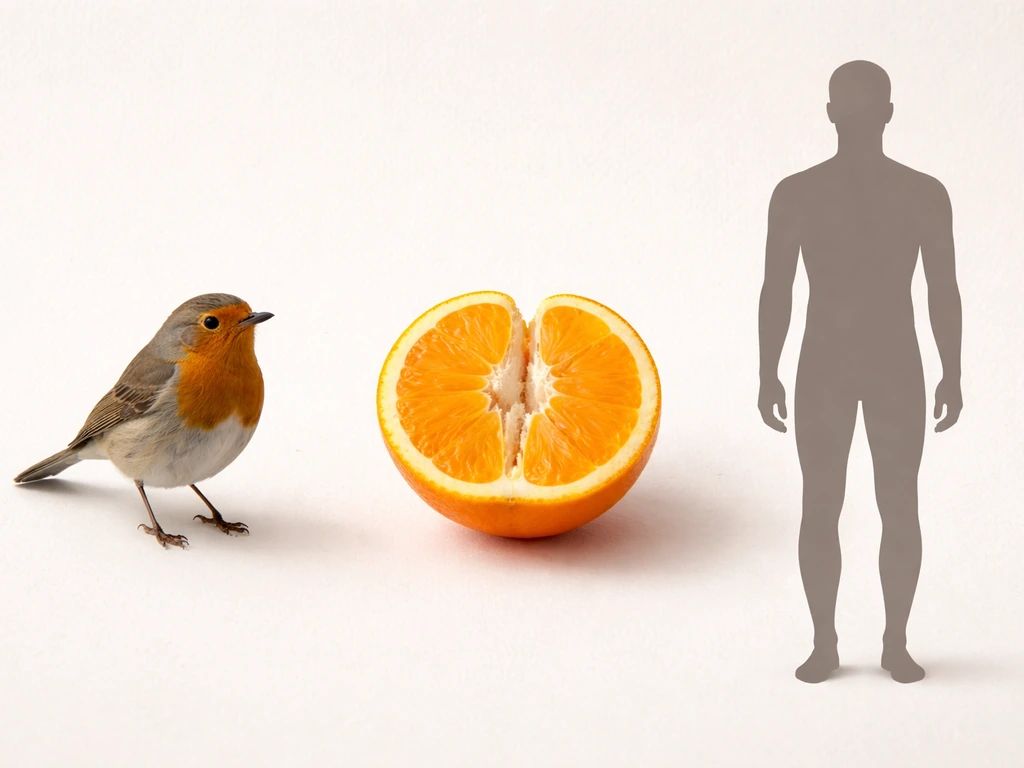
What each word actually means
Before diving into biology, it helps to pin down each term plainly so there's no confusion about what we're comparing.
- Bird: any animal belonging to Class Aves. Think robins, eagles, penguins, and ostriches. All share a core set of physical traits covered below.
- Fruit: in botany, the ripened ovary of a flowering plant that encloses seeds. In everyday speech, people usually mean sweet or tart edible produce like apples and strawberries. Botanically, tomatoes and avocados are fruits too, even though most cooks treat them as vegetables.
- Person: a human being. In biology, that means a member of the species Homo sapiens, Class Mammalia. In law, a 'person' can also mean a corporation or other legal entity, but biology doesn't care about that distinction.
The reason people type this query is usually because they've seen it as a riddle or a trick question, or they're genuinely wrestling with how classification works. Either way, the answer starts with understanding what birds actually are at the biological level.
The traits that actually make an animal a bird
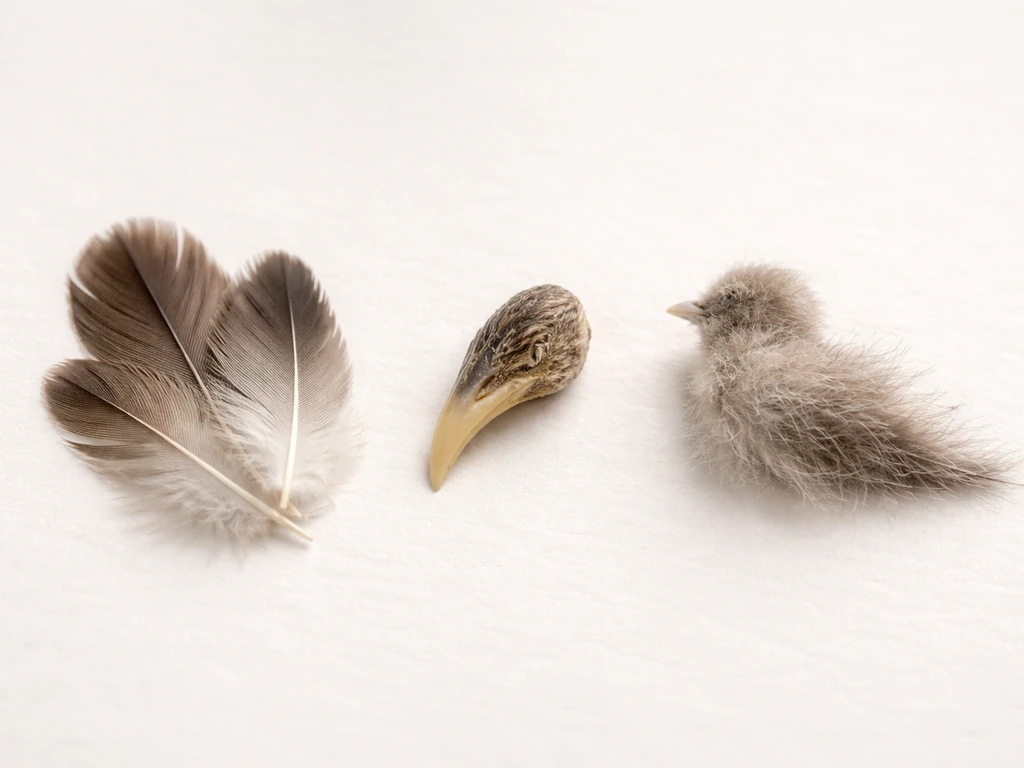
Taxonomists place birds in Class Aves under the broader group of vertebrates. That class is defined by a cluster of physical and physiological traits that, taken together, are unique to birds. No other living group has all of them at once.
- Feathers: the single most reliable visible marker. All birds have them; no non-bird does.
- Toothless beak covered in keratin: the outer sheath is called the rhamphotheca, split into an upper portion (rhinotheca) and a lower (gnathotheca). Birds don't have teeth.
- Hard-shelled eggs: the shell is primarily calcite (calcium carbonate) and is porous enough to allow gas exchange with the developing embryo.
- Warm-blooded (endothermic): birds regulate their own body temperature internally, as mammals do.
- Four-chambered heart: allows full separation of oxygenated and deoxygenated blood.
- Lightweight skeleton with hollow (pneumatic) bones: reduces weight for flight, though flightless birds retain the hollow structure.
- Unique respiratory system: lungs connect to large air sacs, creating unidirectional airflow rather than the in-out breathing mammals use.
You need most of these traits together, not just one. An animal that's warm-blooded but has fur and nurses its young is a mammal, not a bird. An animal that lays eggs but has scales and no feathers is a reptile. The combination is what matters.
Why fruit has nothing to do with birds
Fruit and birds don't share a category at any biological level. A fruit is a plant structure, specifically the matured ovary of a flowering plant (an angiosperm). For example, when people ask whether something like koko is a bird, the answer depends on whether it matches the biological bird criteria outlined in the checklist. When a flower is fertilized, its ovary wall develops into the fruit tissue surrounding the seeds. That's why a tomato, a coconut, and a bean pod are all technically fruits, even though they don't look or taste like what most people picture.
Birds are animals. Plants and animals are entirely separate kingdoms in biology. There is no classification hierarchy where a bird and a fruit meet as the same kind of thing. The only relationship worth noting is ecological: birds eat fruit and disperse seeds. But that's a food relationship, not a classification one. If you're ever asked whether a bird is more like a fruit or a person, the answer is neither, but at least a person is also an animal.
Why a person isn't a bird (and why that distinction matters)
Humans are warm-blooded vertebrates, just like birds, which is where the surface similarity ends. Biologically, people belong to Class Mammalia, not Class Aves. The differences are concrete and checkable: All About Birds’ “Classifying Birds” compares bird classification with Mammalia by listing Aves as warm-blooded, feathered, with hollow bones, and egg-laying Aves (warm-blooded, feathers, hollow bones, lays eggs).
| Trait | Birds (Aves) | Humans (Mammalia) |
|---|---|---|
| Body covering | Feathers | Hair/skin |
| Reproduction | Hard-shelled eggs | Live birth (viviparous) |
| Feeding young | Regurgitation or foraging | Milk from mammary glands |
| Bones | Hollow (pneumatic) | Solid |
| Teeth | None (keratinous beak) | Present |
| Breathing | Unidirectional lung/air sac system | Bidirectional lungs |
The mammary gland point is especially useful: it's the defining mammal trait. If an animal nurses its young with milk, it's a mammal, full stop. Humans do exactly that. No bird does. The word 'person' also carries legal meanings (a corporation can be a legal person, for instance), but none of that touches biology. When you're classifying a creature, only the physical and genetic traits count.
This distinction matters beyond trivia. Understanding that humans are mammals, not birds, is the foundation for understanding why so many 'borderline' creatures get misclassified. People sometimes ask whether something is a bird or a person, or a bird or an animal, because the categories feel fuzzy. They're not. The checklist is clear once you know what to look for. (The related question of whether a bird is an animal at all is worth exploring separately, since some people genuinely aren't sure where birds fit in the broader animal kingdom.)
The classic confusion cases: bats, pterosaurs, and other look-alikes
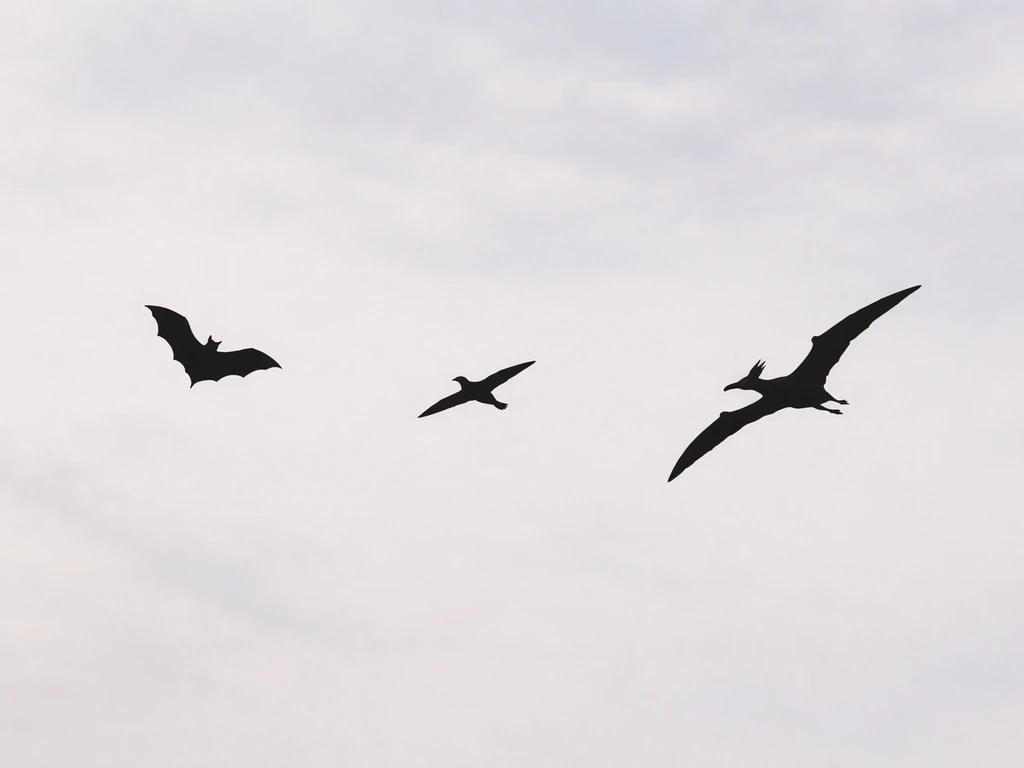
A big reason people get fuzzy about bird classification is that other animals can look superficially bird-like, especially anything that flies or glides. Here are the most common ones people mix up:
Bats
Bats fly, which makes people assume they might be birds. They're not. A can that is also a bird is classified the same way as any other bird: it must match the bird traits in the checklist. Bats are mammals in Order Chiroptera. They have hair, not feathers. They give birth to live young and nurse them with milk. Their wings are skin membranes stretched between elongated finger bones, not feathered forelimbs. If you run through the bird checklist, bats fail almost every item.
Pterosaurs
Pterosaurs were flying reptiles that lived alongside dinosaurs and are now extinct. They share an evolutionary lineage with birds (both are archosaurs, the same group that includes crocodiles), but they are not birds. Their wings were formed by a thin skin membrane, not feathers. They fall outside Class Aves entirely. Sharing an ancestor millions of years back doesn't make them the same class any more than it makes crocodiles birds.
Flying squirrels and gliding insects
Flying squirrels glide using a fur-covered skin membrane called a patagium stretched between their limbs. They're mammals. Large insects like dragonflies or moths can look bird-like in flight from a distance, but insects have an exoskeleton, three body segments, six legs, and no backbone. They're not even close to vertebrates, let alone birds.
Borderline birds: the ones that still count
On the flip side, some genuine birds get misclassified as 'not birds' because they don't match the mental image of a bird that flies and sings. These are worth knowing because they show how robust the bird checklist really is.
Penguins
Penguins can't fly and spend most of their lives in or near cold water. But they are absolutely birds. They have feathers, they have beaks, and they lay hard-shelled eggs (with incubation shared between both parents in most species, and handled exclusively by the male in emperor penguins). Penguins belong to Order Sphenisciformes within Class Aves. Flightlessness doesn't remove them from the class.
Ostriches and other ratites
Ostriches, emus, rheas, and kiwis are all flightless birds grouped as ratites. They lack the keel bone that anchors flight muscles in flying birds, but they still have feathers, beaks, and lay eggs. The emu, for instance, begins egg-laying toward the end of April in the wild, and its eggs have all the hallmark avian shell structure. These birds are just as much Class Aves as any sparrow.
How to classify any creature fast
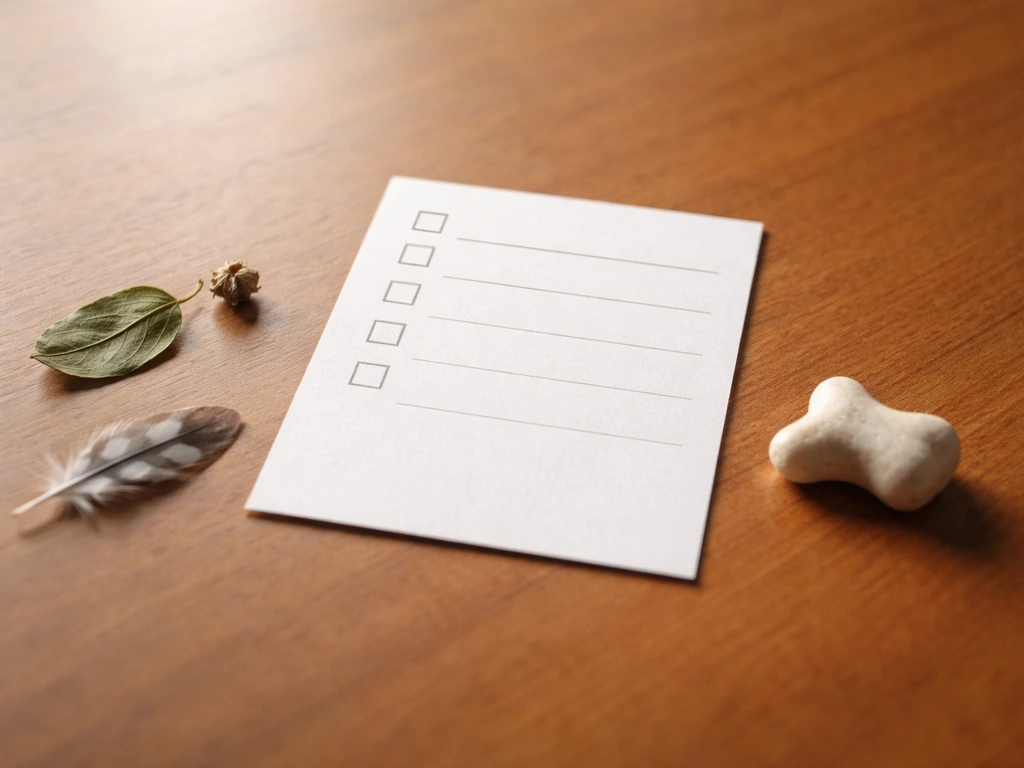
When you're unsure whether something is a bird (or a fruit, or a person), run through this quick checklist. It handles the vast majority of cases in seconds.
- Is it a plant structure? If yes, it might be a fruit (seed-bearing, from a flowering plant's ovary). Stop here, it's not a bird.
- Is it a human or does it nurse young with milk and have hair? If yes, it's a mammal. Not a bird.
- Does it have feathers? If yes, you're almost certainly looking at a bird. No other living animal has true feathers.
- Does it have a toothless keratinous beak, lay hard-shelled eggs, and have a four-chambered heart with hollow bones? If yes to most of these, it's a bird even if it doesn't fly.
- Does it fly but have a skin membrane wing, fur, or live-born young? It's a bat (mammal) or a gliding mammal, not a bird.
- Is it extinct and winged with a skin membrane? It's likely a pterosaur (flying reptile), not a bird.
- Still unsure? Look up the creature in the GBIF Backbone Taxonomy and check its listed Class. Class Aves means bird; anything else means not a bird.
That last step is genuinely useful for obscure cases. The GBIF Backbone Taxonomy is a global biodiversity database that assigns every described species to a taxonomic rank, and 'Class: Aves' is the definitive confirmation that something is a bird in the scientific sense. ITIS states that its mission is to communicate a comprehensive taxonomy of global species and that it partners with GBIF ITIS communicates a comprehensive taxonomy of global species and partners with GBIF. For well-known animals, a quick search on Britannica or Wikipedia will surface the class immediately.
So to close the loop: a bird is a feathered, beaked, egg-laying member of Class Aves. A fruit is a seed-bearing plant structure. A person is a human mammal. They represent three entirely different biological categories, and once you know the core bird checklist, you can sort almost any creature correctly in under a minute.
FAQ
If a corporation is called a “legal person,” does that make it a mammal or a person in the biology sense?
No. “Legal person” is a law concept, not a biological classification. In biology, a person means a human being, and humans are mammals in Class Mammalia. Legal personhood has no impact on traits like milk production, hair, or gene-based taxonomy.
Are eggs from turtles or reptiles “hard-shelled eggs,” and does that mean they are birds?
Hard shells alone are not enough. Birds are defined by a combination of traits, including feathers and other internal characteristics, plus being in Class Aves. Many reptiles and other egg-laying animals produce eggs that can look similar, but they fail multiple bird checklist items.
What counts as a fruit if the structure is edible but not from a flower (for example, seeds inside cones)?
In botany, “fruit” refers to a seed-bearing structure that develops from a flowering plant’s ovary. Cones from gymnosperms are not botanical fruits under that definition, even if the contents are edible. So what you eat does not automatically match the botanical fruit category.
Can something be both “a fruit” in everyday speech and “not a fruit” botanically?
Yes. Many common foods (like tomatoes, cucumbers, and beans) are botanically fruits because they develop from the flower’s ovary, while other items often called fruits (like strawberries) are not true botanical fruits in the same way because the edible part may come from flower tissue beyond the ovary.
How do I classify an animal if it doesn’t clearly have feathers but does have bird-like traits like laying eggs or being warm-blooded?
Use the full set of bird criteria, not a single trait. Warm-blooded egg-layers with beak-like features might still be in a different class, because birds require a suite of traits together. If feathers are truly absent, you should treat it as a non-bird until other Class Aves traits also line up.
Do flightless birds like ostriches and penguins count as birds even though they don’t fly?
Yes. Lack of flight does not remove an animal from Class Aves. Penguins and ratites still have core bird traits like feathers, beaks, and egg-laying, and they belong to specific bird orders within Class Aves.
Are baby birds considered birds, even if they have not developed feathers yet?
Yes, classification is based on species and defining anatomical traits, not only on outward appearance at a particular life stage. A juvenile of a bird species is still a bird, even if some defining features (like full feather development) are not visible yet.
Is it possible for an animal to be “bird-like” and still not be a vertebrate?
Yes, and that’s a common confusion in riddle-style questions. Many animals that look bird-like in flight, such as insects (dragonflies, moths), are invertebrates with exoskeletons and segmented bodies. They are not vertebrates and therefore cannot be birds.
If a bird eats a fruit, do they become related categories in any classification system?
No. Eating is an ecological relationship, not a taxonomic one. A bird remains an animal, and a fruit remains a plant structure, because classification depends on biological lineage and structure, not diet or interaction.
What is the fastest “decision aid” to answer this question correctly in the real world?
For “bird,” verify the animal’s taxonomic class is Class Aves or run the trait checklist together (feathers, beak, egg-laying, and the rest of the bird trait set). For “fruit,” confirm it develops from a flowering plant’s ovary. For “person,” use that “person” means a human mammal, not a general label for animals or legal terminology.
Next Articles
Is a Bird and Animal? How to Tell Birds From Other Creatures
Learn if birds are animals and use a checklist to tell birds from mammals, reptiles, bats, and flightless species.
Is a Turtle a Bird? Simple Taxonomy Checklist and Facts
No, turtles are not birds. Learn the traits that define birds versus reptiles and fix common shell and egg misconception
Is a Hen a Bird or an Animal? Simple Answer and Check
A hen is an animal, specifically a bird. Use a quick checklist to spot bird traits and clear common classification confu