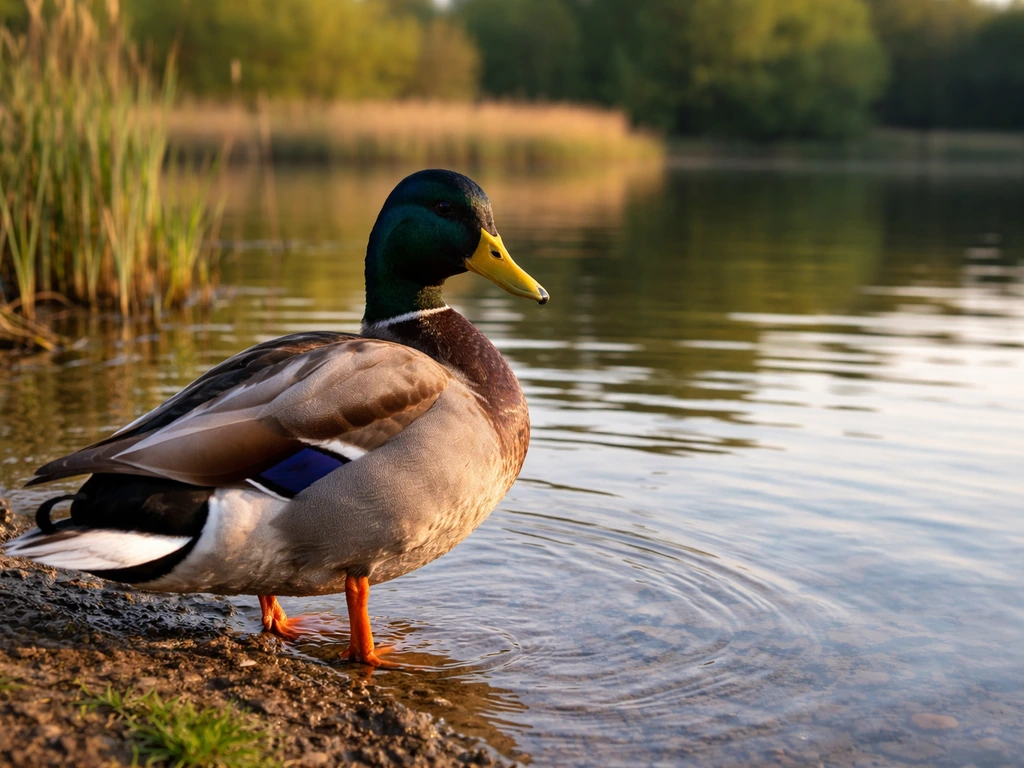
A duck is both a bird and an animal, and there is no contradiction there. "Animal" is a broad biological category that includes every creature from insects to elephants, and birds are one specific group within it. Ducks belong to Class Aves (birds) and Family Anatidae within the order Anseriformes, which places them firmly in the bird camp. So if someone asks "is a duck a bird or an animal," the honest answer is: it's a bird, and because birds are animals, it's an animal too.
Duck Is a Bird or Animal? The Simple Classification

Sarah Chen
18 May 2026
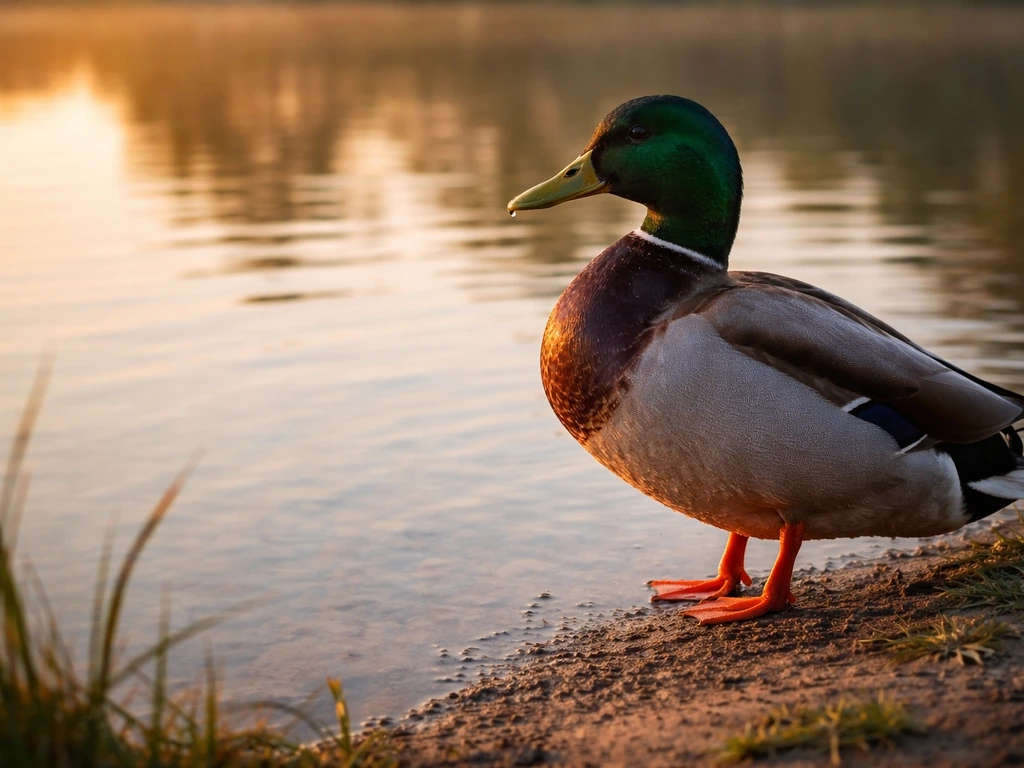
What "animal" actually means, and where birds fit in
The word "animal" gets used loosely in everyday speech to mean something like "a creature that isn't a human or a plant," but in biology it just means any multicellular organism in the Kingdom Animalia. That definition covers an enormous range: sponges, beetles, sharks, tigers, and yes, birds. Birds are animals the same way mammals are animals. The two groups are not in competition with each other; they sit at different levels of the classification tree.
The full classification hierarchy for ducks looks like this: Kingdom Animalia (animals) → Phylum Chordata (vertebrates) → Class Aves (birds) → Order Anseriformes (waterfowl) → Family Anatidae (ducks, geese, and swans). Every level above "duck" confirms the same thing: ducks are birds that are also animals. If you are still wondering whether duck is a bird or mammal, the taxonomy answers that it is a bird ducks are birds that are also animals. Asking "bird or animal" is a little like asking "is a golden retriever a dog or a mammal?" It's both, at different levels of the same system.
What actually makes something a bird
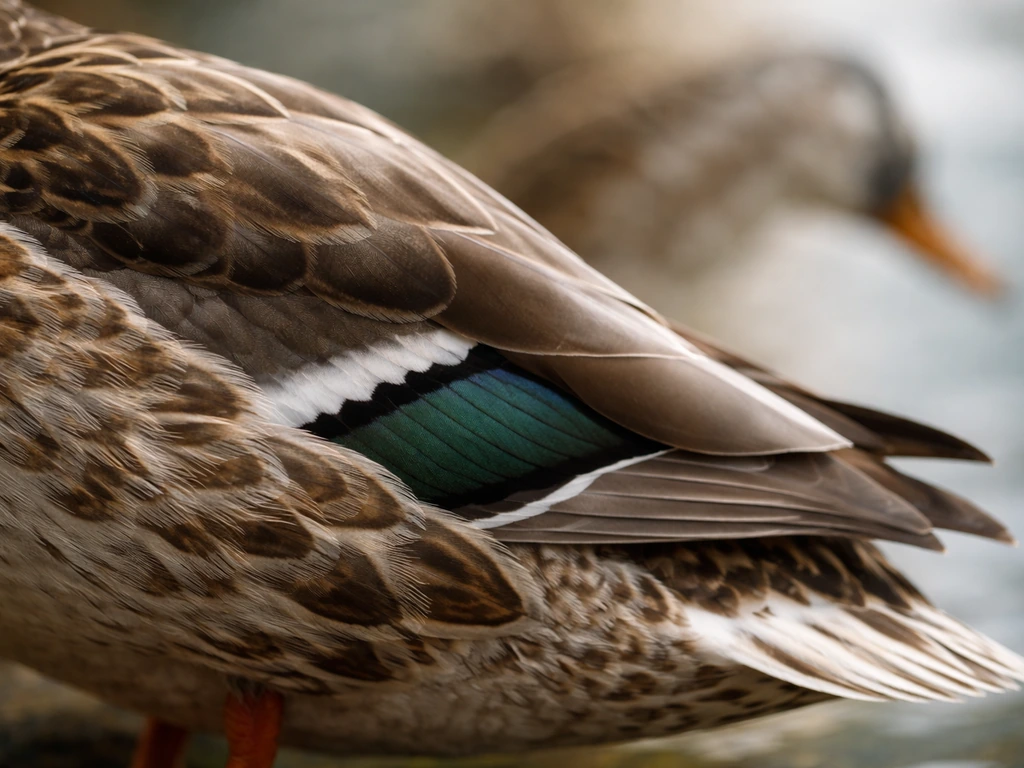
Rather than memorizing a Latin class name, it helps to know the physical traits that define Class Aves. Biologists point to three key markers that separate birds from every other living vertebrate: feathers, hollow bones, and hard-shelled eggs. The Environmental Literacy Council also uses feathers, beak (without teeth), and hard-shelled eggs as bird traits to distinguish birds from mammals, which they use to argue ducks are not mammals feathers, hollow bones, and hard-shelled eggs. The Smithsonian uses exactly these three traits as the defining criteria. The San Diego Zoo adds one more useful point: birds are the only animals on Earth that have feathers, full stop. No mammal, no reptile, no fish has feathers. If something has feathers, it is a bird.
- Feathers: unique to birds; no other living animal group has them
- Hollow bones: reduce body weight for flight (or efficient movement in flightless species)
- Hard-shelled eggs: birds lay eggs with a rigid calcified shell, unlike reptile eggs which are typically leathery
- Warm-blooded (endothermic): birds regulate their own body temperature, as mammals do
- Wings: present in all birds, though not always used for flight (think penguins and ostriches)
Ducks check every box. They have feathers, lay hard-shelled eggs, have hollow bones, are warm-blooded, and have wings they use for actual flight. There is nothing borderline or ambiguous about a duck's classification. The U.S. Fish and Wildlife Service treats ducks as waterfowl under the bird order Anseriformes, and Britannica categorizes the Family Anatidae (ducks, geese, and swans) as a bird family. This is settled science.
Duck taxonomy basics: where ducks sit in the bird family tree
Ducks belong to Family Anatidae, a bird family that also includes geese and swans. Anatidae sits within the order Anseriformes, one of the major waterfowl orders. The ITIS (Integrated Taxonomic Information System) database places the entire order Anseriformes under Kingdom Animalia, which again confirms the bird-within-animal logic. Well-known duck species like the Mallard and the Muscovy duck are both classified under Anatidae, and neither raises any taxonomic questions.
It is worth noting that "duck" is not one single species. It is a common name applied to many different members of Anatidae, typically the smaller ones in the family. Geese and swans are closely related, which is why questions about ducks are almost identical to questions about geese. (A separate, related check is whether a goose is a bird.) is a goose a bird. If you are curious whether a goose is a bird or an animal, the answer follows the same logic: it's a bird within the broader animal kingdom, sitting in the same family (Anatidae) and the same order (Anseriformes).
How ducks differ from the non-birds people sometimes confuse with birds
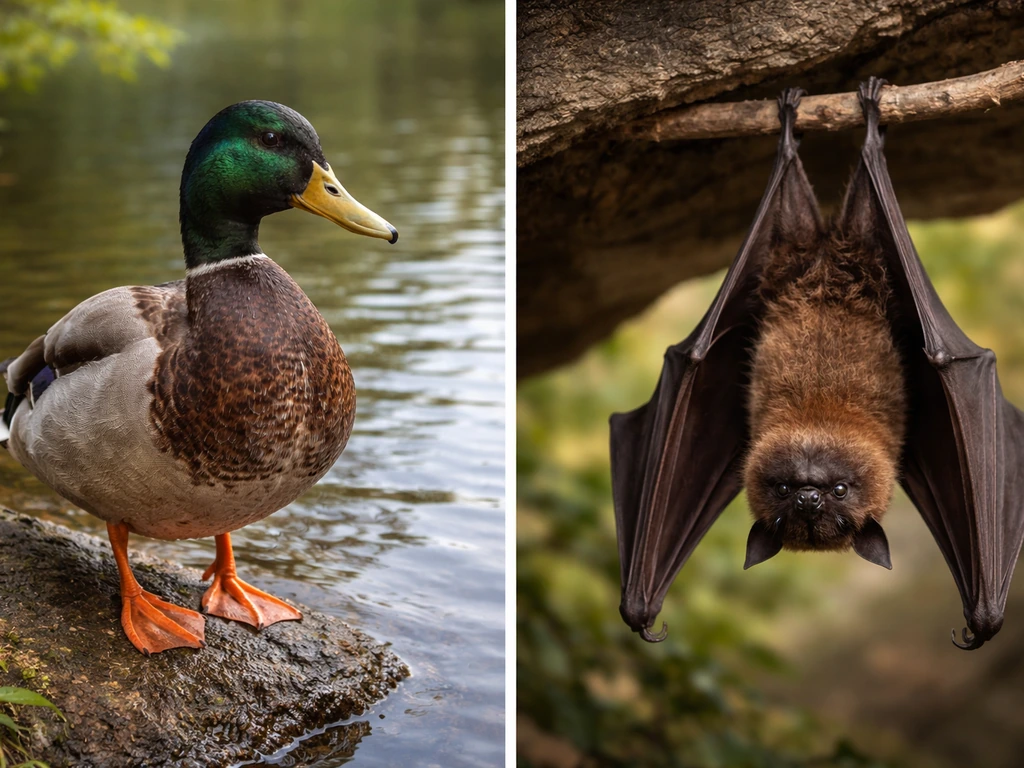
The most common source of confusion involves flying animals that are not birds. Bats fly, but they are mammals (Order Chiroptera). The key difference is straightforward: bats have fur, give birth to live young, and nurse with milk. They have no feathers whatsoever. Ducks have feathers, lay hard-shelled eggs, and nurse no one. The two groups are completely distinct.
Pterosaurs are another frequent point of confusion, especially for people who have just been reading about dinosaurs. Pterosaurs were flying reptiles, not birds and not dinosaurs. The American Museum of Natural History is clear on this: pterosaurs were non-dinosaurian reptiles. They had no feathers (they had a membrane wing stretched between elongated finger bones), and they were not in Class Aves. Comparing a duck to a pterosaur is comparing a bird to a reptile. They shared a sky but not a classification.
| Animal | Has feathers? | Lays hard-shelled eggs? | Warm-blooded? | Classification |
|---|---|---|---|---|
| Duck | Yes | Yes | Yes | Bird (Class Aves) |
| Bat | No (has fur) | No (live birth) | Yes | Mammal (Class Mammalia) |
| Pterosaur (extinct) | No (membrane wings) | Possibly leathery eggs | Debated | Flying reptile (not Aves) |
| Crocodile | No | Leathery eggs | No | Reptile (Class Reptilia) |
Borderline cases: why some animals aren't birds even when they seem like they should be
A useful mental habit when classifying animals is to ignore behavior and focus on physical traits. Flight is a behavior, not a defining trait of birds. That is why penguins are still birds even though they cannot fly. Penguins have feathers, lay hard-shelled eggs, have hollow bones, and are warm-blooded. Their wings have been adapted into flippers for underwater swimming, but the wings are still there. Britannica classifies penguins firmly within Class Aves for exactly these reasons. A duck in water and a penguin underwater are both birds doing what their bodies are built for.
Ostriches are another good example. They are the largest living birds, they cannot fly, and they run at up to 45 mph instead. But they have feathers, lay hard-shelled eggs, and are warm-blooded, so they are birds. The lesson here is that the feathers-plus-eggs-plus-hollow-bones checklist is the reliable test, not what the animal does with its body. Apply that checklist to a duck and it passes instantly.
The same logic works in reverse for bats. Bats fly, which looks bird-like, but they have fur instead of feathers, give birth to live young instead of laying hard-shelled eggs, and nurse their pups with milk. Every item on the bird checklist fails for bats. That is why they are mammals despite sharing the sky with birds like ducks. Whenever you are unsure about an animal, run the checklist: feathers? hard-shelled eggs? hollow bones? If the answer is yes to all three, you almost certainly have a bird.
Common misconceptions about ducks, cleared up quickly
One misconception that comes up surprisingly often is the idea that ducks might be mammals because they are warm-blooded. It is true that both ducks and mammals are warm-blooded (endothermic), but warm-bloodedness alone does not make something a mammal. The defining mammal traits are fur or hair, live birth (with a few odd exceptions like platypuses), and milk production. Ducks have none of those. They have feathers, lay eggs, and do not nurse their young. Chickens, penguins, and ducks are all birds, not mammals, regardless of their body temperature regulation.
Another misconception is that ducks being called "game birds" in hunting regulations means something about their biology. It does not. Terms like "migratory game bird" and "waterfowl" are regulatory and legal categories used by wildlife agencies like the U.S. Fish and Wildlife Service to manage hunting seasons and permits, including the Federal Duck Stamp program. These categories are about which species can be hunted and how, not about biological classification. A duck is a game bird in the same way a building is a commercial property: it's a management label, not a description of what the thing fundamentally is. If you are wondering, is a duck a game bird, it comes down to hunting regulations and management categories, not its biology. Taxonomically, ducks remain birds in Class Aves regardless of any hunting designation.
A quick reality check to settle any remaining doubt: find a duck, look at it, and ask three questions. Does it have feathers? Yes. Does it lay hard-shelled eggs? Yes. Does it have hollow bones and wings? Yes. That is a bird. It is also an animal because all birds are animals. There is no version of biology where a duck is something other than a bird.
Your quick classification checklist for next time
- Does it have feathers? If yes, it is a bird. No other living animal has feathers.
- Does it lay hard-shelled eggs? Birds do; mammals generally do not (platypuses are the rare exception).
- Is it warm-blooded with hollow bones and wings (even modified ones)? That confirms Class Aves.
- If it flies but has fur and nurses young with milk, it is a mammal (like a bat), not a bird.
- If it looks prehistoric and has membrane wings, it may be a flying reptile like a pterosaur, not a bird.
- Remember: "animal" is the broad umbrella. "Bird" is the specific group. A duck is both.
FAQ
If a duck cannot fly, is it still a bird?
Yes. Ducks are still birds even when they are unable to fly, for example, due to molting, injury, or injury recovery. Classification follows physical traits like feathers and eggs, not whether the individual can fly at a given moment.
Are ducklings birds, or do they become birds only after they grow?
Young ducks (ducklings) are birds from the start. They have feathers developing under the skin, and they come from hard-shelled eggs, so they meet the defining criteria before they can fly.
Why do some people say “duck is not an animal” even though ducks are animals biologically?
In biology, “animal” includes birds, but in everyday language “animal” sometimes excludes birds and means only non-bird creatures. If you use the everyday meaning, people may disagree, but the scientific classification still puts ducks in both categories: bird and animal.
Does calling ducks “waterfowl” mean they are a different kind of animal than other birds?
“Waterfowl” is a functional and regulatory term for certain birds that live around water and are managed in hunting contexts. It does not create a separate biological class, so a duck remains a bird in Class Aves even if it is labeled waterfowl.
If ducks are warm-blooded, why are they not mammals?
Warm-bloodedness overlaps across birds and mammals, so it is not enough by itself. To distinguish birds from mammals, use the trio checklist from the article: feathers, hard-shelled eggs, and hollow bones, which ducks have.
Are all animals with “duck” in their name real ducks?
Some animals called “sea duck” or similar names are not true ducks in Anatidae (common names can be misleading). The reliable way to verify is to check whether the animal is actually in the duck family (Anatidae), or use the physical bird checklist.
Is “duck” one species, or many different species?
No. A duck is an individual organism, not a species. Different “duck” types usually belong to the same family (Anatidae) but can still vary in size and behavior, while the bird traits remain consistent.
If ducks are domesticated, do they stop being birds?
Yes, domesticated ducks remain ducks taxonomically. Breeding for traits like body size or egg production can change appearances, but the core classification (bird traits and placement in Anatidae) stays the same.
What is the fastest way to classify an unknown animal that seems like it could be a duck or a bat?
If you find an unknown flying animal, do not rely on flight or wing shape alone. Run the checklist: feathers, hard-shelled eggs, and hollow bones. If it has fur and gives live birth, it is likely not a bird.
How can I tell the difference between “a bird” and “a duck”?
If the animal is a bird but not in Anatidae (for example, swans or geese are close relatives, but chickens are not), it is still a bird and still an animal. Ducks are ducks because of their family placement, but the bird versus mammal question depends on the bird checklist.
Next Article
Is Duck a Bird or a Mammal? Easy Classification Guide
Learn if a duck is a bird or mammal, why ducks have feathers and lay eggs, plus a simple checklist for other animals.