A bat is an animal, specifically a mammal, not a bird. Despite being able to fly, bats belong to the order Chiroptera and share none of the defining traits that make a bird a bird. If you spotted one swooping around at dusk and wondered whether it counts as a bird, the answer is a clear no.
Is Bat a Bird or Animal? The Simple Answer

Sarah Chen
8 Jul 2026
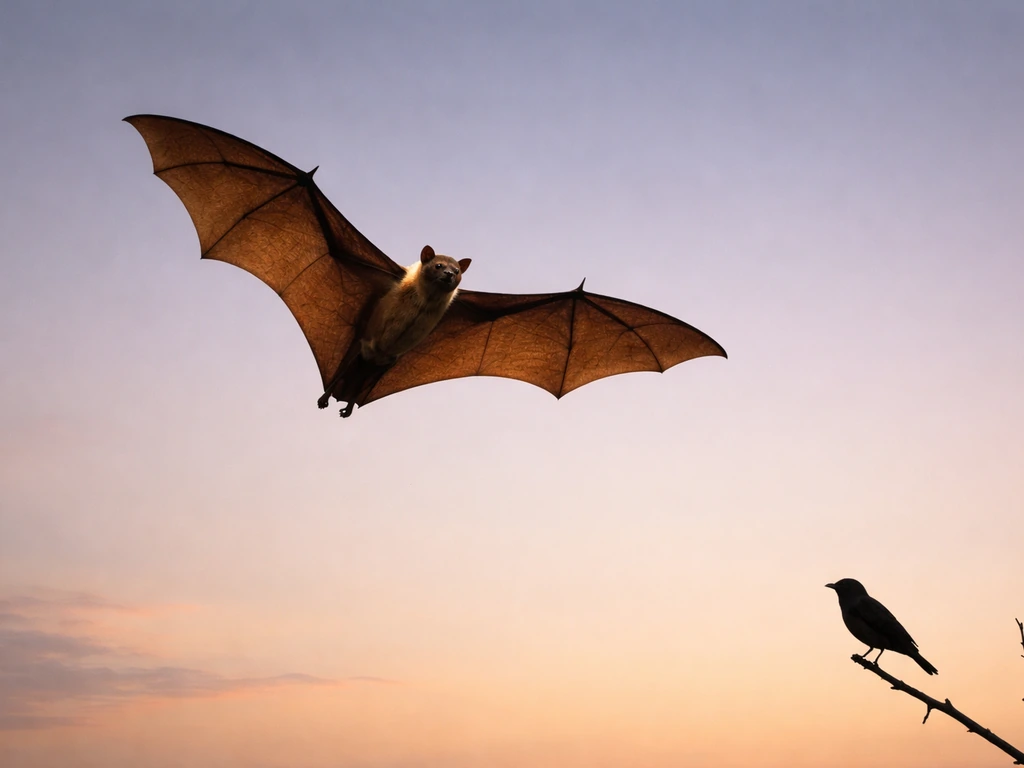
Bats are mammals, full stop
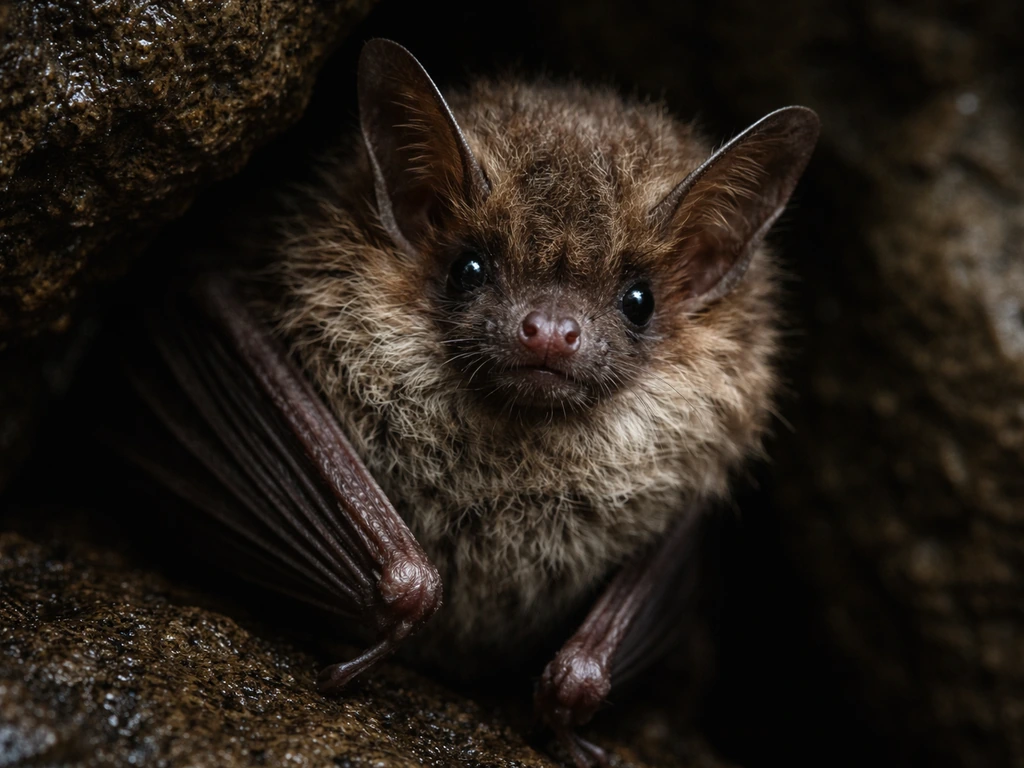
Bats check every box on the mammal checklist. They have fur or hair covering their bodies, they give birth to live young (called pups) rather than laying eggs, and females nurse those pups with milk produced by mammary glands. That last trait is where the word 'mammal' actually comes from: mammary glands. The Smithsonian and Maine's Department of Inland Fisheries and Wildlife both confirm this directly. Bats also regulate their own body temperature internally, just like you do.
Most bat species give birth to just one pup per year, and individual bats can live surprisingly long lives, sometimes up to 35 years according to the National Park Service. That slow reproductive rate is very mammal-like. Compare that to many birds, which can produce a clutch of several eggs in a single breeding season.
One thing worth clearing up: bats are not flying mice either. The German word for bat, 'Fledermaus,' literally translates to 'flying mouse,' which has fed that misunderstanding for centuries. But bats are not rodents. They belong to their own distinct order, Chiroptera, which means 'hand-wing' in Greek, a nod to the anatomy that makes their flight possible.
What actually makes a bird a bird
Birds are warm-blooded vertebrates defined by a specific set of traits that no other living animal group shares. The single most important one is feathers. Every bird has them, and no non-bird has them. Beyond feathers, birds have toothless beaks, hollow lightweight bones, a high metabolic rate, and they reproduce by laying hard-shelled eggs. They also have a four-chambered heart, which they share with mammals, but the feathers-plus-eggs combination is uniquely theirs.
- Feathers: the one trait found in every bird and no other living animal
- Beak or bill: no teeth, just a keratin structure shaped for their diet
- Hollow, lightweight bones: makes powered flight more efficient
- Hard-shelled eggs: birds lay eggs and incubate them externally
- Warm-blooded (endothermic): they generate and regulate their own body heat, with feathers helping to retain it
Penguins are a good example of why flight alone doesn't define a bird. They can't fly, but they have feathers and lay eggs, so they are absolutely birds. Ostriches are the same story. The feathers-and-eggs combination is the core test, not whether the animal can take to the air.
Why bats fail every bird test
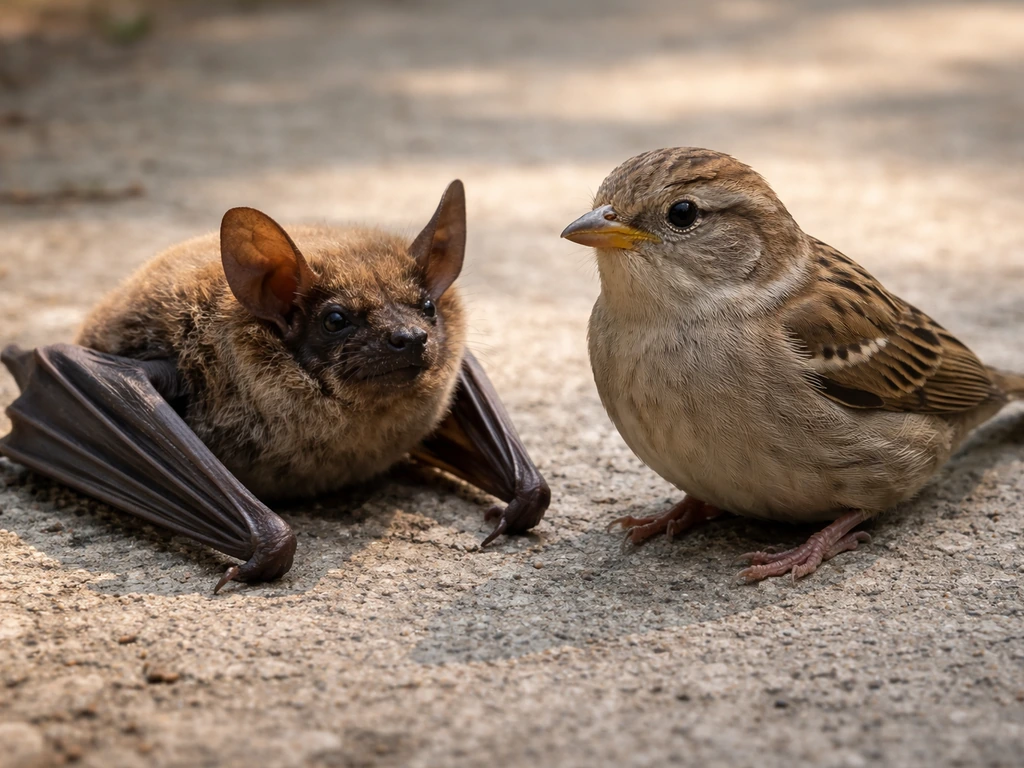
Put a bat next to the bird checklist and it misses on every point. Bats have fur, not feathers. They give birth to live young instead of laying eggs. Their wings are not built from feathers at all. Instead, a bat wing is a thin, flexible membrane called a patagium, stretched across elongated finger bones. It's a completely different engineering solution for flight compared to a bird's feather-covered forelimb.
Bat Conservation International sums it up cleanly: 'Bats have fur, birds have feathers.' That one difference alone is enough to place them in entirely separate classes of animals. Birds belong to class Aves. Bats belong to class Mammalia. The flight ability they share is a case of convergent evolution, meaning two unrelated lineages arrived at a similar solution (powered flight) through completely different biological paths.
| Trait | Bats | Birds |
|---|---|---|
| Body covering | Fur / hair | Feathers |
| Wing structure | Membrane (patagium) over elongated finger bones | Feathers over modified forelimb bones |
| Reproduction | Live birth, nurse young with milk | Lay hard-shelled eggs, incubate externally |
| Young per cycle | Typically 1 pup per year | Variable clutch of eggs per season |
| Biological class | Mammalia (mammals) | Aves (birds) |
| Teeth | Yes, most species have teeth | No, birds have beaks only |
| Flight capability | True powered flight | True powered flight (most species) |
How to tell birds from non-birds on the spot
If you're ever unsure whether an animal is a bird, run through this quick mental checklist. If you are wondering, “is alcatraz a bird,” use the same checklist idea here to decide whether it fits the bird traits like feathers and egg-laying. It works in the field, in a classroom, or just when curiosity strikes.
- Look for feathers: if it has feathers anywhere on its body, it's a bird. No exceptions among living animals.
- Check for a beak with no teeth: birds have beaks made of keratin, never teeth. Bats, by contrast, have small sharp teeth.
- Think about how it reproduces: did it lay an egg with a hard shell? Bird. Does it nurse live-born young with milk? Mammal.
- Notice the wing texture in flight: bird wings show individual feathers and have a stiff, structured look. Bat wings are smooth, thin membranes that flex visibly.
- Consider fur vs. feathers at rest: a roosting or perched animal covered in fur is a mammal. Covered in feathers, it's a bird.
The flight test alone will mislead you. Bats fly, and bats are mammals. If you are still unsure, think of the simple question: a bat is a mammal, not a bird. Penguins don't fly, and penguins are birds. The only reliable shortcut is feathers. If you can see feathers, you're looking at a bird. If you see fur and a membrane wing, you're looking at a bat.
Why this confusion is so common
It makes intuitive sense to group bats with birds. They share the same sky, they both flap wings, and they're roughly similar in size to many birds. Our brains naturally categorize by visible behavior, and 'thing that flies' is a powerful mental shortcut. But biology classifies animals by their evolutionary history and physical traits, not by what they happen to do. Flight evolved independently in birds, bats, and even insects. Sharing a behavior doesn't mean sharing a lineage.
Bats are actually the only mammals capable of true powered flight, which makes them genuinely unusual within their own class. That uniqueness might be part of why they feel hard to categorize. They sit in a weird middle space in people's minds: not quite what you picture when you think 'mammal,' but clearly not a bird either. The answer, though, is unambiguous. Mammal, not bird, not flying mouse.
If you want to go deeper on exactly why bat biology rules out bird classification, or why being warm-blooded and able to fly still doesn't qualify an animal as a bird, the related questions about why a bat is a mammal and not a bird, and what distinguishes mammals from birds in taxonomy, cover those angles in more detail. Bat biology has a straightforward answer: bats are mammals because they have fur and nurse live young with milk why a bat is a mammal and not a bird.
FAQ
Is a bat a bird if it can fly at night?
No. A bat is a mammal, even if it looks “mouse-like” or flies at night. The wing structure is the giveaway: bats use a thin membrane (patagium) stretched over elongated finger bones, not feathered forelimbs.
Does “flying” mean a bat is a bird?
It cannot. Birds are defined by feathers plus egg-laying, so a bat’s fur and live-birth rule it out. Flight alone is not a taxonomic test because different groups evolved powered flight separately.
Do bats lay eggs like birds?
Usually yes. Bats are born as pups alive, and the mother nurses them with milk produced by mammary glands. If you ever see a newborn being carried or nursed, that behavior points to mammals, not egg-laying birds.
Are bats just flying mice?
Many people confuse bats with rodents, but bats are not rodents. Rodents have teeth patterns and a different skeletal lineage, while bats have mammal traits plus chiropteran-specific wing anatomy, which rodents do not have.
What if the animal is small, looks like a bird, and cannot fly well?
Not for the “is it a bird?” question. Some birds are flightless, but they still have feathers and lay eggs. A bat’s membrane wing and fur mean it fails the bird checklist even when it is very bird-shaped.
How can I tell in the field when I only get a quick look?
If it has feathers, it’s a bird. If it has fur and a visible skin membrane connecting the forelimb to the body or legs, it’s a bat. In odd sightings, focus on the covering (feathers vs fur) first, because wings can be misleading.
Is there a simple trait rule beyond “feathers”?
Yes, you can use taxonomy safely without needing scientific names. “Mammal” versus “bird” is decided by traits, not behavior. A useful rule is, fur plus live young equals mammal, feathers plus eggs equals bird.
What if a bat makes noises similar to birds?
If an animal “bills” and “sings,” but it lacks feathers and lays eggs, it still is not a bird. For bats, even when they make birdlike calls, the anatomy (fur, mammary milk feeding, membrane wing) keeps them in Mammalia.
Do all bat species look like the “classic” brown bat?
No, not all bats are the same shape or color, but the core mammal traits are consistent across species. You may see different fur colors or wing spans, yet you will still find fur and mammalian reproduction (pups and milk nursing).
Are bats warm-blooded, and does that make them birds?
Bats generally have wings adapted for powered flight, but “being warm-blooded” is not the deciding factor. Warm-bloodedness appears in both birds and mammals, so it narrows possibilities but does not confirm “bird” without the feathers and egg-laying traits.
Next Articles
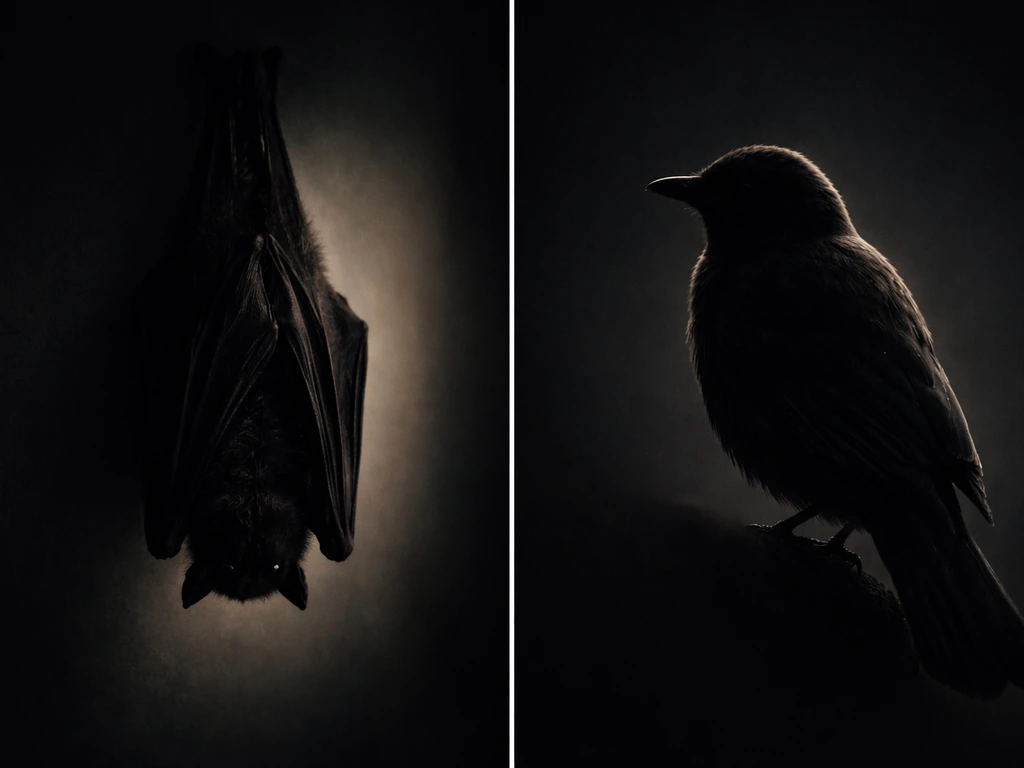
Why Is a Bat a Mammal and Not a Bird? Quick Checklist
Bat is a mammal, not a bird: key traits like fur, live birth, and milk replace feathers and beaks.
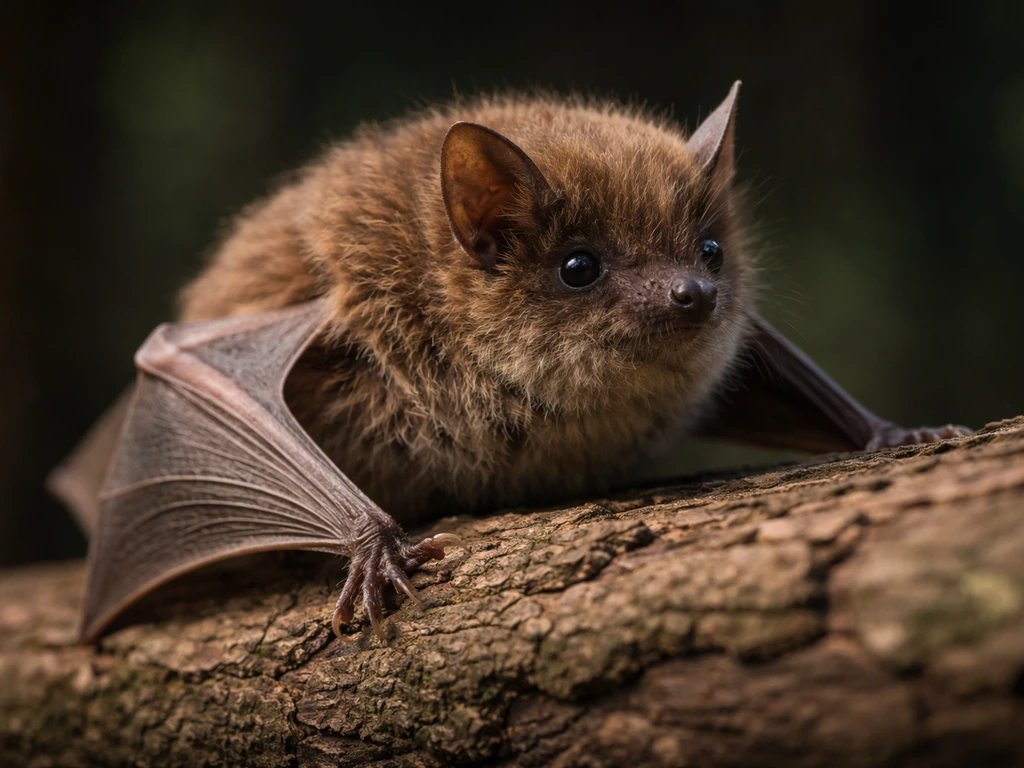
Is a Bat a Mammal or a Bird? Quick Classification Answer
Bat is a mammal, not a bird. Learn key traits that separate bats from birds and how to classify similar animals.
Is a Turtle a Bird? Simple Taxonomy Checklist and Facts
No, turtles are not birds. Learn the traits that define birds versus reptiles and fix common shell and egg misconception