A bat is a mammal because it has fur, gives birth to live young, nurses them with milk from mammary glands, and has the three tiny middle-ear bones that define Class Mammalia. It is not a bird because it has none of the traits that put an animal in Class Aves: no feathers, no hard-shelled eggs, and no bird-lineage bones. The wings are real, but wings alone don't make a bird. That's the whole answer, and the rest of this article is just unpacking why each of those details matters.
Why Is a Bat a Mammal and Not a Bird? Quick Checklist

Sarah Chen
1 May 2026
How animal classification actually works
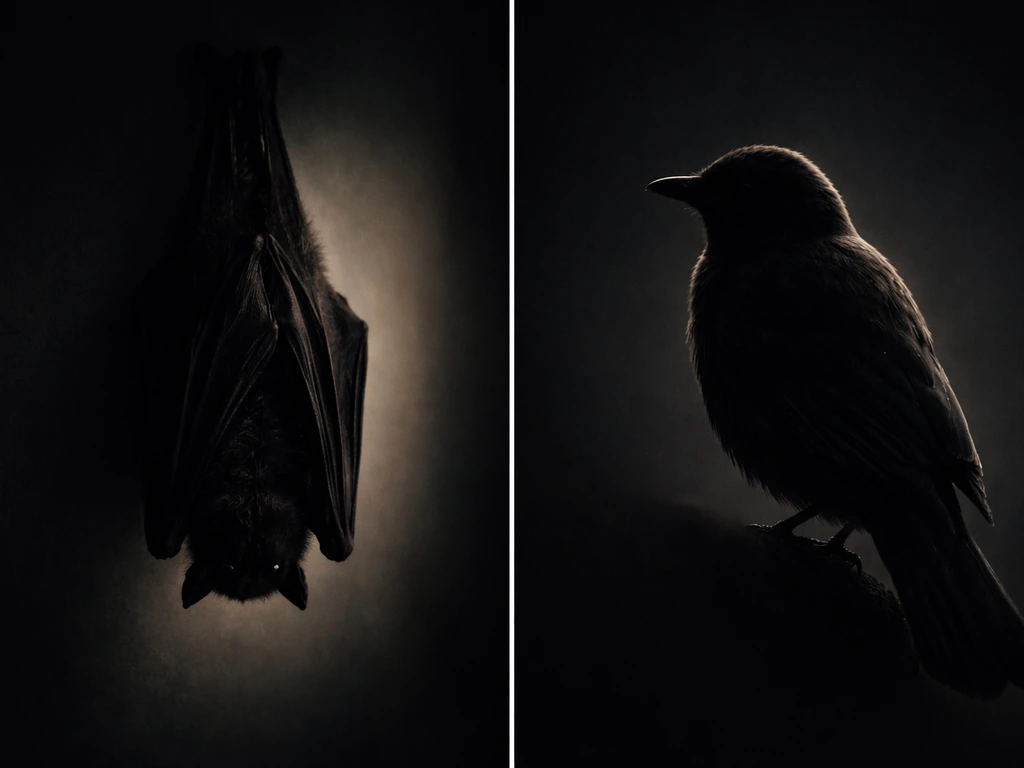
Taxonomy, the science of classifying living things, groups animals based on shared evolutionary history and specific diagnostic traits, not just how they look at a glance. The formal term for a shared trait that points to common ancestry is a synapomorphy. What that means in practice is that two animals can look similar (a bat and a swallow both fly) and still belong to completely different classes if they don't share the right underlying traits. Classification uses a ranked hierarchy: Kingdom, Phylum, Class, Order, Family, Genus, Species. Birds sit in Class Aves. Mammals sit in Class Mammalia. Bats are in Mammalia, order Chiroptera, full stop.
This matters because the common confusion around bats comes from focusing on one visible trait (flight) and assuming it determines the category. It doesn't. You need to look at the full suite of diagnostic features, and when you do that for bats, every single one points to mammal.
What actually makes a bird a bird
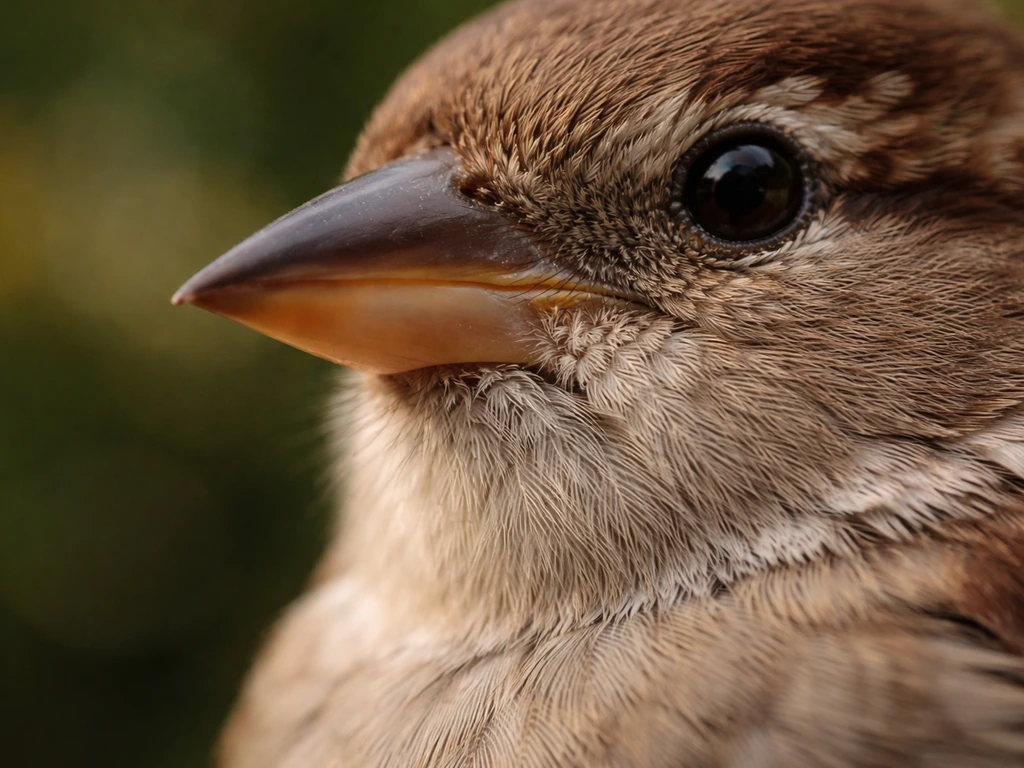
Birds are warm-blooded vertebrates in Class Aves, and they share a specific set of traits that no other living animal group has all at once. The single most defining feature is feathers. Every living bird has feathers, and no non-bird has true feathers. Beyond that, birds reproduce by laying hard-shelled eggs, have forelimbs that are modified into wings (whether they use them to fly or not), and have a four-chambered heart with complete separation between pulmonary and systemic circulation.
- Feathers (the single most definitive bird trait, no other living animal has them)
- Hard-shelled eggs (all birds lay them, including penguins and ostriches)
- Forelimbs modified into wings (even flightless birds like penguins have wing-bones)
- Warm-blooded with a four-chambered heart
- Lightweight, often hollow bones adapted for flight or its evolutionary legacy
Notice that flight itself is not on that list as a requirement. Penguins don't fly. Ostriches don't fly. They are still unambiguously birds because they have feathers and lay hard-shelled eggs. So when someone asks whether a bat is a bird because it flies, the answer is: flight is not the test. Feathers are.
What actually makes a mammal a mammal
Class Mammalia is defined by three core traits that appear across every member of the group, no exceptions. Animal Diversity Web notes that mammals are defined by hair (fur), three middle-ear bones (malleus, incus, stapes), and milk production by mammary glands three core traits that appear across every member of the group. First, mammary glands that produce milk to feed young. Second, hair or fur somewhere on the body at some point in the animal's life. Third, three tiny bones in the middle ear: the malleus, incus, and stapes. That last one surprises people, but it's one of the clearest anatomical markers taxonomists use.
- Mammary glands that produce milk for young (the defining trait the class is named after)
- Hair or fur (all mammals have it at some life stage)
- Three middle-ear bones: malleus, incus, and stapes
- Most give birth to live young (platypuses and echidnas are the egg-laying exceptions, but they still nurse with milk)
- Warm-blooded with high metabolic rates
The milk-producing mammary gland is so central that the entire class is named for it. If an animal nurses its young with milk and has hair, you're almost certainly looking at a mammal. Add the three-bone ear structure and the case is closed.
Running bats through the checklist
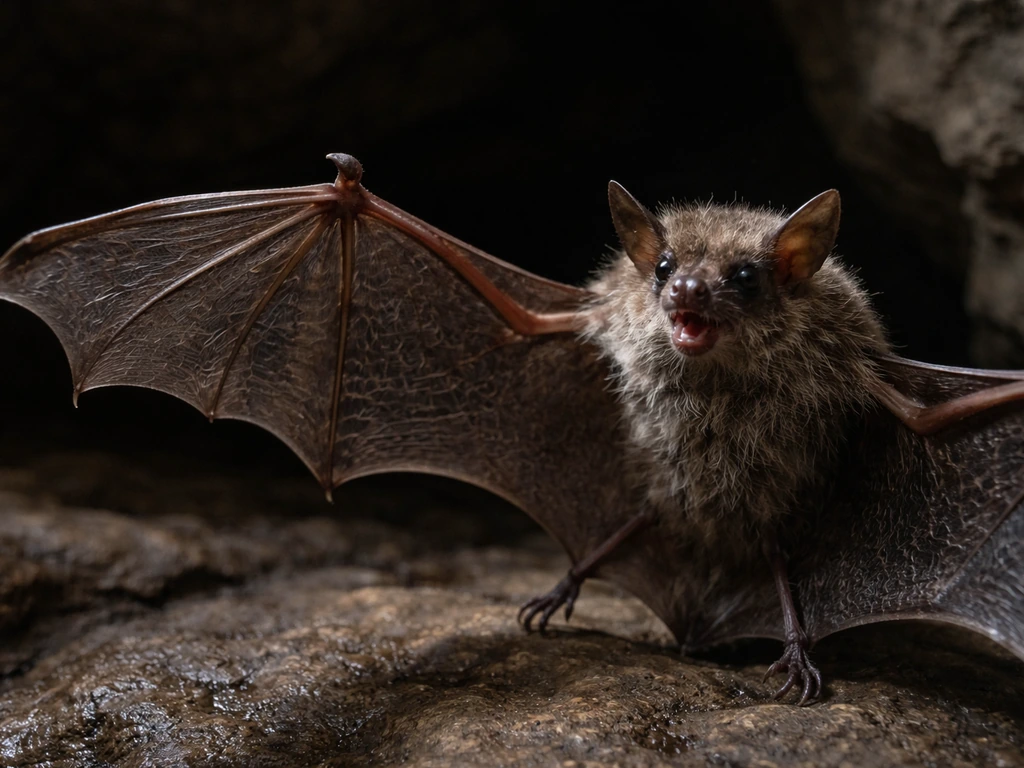
Bats belong to order Chiroptera, which means "hand-wing" in Greek, and they are the only mammals capable of true, sustained, powered flight. The name “Chiroptera” is derived from Greek roots meaning “hand-winged” (hand + wing) “hand-wing" in Greek. That flight is achieved through a membrane of skin stretched between elongated finger bones and the body, not through feathers or anything resembling bird wing anatomy. Let's check bats against both checklists.
| Trait | Birds (Class Aves) | Bats (Order Chiroptera) |
|---|---|---|
| Feathers | Yes, always | No, never |
| Hard-shelled eggs | Yes, always | No, live birth (mostly) |
| Mammary glands / milk | No | Yes |
| Hair / fur | No | Yes |
| Three middle-ear bones | No (single bone) | Yes |
| Wing structure | Feathered forelimb | Skin membrane over finger bones |
| Classification | Class Aves | Class Mammalia, Order Chiroptera |
Bats score zero for bird traits and hit every mammal trait. Female bats nurse their pups with milk. Bats have fur covering their bodies. Their inner ears contain the same malleus, incus, and stapes bones found in every other mammal. Their wings are not feathered limbs but a thin patagium (skin membrane) stretched over dramatically elongated finger bones. There is no biological ambiguity here. Bats are mammals.
Bats are not rodents either
A separate but very common misconception is that bats are some kind of rodent, often described informally as "flying mice" or "flying rats." This is completely wrong at the classification level. Rodents belong to order Rodentia, which is a different mammal order entirely. The defining trait of rodents is one pair of continuously growing, rootless incisors in both the upper and lower jaw, with no canine teeth. Rats, mice, squirrels, and beavers are rodents. Bats have none of those dental characteristics.
Bats are in order Chiroptera. Rodents are in order Rodentia. They share the class Mammalia, but that's where the connection ends. Calling a bat a flying rodent is roughly like calling a whale a large fish: it's based on a surface resemblance that collapses the moment you look at the actual biology. Bats are more closely related to horses and whales, within the broader mammal tree, than they are to rats or mice.
Quick checklist: bird, mammal, or neither?
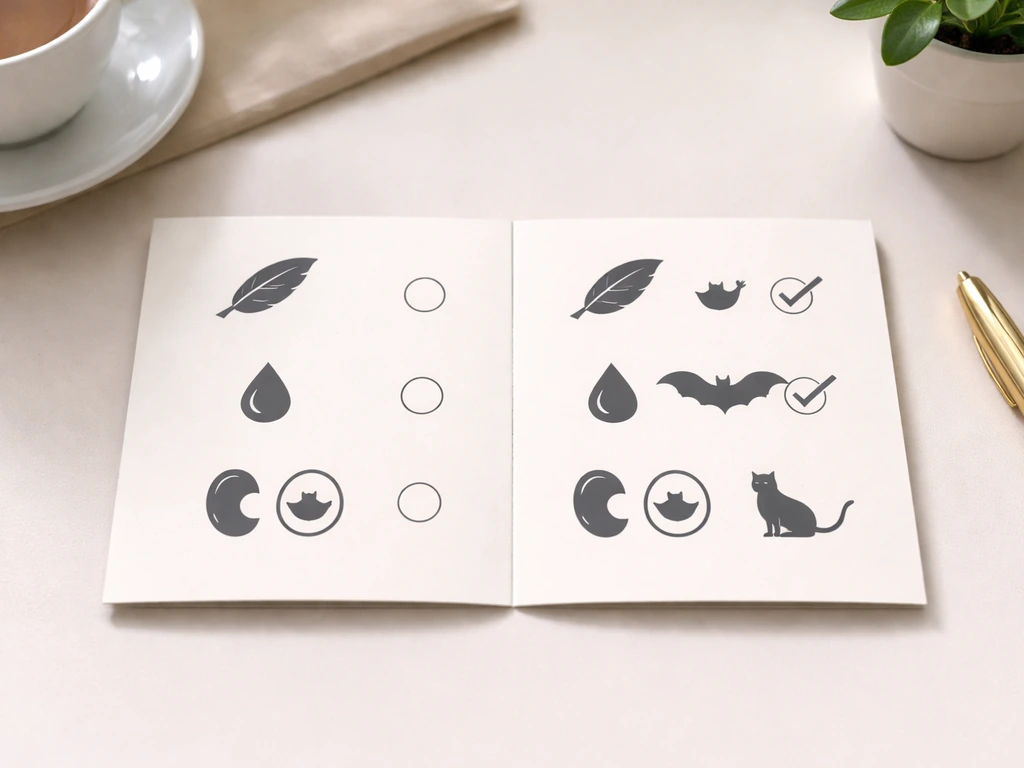
If you're ever trying to sort out whether an animal is a bird or a mammal, you really only need to ask a handful of questions. If you are wondering whether a bat is a bird or a mammal, the key clues are milk and fur, not feathers whether an animal is a bird or a mammal. This checklist works for bats, for pterosaurs (flying reptiles, also not birds), and for any other borderline case you're curious about.
- Does it have feathers? If yes, it's a bird. If no, it's not a bird, regardless of whether it flies.
- Does it lay hard-shelled eggs? A yes here supports bird classification, but check for feathers first.
- Does it nurse young with milk from mammary glands? If yes, it's a mammal.
- Does it have fur or hair? Combined with milk, this confirms mammal.
- What do its wings look like? Feathered forelimb = bird. Skin membrane over bones = bat or gliding mammal. Leathery membrane on an extinct reptile = pterosaur (not a bird, not a mammal).
- Does it have continuously growing incisors and no canine teeth? If yes, it's a rodent, a specific mammal order. Bats don't have this.
Applying this to a bat: no feathers, no hard-shelled eggs, yes to milk, yes to fur, skin-membrane wings, no rodent dentition. Result: mammal, order Chiroptera, case closed. The same logical process works well for other commonly confused animals. Pterosaurs, for instance, had leathery wings and no feathers, making them neither birds nor mammals but flying reptiles. Working through each trait one at a time is always more reliable than going by overall appearance.
Where to go from here
Now that you have the core framework, you can apply it to any animal that gives you pause. The same trait-by-trait approach that clarifies bats also works for the platypus (a mammal that lays eggs but still nurses with milk), penguins (birds that can't fly but absolutely have feathers), and extinct flying reptiles like pterosaurs. Each of those cases has its own quirks, but the checklist holds up. If you want to keep building on this, it's worth looking at how the bird-versus-mammal distinction plays out in other commonly confused animals, including the full question of whether a bat is a bird or an animal in general, since some people aren't sure which broader category it even belongs to.
FAQ
If a bat has “wings,” why isn’t it classified as a bird?
In taxonomy, the question is not whether an animal can fly or has wing-like structures, it is whether it shares the diagnostic bird traits. Bats have skin-membrane wings supported by elongated finger bones, but they lack true feathers and they do not lay hard-shelled eggs.
Do bats lay eggs at all?
No. Bats are mammals, so females produce milk and nurse live young. While the embryo develops inside the mother’s body (a reproductive detail that can look “egg-like” to some people), there are no hard-shelled eggs as found in birds.
What are the “three bones” in a bat’s ear, and why do they matter?
Mammals have a middle ear with three specific tiny bones, malleus, incus, and stapes. Many animals have an ear, but this particular bone arrangement is a strong anatomical marker used in classification to distinguish mammals from birds and most other groups.
Are bat wings homologous to bird wings?
They are not homologous in the classification sense. Bird wings are modified forelimbs with feathers, while bat wings are a stretched patagium over elongated finger bones. Even though both function for flight, the underlying structures come from different evolutionary solutions.
Could a bird ever look like it has fur or a membrane?
Rarely, but appearance can mislead. Some birds have specialized skin features and downy coverings, yet they still have feathers and bird reproductive traits like hard-shelled eggs. True fur and mammary milk production are the key mammal indicators, not texture alone.
What about “flying squirrels” or other “flying” animals, are they birds or bats?
Neither. Flying squirrels glide using a skin membrane between limbs, but they do not have true, powered flight wings like bats, and they do not have mammary glands that support the same “bat-style” reproductive development. Gliding anatomy is not the same as bat wing anatomy.
Why do some people call bats “flying mice,” are bats really rodents?
They are not. Rodents have a characteristic tooth pattern, one pair of continuously growing, rootless incisors in each jaw, with no canine teeth. Bats lack that dental setup, and they belong to a different mammal order (Chiroptera).
Is flight the only reason people get confused about bats?
Flight is the biggest visual hook, but the other common driver is the word “wing.” People also assume that any wing implies “bird lineage.” When you use the full trait checklist (milk, fur, ear bones, and absence of feather and egg traits), the classification becomes consistent.
How can I quickly decide bird vs mammal for a new animal I do not know?
Use a short decision path: first check for milk and nursing (mammary glands), then check for fur or hair, then verify the middle-ear bone marker if needed. If the animal clearly has feathers and lays hard-shelled eggs, it is a bird even if it cannot fly.
Is there any “borderline” animal where this bat logic might seem unclear?
A few animals blur expectations because they have a mix of traits, like platypuses (mammals that lay eggs but still nurse with milk). Even then, the milk-and-fur plus mammal ear-bone traits keep the classification anchored as mammal, showing that reproductive quirks do not override core diagnostic traits.
Next Articles
Is a Bat a Mammal or a Bird? Quick Classification Answer
Bat is a mammal, not a bird. Learn key traits that separate bats from birds and how to classify similar animals.
Is Squirrel Animal or Bird? Clear Answer and Classification
Squirrels are mammals, not birds, class Mammalia, order Rodentia. Quick traits, comparison table, checklist & FAQ.
Is a Turtle a Bird? Simple Taxonomy Checklist and Facts
No, turtles are not birds. Learn the traits that define birds versus reptiles and fix common shell and egg misconception