A bat is a mammal, full stop
Bats are mammals, not birds. They belong to the order Chiroptera (from the Greek for "hand-wing"), and they sit firmly within class Mammalia alongside dogs, whales, and humans. The U.S. Fish & Wildlife Service, the Smithsonian Institution, Britannica, and PBS Nature all classify bats the same way: mammals of the order Chiroptera. If you walked away from this article right now, that's the answer. But if you're wondering why this question feels tricky, or how to quickly sort out similar cases in the future, keep reading, because the logic behind the classification is genuinely useful.
Bird vs mammal: the traits that actually settle it
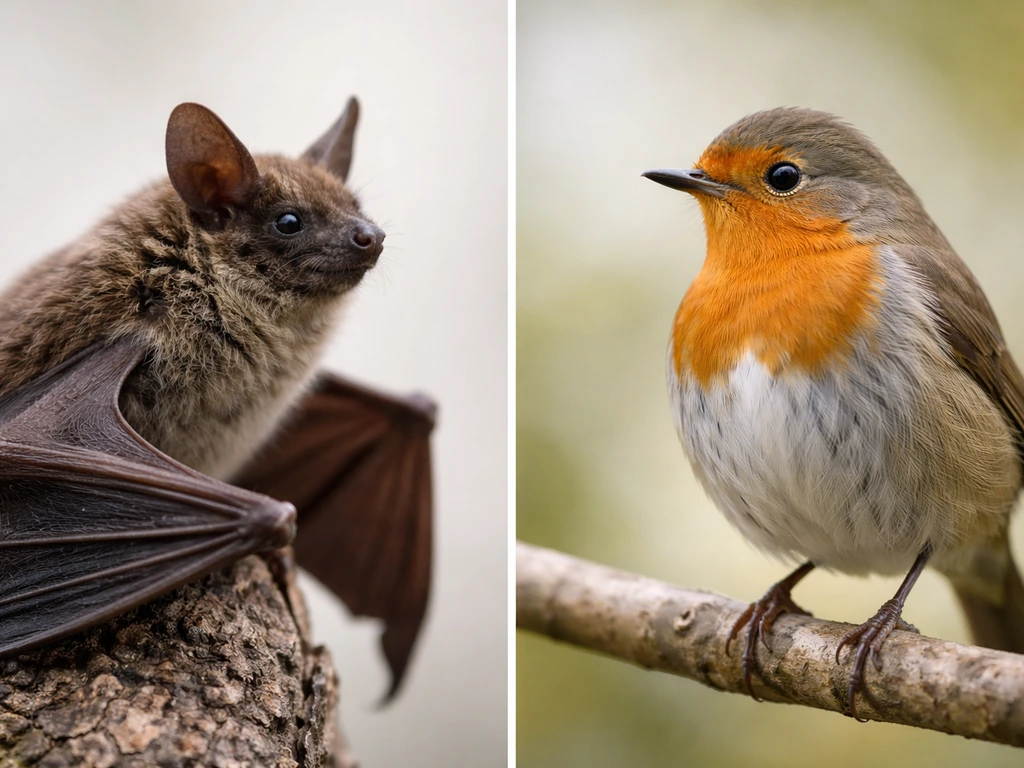
Classification isn't based on what an animal does, it's based on what it is, biologically. Birds and mammals are two completely separate classes of vertebrates, and each has a checklist of defining traits. When you run bats through that checklist, they come out on the mammal side every single time.
Birds (class Aves) share a specific set of traits: feathers, a beak (no teeth in modern species), hollow bones to reduce weight, a four-chambered heart, and they lay hard-shelled eggs. Every single bird has feathers. That's the single most reliable marker of the class. Mammals, on the other hand, are defined by mammary glands (the female produces milk to nurse young), hair or fur at some stage of life, and in most species, live birth. Bats check every mammal box and zero bird boxes.
| Trait | Birds (Class Aves) | Mammals (Class Mammalia) | Bats |
|---|
| Body covering | Feathers | Hair or fur | Fur (hair) |
| Feeding young | Regurgitation or foraging | Mammary glands (milk) | Mammary glands (milk) |
| Reproduction | Hard-shelled eggs | Live birth (most) | Live birth |
| Forelimbs | Wings made of feathers | Arms, paws, or flippers | Elongated fingers with skin membrane |
| Flight | Yes (most species) | Rare | Yes (true powered flight) |
| Teeth | No (beaks) | Yes (most) | Yes |
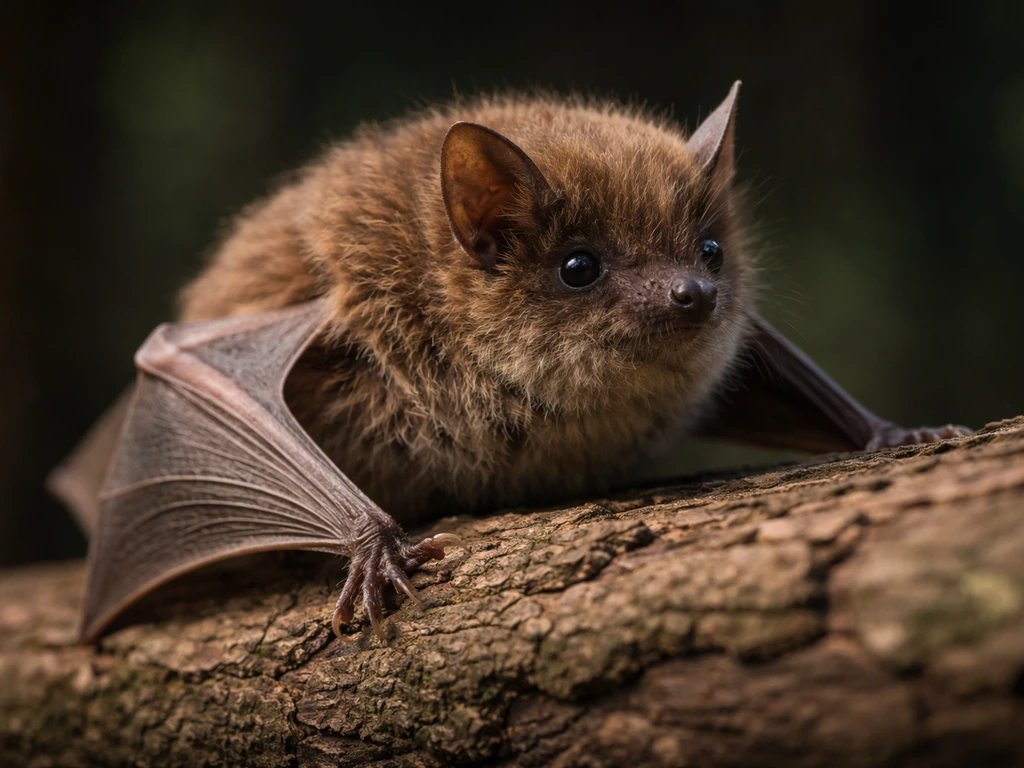
Bats have fur, not feathers. Female bats nurse their pups with milk. Bats have teeth. They give birth to live young. These are mammal traits, and no amount of wing-flapping changes that. If you want a deeper breakdown of exactly why a bat is a mammal and not a bird, the biological logic goes even further into skeletal and reproductive anatomy.
Why bats get confused with birds (and why flight doesn't count)
The confusion is completely understandable. Bats fly, they're active at dusk and dawn alongside birds, and from a distance their silhouettes can look similar. When something flies, our brains tend to file it under "bird." But flight is a behavior and a body function, not a classification trait. It tells you about what an animal can do, not what class it belongs to.
Bats are actually described by Britannica as "mammals with front limbs modified for flight," and PBS Nature notes they are "the only mammals capable of true, sustained powered flight. The U.S. National Park Service notes that bats are the only mammals capable of true flight the only mammals capable of true, sustained powered flight. " That description is key: the wings are modified forelimbs, specifically elongated finger bones stretched across a thin skin membrane called a patagium. Bird wings are built completely differently, with feathers anchored to fused hand bones. The two types of wings evolved independently and are not homologous structures. So even the wings are different in their underlying biology.
This is a classic example of convergent evolution: two unrelated groups independently evolving a similar function (flight) through completely different anatomical paths. Flying squirrels glide. Flying fish can briefly leave the water. None of those animals are birds. The same logic applies to bats.
Bats vs other common misclassifications
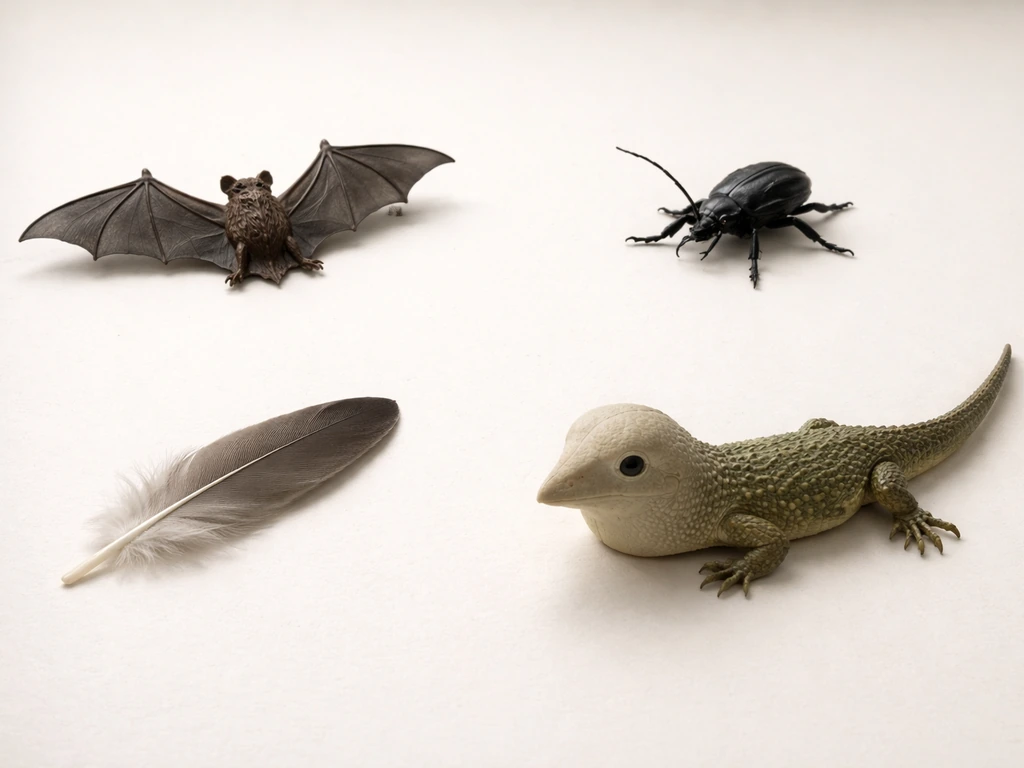
Some searches phrase this question as "is a bat a bird or an animal?" which hints at a slightly different confusion: the idea that "bird" and "animal" might be the same category. They're not. Birds are animals. Mammals are animals. Everything in the animal kingdom is an animal. The real question people mean to ask is whether a bat is a bird or a non-bird animal, and the answer is firmly non-bird.
Another variant worth clearing up: bats are not insects. Insects are invertebrates (no backbone) with six legs and an exoskeleton. Bats are vertebrates with an internal skeleton, a spine, and four limbs. If you've ever seen a bat up close and thought it looked almost insect-like while darting around at night, that's the erratic flight pattern and small size playing tricks, not any real biological similarity. Breaking down the bat-as-a-bird-or-mammal question in plain terms makes it easy to see why the insect category is even further off the mark.
To put it plainly: a bat is an animal (yes), a vertebrate (yes), a mammal (yes), a member of Chiroptera (yes), a bird (no), an insect (no), and a reptile (no). Justifying why bat is a mammal and not a bird comes down to those core mammalian traits: fur, milk, live birth, and a fundamentally different skeletal structure.
Quick cheat-check: how to tell birds from non-birds in seconds
When you're looking at an unfamiliar animal and want to quickly sort out whether it's a bird, run through this short checklist. You don't need a biology degree, just a few sharp questions.
- Does it have feathers? If yes, it's almost certainly a bird. No other living animal has feathers.
- Does it have a beak and no teeth? That points strongly to a bird.
- Does it lay hard-shelled eggs? Combined with feathers, that confirms bird.
- Does it have fur or hair? That's a mammal signal.
- Does it nurse young with milk? That's a definitive mammal trait.
- Does it have visible teeth and skin-covered wings (not feathered)? You're likely looking at a bat or similar mammal.
For bats specifically: no feathers, no beak, fur-covered body, teeth present, skin-membrane wings. That's a clean mammal classification every time. Figuring out whether a bat is a bird or animal becomes straightforward once you use feathers as your first filter, because bats fail that test immediately.
Other borderline cases worth knowing
Bats are the most commonly misclassified flying animal, but they're not alone. A few other cases come up regularly and are worth a quick mention, because the same classification logic applies across all of them.
Penguins and ostriches are real birds despite being flightless. They have feathers, lay eggs, and have beaks. Flight is not a requirement for being a bird. Pterosaurs (ancient flying reptiles) are not birds either: they were reptiles with membranous wings, similar in that structural sense to bat wings, but they belong to an entirely different branch of the animal tree and are long extinct. If you've ever wondered about an unusual place name tied to a bird, consider that even Alcatraz has a bird connection, with the name deriving from a Spanish word for seabird.
The pattern in all these cases is the same: go to the biological traits first, not the behavior or the silhouette. Does it have feathers? Can it produce milk? What does its skeleton look like? Those questions cut through the confusion fast. Bats fly like birds, hunt like some birds, and share the sky with birds, but biologically they are as different from birds as a cow or a dolphin. They are mammals, classified under Chiroptera, and that classification has been rock-solid across every major scientific institution that has studied them.