Quetzalcoatlus is not a bird. It was a pterosaur, specifically an azhdarchid pterosaur, which puts it in a completely separate branch of the reptile family tree from birds. Despite having wings and the ability to fly, Quetzalcoatlus shares no closer relationship to birds than a crocodile does. The wings look superficially similar, but under the skin they are built in an entirely different way, and that difference is the key to understanding why 'flies' does not equal 'bird.'
Is Quetzalcoatlus a Bird? What It Really Was and Why

Sarah Chen
16 May 2026
What Quetzalcoatlus actually was
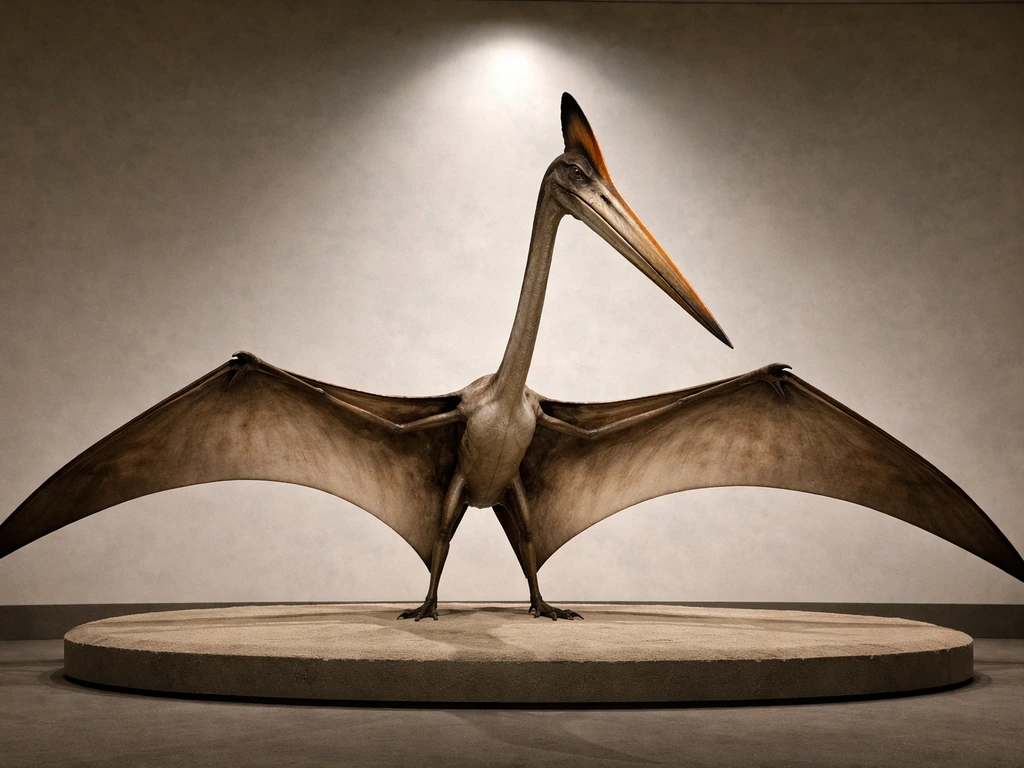
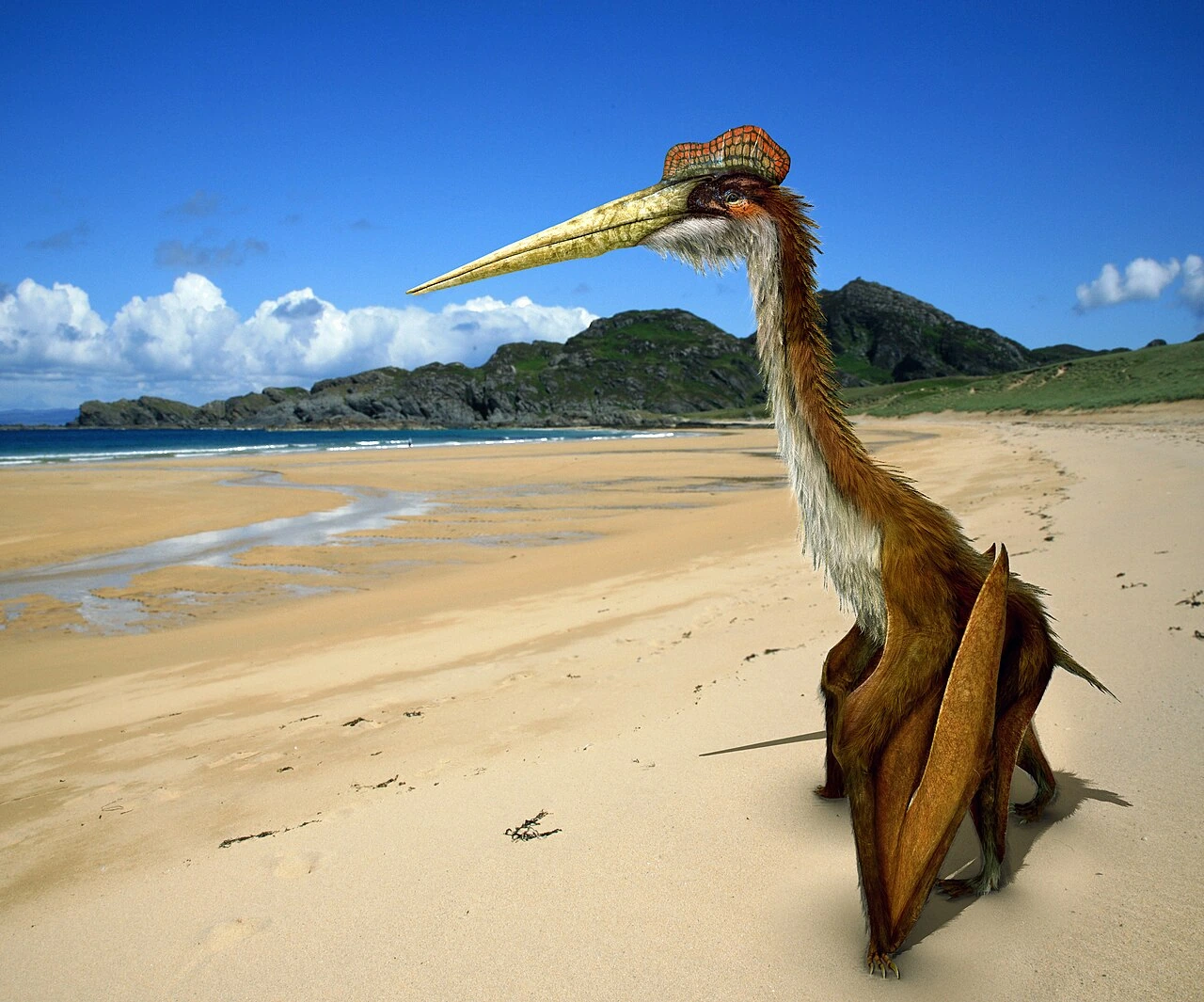
Quetzalcoatlus was a genus of giant flying reptile that lived during the Late Cretaceous period, roughly 68 to 66 million years ago. It belongs to Order Pterosauria, Family Azhdarchidae, which is confirmed by phylogenetic analyses including a major 2021 Journal of Vertebrate Paleontology memoir dedicated specifically to its classification. With an estimated wingspan of up to 10 to 11 meters, it is one of the largest flying animals ever found in the fossil record.
The defining physical feature of its wing tells the whole story: pterosaur wings are built around an enormously elongated fourth finger. A major peer-reviewed review emphasizes that pterosaur wings were anchored to the enlarged fourth finger and constructed around a finger-supported membrane, not feathers pterosaur wings are built around an enormously elongated fourth finger. That single finger anchored a membrane called the brachiopatagium, which stretched from the wingtip all the way down to the hindlimbs. There are no feathers forming the wing surface, no avian skeletal structure underneath, just a membrane stretched across a dramatically extended finger bone. That is structurally nothing like a bird wing.
The American Museum of Natural History sums pterosaurs up neatly: 'Not a Bird, Not a Dinosaur.' That framing is worth taking seriously, because it corrects two common errors at once. Quetzalcoatlus is neither an early bird nor a dinosaur. It is its own thing entirely.
What actually makes an animal a bird
In modern taxonomy, birds belong to the clade Aves (a clade is a group that includes an ancestor and all its descendants). What makes Aves special is that birds are actually a group of theropod dinosaurs, nested inside Dinosauria. This is broadly accepted across biology: OpenStax Biology, ScienceDirect reviews on bird evolution, and formal avian systematics work all confirm that birds evolved from within the dinosaur lineage, specifically from feathered theropods.
The traits that diagnose a true bird are specific and testable. They are not just 'has wings' or 'can fly.' A penguin cannot fly but is absolutely a bird. A bat can fly but is a mammal, not a bird. The actual diagnostic markers come from skeletal and integumentary (skin-related) features that are unique to the avian lineage.
- Feathers: true pennaceous feathers, not fur or membrane. Birds have feathers; no other living animal group does.
- Pygostyle: a fused set of tail vertebrae at the end of the spine that supports tail feathers. Britannica identifies this as a key bird-specific skeletal feature.
- Furcula (wishbone): a fused clavicle structure inherited from theropod dinosaurs, present in birds.
- Hollow, lightweight bones with specific avian pneumatization patterns.
- Membership in the theropod dinosaur lineage confirmed through phylogenetic analysis.
Quetzalcoatlus has none of these. No pygostyle, no furcula in the avian sense, no confirmed pennaceous feathers, and no theropod ancestry. Some pterosaur fossils have been found with filament-like structures that researchers have debated, but specialists (including researchers at the University of Leicester) caution that these are likely fibrous internal wing structures rather than true feathers. Even if some pterosaurs had feather-like filaments, that would not make them birds, any more than a bat's hair makes it a bird.
Why Quetzalcoatlus looks so much like a bird
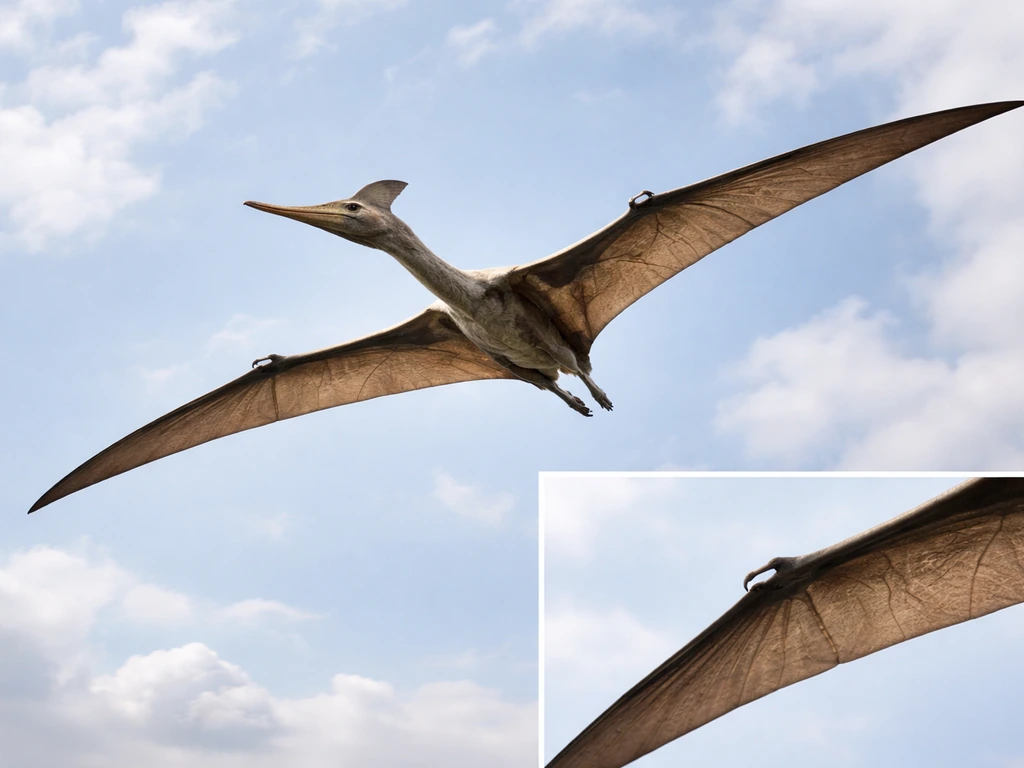
This is a fair question, and the confusion is understandable. Quetzalcoatlus has a large wingspan, a long pointed beak-like skull, and it flew. From a distance, or in an illustration, it can absolutely look bird-like. The AMNH notes that this visual resemblance is precisely what trips people up, because human brains naturally group things that look alike together.
What you are seeing is convergent evolution, where two unrelated lineages independently evolve similar solutions to similar problems. Flight puts constraints on body design: you need to be lightweight, aerodynamic, and have something wing-shaped. Both birds and pterosaurs solved those problems, but they did it with completely different anatomical toolkits. A researcher at PubMed who studied giant pterosaur flight mechanics alongside bird flight explicitly argued that bird and pterosaur wing structures are too different to treat as mechanically equivalent. They converged on a similar silhouette, not a similar skeleton.
The 'beak-like' skull is another example of convergence. Quetzalcoatlus had a long, narrow, toothless (in some species) skull that superficially resembles a stork or heron. But skull shape follows feeding behavior. Long-necked, fish-snatching body plans will produce long pointed skulls whether the animal is a bird, a pterosaur, or something else entirely.
The evolutionary split: pterosaurs, dinosaurs, and birds on the family tree
To really understand why Quetzalcoatlus is not a bird, you need to see where the lineages branched apart. Both pterosaurs and dinosaurs (including birds) are archosaurs, a broader reptile group that also includes crocodilians. But pterosaurs split off from the archosaur tree before dinosaurs even existed as a group. That means pterosaurs are not dinosaurs, and they are certainly not birds.
Birds, on the other hand, are deeply nested inside Dinosauria. The lineage goes: Archosauria, then Dinosauria, then Theropoda, then a series of feathered theropod groups leading to Aves. Smithsonian's paleontology coverage and ScienceDirect's bird evolution reviews both explicitly map this: birds sit in the theropod branch of Dinosauria, while pterosaurs are an entirely separate branch of the archosaur tree that diverged much earlier.
| Group | Clade | Wing Type | Feathers? | Is a Bird? |
|---|---|---|---|---|
| Quetzalcoatlus (pterosaur) | Pterosauria (Archosauria) | Membrane anchored to elongated 4th finger | No (possible filaments, debated) | No |
| Modern bird (e.g., eagle) | Aves (Theropoda, Dinosauria) | Feathered forelimb | Yes | Yes |
| Non-avian dinosaur (e.g., T. rex) | Dinosauria (non-avian) | None (some had feathers but not wings) | Some had feathers | No |
| Bat | Mammalia (Chiroptera) | Membrane anchored to elongated fingers | No (has fur) | No |
Notice that bats and pterosaurs both use membrane wings anchored to elongated fingers, yet they are not related either. That is convergent evolution again, and it reinforces why you cannot classify animals by their silhouette alone.
A practical checklist for future 'is it a bird?' questions
If you encounter another animal, living or extinct, and need to figure out whether it is a bird, here is what to check. Run through these in order and you will land in the right place almost every time.
- Check the taxonomy first. Is it classified in Aves? If a reliable source (Britannica, a museum database, or a peer-reviewed source) places it in Aves, it is a bird. If it is in Pterosauria, Mammalia, or anything else, it is not.
- Look at the wings. Bird wings are feathered forelimbs. Pterosaur wings are membranes stretched between an elongated fourth finger and the body. Bat wings are membranes stretched between multiple elongated fingers. Feathered wing equals potential bird; membrane wing does not.
- Check for feathers specifically. True pennaceous feathers (the kind that make up a bird's flight surface) are a bird-exclusive trait among living animals. Fur, scales, and membrane are not feathers.
- Look for a pygostyle in fossil evidence. That fused tail structure is a reliable bird marker in fossils. If the tail is long and bony with many free vertebrae, you are not looking at a bird.
- Ask about ancestry. Is this animal a theropod dinosaur? If yes, it might be a bird. If it is a pterosaur, a mammal, or an early reptile, it is not.
- Do not be fooled by flight alone. Flight evolved independently multiple times: in birds, in pterosaurs, in bats, and even in some insects. Flying does not mean bird.
This kind of checklist works for other confusing cases too. The same logic that rules out Quetzalcoatlus as a bird also rules out bats, flying fish, and flying squirrels. Xiao, the bird-like creature discussed in popular culture, is often asked about in the same way people ask whether Quetzalcoatlus is a bird. And it is the same logic you would apply to fictional or mythological creatures if you ever want to ask whether something like Lugia or Ho-Oh would qualify as a 'real' bird under biological rules. However, Ho-Oh is a legendary bird from Pokemon, so it is not a real-world species that scientists would classify like fossils. This same standard also helps answer questions like “is Lugia a bird,” even though Lugia is a fictional Pokémon.
The bottom line
Quetzalcoatlus was a remarkable animal, one of the largest flying creatures that ever lived, but it was a pterosaur through and through. Its membrane wings, its position outside Dinosauria entirely, and its lack of avian skeletal features all confirm it belongs in Pterosauria, not Aves. When you see something that flies and has a beak-shaped skull, the right move is to check the wings and the taxonomy before assuming it is a bird. In this case, the wings are made of skin stretched over a giant finger, and that settles it. Some people wonder whether something that flies and has a beak or bird-like look is actually a bird, so it helps to compare birds to other things people might ask about, like whether is a lute a bird. Xayah is commonly described as a demon-themed character, not a real bird species.
FAQ
If Quetzalcoatlus had any feather-like filaments, would that make it a bird?
No. If an animal lacks the avian diagnostic skeletal and integumentary traits that define Aves, it is not treated as a bird even if it has feathers or looks like one. With Quetzalcoatlus, the wing construction and lineage placement point to Pterosauria, not Aves.
Could Quetzalcoatlus still be classified as a bird if some fossils are incomplete?
It is typically not handled as a “missing evidence” case. The key bird markers (like avian-style wing skeleton organization and specific feather types, including clear pennaceous feather evidence) are absent in the known Quetzalcoatlus material, while the pterosaur wing anatomy is present and diagnostic.
Why do scientists not classify Quetzalcoatlus as a bird just because it flew?
Modern classification uses ancestry and diagnostic traits, not just “can fly.” A bird is defined by where it sits in the dinosaur family tree and by specific skeletal and skin features, so flight alone would incorrectly group many unrelated flyers together.
What does the “bird-like” beak-shaped skull actually indicate?
“Beak-like” is misleading. Many long, toothless or reduced-tooth skull shapes evolve for feeding and prey-handling, so resemblance to storks or herons does not prove close relationship to birds.
If I find another fossil or image of a giant flyer, what is the fastest way to tell whether it is a bird?
The checklist is about structure and relationships. For flying animals, focus on what the wing is made of (feathers versus a membrane anchored to an elongated finger), then check lineage placement (Aves nested in theropod dinosaurs versus an earlier-diverging archosaur branch for pterosaurs).
How does convergent evolution specifically cause people to mistake Quetzalcoatlus for a bird?
Convergent evolution explains the confusion, but it also means you should avoid silhouette-based classification. Similar flight-related shapes can arise from different body toolkits, so you need anatomical and phylogenetic evidence rather than an overall look.
Are pterosaurs like Quetzalcoatlus just distant relatives of birds?
Birds are nested within Theropoda, so “bird ancestors” and “dinosaur relatives” are not interchangeable with “other archosaurs.” Pterosaurs are an earlier-splitting archosaur lineage, so they are not on the direct line that leads to Aves.
What is the most concrete anatomical difference between pterosaur wings and bird wings?
It helps to remember that pterosaur flight membranes are not built like bird wings. Birds use feathered wings supported by a bird-specific skeletal plan, while Quetzalcoatlus used a membrane stretched over a dramatically elongated fourth finger.
How should I answer the question “Is Lugia a bird” or “Is Ho-Oh a bird” from a biology standpoint?
Fictional creatures can be “bird-like” in design, but they are not real biological species with diagnosable traits or evolutionary relationships. If someone asks whether “Lugia” or “Ho-Oh” is a bird, it is about in-universe description, not scientific classification criteria.
Why are bats a good comparison when people ask whether something is a bird?
Yes, bats are a common comparison trap. They fly using membrane wings, but they are mammals with mammal ancestry, not part of the avian dinosaur lineage, so the same “shape does not equal relationship” logic applies.
Next Article
Is Yveltal a Bird? Why It Is Not a True Bird
No, Yveltal is not a bird. It lacks true bird traits like feathers and avian anatomy in biology.