What 'counts as a bird' in real biology
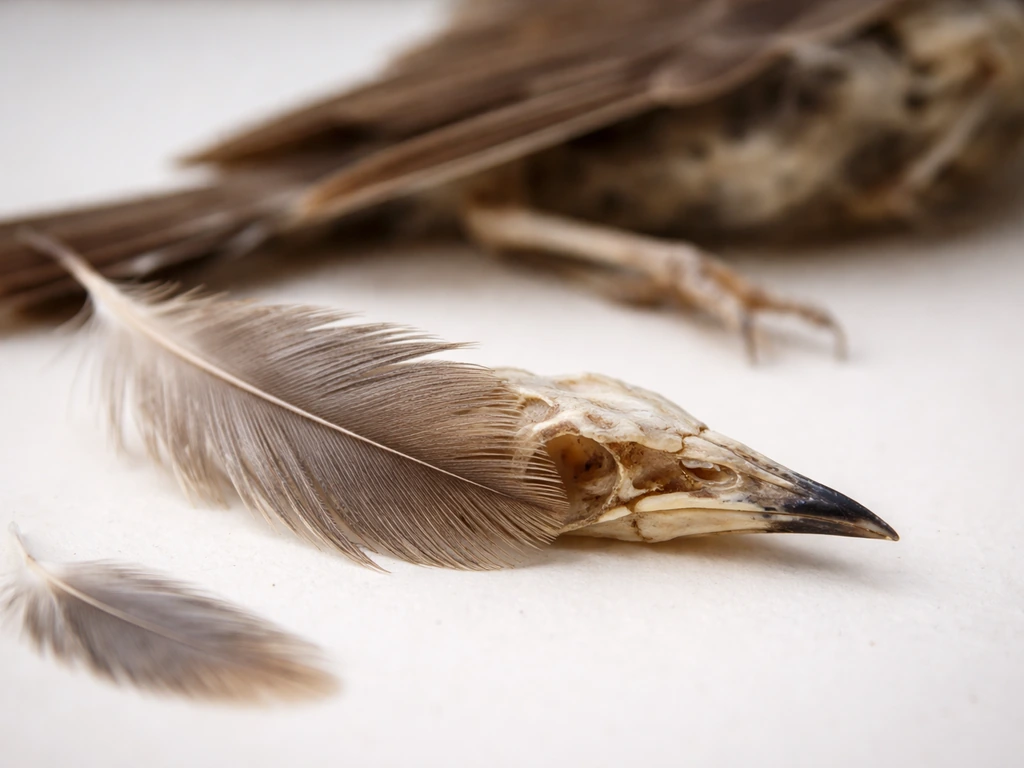
Before we can answer whether Lugia is a bird, we need a working definition of what a bird actually is. Biologists place all birds in class Aves, and membership in that class comes down to a specific package of traits, not just one. A real bird is a warm-blooded (endothermic) vertebrate that has feathers made of keratin, a toothless beak, hollow (pneumatic) bones that keep the skeleton light, and lays hard-shelled eggs. No other living animal has all five of those features together. Feathers are especially diagnostic: birds are literally the only animals on Earth that have them.
Wings alone don't cut it. That's the most common mistake people make when they look at a flying or gliding creature and call it a bird. Pterosaurs had wings, but their wings were formed by a membrane stretched across an enormously elongated fourth finger, not by feathers. Bats have wings too, but they're mammals with fur, teeth, and live births. The 'wings equals bird' shortcut fails every time you apply it to anything outside class Aves. What you need is the full checklist: feathers, warm blood, toothless beak, hollow bones, and eggs.
- Feathers made of keratin (the only animal group that has them)
- Endothermic (warm-blooded) metabolism
- Toothless beak instead of jawed teeth
- Hollow, pneumatic bones for a lightweight skeleton
- Hard-shelled eggs laid externally
Quick answer: is Lugia a bird?
No, Lugia is not a bird. Lugia is a fictional legendary Pokémon from the Generation II games (Pokémon Gold and Silver) and the 1999 movie 'Pokémon: The Movie 2000.' It doesn't exist in the real world, so it can't belong to any real biological class, including class Aves. Asking whether Lugia is a bird is a bit like asking whether a dragon is a reptile: the question is fun to think through, but there's no actual organism to classify.
That said, the question isn't a silly one. Lugia looks like it could be birdlike, and its in-game type is Psychic/Flying. People naturally want to know where it falls. The honest answer is that Lugia is best described as a fictional creature with a design that blends avian, draconic, and sea-creature elements, and none of those inspirations make it a real bird any more than a griffin or a phoenix would be.
Is Lugia a legendary bird (Pokémon labels vs real taxonomy)
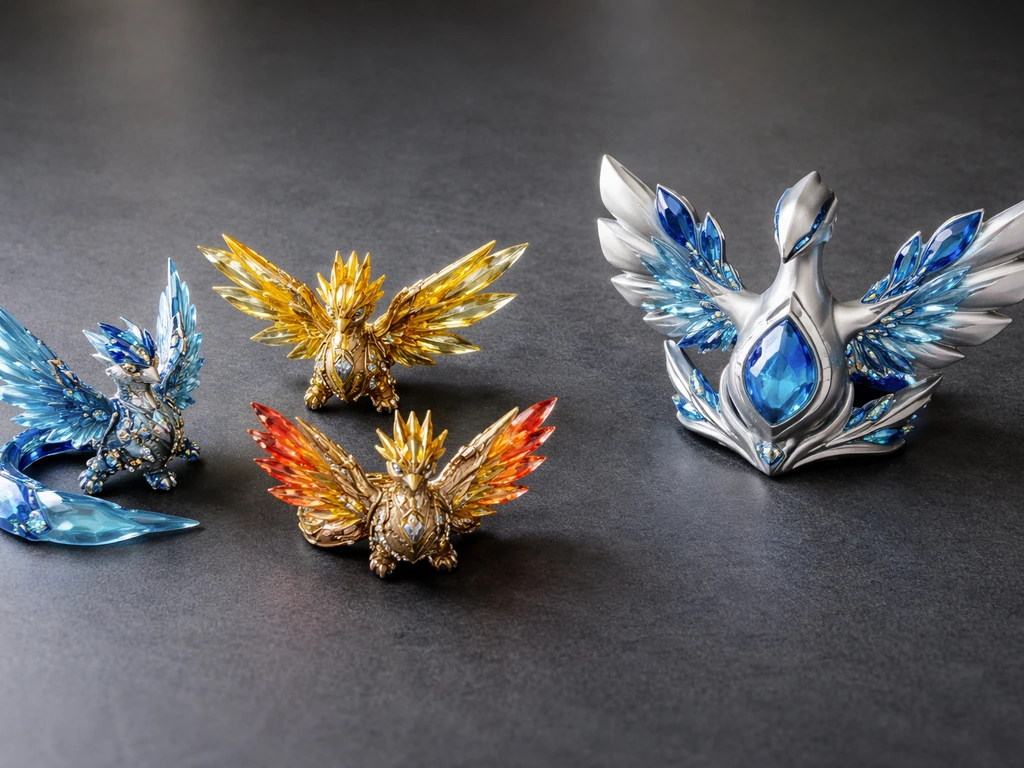
Here's where it gets genuinely interesting. Within the Pokémon games, there is an official group called the 'Legendary Birds,' which consists of Articuno, Zapdos, and Moltres. Lugia is not a member of that group in the game's own internal taxonomy. Lugia's official in-game species label is 'Diving Pokémon,' and it is associated with the sea, not the sky. Its Pokédex entries describe it sleeping in a deep-sea trench and causing 40-day storms when it flaps its wings. That's more sea-serpent energy than sparrow energy.
The confusion probably comes from Lugia's central role in 'The Movie 2000,' where it appears alongside Articuno, Zapdos, and Moltres, and from the fact that it is broadly called a 'legendary' Pokémon (as in, rare and mythical within the game world). But 'legendary' in Pokémon just means powerful and rare. It doesn't mean 'bird.' Lugia is a legendary Pokémon that is not classified as one of the official Legendary Birds. The Pokémon franchise's own internal labels are already telling you it's a Diving Pokémon, not a bird Pokémon.
Even if Lugia were classified as a legendary bird within the game, that still wouldn't make it a real bird. Pokémon types and species labels are storytelling tools, not biological taxonomy. A Pokémon's 'Flying' type doesn't map to class Aves any more than a Pokémon's 'Dragon' type maps to the actual reptilian clade. The franchise applies real-life inspiration through a fantasy framework, and that framework shouldn't be read as scientific classification.
Lugia's birdlike vs dragonlike features, and why people get confused
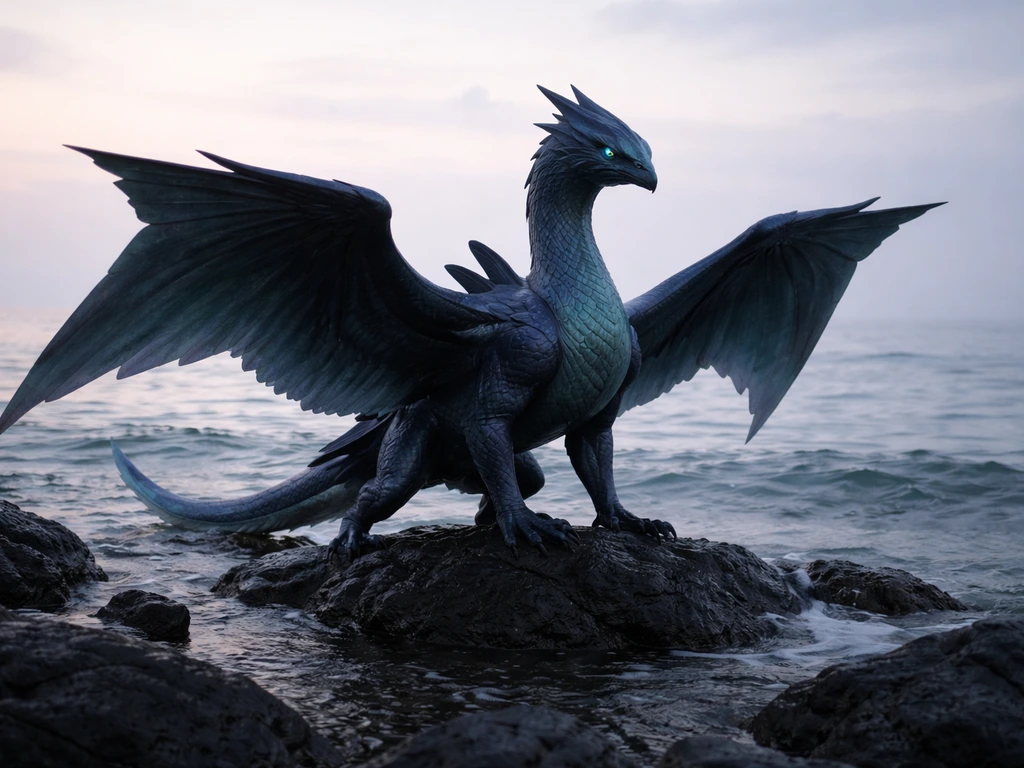
Lugia's design is genuinely ambiguous, and that ambiguity is intentional. Bulbapedia's official design description says Lugia 'resembles a dragon, a plesiosaur, and a bird,' and you can see all three in its silhouette. It has large wings that are shaped somewhat like hands, points above its eyes that read as a kind of crest, and a long neck and tail that evoke a sea creature more than a songbird. Some players see stylized avian wings and land on 'it's a bird.' Others look at the smooth, scale-like texture of the Silver Wing item and the serpentine body and land on 'it's a dragon.'
This is exactly the same trap that catches people with real-world animals. Pterosaurs looked birdlike because they flew and had hollow, air-filled bones, but they weren't birds: their wings had a completely different skeletal structure. The visual similarity between a pterosaur and a bird is convergent evolution, where unrelated groups arrive at similar shapes because they solve the same problem (in this case, flying). Lugia's design works the same way: it borrows avian visual cues to signal 'this creature flies and is majestic,' but those cues are aesthetic choices by a designer, not biological evidence of class Aves membership.
For what it's worth, the traits that would make something a real bird are all absent or unknowable for Lugia. We have no indication it has keratin feathers (those wing-tips look more like fins or membranes). There are no Pokédex entries mentioning a toothless beak in the bird-biology sense. It lives underwater, which is unusual for birds (though penguins do it). And while birds do exist as a class because they share a common ancestor, Lugia has no evolutionary lineage at all. It was created by a game designer, not natural selection.
How to classify fictional creatures using bird criteria
When someone asks 'is X a bird? When the question is is Xayah a bird, use the same real biological checklist instead of judging by its bird-like look is X a bird. ' about a fictional creature, the most useful thing you can do is run it through the real biological checklist rather than relying on vibes or visual design. Here's a practical framework you can apply to Lugia, Ho-Oh, Yveltal, or any other winged fictional creature you're trying to place.
- Does it exist in reality? If no, it can't be a real bird. Full stop. The rest of the exercise is about understanding design intent, not taxonomy.
- Does the design include true feathers (not membrane wings, fin-like wings, or scaled wings)? Feathers are the single most diagnostic bird trait.
- Does it have a toothless beak, or does it have teeth, a snout, or a jaw that reads as reptilian?
- Is it warm-blooded and egg-laying in its fictional lore? This matters less for fictional creatures, but it helps gauge how 'bird-like' the writers intended it to be.
- What does the franchise's own classification say? Lugia is a 'Diving Pokémon.' Ho-Oh has a different set of associations. Those internal labels are useful data points about creative intent.
Running Lugia through this checklist, it fails at step one (not real) and gives mixed signals at every step after that. Its wings look more like elongated hands or fins than feathered wings. Its Pokédex entries emphasize sea-dwelling behavior. Its official species label has nothing to do with birds. The honest classification is: fictional creature with mixed avian and draconic design cues, not a bird by any real-world standard.
This same framework works for other creatures people commonly misclassify. Yveltal, for example, is another Pokémon with a dramatic winged silhouette that raises the same question. Yveltal is another dramatic winged Pokémon, and you can evaluate whether it qualifies as a real bird using the same checklist of traits. Quetzalcoatlus, a real prehistoric creature, gets misidentified as a bird because it flew, but it was actually a pterosaur. Even real-world borderline cases like ostriches and penguins, which don't fly and live very un-bird-like lives, still pass the full checklist because they have feathers, hollow bones, toothless beaks, and lay hard-shelled eggs. Lugia passes none of those checkpoints in any verifiable way.
A quick comparison: Lugia vs real bird traits
| Trait | Real Bird (Class Aves) | Lugia (Fictional Pokémon) |
|---|
| Feathers | Yes, keratin feathers only found in birds | No confirmed feathers; wings appear fin/membrane-like |
| Toothless beak | Yes, defining trait of all birds | Unclear; design includes pointed beak-like features but also reptilian elements |
| Hollow/pneumatic bones | Yes, reduces skeleton weight for flight | Unknown; fictional creature with no confirmed anatomy |
| Warm-blooded (endothermic) | Yes, all birds are endothermic | Not established in lore |
| Hard-shelled eggs | Yes, all birds lay them | Not mentioned in any Pokédex entry |
| Real biological lineage | Yes, belongs to class Aves via evolution | None; created by a game designer |
| Official species label | Bird | Diving Pokémon |
| In-game type | N/A | Psychic / Flying |
The bottom line, and how to handle questions like this going forward
Lugia is not a bird. It's a fictional legendary Pokémon whose design intentionally mixes avian, draconic, and sea-creature elements, and whose own franchise classifies it as a 'Diving Pokémon,' not a bird Pokémon. It is not one of the in-game Legendary Birds (that group is Articuno, Zapdos, and Moltres). And even if someone wanted to argue it looks birdlike, looking like a bird is not the same as being a bird: real classification requires the full package of class Aves traits, and Lugia can't be verified against any of them because it doesn't exist.
The broader lesson is worth holding onto. Whenever you're faced with a winged creature, fictional or real, and you want to know if it's a bird, don't start with the wings. Start with feathers. A lute is not a bird, because it is a musical instrument, not a warm-blooded animal with feathers, a beak, hollow bones, and hard-shelled eggs. If the creature has true keratin feathers, a toothless beak, hollow bones, warm blood, and lays hard-shelled eggs, it's a bird. If it's missing any of those, it needs a closer look. And if it's fictional, the most you can say is how bird-like its design intent is, not whether it actually belongs to class Aves.
If you're working through similar questions, the same logic applies to other popular fictional and prehistoric cases. If you are wondering is Xiao a bird, apply the same real biological checklist rather than relying on appearance. If you're wondering can xiao turn into a bird, apply the same real biological checklist rather than relying on appearance. Ho-Oh, another legendary Pokémon that appears explicitly alongside the Legendary Birds, raises a closely related question about legendary bird classification. Ho-Oh is another legendary Pokémon that is often grouped with the Legendary Birds, so it is worth checking against the same real bird checklist to see whether the label maps to class Aves. Yveltal is another dramatic winged Pokémon worth running through the same checklist. And if you're curious about real prehistoric flyers like Quetzalcoatlus, those are worth exploring too, since they illustrate exactly why wings and flight don't automatically equal 'bird' even in the fossil record.