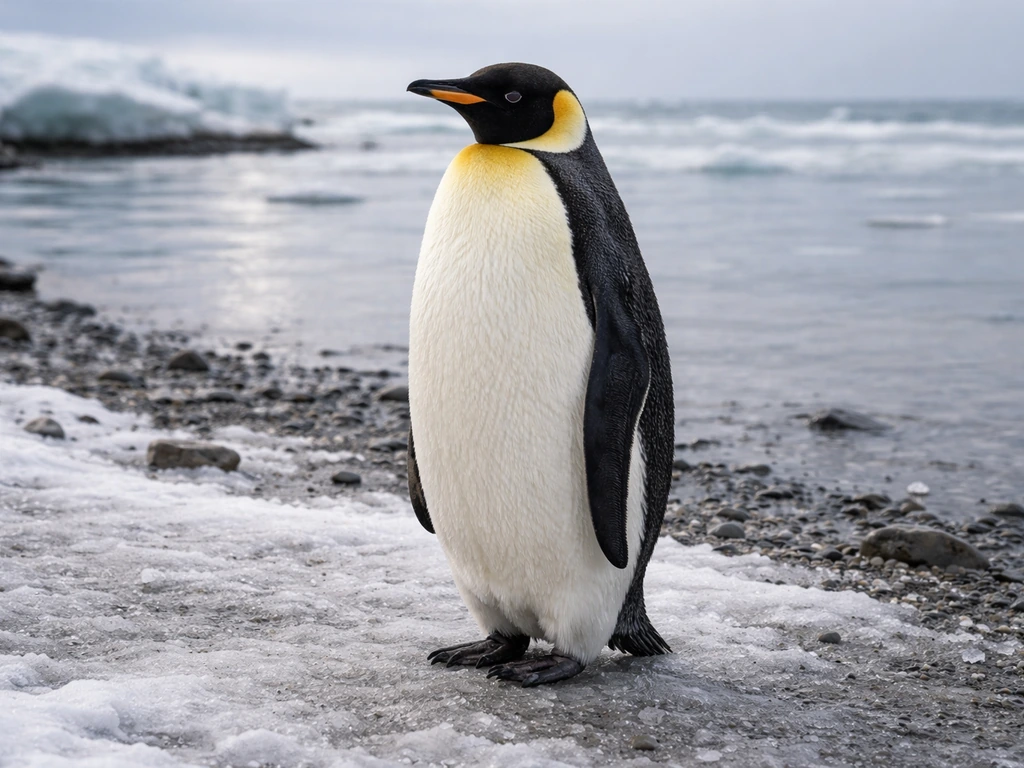
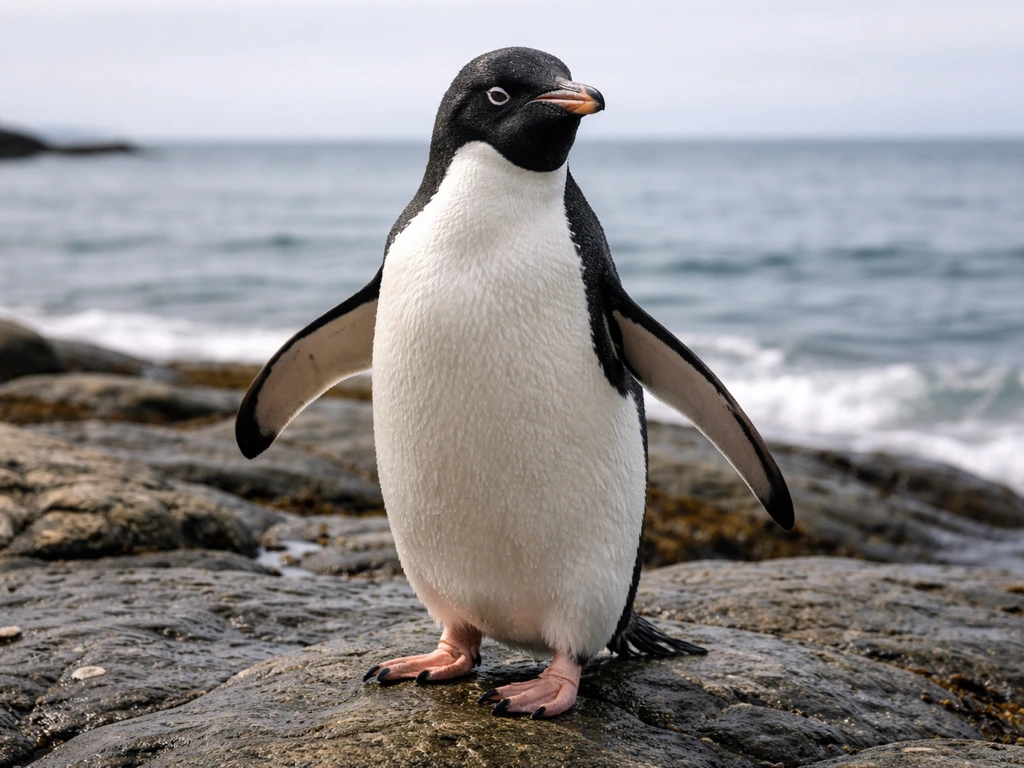
A penguin is a bird, full stop. It is not a fish, and it is not a mammal. Penguins belong to Class Aves (the scientific grouping for all birds), specifically the order Sphenisciformes and family Spheniscidae. They have feathers, wings, a beak, lay hard-shelled eggs, and are warm-blooded. Penguins are a clear example of are penguins bird, because they have feathers, wings, and lay hard-shelled eggs. Every single one of those traits puts them firmly in the bird column, not the fish column.
Is a Penguin a Fish or a Bird? Quick, Clear Answer

Sarah Chen
24 Apr 2026
Why penguins get mistaken for fish (or sea animals)
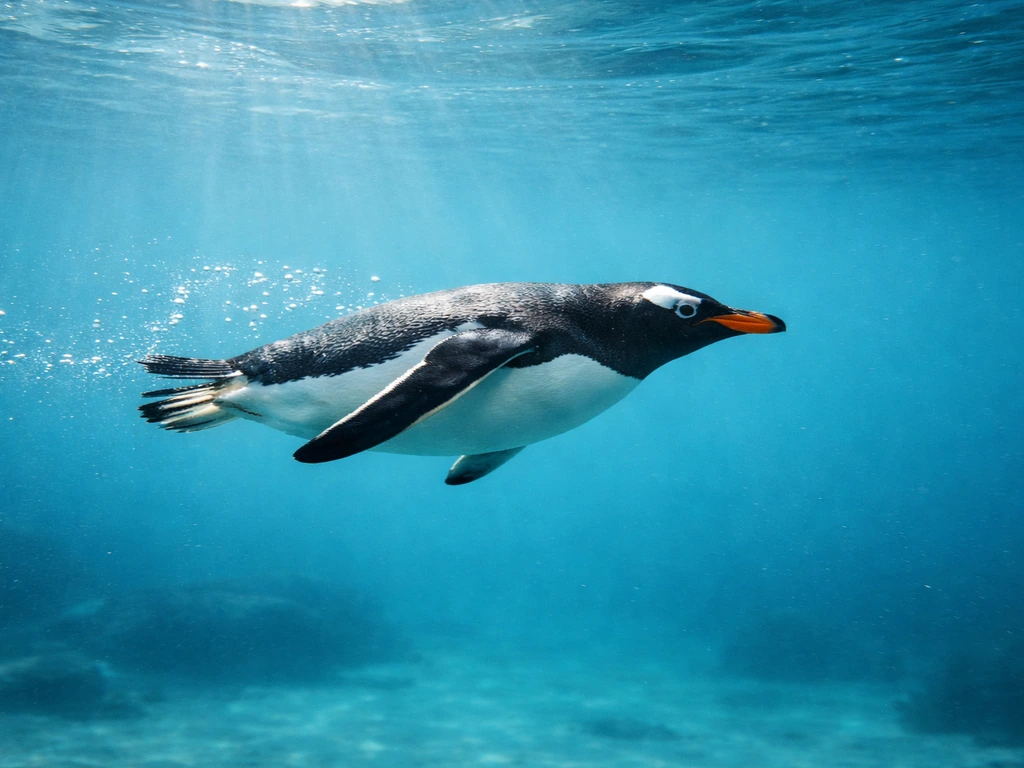
The confusion is completely understandable. Penguins spend roughly 75% of their lives in the water, according to the Smithsonian. They are built for it: a streamlined, torpedo-shaped body, flippers they use to "fly" underwater, and a coloring pattern (dark back, white belly) that works as camouflage in the ocean. Watch one glide through the water and your brain wants to say "fish." But looking aquatic and being aquatic are two very different things biologically.
The other reason people get tripped up is that penguins can't do the one thing most people associate with birds: fly through the air. Because they don't match the mental image of a sparrow or a robin, the brain starts hunting for another category. Fish and mammals both come to mind, especially if someone has also heard that dolphins and whales (mammals) live in the sea. The question "is a penguin a bird, fish, or mammal?" is genuinely one of the most common animal classification questions out there, and it's not a silly one. So, is an impala a mammal, bird, insect, or fish an impala a mammal bird insect or fish.
The bird checklist: traits penguins have that fish definitely don't
The fastest way to settle this is to run penguins through the standard bird identification checklist. Birds are defined by a specific set of biological traits, and penguins match every one of them.
- Feathers: Penguins have feathers, not scales. Their feathers are short, dense, and tightly packed to be waterproof, and the Natural History Museum has studied penguin feather microstructure under electron microscopes to understand exactly how that waterproofing works. Once a year, penguins go through what's called a "catastrophic molt," shedding all their feathers at once and growing a fresh coat. Fish have scales; penguins have feathers.
- Wings: Penguins have wings. Those wings have evolved into stiff, flat flippers, but the underlying bone structure is the same skeletal framework found in the wings of any flying bird, just shortened and flattened for underwater propulsion. Britannica confirms this directly.
- Beak: Penguins have a beak. Fish have mouths with jaws but no beak. Mammals have neither a beak nor a bill in most cases.
- Warm-blooded (endothermic): Penguins regulate their own body temperature internally. Fish are cold-blooded (ectothermic), meaning their body temperature shifts with the environment. This is a hard biological line between the two groups.
- Hard-shelled eggs: Penguins come ashore to lay hard-shelled eggs, which both parents incubate in a featherless brood pouch to keep them warm. Birds lay hard-shelled eggs; fish typically release eggs into water with no shell. Mammals (with a few platypus-shaped exceptions) don't lay eggs at all.
- Hollow bones: Birds, including penguins, have hollow bones. This is a trait shared across Class Aves and is completely absent in fish.
Scientific American puts it plainly: like all birds, penguins possess feathers, wings, and beaks, and they lay eggs. That's the whole checklist ticked off in one sentence.
Penguin vs fish vs mammal: a side-by-side comparison
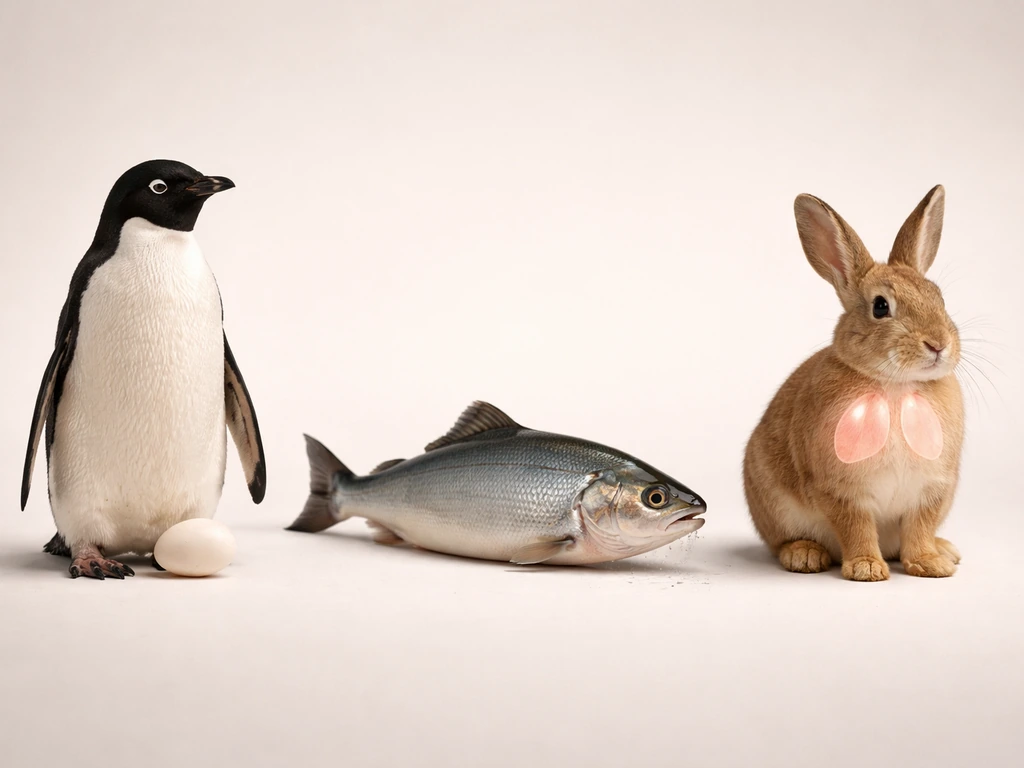
If you want to see exactly where penguins land relative to fish and mammals, this table makes it obvious. The traits listed here are the core classification markers used in biology, not just surface appearances.
| Trait | Penguin (Bird) | Fish | Mammal |
|---|---|---|---|
| Body covering | Feathers | Scales | Hair or fur |
| Body temperature | Warm-blooded (endothermic) | Cold-blooded (ectothermic) | Warm-blooded (endothermic) |
| Breathing | Lungs | Gills (water) | Lungs |
| Reproduction | Lays hard-shelled eggs | Mostly lays unshelled eggs in water | Mostly live birth; nurses young with milk |
| Limbs | Wings (modified as flippers) + legs | Fins | Four limbs or flippers (no wings) |
| Beak or bill | Yes | No | No (with rare exceptions) |
| Mammary glands / produces milk | No | No | Yes |
| Biological classification | Class Aves | Multiple fish classes | Class Mammalia |
Notice that penguins share warm-bloodedness with mammals, and they share an aquatic lifestyle with fish, but the feathers and hard-shelled eggs are what put them in the bird column with no ambiguity. Mammals are identified by mammary glands (which produce milk to nurse young) and hair or fur. Penguins have neither. Fish breathe through gills and are covered in scales. Penguins have neither of those either.
How to remember this (and where to go from here)
Here's a memory trick that actually works: feathers equal birds, always. National Geographic Kids puts it simply: birds are the only animals with feathers. So if you're ever unsure whether something is a bird, look for feathers first. If it has feathers, it's a bird. Penguins have feathers, therefore penguins are birds. It really is that clean. So, is a pelican a bird? Yes, pelicans are birds too is a bird.
A second check is the egg question. If the animal lays a hard-shelled egg and incubates it, that's a strong bird signal. Penguins do exactly that, coming ashore specifically to lay and incubate their eggs. Fish eggs have no shell and are usually released into water. Mammal young (in most species) are born live and nursed with milk.
Penguins are one of the most classic "borderline case" animals in bird classification, right up there with ostriches, which also can't fly. If you're finding that the penguin question opened up a bigger curiosity about what actually makes something a bird, that's worth following. The deeper question of why penguins are birds (not just that they are) gets into some fascinating evolutionary territory around how flippers developed from wings and why penguin feathers are structured the way they are.
Natural History Museum analyses of penguin feathers, including electron microscopy, examine microstructures responsible for their water-repelling behavior [penguin feathers are structured the way they are](https://www. nhm. ac. uk/discover/how-penguin-suits-inspire-future-fabrics.
html). If you are asking what makes penguins birds, the short answer is that their biology matches birds, not fish why penguins are birds. Similarly, if the fish-or-mammal confusion is still nagging at you, the distinction between birds and mammals (like why a warm-blooded, swimming animal is a bird and not a mammal) is worth exploring directly.
The practical takeaway: next time someone asks whether a penguin is a fish or a bird, the answer is bird, and the proof is in the feathers, the hard-shelled egg, the beak, and the wings underneath those flippers. No gills, no scales, no mammary glands. Scientific American explains that penguins' dense feathers trap air to provide insulation, along with additional hydrodynamic benefits dense feathers trap air for insulation. Definitely a bird.
FAQ
Why do some people say “penguins are fish,” even though they are birds?
It usually comes from behavior, not biology. Penguins hunt and move efficiently in water, so they resemble fish in silhouette and lifestyle, but classification depends on core traits like feathers, egg type, and breathing method, not where the animal spends most of its time.
Do penguins have gills or scales at all?
No. They breathe air with lungs like other birds, and their outer covering is feathers, not scales. Even though they live in the ocean, they are not built for gill-based underwater breathing.
If a penguin is warm-blooded, does that mean it’s a mammal?
Warm-bloodedness alone does not make something a mammal. Penguins are warm-blooded, but the decisive signals for mammals are hair or fur and mammary glands that produce milk. Penguins have feathers and no mammary glands.
What bird traits are most decisive for identifying a penguin as a bird?
Feathers are the easiest “yes or no” marker, and penguins also have wings, a beak, and lay hard-shelled eggs that are incubated. Those features collectively put them in Class Aves without relying on whether they can fly.
Can a penguin be considered a “bird” if it cannot fly?
Yes. Many birds cannot fly (penguins are one example, ostriches and emus are others). Bird status is based on anatomical and reproductive traits, not the ability to fly through the air.
Do penguins lay eggs like other birds, or is it different because they live in water?
Penguins still lay hard-shelled eggs and incubate them, typically on land or in sheltered nesting areas. Fish reproduce very differently, with eggs generally released into water and lacking hard shells.
If a penguin looks like it has flippers, are those actually modified wings?
Yes. Penguins’ flippers are derived from the wing bones found in birds, but shaped for swimming. The key point is that the underlying anatomy still traces back to wings, supporting their classification as birds.
How can I quickly tell apart a penguin versus a similar-looking sea animal?
Use a short checklist: feathers (bird), hard-shelled egg/incubation behavior (bird), lungs/air breathing (bird), and no scales or gills. If you find gills or scales, it is not a penguin.
Are there any “exceptions” that would make the penguin question uncertain?
For standard animal classification, there are no true exceptions. Penguins always meet the defining bird traits, so the only uncertainty is confusion from their aquatic lifestyle or from comparing them to fish based on appearance.
Next Article
Why Is a Penguin a Bird? What Makes It a Bird
Learn why penguins are birds, not fish, using key traits like feathers, warm-bloodedness, and reproduction.