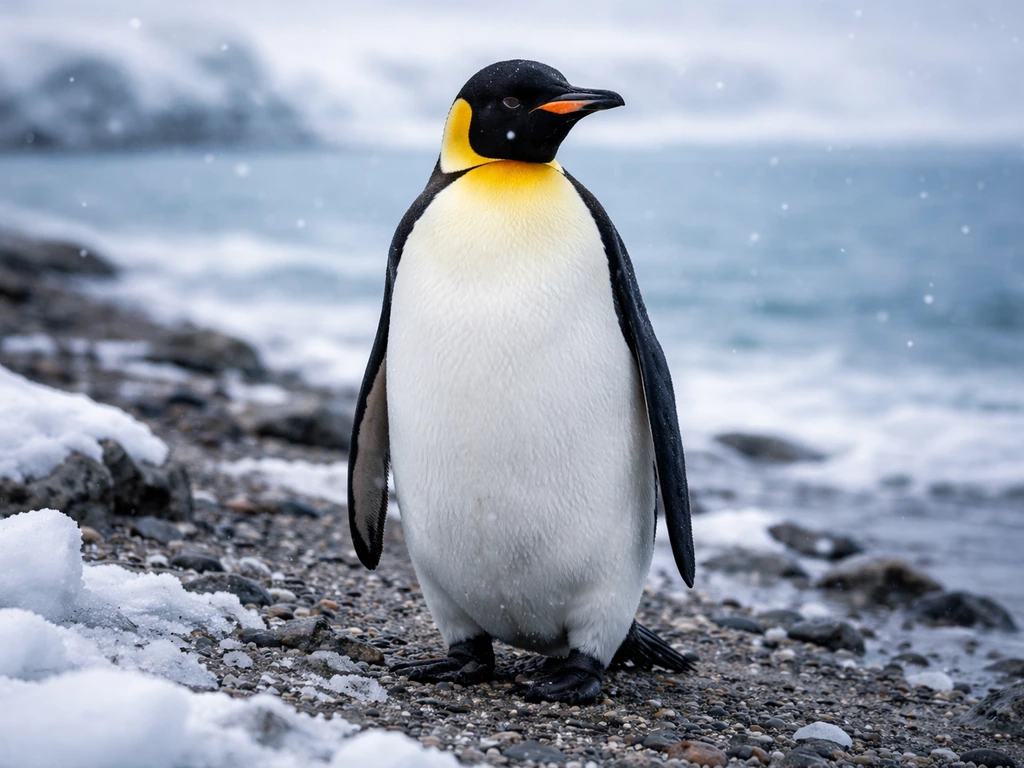
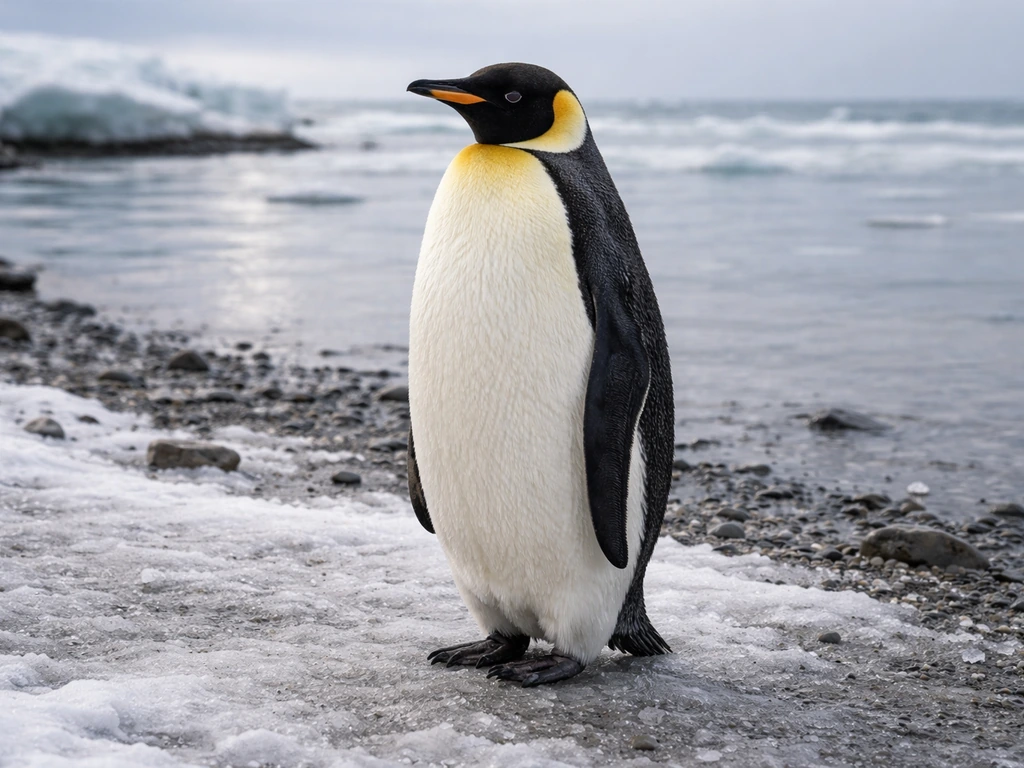
A penguin is a bird because it has feathers, lays eggs, is warm-blooded, and belongs to the class Aves, the same biological group as every other bird on the planet. That classification is based on biology, not on whether an animal can fly or looks like what most people picture when they think "bird." If you've been wondering why penguins are birds when they swim like fish and can't fly, the short answer is: biology is about shared ancestry and physical traits, not lifestyle.
Why Is a Penguin a Bird? What Makes It a Bird

Sarah Chen
16 Apr 2026
What actually makes an animal a bird
The word "bird" isn't a common name slapped on any animal people feel like calling a bird. It maps directly onto a biological class called Aves, and membership in that class is defined by a specific set of traits. According to Animal Diversity Web, birds (Aves) are vertebrates with feathers, modified for flight and for active metabolism, and they typically provide extensive parental care to their young. That last point matters: birds don't just drop their eggs and disappear.
In plain terms, the core checklist for being a bird looks like this: feathers covering the body, a beak (no teeth), two hind limbs used for walking or perching, endothermy (meaning the animal generates and regulates its own body heat from the inside rather than relying on external temperatures), eggs that develop outside the mother's body, and a specialized lung-and-air-sac respiratory system that produces continuous, one-directional airflow. That unidirectional airflow gives birds more completely ventilated lungs than mammals of a comparable size, which is part of why birds can sustain demanding physical activity like flight or, in penguins' case, deep diving.
Feathers deserve special attention because they are the single most distinctive marker of birds. No other living animal group has them. They serve double duty: insulation to keep a warm-blooded body at the right temperature, and aerodynamic function (generating lift and thrust in flying species). Even in flightless birds, feathers are still present and still doing the insulation job.
Every penguin trait that checks the bird box
Here is where people get surprised. Run through the bird checklist above and apply it to penguins, and every single item matches.
Feathers: Penguins have them. Penguin feathers are short, dense, and highly waterproof, which is an adaptation for life in cold water, but they are undeniably feathers. Emperor penguin feather density studies have confirmed just how tightly packed that plumage is. And penguins go through a full molt, shedding and replacing all their feathers at once in what's sometimes called a "catastrophic molt," a feature entirely characteristic of birds. Penguins are birds, and their feathers are part of why.
Wings: A penguin's flipper is a wing. It has exactly the same skeletal base as a flying bird's wing, with the bones shortened and flattened into a relatively rigid limb covered with very short feathers. The penguin doesn't use those wings to fly through air; it uses them to "fly" through water, using them for underwater propulsion. The structure is avian (belonging to birds), adapted for a different medium.
Endothermy: Penguins are warm-blooded. They maintain a stable internal body temperature regardless of the frigid Antarctic waters around them. This is a fundamental bird trait, and Animal Diversity Web explicitly notes that penguins (order Sphenisciformes) have an endothermic, active-metabolism physiology.
Respiration: Penguins breathe with lungs and air sacs, not gills. Research into penguin diving physiology has documented the avian respiratory anatomy in detail, including the volumes and distribution of air across the penguin lung-and-air-sac system. That air-sac design is distinctly avian and plays a direct role in how penguins manage oxygen storage during dives.
Eggs and parental care: Penguins lay eggs and incubate them outside the body. Incubation duties are shared by both parents in shifts, with the timing of the breeding cycle calculated so that chicks hatch when food in the ocean is most plentiful. The emperor penguin is a notable exception to the shared-incubation pattern: the male incubates the egg alone while the female goes out to sea to feed, then the parents swap roles.
A special featherless brood pouch keeps the egg warm against the parent's skin. Smithsonian Ocean notes that all penguin species incubate their eggs in a special featherless brood pouch [A special featherless brood pouch keeps the egg warm against the parent's skin. ](https://ocean. si.
edu/ocean-life/seabirds/penguins). This is intensive parental investment, the kind Animal Diversity Web flags as a defining bird characteristic.
Taxonomy: Penguins are formally placed in class Aves, order Sphenisciformes, and family Spheniscidae. Spheniscidae is the only family in that order. Multiple taxonomic sources, from SeaWorld's scientific classification pages to the Seamap species profiles, list penguins squarely in class Aves. The question of whether a penguin is a bird or just an animal has a clear answer at the taxonomy level: it is both, and within "animal," it is classified as a bird.
Why penguins look fish-like but definitely aren't fish
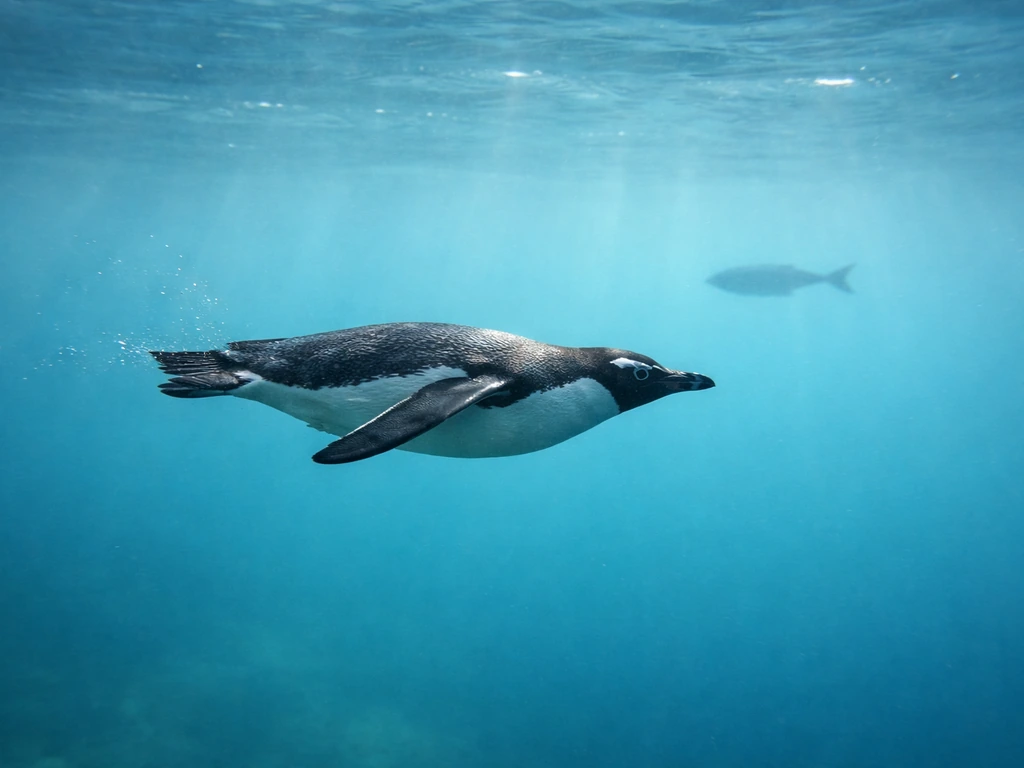
This is where most of the confusion comes from. Penguins swim fast, their bodies are streamlined, and they spend a huge portion of their lives in the ocean. That looks fish-like. But looking similar to something and being classified as that thing are completely different ideas. A dolphin looks like a shark but is a mammal. A penguin looks like it could be a fish but is a bird. Shape is about adapting to an environment; classification is about ancestry and biology.
If you compare a penguin to a fish directly, the differences stack up fast. Here's the clearest way to see that side by side:
| Trait | Penguin (bird) | Fish |
|---|---|---|
| Body covering | Short, dense, waterproof feathers | Scales (in most species) |
| Respiration | Lungs and air sacs (breathes air) | Gills (extracts oxygen from water) |
| Body temperature | Warm-blooded (endothermic) | Cold-blooded (ectothermic) in most species |
| Reproduction | Lays eggs on land, incubates them, extensive parental care | Most lay externally fertilized eggs in water, typically with little parental care |
| Limbs / appendages | Flippers derived from bird wings, two hind legs | Fins (no limbs with the same skeletal structure) |
| Skeleton | Bony skeleton with avian features | Bony or cartilaginous skeleton (different structure) |
| Taxonomy | Class Aves | Multiple classes (Actinopterygii, Chondrichthyes, etc.) |
The respiratory difference alone is decisive. Penguins have to surface to breathe because they have lungs, not gills. No fish does that. And penguins' feathers, even though they're short and dense rather than long and flight-adapted, are nothing like scales. Feathers have a completely different biological origin and structure. The fact that they're waterproof in penguins is an adaptation, not evidence of being a fish.
It's also worth noting that fish reproduction typically involves eggs that are externally fertilized in the water, often laid in large numbers, often with minimal parental involvement. Penguin reproduction is basically the opposite: eggs are laid on land (or ice), fertilized internally before laying, incubated with body heat from one or both parents, and the chick receives extended care after hatching. That reproductive pattern is birds, full stop.
How is a penguin a bird: a quick checklist
If you want a fast, reliable way to confirm that penguins meet the bird criteria, here it is. A penguin is a bird because:
- It has feathers (short, dense, and waterproof, but real feathers that molt on a cycle).
- It has wings (structurally derived from bird wings, used as flippers for underwater swimming).
- It is warm-blooded (endothermic, maintaining its own internal body temperature).
- It breathes with lungs and air sacs (not gills), surfacing to take in air.
- It lays eggs outside the body and incubates them with direct body heat.
- It provides extensive parental care before and after hatching.
- It has a beak, not a toothed jaw.
- It is formally classified in class Aves by every major taxonomic system.
Every item on that list applies to penguins without exception. You can use this same checklist on any animal you're unsure about. If it clears all eight, it's a bird. People sometimes wonder whether a penguin is a bird or a mammal, and this list makes that easy to resolve too: mammals have fur or hair instead of feathers, give birth to live young (in most cases), and nurse offspring with milk. Penguins do none of those things.
Why we call it a bird: taxonomy beats appearance every time
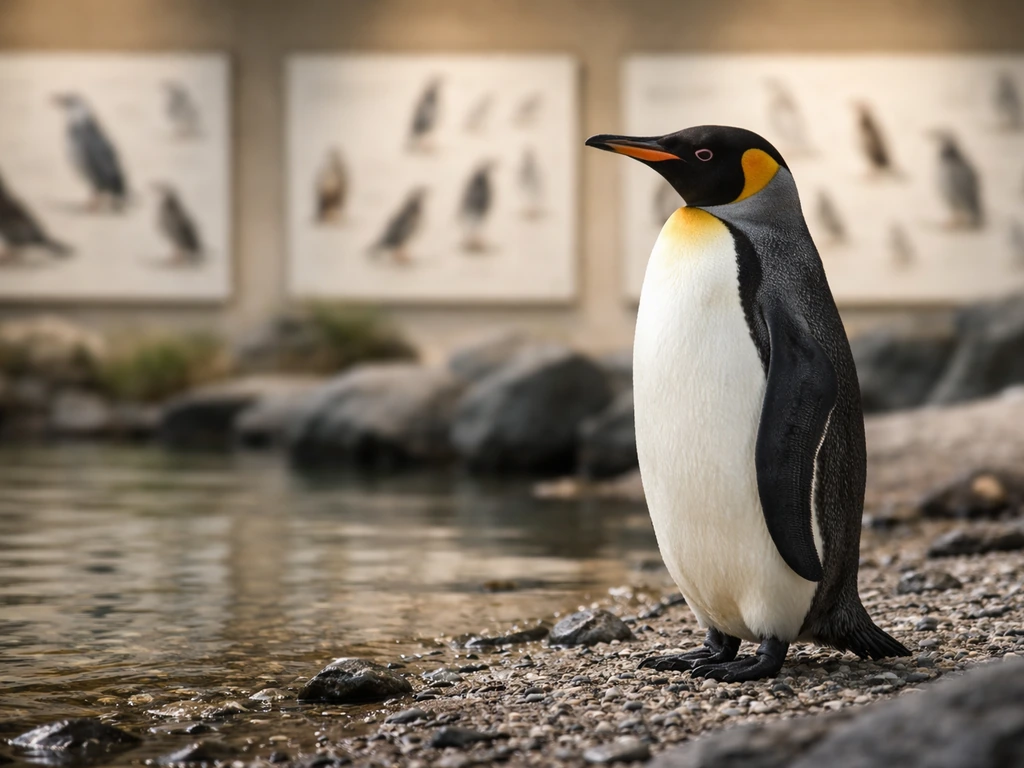
The reason penguins are called birds isn't a historical accident or a loose use of the word. "Bird" is a common-language term that directly corresponds to the scientific classification Aves. When biologists place an animal in class Aves, the everyday word for that is bird. Taxonomy works by grouping animals that share a common ancestor and a defined set of inherited biological traits, not by grouping animals that look similar or live in the same place.
This is why appearances can mislead. A penguin's streamlined body, flipper-wings, and aquatic lifestyle evolved because those traits make it spectacularly good at surviving in cold oceans. Natural selection shaped the penguin toward a fish-like form because that form works in that environment. But those are adaptations layered on top of a fundamentally avian body plan. The skeleton, the feathers, the respiratory system, the reproductive biology, all of it is bird.
Think of it this way: ostriches can't fly either, and they look nothing like a robin or a sparrow. But nobody disputes that ostriches are birds, because the biological criteria are clearly met. Penguins are in the same position. Their flight apparatus was redirected toward swimming rather than abandoned entirely, but the underlying structure is still a bird wing. That's why Britannica describes penguins as aquatic birds adapted for an aquatic environment, not as something in between birds and fish.
The confusion is completely understandable. People learn "birds fly" as an early shorthand, and penguins break that rule visibly. But the rule was never the actual definition. Knowing that a penguin is a bird because of its feathers, warm blood, egg-laying, and class Aves placement, rather than because of its ability to fly, is the shift in thinking that makes the classification click.
If you want to see how this same logic applies to other water-associated birds, it helps to look at species like pelicans. Asking whether a pelican is a bird or even whether a pelican counts as a water bird runs into the same taxonomy-versus-appearance dynamic: both questions get resolved by checking the biological criteria, not by looking at where the animal spends its time. And if you want to practice the classification thinking on a very different kind of animal, trying to work out whether an impala is a mammal, bird, insect, or fish is a good exercise, because the answer is obvious once you're applying the right criteria.
The bottom line: penguins are birds because they meet every biological criterion that defines the class Aves. Their swimming ability and streamlined shape are evolutionary adaptations, not evidence of being fish or something else. Classification follows biology, and penguin biology is unambiguously bird.
FAQ
If a penguin cannot fly, why is it still considered a bird?
No. In taxonomy, “bird” is based on inherited biological traits, and the ability to fly is not required. A quick way to test this is the feathers plus lung-and-air-sac (bird-style breathing) combination, which penguins have.
How can you tell a penguin apart from a fish if they both swim?
Penguins can look fish-like, but fish have gills and get oxygen without air-breathing. Penguins surface to breathe with lungs and use an avian lung-and-air-sac system, so they are birds even though they live and swim in water.
Are penguin feathers basically like fish scales?
Bird “feathers” are distinct from fish scales because feathers have a different structure and developmental origin. Scales are not modified body insulation plumes, and they do not molt as feathers do, so the presence and behavior of feathers points to Aves.
Does being near the ocean or spending time swimming make something a bird?
“Bird” is not the same as “can fly,” and it is also not the same as “lives near water.” For example, some birds spend most of their time underwater or in cold climates, but the classification still follows the shared bird body plan traits.
Is a penguin ever classified as a mammal, or why is it definitely not one?
Mammals and birds differ strongly in reproduction and body covering. Penguins lack fur, do not nurse offspring with milk, and they develop chicks from eggs incubated outside the mother’s body, all of which are consistent with birds rather than mammals.
What does “in between” mean when people say penguins are neither birds nor something else?
There is overlap in appearance with other animals, but penguins are not “in between” groups. If an animal has feathers, bird-style breathing with air sacs, and egg-based reproduction with parental care, those traits line up with Aves regardless of how the animal looks or moves.
What’s the fastest reliable way to check whether an animal is a bird without needing full taxonomy knowledge?
The easiest checklist approach is to confirm multiple independent traits, not just one. If feathers are present, then also verify egg-laying and bird-type respiration (lungs plus air sacs). One trait can be misleading, but a cluster is decisive.
Do penguins still molt like other birds if they cannot fly?
Penguin molt is a whole-body feather replacement process, which is characteristic of birds even in flightless species. You can spot the pattern by looking for staged shedding and regrowth in their plumage, which is different from how fish or reptiles replace their coverings.
Next Article
Are Penguins a Bird or a Mammal? Quick Taxonomy Check
Penguins are birds, not mammals. Learn the traits that define birds and a quick checklist to classify other animals.