Yes, a flamingo is absolutely a bird. It belongs to class Aves, the scientific grouping that contains every bird on the planet, and sits in its own family called Phoenicopteridae. There is no taxonomic grey area here. If you have seen a flamingo described as a water bird, a wading bird, or a tropical bird, those are all accurate labels too. They are not competing categories. They are just different ways of describing where flamingos live and how they behave. This article breaks down each label, explains what makes flamingos birds in the first place, and clears up the occasional confusion about whether they might be mammals.
Is a Flamingo a Bird? Water, Wading, and Facts

Sarah Chen
4 Apr 2026
What makes any animal a bird?
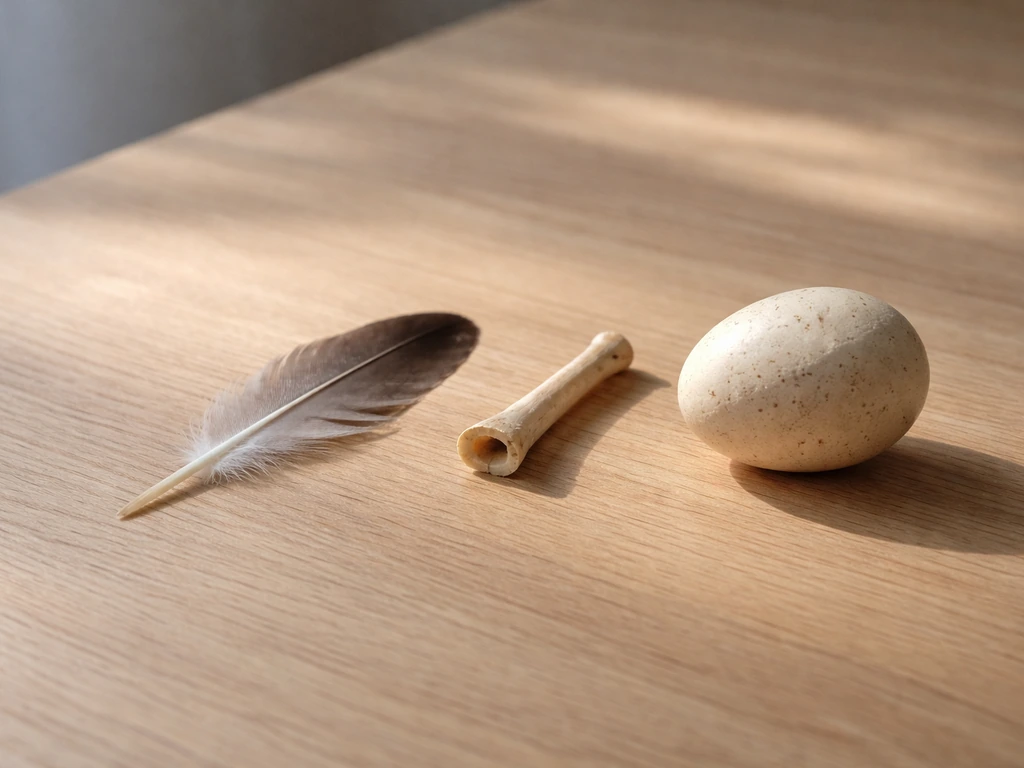
Before getting into flamingo specifics, it helps to know the checklist scientists use to sort birds from everything else. You only need a few markers, and they are pretty definitive. understanding whether a flamingo is a bird or animal starts with knowing what separates class Aves from all other vertebrates.
- Feathers: the single most reliable marker. No other living animal group has them.
- Hollow bones: lightweight skeletal structure that is diagnostic of birds.
- Hard-shelled eggs: birds reproduce by laying eggs with a calcified shell, not by live birth.
- Warm-blooded metabolism (endothermy): birds regulate their own body temperature internally.
- Beak or bill with no teeth (in modern birds): a keratin-covered structure rather than toothed jaws.
- Wings: present in all birds, though not all birds fly.
Flamingos check every single box. They have feathers, hollow bones, lay hard-shelled eggs, and have that distinctive curved bill you would recognize anywhere. The Cornell Lab of Ornithology is clear that all birds have feathers and lay eggs, and the Smithsonian's National Museum of Natural History adds hollow bones to that foundational list. Flamingos meet those criteria without exception.
Why flamingos are called water birds
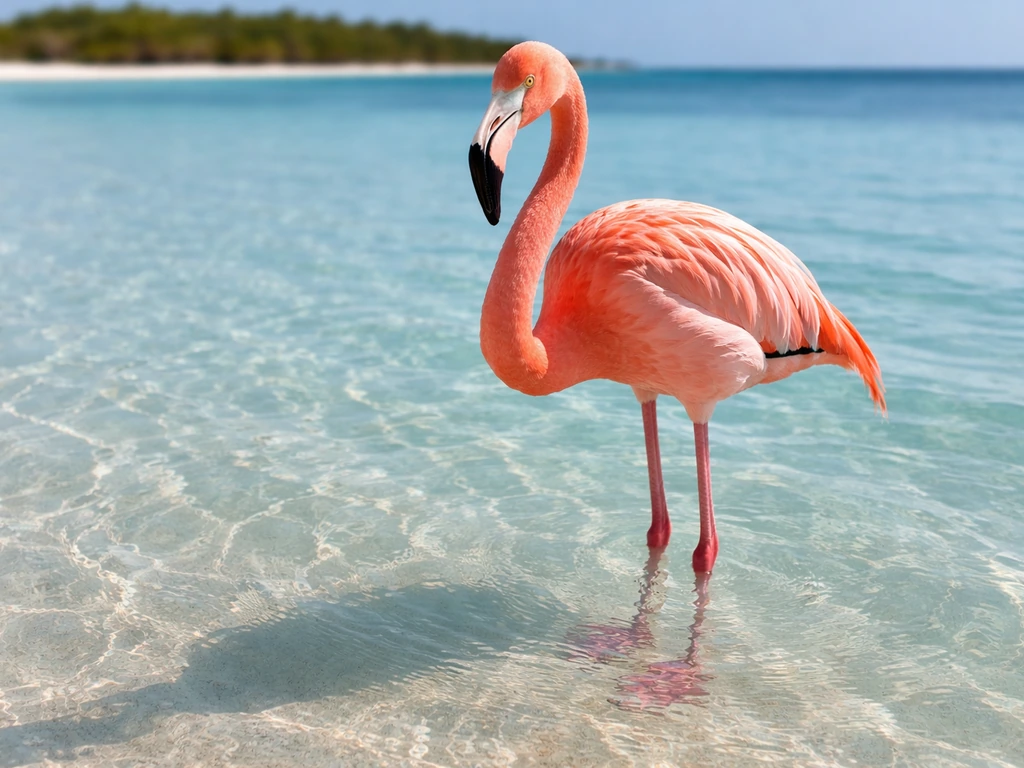
The label 'water bird' gets applied to any bird that spends most of its active life in or around water rather than in forests or grasslands. Flamingos fit this description completely. The Smithsonian National Zoo describes American flamingos as animals that 'usually live in the shallows of salt or brackish water or alkaline lakes.' That is not just their preferred hangout. It is functionally where they eat, socialize, breed, and sleep.
Their entire anatomy reflects a water-based lifestyle. The long legs keep the body clear of the water surface. The flexible neck allows the head to reach down and sweep through the shallows. That peculiar downward-bent bill is actually a filtering tool: Cornell Lab's identification notes describe flamingos striding slowly through shallow water with the head submerged, using comb-like structures inside the bill to blank" rel="noopener noreferrer">filter out small aquatic invertebrates. They are essentially running a biological strainer through the water every time they eat.
People sometimes even ask whether pigeons qualify for similar habitat-based labels, which shows how these classifications can get confusing. For comparison, whether a pigeon is a perching bird is a completely different question that hinges on different behavioral and anatomical criteria. With flamingos, the water connection is unmistakable and central to their identity.
Flamingos as wading birds: legs, feeding, and habitat
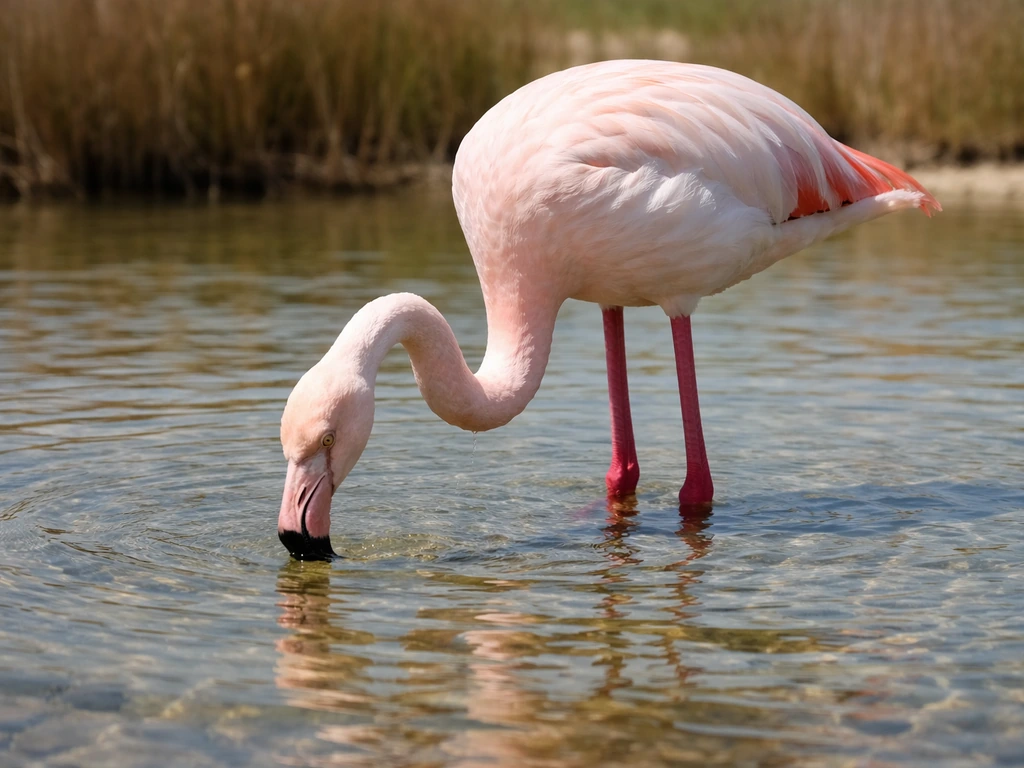
'Wading bird' is actually a more specific label than 'water bird,' and flamingos earn it based on exactly how they interact with their environment. Wikipedia's flamingo overview explicitly classifies flamingos as 'a type of wading bird' in the order Phoenicopteriformes. Wading birds are those that wade through shallow water on long legs to feed, rather than swimming or diving. Herons, egrets, and storks are other examples. Flamingos belong in that same company.
The wading behavior also explains one of the most famous quirks of flamingo biology: standing on one leg. The Smithsonian has reported that this posture helps flamingos manage balance while standing in water for extended periods. When you spend hours each day wading through shallow lagoons and filter-feeding with your head submerged, leg management becomes a real concern. The one-leg stance is a practical adaptation to a wading lifestyle, not just an aesthetic flourish.
Flamingos breed in colonies and disperse to lagoons, estuaries, and saltwater shallows after breeding season. Their habitat is consistently wet and shallow. That is the operational definition of a wading bird's territory, and flamingos hit it precisely.
Are flamingos tropical birds?
This label is accurate in a general sense, though 'warm-region bird' might be more precise. The American flamingo is found throughout the Caribbean and along the northern coast of South America, including the Galápagos Islands. The Greater flamingo, the species with the widest range, spans Africa, western Asia, and southern Europe. What all these locations share is warmth and access to saline or alkaline wetlands, salt lakes, coastal lagoons, mudflats, and similar habitats.
SeaWorld's species descriptions note that flamingos are found in warm regions and depend on alkaline or saline lakes and estuarine lagoons. None of the six flamingo species are found in cold climates. So when someone calls a flamingo a tropical bird, they are using the term loosely to mean 'warm-climate, brightly colored bird found in places like the Caribbean,' and that usage is reasonable even if the geographic range technically extends beyond the tropics into subtropical and temperate zones.
The bright pink coloration, the exotic-looking stance, the association with Caribbean and South American scenery: these all feed into the 'tropical' label. It is more of a cultural and ecological shorthand than a strict scientific classification, but it is not wrong.
Flamingos vs mammals: why this is not even close
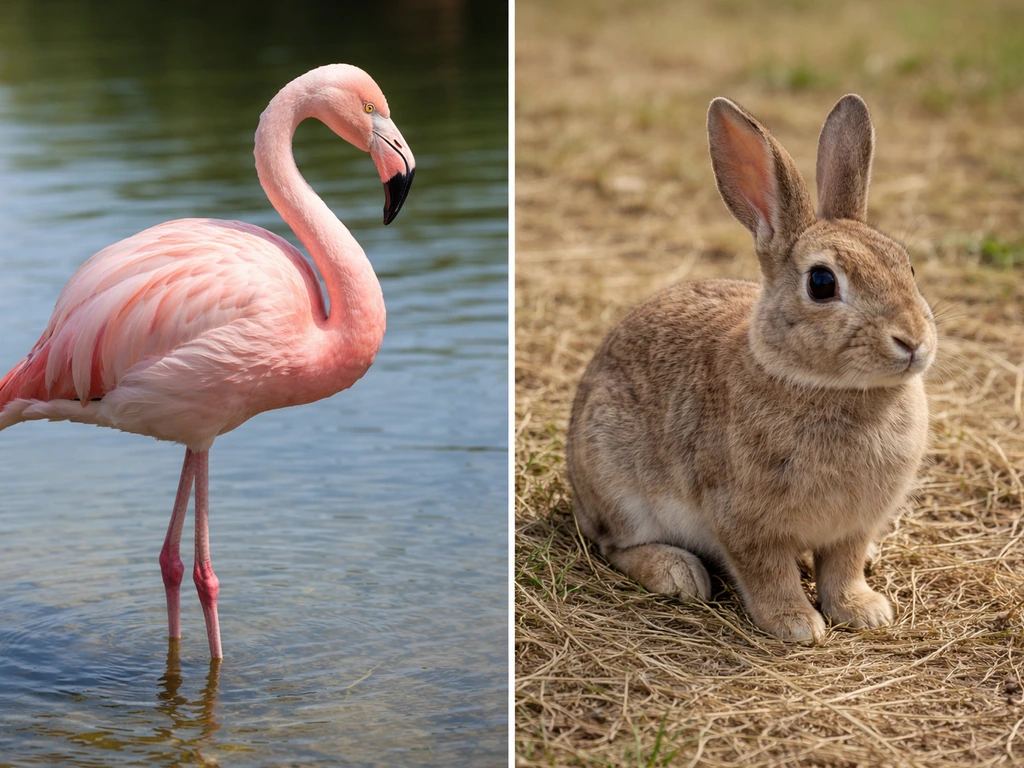
Some people search for 'is a flamingo a bird or a mammal,' and the honest answer is that the distinction could not be clearer. Mammals are defined by three core traits: hair or fur on the body, mammary glands that produce milk for offspring, and (with a few exceptions) live birth. Flamingos have none of these. They have feathers, not fur. They give birth by laying a single hard-shelled egg and incubating it for approximately 28 days. There is no live birth, no mammary glands, no mammalian biology at all.
There is one detail that sometimes causes confusion: flamingos do produce a substance called crop milk, which both male and female parents secrete to feed their chick. But this is not mammal milk. It is produced by cells lining the crop (a part of the digestive tract), and it has no connection to mammary glands. According to Wikipedia, blank" rel="noopener noreferrer">crop milk is produced in the crop and, unlike mammalian milk from mammary glands, is produced by both male and female flamingos. The fact that both parents produce it is actually a bird-specific phenomenon. It does not make flamingos mammals any more than a bat's wings make it a bird.
Think of it this way: a flamingo lays an egg, incubates it, and hatches a chick. That single fact alone rules out mammal status for every mammal except the platypus and echidna (which are genuinely unusual cases). Flamingos are textbook birds reproducing in a textbook bird way.
How flamingos compare to other birds people commonly question
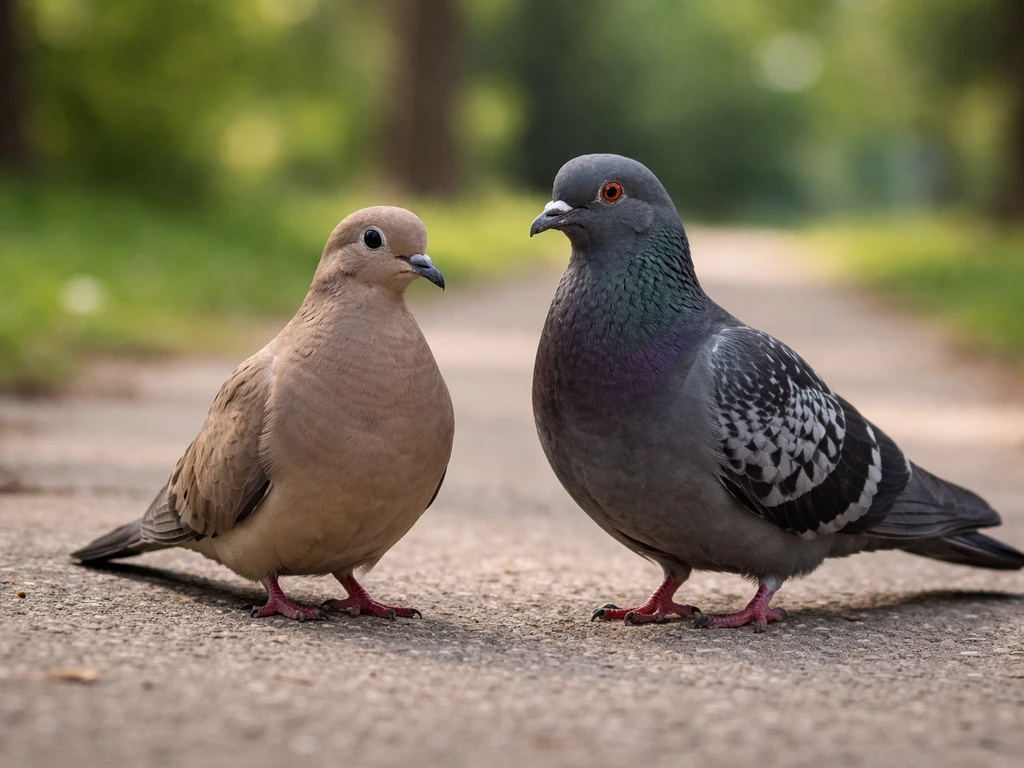
Flamingos are not the only birds whose classification people question. Doves and pigeons generate similar curiosity about how closely related two seemingly different birds can be. If you have ever wondered about that, whether doves and pigeons are the same bird is worth reading alongside this. And if the broader category of what counts as a 'bird or animal' interests you, the question of whether a pigeon is a bird walks through the same classification logic applied to a very different species.
Flamingos, pigeons, and doves are all unambiguously birds, but they sit in completely different parts of the bird family tree and occupy totally different ecological niches. Pigeons are also birds, so the idea that a pigeon is an animal is correct too. Flamingos wade through saline shallows filtering invertebrates. Pigeons perch and forage on land. Doves are closely related to pigeons but have their own behavioral patterns. The shared 'bird' label covers enormous variety.
Flamingos vs pigeons and doves: a quick classification comparison
| Feature | Flamingo | Pigeon | Dove |
|---|---|---|---|
| Class | Aves (bird) | Aves (bird) | Aves (bird) |
| Order | Phoenicopteriformes | Columbiformes | Columbiformes |
| Habitat type | Shallow saline/brackish water | Urban, grassland, woodland | Woodland, shrubland, farmland |
| Feeding method | Filter-feeding in water | Foraging on ground | Foraging on ground |
| Wading bird? | Yes | No | No |
| Tropical range? | Yes (Caribbean, S. America, Africa) | Worldwide | Worldwide |
| Lays hard-shelled eggs? | Yes | Yes | Yes |
| Mammal traits? | None | None | None |
The comparison makes it obvious that all three are firmly in class Aves, but flamingos occupy a unique ecological role that neither pigeons nor doves come close to filling. If you want to dig into the dove side of that table, whether a dove is a bird covers the classification specifics, and whether a dove qualifies as an upland bird gets into habitat-based labeling in the same way this article does for flamingos. For the broader 'bird or animal' framing that often trips people up, the question of whether a pigeon is a bird or animal directly addresses why the 'or animal' framing is itself a misconception worth untangling.
The bottom line
Flamingos are birds. They are classified in class Aves, family Phoenicopteridae, and they meet every criterion on the bird checklist: feathers, hollow bones, hard-shelled eggs, warm-blooded metabolism, and a bill rather than teeth. Calling them water birds, wading birds, or tropical birds is not contradicting that classification. It is describing where they live (warm, shallow, saline wetlands), how they eat (filter-feeding while wading), and what their range looks like (Caribbean, South America, Africa, southern Europe). And they are definitively not mammals: they lay eggs, have feathers, and produce no mammalian milk from mammary glands. The flamingo is one of the more distinctive-looking birds on the planet, but biologically it is a straightforward case.
FAQ
If a flamingo does not look like other birds, is it still a bird?
Yes, a flamingo is still a bird even if it is injured, raised in captivity, or you rarely see it standing on one leg. The “bird” classification is based on anatomy and reproduction (feathers and egg-laying), not on a single visible behavior.
Are flamingos only tropical birds, or do they live outside the tropics?
No. “Tropical” is commonly used as a casual label for warm-climate flamingos, but some species extend into subtropical or temperate regions. What stays consistent is their reliance on warm conditions and saline or alkaline wetlands.
Do flamingos swim like ducks, or are they mainly waders?
You can think of them as wading birds, not aquatic birds that swim as their main mode of feeding. Flamingos primarily feed by striding through shallow water and filtering from the water while their bodies remain out of it.
Why are people confused about “milk” with flamingos, and are they mammals?
Crop milk is real, but it is not mammal milk. In flamingos it is produced in the lining of the crop (a digestive structure), and it does not involve mammary glands.
Are flamingos cold-blooded, or do they regulate their body temperature like other birds?
Flamingos are warm-blooded, like other birds, and they keep a high internal body temperature. They do not thermoregulate like reptiles or rely on external heat, even though they live in warm climates.
How do flamingos eat, and does their bill mean they are like predators with teeth?
Not generally. Flamingos do not have teeth and do not chew like many land mammals. Their specialized curved bill works as a filter, letting them strain small invertebrates and other food items from shallow water.
What determines a flamingo’s pink color, and does it change their classification?
No. Being “pink” is not a marker of being a mammal or bird, it is mainly a coloration outcome. Flamingos typically gain much of their pigment from what they eat (for example, algae and small aquatic organisms that contain carotenoids).
Can flamingos live in deep water, or do they always need shallow wetlands?
Some flamingos may spend time near deeper water or move between wetlands, but their core feeding and resting pattern is tied to shallow, wading-friendly areas. If a place does not provide that type of shallow saline habitat, it is usually less suitable for them.
Next Article
Are Doves and Pigeons the Same Bird? Differences Explained
See how doves fit in the pigeon family, plus key field marks and behavior tips to tell them apart confidently.