Asking whether a bird is homologous or analogous is a bit like asking whether a car is fast or red, the question needs a bit of reframing before it can be answered. Homologous and analogous are labels for specific trait comparisons between two animals, not labels for an entire organism. So the real question is: when you compare a particular bird trait to the same-looking trait in another animal, is that similarity due to shared ancestry (homologous) or due to independent evolution solving the same problem (analogous)? If you are wondering what is the analogy of bird in the common sense of “bird-like function,” it usually points you toward the analogous side unless the trait traces back to shared ancestry homologous or due to independent evolution solving the same problem (analogous). Some people wonder, for example, whether a platypus is a bird, and the same homologous versus analogous logic helps you ask the right comparison questions is a platypus a bird. The answer depends entirely on which trait you're comparing and which animal you're comparing it to. Bird feathers and bird forelimb bones are homologous with structures in their dinosaur relatives. Bird wings, compared to bat wings or pterosaur wings, are analogous, all three evolved flight independently.
Is a Bird Homologous or Analogous? How to Tell Trait Similarity

Homologous vs analogous: quick definitions
Homologous structures are body parts that share an underlying similarity because they were inherited from a common ancestor. Britannica defines homology as similarity of structure, physiology, or development that comes from descent from a common evolutionary ancestor, contrasting it with analogous traits that share function but not ancestry blank" rel="noopener noreferrer">homology is similarity rooted in shared evolutionary ancestry. The similarity is rooted in evolutionary history, not necessarily in what the structure does today. blank" rel="noopener noreferrer">Analogous structures, on the other hand, share a functional similarity, they do the same job, but they evolved independently in separate lineages without being inherited from a shared ancestral structure. The technical term for this independent evolution of similar traits is convergent evolution, and the structures it produces are sometimes called homoplasies.
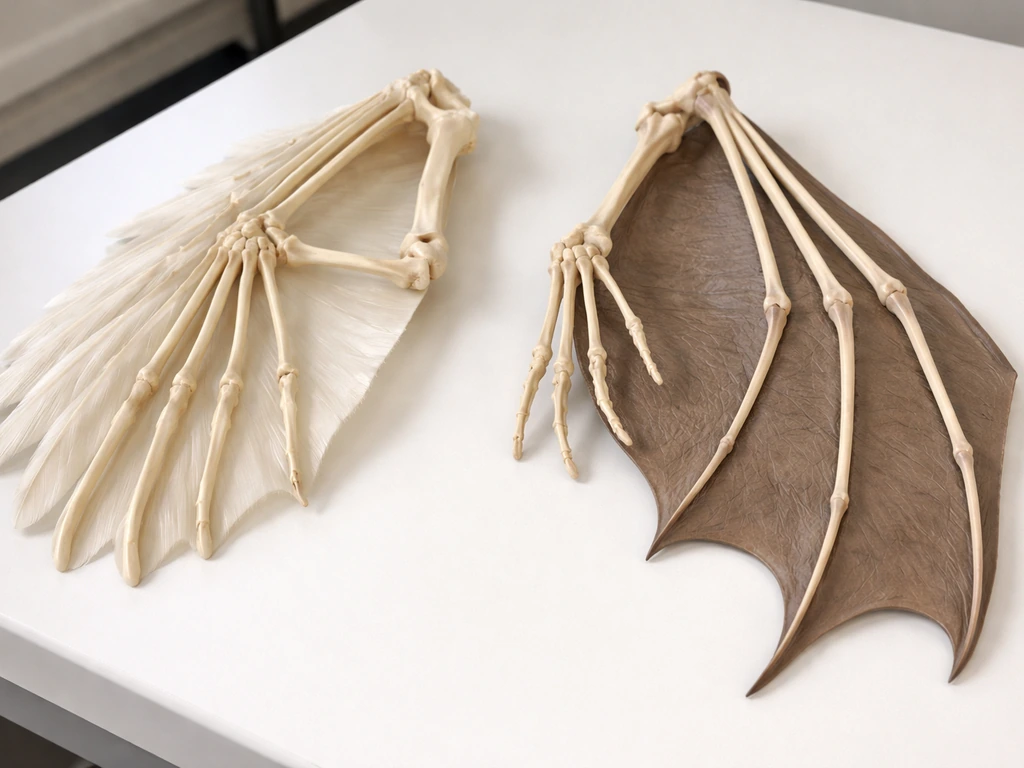
The clearest way to tell them apart: homologous structures often look similar under the surface even when they do different things (a human arm, a whale flipper, and a bird wing share the same bone layout), while analogous structures often look similar on the outside but are built completely differently underneath (a bird wing and a butterfly wing are both "wings" but have nothing in common structurally). A butterfly wing can be analogous to a bird wing as a flight structure, while the underlying anatomy is different.
Birds' major traits that are easy to compare
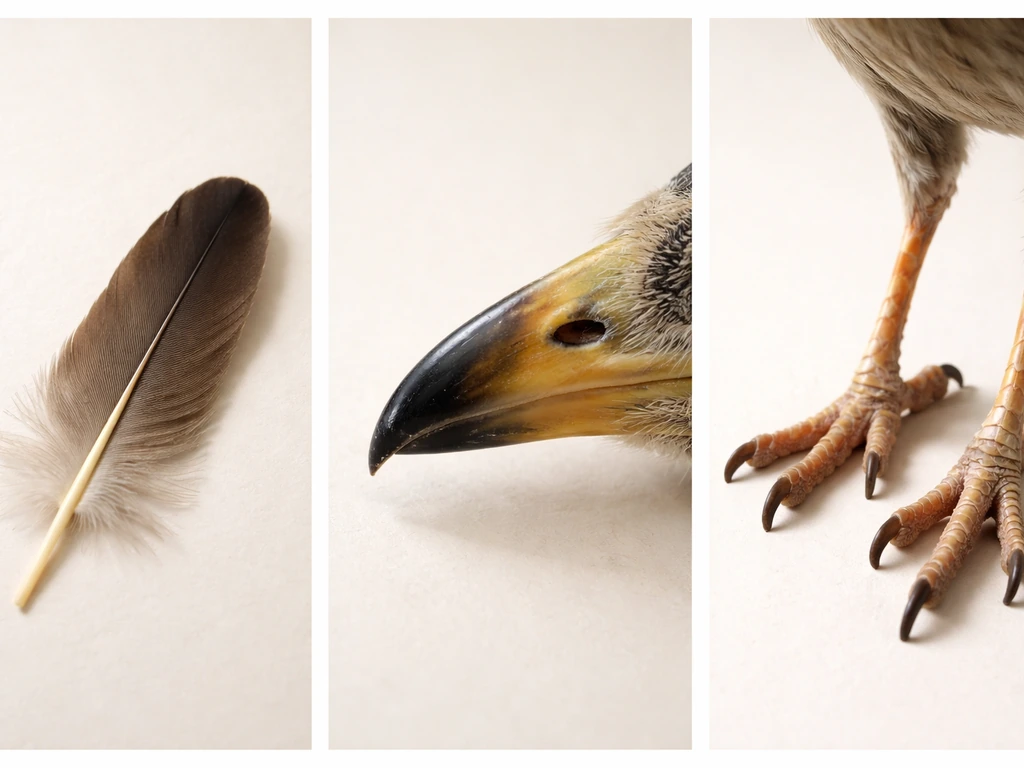
Before classifying anything as homologous or analogous, it helps to know which bird traits are actually distinctive enough to compare. Birds belong to class Aves and are defined by a consistent set of features that show up even in flightless and aquatic species.
- Feathers: complex structures with a central shaft (rachis) and barbs forming a vane, made of keratin and unique to birds among living animals
- Forelimb bones: the same basic tetrapod bone layout (humerus, radius, ulna, and modified hand bones) modified into a wing
- Hollow, pneumatized bones: many bones are air-filled, connected to the respiratory system, reducing weight
- Air sac respiratory system: lungs connected to voluminous air sacs that together have about twice the total volume of mammal lungs in a comparably sized animal
- Furcula (wishbone): two fused clavicle bones forming a springlike structure
- Egg-laying with hard or leathery shells
- Warm-blooded (endothermic) metabolism
Each of these traits can be compared independently to traits in other animals, and each comparison can land differently on the homologous/analogous scale. That's the key insight this whole topic hinges on.
Which bird traits are homologous vs analogous (with non-birds)
Here is where the actual classifications live. Comparing bird traits to those of other animals gives very different answers depending on the trait and the comparison animal.
| Bird trait | Compared to | Classification | Reason |
|---|---|---|---|
| Forelimb bones (humerus, radius, ulna) | Bat forelimb, whale flipper, human arm | Homologous | All inherited from the same tetrapod ancestor — the bone layout is shared even though the functions differ |
| Wing (as a flight structure) | Bat wing, pterosaur wing | Analogous | All three evolved flight independently; the wing structures are built differently at the anatomical level |
| Feathers | Reptile scales, mammal hair | Analogous (functionally); homologous (developmentally) to theropod protofeathers | Feathers evolved from structures already present in theropod dinosaur lineages — they are homologous with theropod protofeathers, but analogous to mammal hair (different origin, similar insulation function) |
| Furcula (wishbone) | Theropod dinosaur furculae | Homologous | Furculae have been found in multiple theropod dinosaurs including Velociraptor, indicating shared ancestry |
| Hollow (pneumatized) bones | Pterosaur hollow bones | Analogous | Evidence suggests pneumaticity evolved independently in pterosaurs and the bird lineage |
| Air sac respiratory system | Crocodilian airways (partially) | Homologous (partially) | Birds and crocodilians share archosaurian ancestry; some airway features trace back to that common lineage |
| Egg-laying | Reptile egg-laying | Homologous | Shared with the broader amniote ancestry, not an independent invention |
| Endothermy (warm-bloodedness) | Bat and mammal endothermy | Analogous | Birds and mammals evolved endothermy independently from ectothermic ancestors |
Notice how the forelimb bones and the wing built from those bones get different labels. That's intentional and important. The bones are homologous across all tetrapods. But assembling those bones into a flight wing happened separately in birds, bats, and pterosaurs, so the wings as flight organs are analogous even though the individual bones are homologous. This is the most common point of confusion in this topic, and getting it right matters.
The animals that confuse people most: penguins, ostriches, bats, and pterosaurs
Penguins and ostriches: flightless but fully homologous
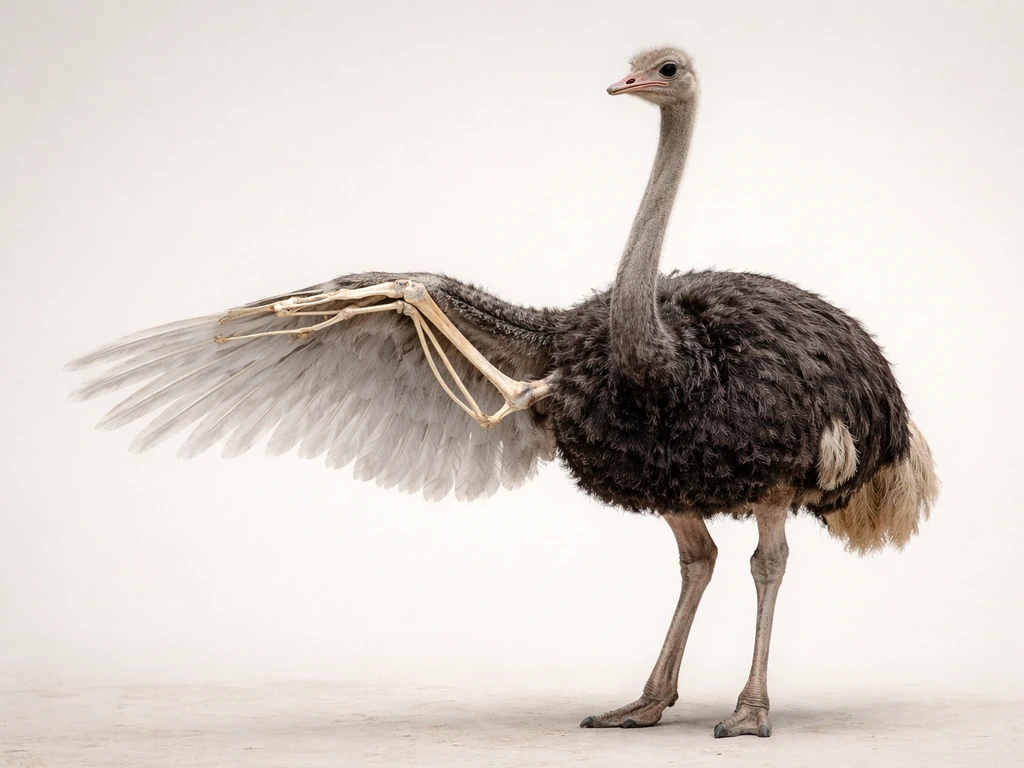
Penguins and ostriches throw people off because they don't fly, which seems to undercut the idea that their wings are the same thing as a flying bird's wings. But flightlessness doesn't change the underlying anatomy. A penguin's flipper has the exact same skeletal base as the wing of a flying bird, the same bones, just shortened and flattened. The surface is covered with very short feathers. That flipper is homologous with the wings of eagles and sparrows. What changed is the function, not the origin. The same logic applies to an ostrich's stubby wings. Both birds retained the theropod forelimb bone layout inherited through their evolutionary lineage. They are structurally and developmentally continuous with flying birds, which is exactly what homologous means.
Bats: homologous bones, analogous wings
Bat wings are the classic example used in biology textbooks to illustrate how homologous and analogous can apply simultaneously at different levels. Every bone in a bat's wing skeleton, the humerus, radius, ulna, and dramatically elongated finger bones, is homologous with bones in a bird's wing and in your own arm, because all these structures trace back to the same tetrapod ancestor. But the bat wing as a flight structure is analogous to a bird wing. Bats evolved flight from within the mammal lineage. Birds evolved flight from within the theropod dinosaur lineage. They solved the same aerodynamic problem using the same raw materials (inherited tetrapod bones) but through completely independent evolutionary paths. The wings look superficially similar from the outside but are constructed very differently at the anatomical level. This bat-vs-bird comparison is worth studying carefully because it illustrates a point that applies across many comparisons.
Pterosaurs: a truly different wing
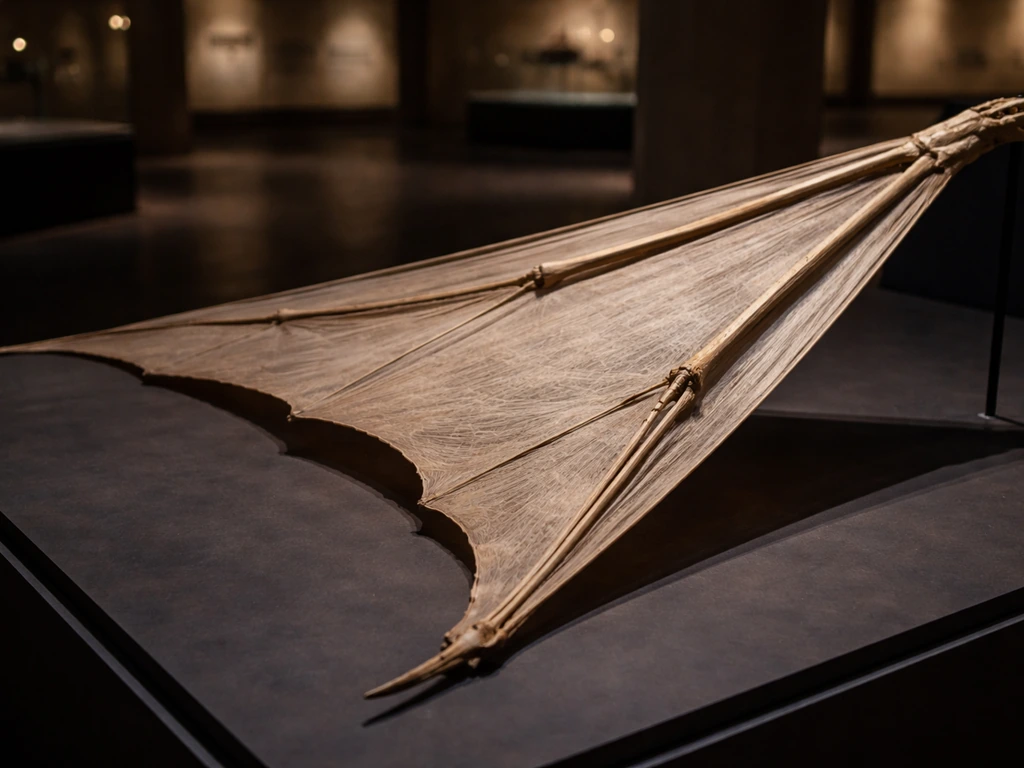
Pterosaurs are frequently lumped together with birds because both flew, and both are associated with dinosaur-era fossils. But pterosaur wings are analogous to bird wings in an even more obvious way than bat wings are. A pterosaur wing was a membrane of skin and muscle stretching from the body to an extraordinarily elongated fourth finger, three short clawed fingers sat at the front of the wing, and that single massive fourth digit ran along the wing's leading edge. This is structurally completely different from a bird wing, where flight feathers attach to fused and reduced hand bones, and there is no membrane. The forelimb bones are still broadly homologous (both pterosaurs and birds descended from archosaur ancestors with the same basic forelimb layout), but the flight apparatus built on those bones is an independent, analogous solution. Pterosaurs also likely had hollow bones, but current evidence suggests that pneumaticity evolved independently in pterosaurs and bird-line archosaurs, making that trait analogous as well.
How to decide homologous vs analogous for any trait: a practical method
You don't need a biology degree to work through this. Whenever you're looking at a trait in a bird and trying to classify it against a similar trait in another animal, run through these steps in order.
- Define the specific trait precisely. Don't just say 'wings' — say 'the wing as a flight membrane' or 'the forelimb bone arrangement.' The classification can differ depending on the level of detail.
- Ask: do these two animals share a common ancestor from whom this specific trait was inherited? If yes, it's homologous. Look at phylogenetic (evolutionary family tree) evidence: birds and crocodilians share archosaurian ancestry; birds and mammals share a much older, more distant tetrapod ancestry.
- Ask: are the underlying structures built the same way? Homologous structures share the same basic architectural plan even if they do different jobs. Analogous structures often look alike on the surface but differ fundamentally in internal construction.
- Ask: did both lineages face the same selection pressure and solve it separately? If two distant groups both evolved the same solution (like flight, or warm-bloodedness) and there's no evidence it was present in their last common ancestor, you're almost certainly looking at analogy.
- Check embryonic and genetic evidence when possible. Homologous structures typically develop from the same embryonic tissues and share more genetic similarities. Analogous structures can look identical at maturity while having developed through very different cellular pathways.
- Accept that some traits sit at multiple levels. The bones can be homologous while the wing built from them is analogous. Both labels can be correct — for different aspects of the same structure.
Takeaways and common misconceptions
A few wrong assumptions come up constantly in this topic, and they're worth addressing directly.
- "Birds have wings, bats have wings, so they must be homologous" — Wrong. The bones inside those wings are homologous. The wings as flight structures are analogous. Similarity in function or appearance does not equal homology.
- "Penguins don't fly, so their wings must be different from real bird wings" — Wrong. A penguin's flipper is homologous with the wing of any flying bird. The function changed; the evolutionary origin didn't.
- "Pterosaurs and birds both fly and both lived with dinosaurs, so they must be closely related" — Wrong. Pterosaurs were archosaurs but not dinosaurs, and they were not in the direct ancestral line of birds. Bird flight and pterosaur flight evolved independently — both are analogous solutions to the same problem.
- "If something looks like a feather, it must be homologous to a bird feather" — Not necessarily. Pterosaurs had branched filamentous structures that resembled early feathers, but current scientific evidence suggests these may not be homologous to true bird feathers — they may be a separate epidermal innovation.
- "Homologous means the same; analogous means different" — Oversimplified. Homologous structures can look very different (a bat's wing and a whale's flipper share the same bones) and analogous structures can look almost identical (a bird wing and a butterfly wing are both flat and used for flight).
- "A bird as a whole is homologous or analogous" — This framing doesn't work. Only specific traits compared between specific animals carry those labels. 'Bird' as a category is a clade — a group sharing common ancestry — not a trait classification.
The broader pattern here is consistent: birds share deep homologous relationships with other archosaurs (crocodilians, and through deeper ancestry, all tetrapods) in their skeletal architecture, reproductive strategy, and some airway features. The crocodile and bird association is an example of shared ancestry making bird traits homologous. But birds also evolved several traits, powered flight, full feather insulation, and endothermy, through evolutionary paths that were independent of the other animals that evolved superficially similar solutions. When you see a bird trait mirrored in a bat, a pterosaur, or a reptile, always ask which animal you're comparing, which specific trait you're looking at, and whether the similarity came from shared inheritance or from independent invention. That three-part check gives you the right answer every time.
FAQ
If my question is “is a bird homologous or analogous,” is that a meaningful way to phrase it?
Ask whether you are comparing a single trait (like a particular bone, feather type, or respiratory feature) or the entire animal. Whole-organism labels are usually not homologous or analogous, because the classification can differ across traits within the same species.
What counts as enough evidence to call two traits homologous, beyond looking similar?
For two traits to be homologous, there should be evidence they share an underlying developmental and evolutionary origin, not just a similar shape. Function alone, even if similar, does not prove homology.
How can I avoid confusing analogous traits with homologous traits when they look similar?
Analogous traits often reflect convergent evolution, so they can look alike while the internal wiring, cell types, bones, or supporting structures differ. A practical check is to compare the “parts that make the trait,” not just the final appearance or job.
Can the same comparison be both homologous and analogous at the same time?
Yes. A bat wing and a bird wing can be analogous as flight structures while the underlying tetrapod forelimb bones are homologous. The level matters, so do not force one label to cover every detail.
If a bird does not fly (like a penguin), does that automatically change whether its “wings” are homologous or analogous?
Not necessarily. Flightless birds can still show homology if the internal skeletal and developmental baseline traces to the same inherited structure. Function can change, but origin does not.
If two traits perform the same function, how do I test whether that similarity is from shared ancestry or convergent evolution?
Compare embryology, anatomy, and ancestry, when possible. Two traits that are “the same job” can arise from different tissue origins or different skeletal components, which points toward analogy.
In common language, “bird-like” suggests function, so does that usually mean analogous?
“Bird-like” in everyday language often targets function, which nudges you toward analogy. For a biology-style answer, convert the question into “which specific trait, compared to which trait in which organism?”
When comparing wings across animals, what is the most practical trait-level checklist to use?
Measure similarity in the trait’s building blocks. For wings, look for whether they use homologous bones and how the flight apparatus is assembled (feather attachment structures vs membranes and elongated digits).
Is it a mistake to equate “different function” with “analogous”?
Some people expect that homologous structures must have the same current function, but homology is about origin. A classic mistake is treating “different function” as automatic evidence of analogy.
What should I do if I’m unsure whether two traits are built differently underneath, or if the evidence is ambiguous?
If no clear difference is detectable in the underlying structure or developmental origin, you may be comparing different traits poorly, or the similarity may be deep enough to involve both history and convergence. Re-identify the exact trait boundaries before labeling.
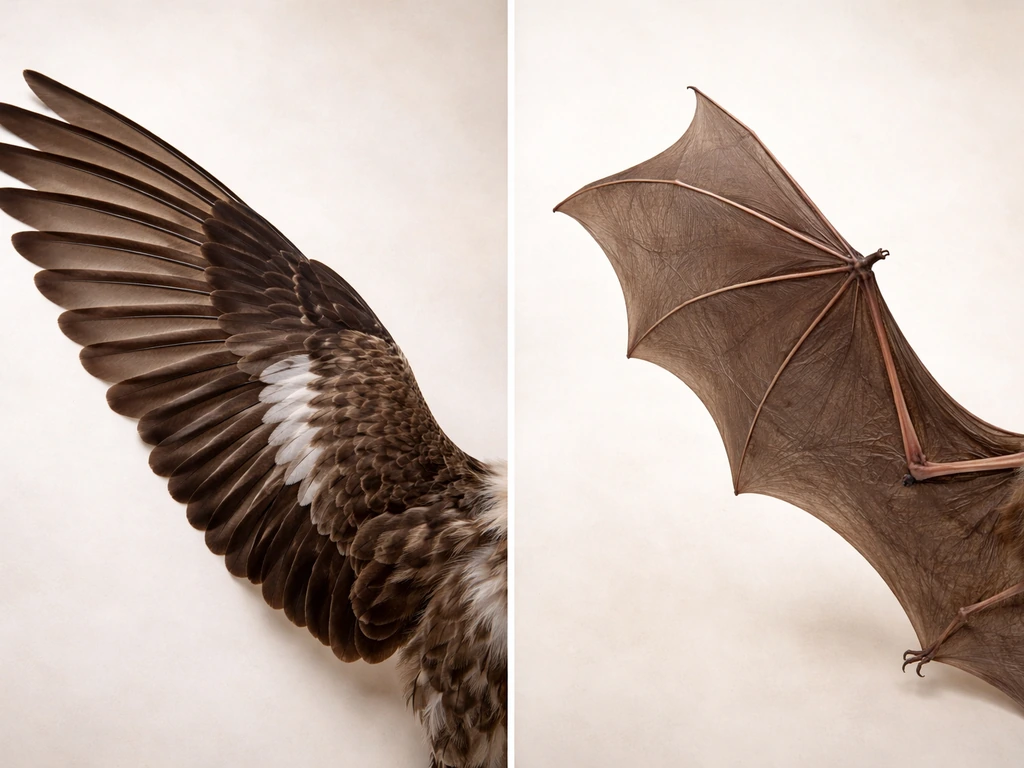
Bird and bat wings are homologous as tetrapod forelimbs, but analogous as flight adaptations.
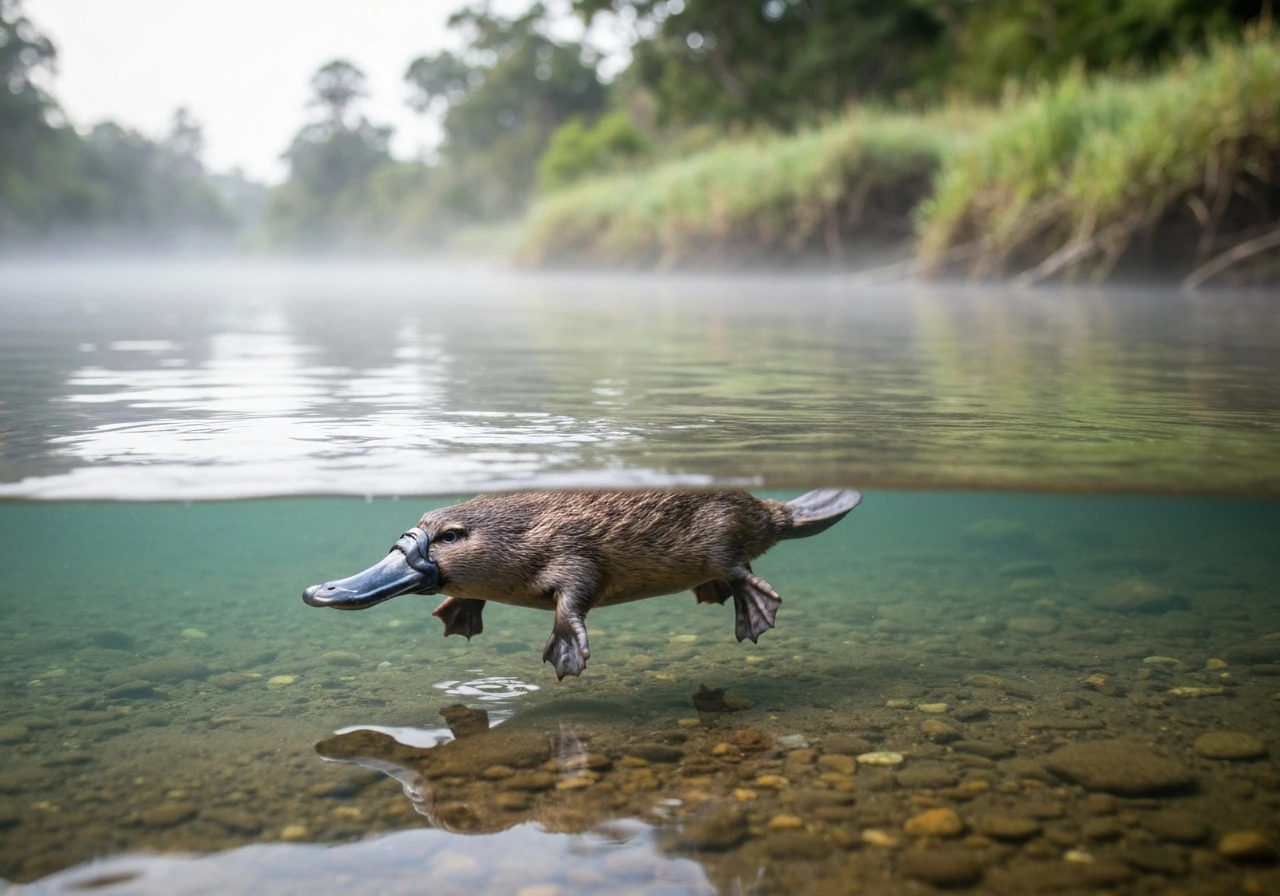
No, a platypus is not a bird. It is a mammal, and the traits that prove it, plus how to classify similar animals.
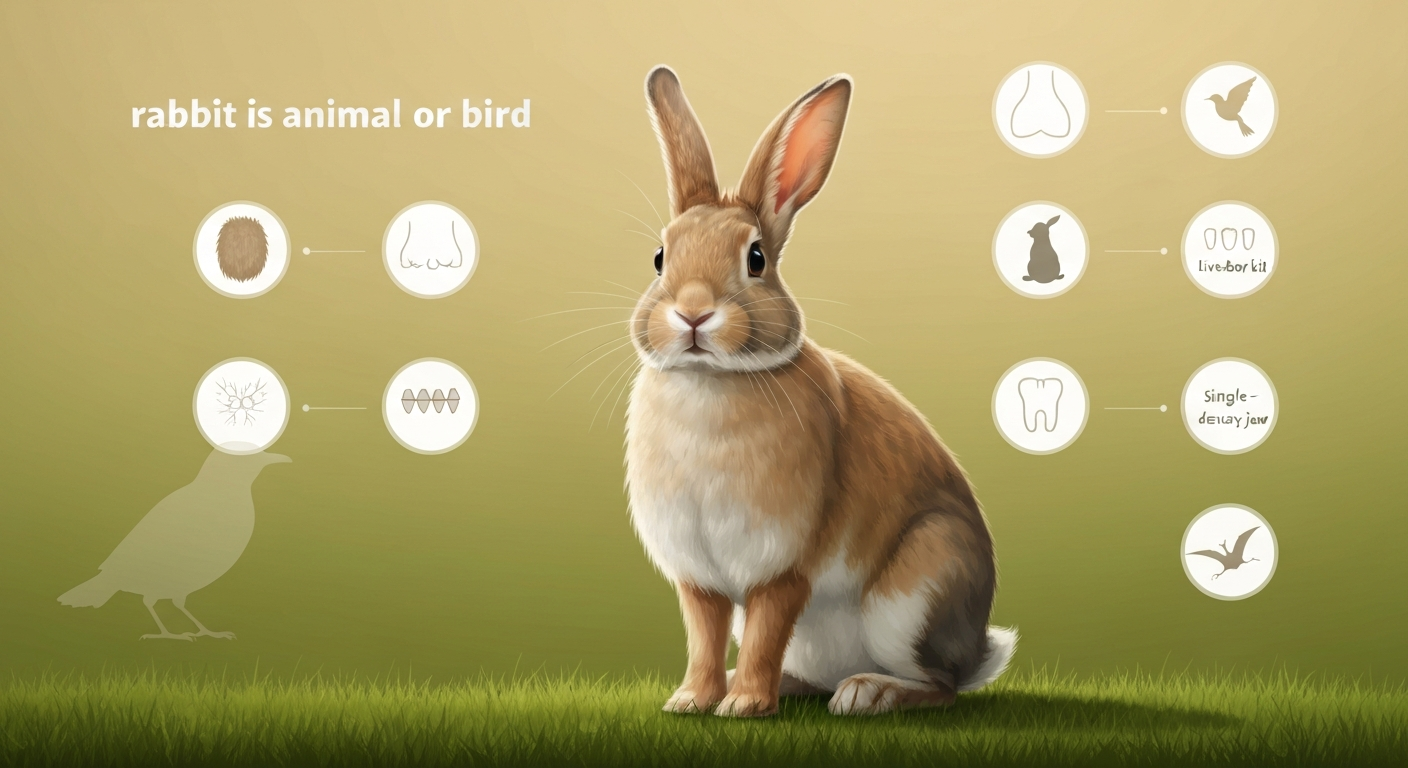
Is a rabbit an animal or a bird? Quick answer: rabbit = mammal. Traits, comparison, myths clarified.