Yes, there is a real bird with 'Sagittarius' in its name. The secretarybird, a large African bird of prey, has the scientific name Sagittarius serpentarius, and its genus is literally called Sagittarius. So if someone told you there's a 'Sagittarius bird,' they weren't wrong. They were just using its Latin classification name rather than its common English one.
Is There a Bird Called Sagittarius? How to Verify It

Sarah Chen
12 Jun 2026
What 'Sagittarius' could mean in a bird context

The word 'Sagittarius' shows up in a few different places, and depending on where you first encountered it, your mental image of a 'Sagittarius bird' could be very different. It's a zodiac sign and a constellation. Britannica notes that Sagittarius is a constellation and a zodiac sign in its astronomy and astrological context [It's a zodiac sign and a constellation. ](https://www.
britannica. com/place/Sagittarius-constellation). It's also a Latin word meaning 'archer. ' And, crucially for this question, it's a genus name used in bird taxonomy.
When people search for a 'Sagittarius bird,' they're usually coming from one of three directions: they heard the scientific name Sagittarius serpentarius somewhere, they're connecting the zodiac symbol to birds somehow, or they saw the name in a list and weren't sure if it referred to an animal.
The most concrete and verifiable answer is the taxonomic one. In biological classification, a genus name is part of a species' official scientific identity. When a bird's genus is 'Sagittarius,' that word is literally part of how scientists refer to the bird. That's a much stronger connection than, say, a nickname or a cultural association.
The real bird: the secretarybird and its Sagittarius name
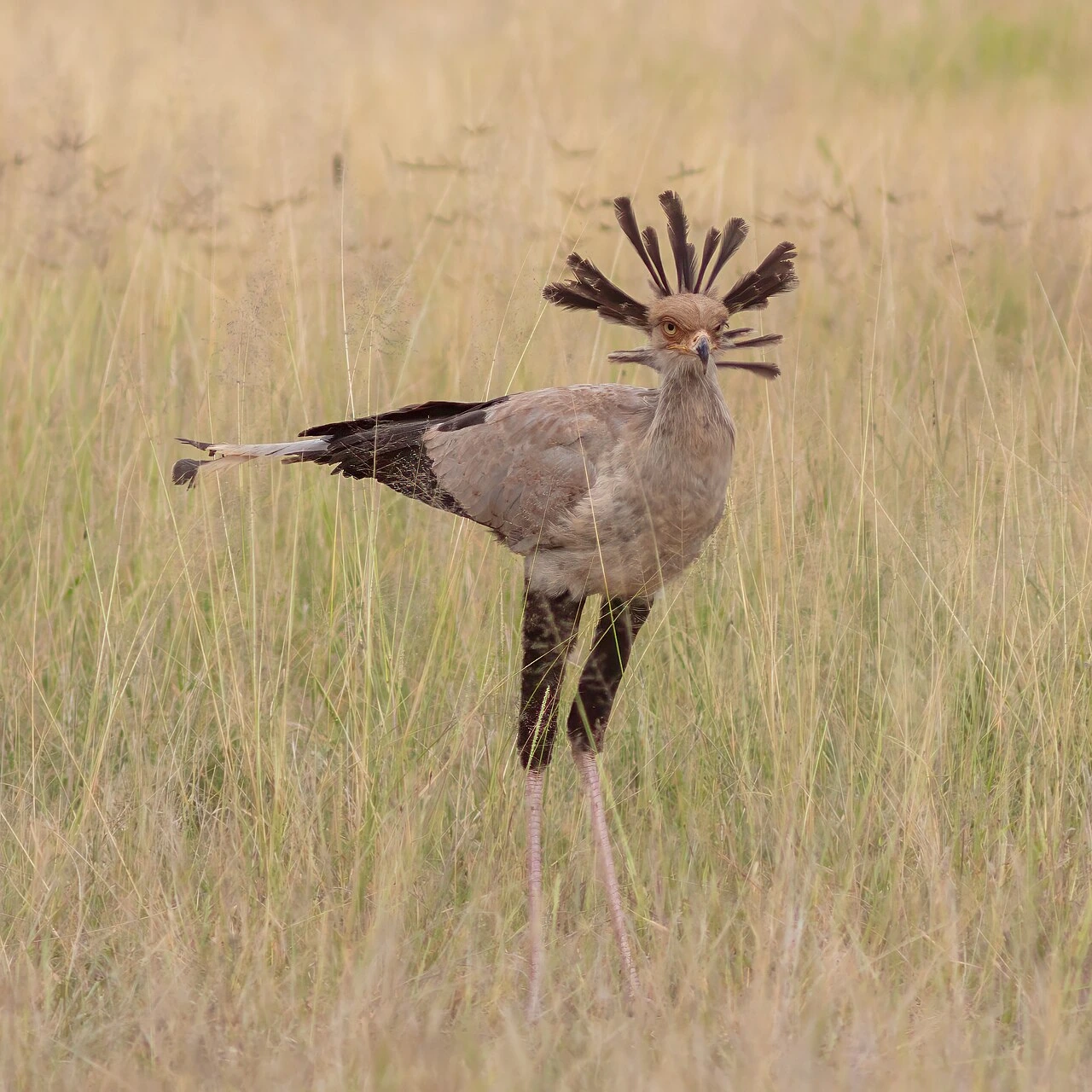
The secretarybird (Sagittarius serpentarius) is the only living member of the family Sagittariidae, and it's unambiguously a bird. It's native to sub-Saharan Africa, stands around 4 feet tall, and is famous for stomping on snakes with its powerful legs rather than catching them with its beak. The scientific name Sagittarius serpentarius is often translated as 'the archer of snakes,' combining the Latin for archer with the Latin for snake-handler. The name likely reflects both the bird's hunting style and, possibly, the crest of long feathers behind its head that early observers thought resembled quill pens stuck behind a secretary's ear (hence the common name 'secretarybird').
This bird is classified in class Aves, which is the formal scientific class for all birds. It has feathers, lays eggs, has hollow bones, and is warm-blooded. Every biological feature that defines a bird is present. There's no ambiguity here. The secretarybird is a fully recognized bird species in every major taxonomy database and reference.
How to verify this using scientific names and taxonomy sources

If you want to confirm this yourself, or check any animal name you're unsure about, the process is straightforward. Scientific names are the most reliable way to track any species because common names vary by region and language, while a binomial name (genus + species) is universal and consistent across scientific literature.
- Search GBIF (gbif.org): the Global Biodiversity Information Facility lists accepted scientific names, taxonomic ranks, and common names for every recognized species. Searching 'Sagittarius serpentarius' will immediately show you the secretarybird's full classification.
- Check Encyclopaedia Britannica's biology entries: Britannica confirms Sagittarius serpentarius as the secretarybird's binomial and places it in family Sagittariidae.
- Use the IOC World Bird List (iocworldlist.org): the International Ornithological Congress maintains the most current list of recognized bird species worldwide. Searching the genus 'Sagittarius' there will return the secretarybird.
- Look at the taxonomic rank: for any species, confirm it's listed under kingdom Animalia, class Aves. If those fields are populated, it's a bird by scientific consensus.
The key thing to check when verifying any 'is this a bird?' question is the class designation. Class Aves is the scientific grouping that contains all birds and only birds. If a species sits in class Aves, it's a bird. If it doesn't, it isn't, no matter how bird-like it looks or what its name suggests.
Where the confusion usually comes from
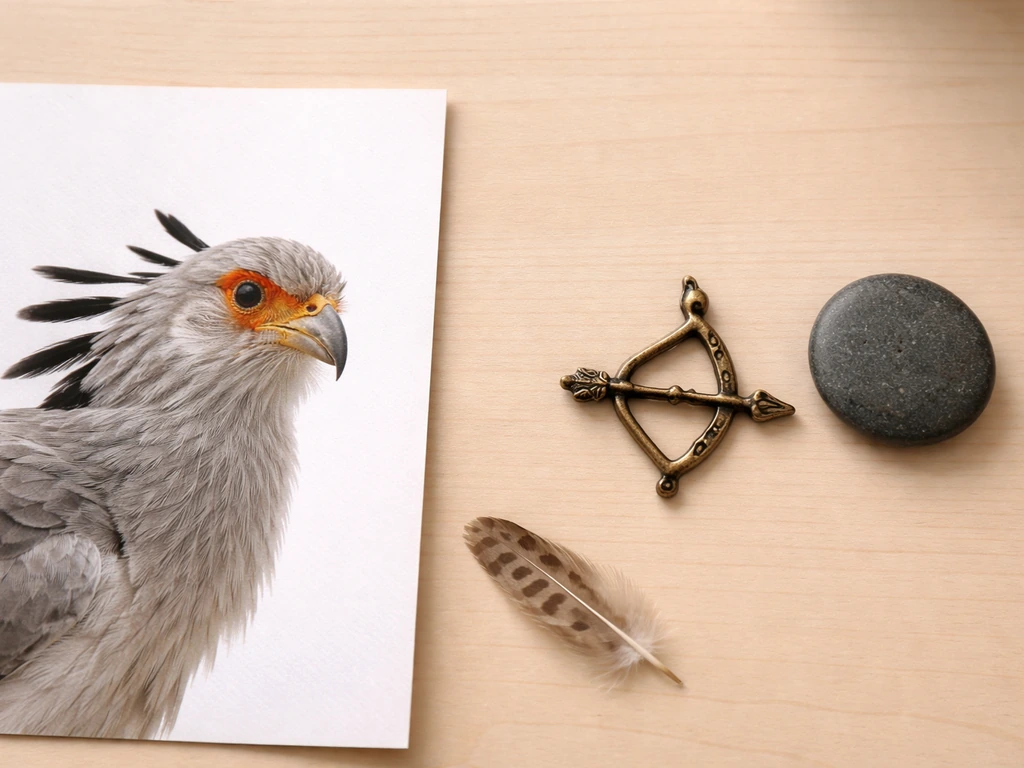
If someone is searching for a 'Sagittarius bird' and isn't sure whether it's real, the confusion almost always comes from one of a few sources. The most common is the zodiac and constellation: Sagittarius is one of the twelve zodiac signs, depicted as an archer (sometimes a centaur). It has no direct bird connection in astrology or star mythology, so if you're coming from that angle, the link to a bird feels surprising.
Another source of confusion is fiction and pop culture. Fantasy games, novels, and mythology occasionally invent bird-like creatures and attach constellation names to them. If you encountered 'Sagittarius bird' in a fictional context, it may have been a made-up creature rather than a reference to the real secretarybird. Similarly, place names and brand names sometimes borrow 'Sagittarius' without any biological meaning.
There's also the issue of how scientific names travel. Latin genus names appear in nature documentaries, wildlife apps, and biology textbooks. Someone might hear 'Sagittarius serpentarius' mentioned and not realize the first word is a genus name rather than a zodiac reference. The overlap in spelling is real, and it's a completely understandable point of confusion. This kind of naming crossover isn't unique to birds, but it does show up often in ornithology.
What actually makes something a bird
Since this site is all about clarifying what counts as a bird, it's worth grounding the secretarybird's status in what biologists actually look for. A bird is a member of class Aves, and membership comes down to a specific set of traits: feathers (unique to birds among living animals), a beak with no teeth in modern species, the ability to lay hard-shelled eggs, a four-chambered heart, hollow bones that reduce weight, and warm-bloodedness. The secretarybird has all of these.
This is important because some animals that look bird-like don't actually qualify. Bats fly and have some similar silhouettes in the air, but they're mammals and have fur instead of feathers. Pterosaurs (flying reptiles from the dinosaur era) are often mistaken for birds in casual conversation, but they were a separate lineage entirely and are long extinct. These kinds of borderline cases come up often, and the rule is always the same: check the class designation and the defining anatomical features, not just appearance or name.
The secretarybird is interesting in this context because it doesn't look like most people's mental image of a bird of prey. It walks on long legs like a stork, runs down prey on foot, and has an unusual silhouette. But it has every defining bird feature, so taxonomically it's solidly in class Aves alongside eagles, owls, and sparrows.
Quick comparison: Sagittarius in different contexts
| Context | What 'Sagittarius' refers to | Is it a bird? |
|---|---|---|
| Taxonomy (Sagittarius serpentarius) | Genus name of the secretarybird | Yes, fully recognized bird |
| Zodiac / astrology | Archer sign, 9th sign of the zodiac | No, not related to any species |
| Astronomy / constellations | Southern constellation near the galactic center | No, not related to any species |
| Fiction / games | Invented creature names using the word | Depends entirely on the source, not a real species |
| Place or brand names | Regional or commercial naming | No biological meaning |
What to search and how to confirm it today
If you want to nail down any 'Sagittarius bird' question right now, here's what to do practically: If you're also wondering whether a rocket counts as a bird, the answer depends on whether it's in class Aves, and most man-made rockets are not is a rocket a bird.
- Search 'Sagittarius serpentarius' on GBIF or the IOC World Bird List to see the secretarybird's full accepted classification, including its place in class Aves and family Sagittariidae.
- If you saw the name 'Sagittarius bird' in a non-scientific context (astrology app, game, book), search the exact phrase plus 'scientific name' or 'species' to see if there's a real biological match. If no taxonomy database returns a result, it's likely fictional or informal.
- Cross-check common names: GBIF lists accepted common names alongside scientific names. The secretarybird is listed with the English common name 'Secretarybird,' so searching either form will find it.
- If you're trying to identify a bird you actually saw and someone called it a 'Sagittarius bird,' compare your sighting to photos of the secretarybird: it's a very tall, long-legged raptor with a distinctive crest of feathers, found in open African grasslands.
- For any other animal name you're unsure about, the same method applies: find the scientific name, confirm the class is Aves, and check an authoritative taxonomy database. That's the fastest way to get a definitive answer.
The secretarybird is a genuinely fascinating animal and one of those species that surprises people precisely because it doesn't fit the typical bird-of-prey mold. Grackles and starlings are different kinds of birds, even though some people may confuse them at a glance. If your search for a 'Sagittarius bird' led you here, you've found a real species with a legitimate Sagittarius connection, and it's one worth looking up in more detail.
This is a real-bird question in the same way, and you can confirm it by checking the class designation is mart a bird. Questions like this one, where a name spans astrology, Latin, and biology all at once, are exactly the kind of thing that deserves a straight answer rather than a shrug. Many people also ask whether a star is a bird, but the two are unrelated classifications.
FAQ
If the genus is Sagittarius, why don’t people usually call it a Sagittarius bird?
No. “Sagittarius” is part of the secretarybird’s scientific name and genus (Sagittarius serpentarius), but it is not an official common English name for the bird itself. Most references will call the species “secretarybird,” not “Sagittarius bird.”
What should I look for if I only see the word “Sagittarius” and not the full species name?
If you see “Sagittarius” used alone, double check whether it is referring to the zodiac/constellation, a brand or place name, or a taxonomy listing. In real biology usage, “Sagittarius” should appear as a genus heading, usually paired with a second word for the species.
Can a creature be “bird-like” but not count as a bird, and does that apply here?
Yes, because the secretarybird is in the class Aves, it is unambiguously a bird. A common mistake is to equate “bird-like behavior” (such as hunting or walking) with being a bird, but classification relies on bird-defining traits, especially feathers and egg-laying.
How can I tell if a website or post is mixing up Sagittarius with the wrong animal group?
If your source says the genus is Sagittarius but mixes it with another animal group (for example mammals or reptiles), treat it as an error. The safest verification step is to confirm that the taxonomic entry places the species in class Aves and provides a binomial name.
Is it enough to confirm “Sagittarius” as a genus, or do I need the full binomial name?
If you are verifying the name yourself, prioritize the binomial format (genus plus species) over the genus alone. “Sagittarius” by itself is too broad, but “Sagittarius serpentarius” uniquely identifies the secretarybird in scientific literature.
Could there be other animals with “Sagittarius” in their names, and would that still make the answer “yes” for birds?
In some contexts, “Sagittarius” can appear in non-bird taxonomy or scientific naming elsewhere, and that does not make it a “bird called Sagittarius.” The key is to check the full classification entry for the specific organism you mean, not just the shared word.
What if I saw “Sagittarius bird” in a game or novel, how do I know it is not made up?
If you encountered “Sagittarius bird” in a fantasy game or story, it may be a fictional creature named after the zodiac. To decide whether it maps to the secretarybird, look for any mention of the Latin binomial “Sagittarius serpentarius” or features like snake-stomping and the stork-like legs.
Does the Sagittarius constellation correspond to the same “Sagittarius bird” idea?
The closest real-world match is the secretarybird, not a constellation “bird.” The constellation Sagittarius is an archer-related symbol in astronomy, and it does not officially define a bird species.