No, a kangaroo is not a bird. It is a mammal, specifically a marsupial, meaning it gives birth to tiny undeveloped young that then grow inside the mother's pouch. Kangaroos have fur, nurse their joeys with milk, and share absolutely none of the defining biological traits that make an animal a bird. If you landed here genuinely wondering, you are not alone, and by the end of this you will have a simple, reliable way to answer this kind of question for any animal.
Is Kangaroo a Bird? Key Traits That Show It Is Not

Sarah Chen
6 Jul 2026
What actually makes something a bird
Birds belong to Class Aves, a biological classification that comes with a very specific checklist. You do not get to be a bird just because you fly, or because you look the part. Bats fly and are not birds. Pterosaurs flew and were not birds. Classification is about shared biological traits, not behavior or appearance.
Here are the traits that define every bird, from a hummingbird to a penguin to an ostrich:
- Feathers: every bird has them, and no other living animal does
- A beak (bill): birds have no teeth, just a keratin-covered beak
- Laying eggs with hard or leathery shells: birds reproduce by laying eggs outside the body
- Hollow, lightweight bones that support an efficient skeleton
- A unique respiratory system with air sacs that allows continuous airflow through the lungs
- Warm-blooded metabolism (endothermy), shared with mammals but distinct in its mechanics
- Two legs and two wings (even if the wings are vestigial, as in penguins and ostriches)
A useful mental shortcut: if you spot feathers, you have a bird. No other animal alive today grows feathers. Everything else on the list reinforces it, but feathers alone are a reliable single-trait indicator.
What kangaroos actually are
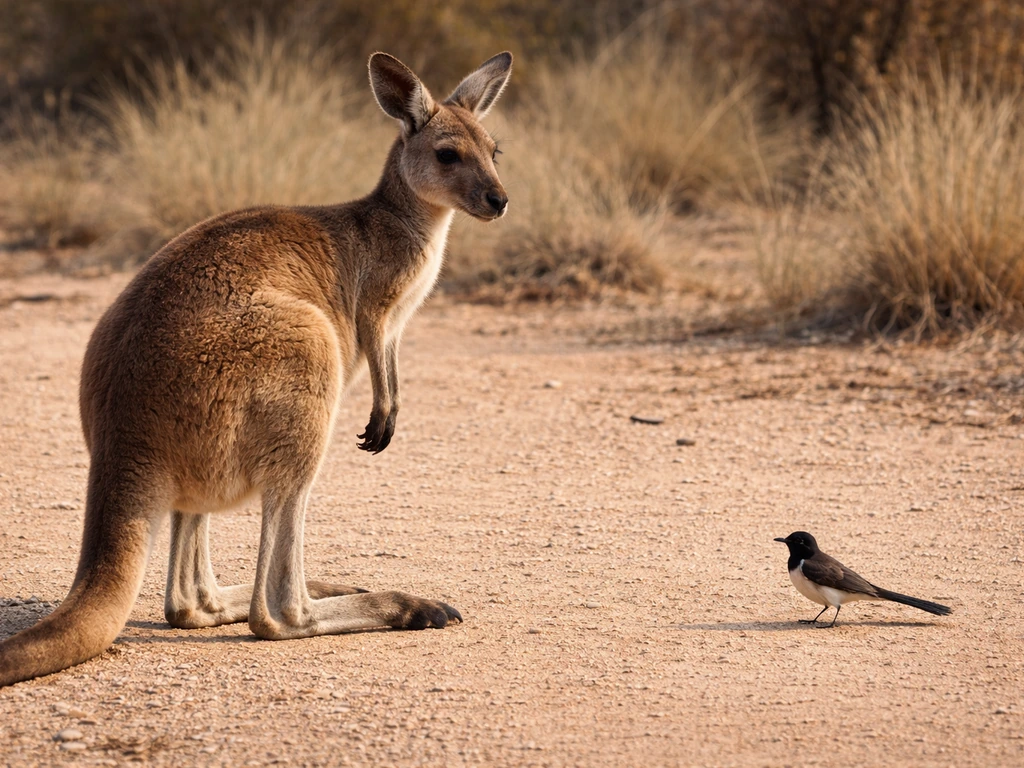
Kangaroos belong to Class Mammalia (mammals) and more specifically to the marsupial group within it. Kangaroos are mammals in the Class Mammalia, not birds in the Class Aves blank" rel="noopener noreferrer">Class Mammalia (mammals). Their scientific order is Diprotodontia, and their family is Macropodidae, which translates roughly to 'big feet' and covers kangaroos, wallabies, and their relatives. Kangaroos are in the order Diprotodontia and in the family Macropodidae blank" rel="noopener noreferrer">Diprotodontia and the family Macropodidae. The Eastern Grey Kangaroo, for example, is classified as Macropus giganteus, a marsupial mammal native to Australia.
Marsupials are mammals defined by a distinctive reproductive strategy: they give birth to young at a very early stage of development. The tiny joey crawls to the mother's pouch and continues developing there, nursing on milk. That is about as far as you can get from laying a shelled egg.
Here is what kangaroos have that birds do not:
- Fur covering the body, not feathers
- Mammary glands that produce milk to nurse young
- Live birth (even though the young are undeveloped, they are born alive, not hatched)
- A pouch (marsupium) for raising joeys
- Solid, dense leg bones built for powerful hopping, not lightweight hollow bird bones
- A jaw with teeth, not a beak
- Four limbs, none of which are wings
Bird vs. kangaroo: side-by-side comparison
| Trait | Bird (Class Aves) | Kangaroo (Class Mammalia) |
|---|---|---|
| Body covering | Feathers | Fur |
| Reproduction | Lays shelled eggs | Live birth (marsupial pouch) |
| Feeding young | Regurgitation or foraging | Nursing with milk |
| Limbs | Two legs, two wings | Two legs, two forelimbs, no wings |
| Skeleton | Hollow, lightweight bones | Dense, solid bones |
| Jaw | Toothless beak | Toothed jaw |
| Classification | Class Aves | Class Mammalia, Order Diprotodontia |
Why people ask this in the first place
It is worth being honest: most people asking 'is a kangaroo a bird? If you are also wondering is a kiwi a bird, check the same feather-and-trait criteria you would use for any animal. ' already know the answer is probably no, but they want confirmation and a clear reason why. These kinds of questions come up because everyday language is loose about animal categories. We group things by how they look, where they live, or how they move, and those groupings do not always match biology.
A few common misconceptions that lead to 'is it a bird?' confusion:
- Flight equals bird: not true. Bats are flying mammals. Pterosaurs were flying reptiles. Flight is a behavior, not a classification.
- Two-legged animals must be birds: kangaroos hop on two legs, and so do humans walk on two legs. Bipedalism is not a bird-exclusive trait.
- Egg-laying means bird: platypuses lay eggs and are mammals. Reptiles lay eggs. Egg-laying alone is not enough to classify something as a bird.
- Size or appearance confusion: some large birds like emus and ostriches look nothing like the 'typical' bird image, which makes people uncertain. But feathers, a beak, and egg-laying still apply.
- Australian animals as a fuzzy category: kangaroos share their home continent with the emu (a bird) and the kookaburra (a bird), but being Australian does not make something a bird.
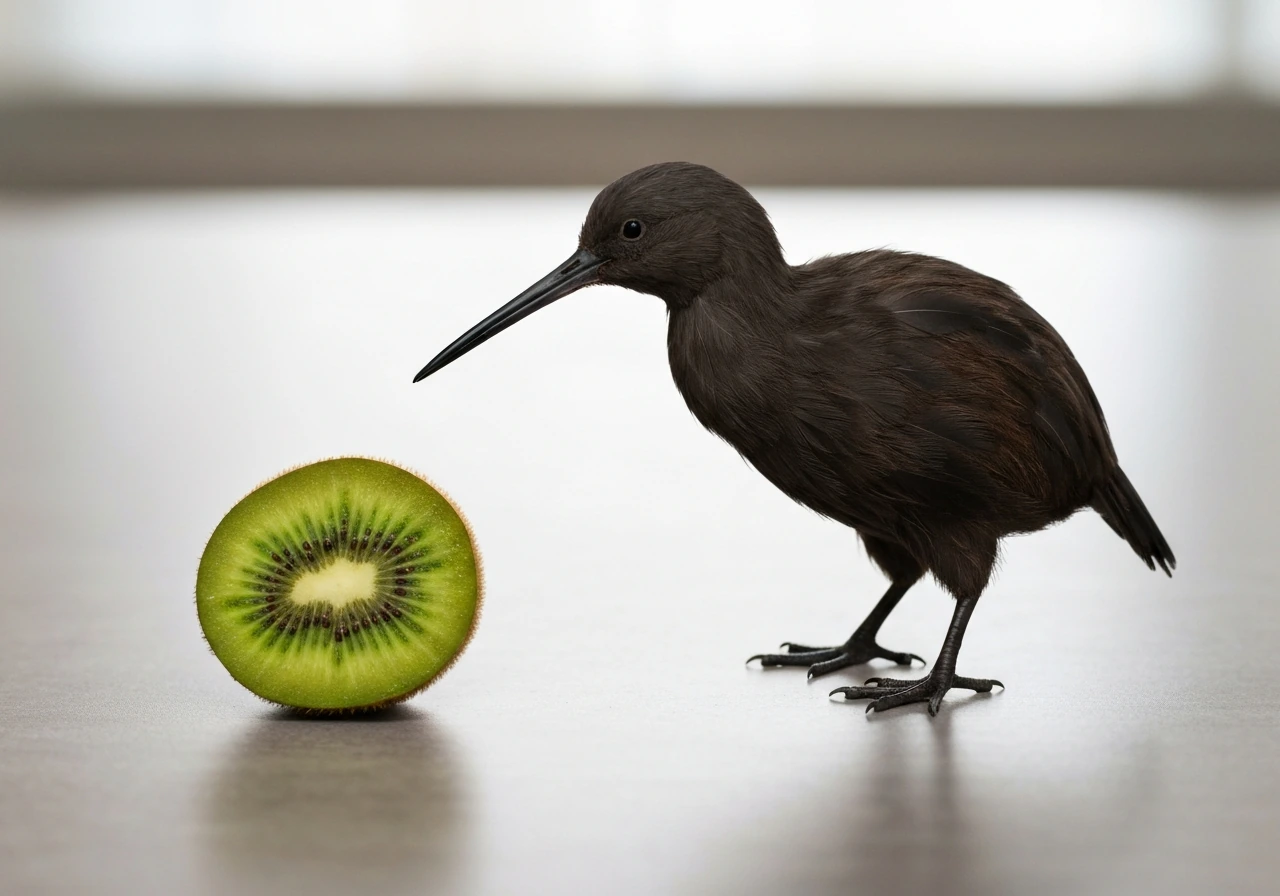
The kiwi is a great example of an animal that genuinely trips people up because it is a flightless bird with hair-like feathers, laying enormous eggs, and looking more like a furry mammal than a robin. The kiwi is a bird, even though it has hair-like feathers and seems more like a small mammal than other birds. But it is firmly a bird. The kangaroo, on the other hand, leaves no ambiguity once you run through the checklist.
A quick checklist to settle 'is it a bird?' for any animal
Next time you are unsure whether an animal is a bird, run through these three questions in order:
- Does it have feathers? If yes, it is a bird. Full stop.
- Does it have a beak and lay shelled eggs? If both yes, almost certainly a bird (confirm feathers to be sure).
- Does it have fur or hair, give live birth, and nurse young with milk? If yes, it is a mammal, not a bird.
Kangaroos fail the first two questions completely and pass the third with flying colors. That is your answer. If you want to dig deeper into similar classification questions, the distinction between birds and mammals comes up in a lot of familiar cases, including the kiwi (a bird that barely looks like one) and the closely related question of whether a kangaroo is a bird or an animal, which is worth reading if you want the fuller taxonomy breakdown. The distinction between whether a kangaroo is a bird or an animal is mostly about biological classification, not appearance or behavior.
FAQ
If a kangaroo has fur, does that automatically mean it cannot be a bird, even if it has something that looks like feathers?
Yes. Birds are identified by true feathers, which kangaroos do not have. Fur is a mammal trait, and even if you see hair-like growths from another animal, you would still need actual feathers and bird-specific biology, not just a similar look.
Can a kangaroo ever be classified as a bird in any situation, like in a museum label or children’s book?
No, not in biological classification. Where you might see confusion is common names or loose educational language, which can be inaccurate. Classification depends on anatomy and genetic lineage, not wording on signage.
Is a kangaroo related to birds because both are animals that have offspring?
No. All animals reproduce, but birds and kangaroos do not share the key reproductive pattern. Kangaroos are marsupials that nurse joeys in a pouch, while birds lay eggs and develop embryos inside shells.
How do I tell if I’m dealing with a bird versus a mammal when the animal is small or looks furry?
Use the quickest decision aid: look for feathers. If you can confirm feathers, it points to birds. If you see fur and mammal-like skin and milk-nursing behavior, it points to mammals. For edge cases, prioritize the reproductive method and presence of feathers over appearance.
Does flight matter for whether something is a bird? For example, could a kangaroo be considered a bird because it can jump?
No. Birds are not defined by flying, bats and pterosaurs show why. Jumping is locomotion, it does not determine class. Birds are defined by shared biological traits, especially feathers.
What’s the most common mistake people make when they ask “is kangaroo a bird,” and what should I check first?
The most common mistake is relying on surface impressions like movement, shape, or fuzzy appearance. Check first for feathers, then for mammal traits like fur and milk-based nursing, and finally for the reproductive strategy.
If someone says “kangaroos look like they have feather-like parts,” what should I verify?
Verify whether the structure is truly a feather, including how it grows and attaches, and whether the animal uses bird-type biology. Kangaroos do not produce feathers, so feather claims are usually a misidentification of fur, skin, or superficial growth.
Does the fact that kangaroos are warm-blooded like birds affect the answer?
Warm-bloodedness alone does not. Birds are warm-blooded, and mammals are also warm-blooded, but that trait spans many classes. The decisive features here are classification-level traits, especially feathers versus fur and the distinct reproduction method.
Next Article
Is a Kiwi a Bird? Kiwi Bird vs Kiwi Fruit
Is a kiwi a bird? Explain kiwi bird traits and how it differs from kiwi fruit, with quick context tips.