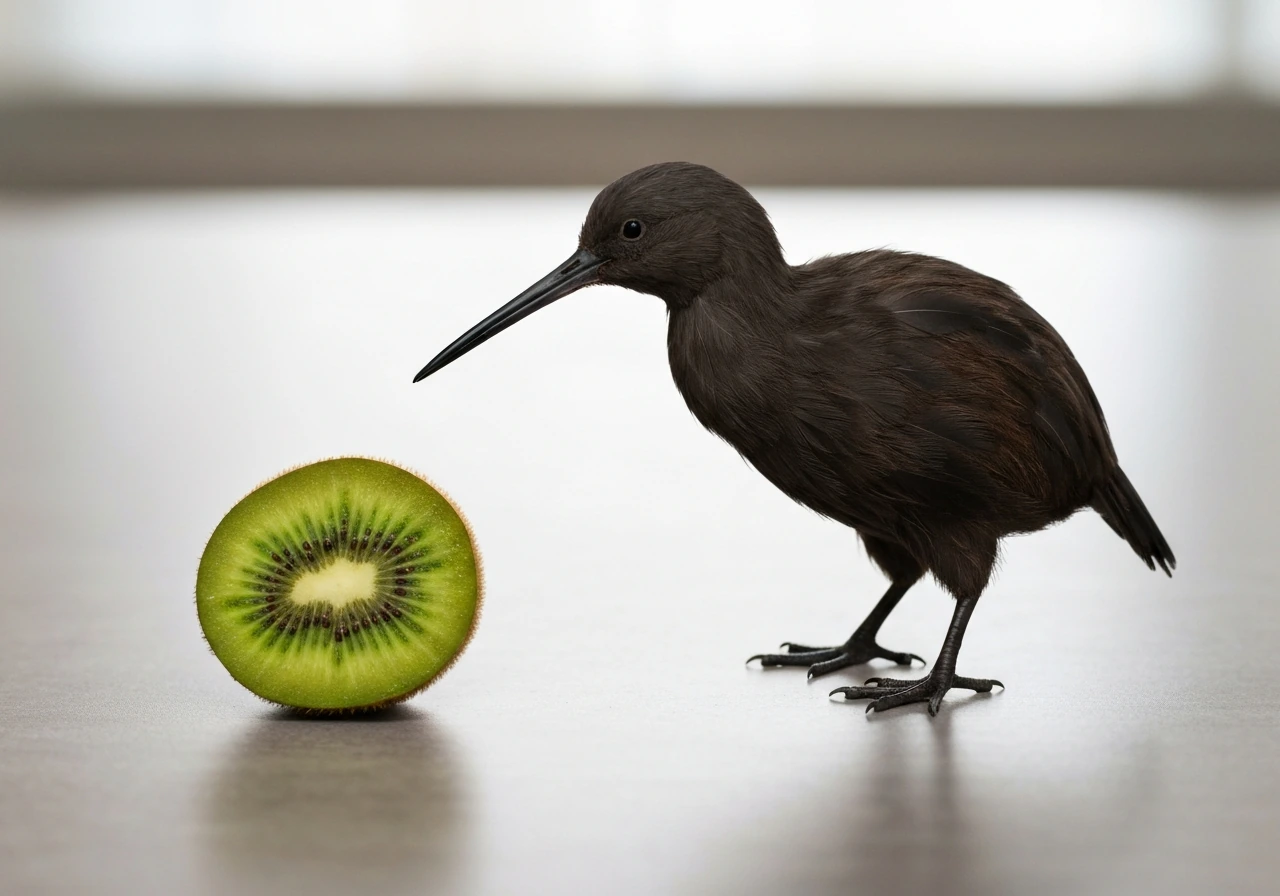
What "kiwi" usually means (bird vs fruit)
The word "kiwi" does double duty in everyday English, and that's the root of almost all the confusion. In biological terms, a kiwi is a flightless bird native to New Zealand, belonging to the genus Apteryx. In grocery stores and smoothie recipes, "kiwi" is shorthand for [kiwifruit, the edible berry of the woody vine](https://www. missouribotanicalgarden.
org/PlantFinder/PlantFinderDetails. aspx? qt=Display&taxonid=275437) Actinidia deliciosa (or the closely related Actinidia chinensis). Those two things have almost nothing in common except the name, and the name connection is more about New Zealand branding history than any real similarity between a brown fuzzy bird and a brown fuzzy fruit.
If someone asks you "is a kiwi a bird," the honest answer is: it depends entirely on which kiwi they mean, but yes, one of them absolutely is.
There is also a third meaning worth flagging quickly: "Kiwi" (with a capital K) is a colloquial nickname for New Zealanders, coined because the kiwi bird is a national symbol of New Zealand. This usage has no bearing on biology, but it does explain why New Zealand exporters rebranded their exported fruit as "kiwifruit" starting June 15, 1959, tying the fruit's identity to New Zealand's national image. So the fruit borrowed the bird's name, not the other way around.
Quick answer: is the kiwi bird a bird?
Yes, without any qualification: the kiwi bird is a bird. It is classified in class Aves (the biological class that contains all birds), order Apterygiformes, family Apterygidae, and genus Apteryx. There are five recognized species in that genus, all found only in New Zealand. whether kiwi is a bird or animal is actually a trick question in disguise, because birds are animals. The kiwi is both: it is an animal, and the specific kind of animal it is happens to be a bird. The fact that it cannot fly throws some people off, but flight has never been the defining feature of birds.
Why kiwi birds count as birds (key bird traits)
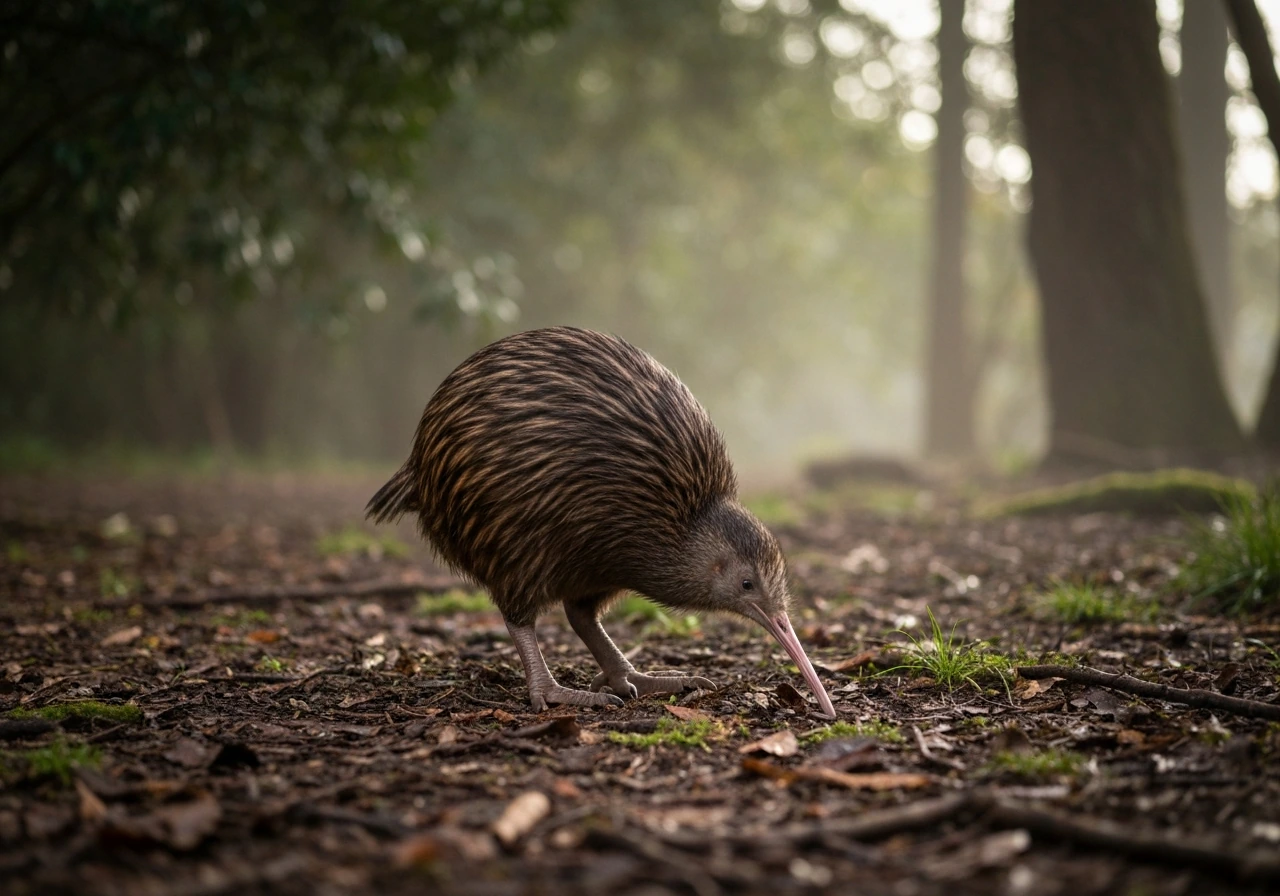
Birds are warm-blooded vertebrates in class Aves. The traits that define them as a group include feathers (the only characteristic exclusive to birds among all animals alive today), toothless beaked jaws, hard-shelled eggs, and a high metabolic rate. Kiwis check every one of those boxes. They have feathers, though the feathers are loose and hair-like in texture, almost fur-like to the touch. They have a long, slender bill. They lay hard-shelled eggs. They are warm-blooded. Taxonomically, they sit inside Phylum Chordata (vertebrates) alongside every other bird on the planet.
Kiwis are classified as ratites, a group of flightless birds that also includes ostriches, emus, and rheas. The term "ratite" refers to the flat sternum (breastbone) with no keel, which means there is no large surface area for flight muscles to attach to. That is why ratites cannot fly. But the absence of a keel does not remove them from class Aves, any more than a penguin's flippers disqualify penguins from being birds. The kiwi meets the biological definition of a bird in every way that matters.
- Feathers: present (loose and hair-like, but genuine feathers)
- Beak/bill: yes, notably long and slender with nostrils near the tip
- Hard-shelled eggs: yes, and kiwi eggs are famously large relative to body size
- Warm-blooded: yes
- Class Aves: yes, order Apterygiformes, family Apterygidae
- Flight: no, but flightlessness does not exclude an animal from being a bird
Kiwi fruit: what it is and why it isn't a bird
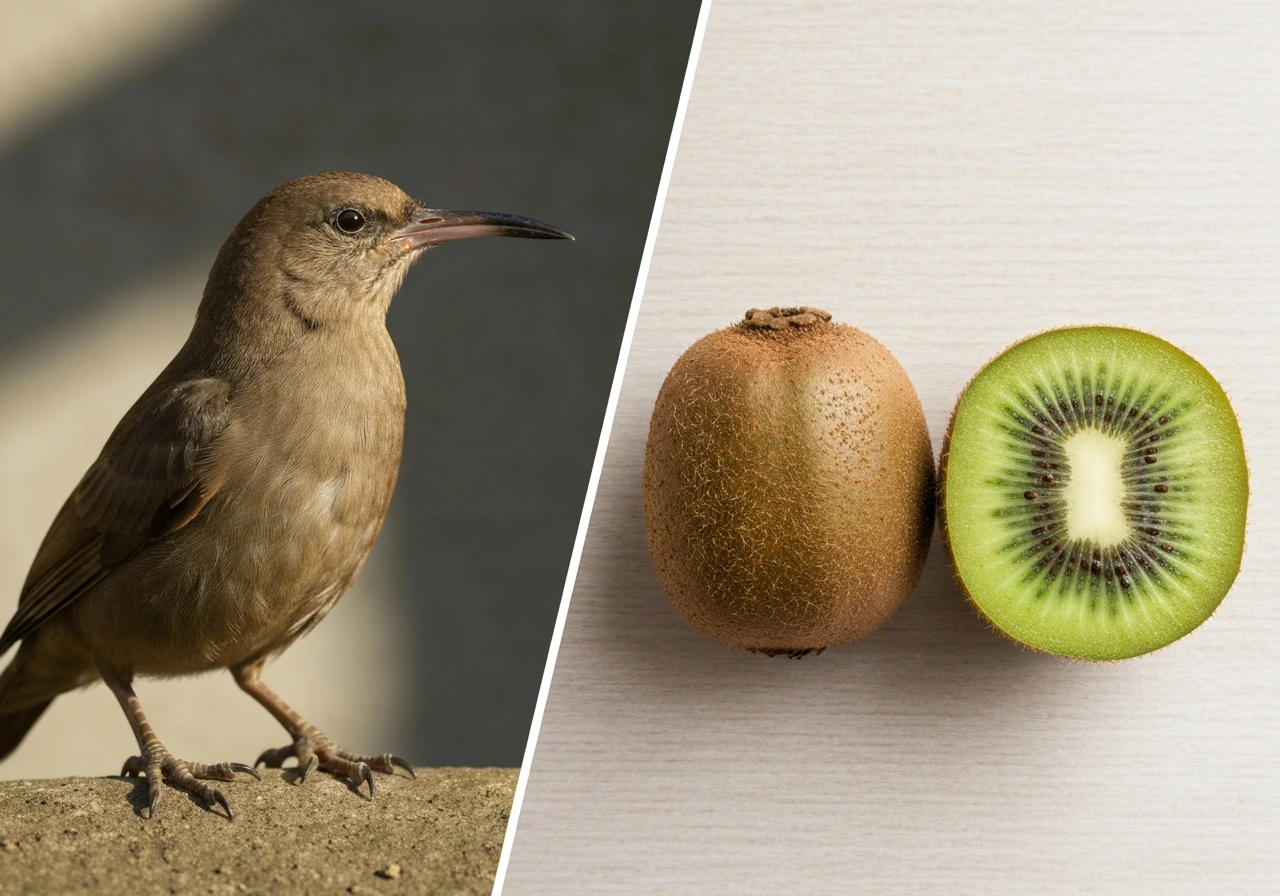
Kiwifruit is the edible berry of Actinidia deliciosa, a woody vine in the plant family Actinidiaceae. The fruit itself is an ellipsoidal, thin-skinned berry with brown fuzzy skin, pale green flesh, and small black seeds. It is a plant product: no feathers, no beak, no eggs, no warm blood. Calling it a bird would be like calling a coconut a mammal. The only connection to the bird is the shared name, which came from New Zealand marketing rather than any biological relationship.
In North America and Europe, people commonly call kiwifruit simply "kiwi," which is the main source of the confusion when someone asks "is a kiwi a bird or fruit." In many other parts of the world, "kiwifruit" is the standard term, which sidesteps the ambiguity entirely. The USDA classifies kiwifruit as the edible berry of a woody vine, with the two most common commercial species being Actinidia deliciosa and Actinidia chinensis. Neither of those species has anything to do with class Aves.
Common confusion and how to tell which kiwi you mean
Context almost always resolves this. If someone is talking about New Zealand wildlife, a nocturnal animal, or a creature with a long bill, they mean the bird. If they are talking about a recipe, a grocery item, or a vitamin C source, they mean the fruit. The confusion tends to show up most in written text or quick searches where there is no surrounding context, which is probably why you are reading this right now.
Here are the fastest context cues to use when the word "kiwi" appears without explanation:
- Wildlife, zoo, or conservation context: almost certainly the bird (Apteryx species)
- Food, recipe, nutrition, or produce context: almost certainly the fruit (Actinidia deliciosa)
- New Zealand culture or national identity context: could be the bird (as a national symbol), the fruit (as an export product), or the informal nickname for New Zealanders
- Biology or taxonomy context: the bird, which has a formal classification in class Aves
- No context at all: ask for clarification, or assume the fruit if the speaker is North American or European, since that usage dominates in casual conversation there
This kind of naming overlap is surprisingly common in the animal and plant worlds, and it is worth keeping in mind whenever you see a common name used without a scientific name attached. The same issue comes up, for example, when people debate whether a kangaroo is a bird or animal, which sounds like a strange question until you realize some people genuinely are not sure where kangaroos fit in animal classification.
Bird vs other animals: placing "kiwi" in the big picture
It helps to step back and look at where birds sit in the broader animal classification. Birds belong to class Aves within the vertebrates, nested inside Phylum Chordata. They are distinct from mammals (which have fur, nurse young with milk, and are generally not egg-layers, though platypuses are a famous exception), reptiles (which are cold-blooded and lack feathers), and fish and amphibians. The kiwi bird sits cleanly inside class Aves because it has feathers and meets all the other defining criteria, even though it cannot fly and looks somewhat odd compared to a typical songbird.
Flightless birds are actually a good illustration of why you cannot define "bird" by behavior or shape alone. You have to go to the biological traits: feathers, beak, egg-laying, warm blood, class Aves membership. The kiwi passes every test. Questions like whether a kangaroo is a bird get at the same underlying principle: the answer comes from taxonomy, not from how the animal looks or whether it fits your mental image of what a bird should be.
| Kiwi bird (Apteryx) | Kiwifruit (Actinidia deliciosa) |
|---|
| Type of thing | Animal (bird) | Plant product (berry) |
| Class/Kingdom | Class Aves (Animalia) | Plantae |
| Has feathers | Yes | No |
| Has a beak | Yes (long, slender) | No |
| Lays eggs | Yes | No |
| Warm-blooded | Yes | N/A (plant) |
| Can fly | No (ratite) | N/A (plant) |
| Native to New Zealand | Yes | Originally China; associated with NZ via branding |
| Is it a bird? | Yes | No |
One more thing worth mentioning: questions about unusual animals and their classification are not silly. They reflect the fact that common names are messy and biology is not always intuitive. If you have ever wondered about a similarly puzzling case, like whether "kaur" is a bird, the same approach applies: look for the defining traits of birds (feathers, beak, hard-shelled eggs, class Aves) rather than relying on the name or the animal's appearance. That framework will sort out almost any "is this a bird?" question you run into.
To put it plainly: the kiwi bird is a real bird, classified in class Aves, and it lives in New Zealand. The kiwifruit is a plant product that borrowed its name from New Zealand's national symbol. If someone asks "is a kiwi a bird," the answer is yes, if they mean the animal, and a clear no if they mean the fruit sitting in their fruit bowl.