A hyena is not a bird. It is a mammal, specifically a carnivorous mammal placed in Class Mammalia, Order Carnivora, Family Hyaenidae. No version of a hyena, spotted, striped, brown, or aardwolf, has ever been classified as a bird. This is one of those questions where the biology is completely clear and there is no gray area.
Hyena: Is It a Bird or an Animal? Taxonomy Answer

Sarah Chen
26 Jun 2026
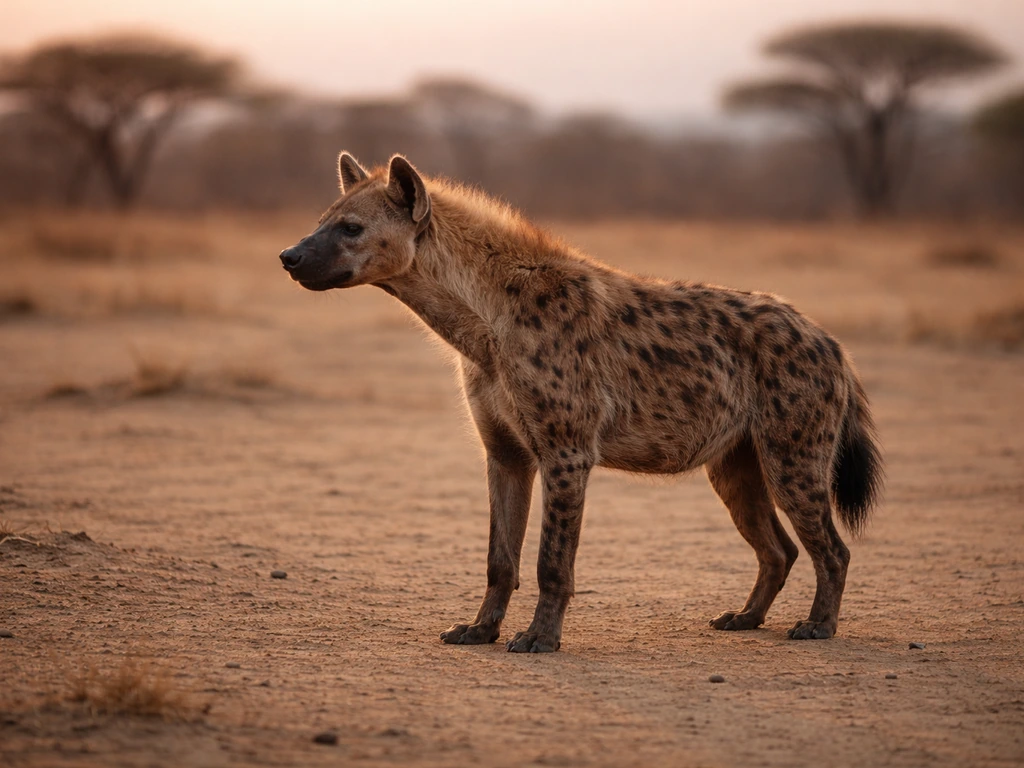
What hyenas actually are
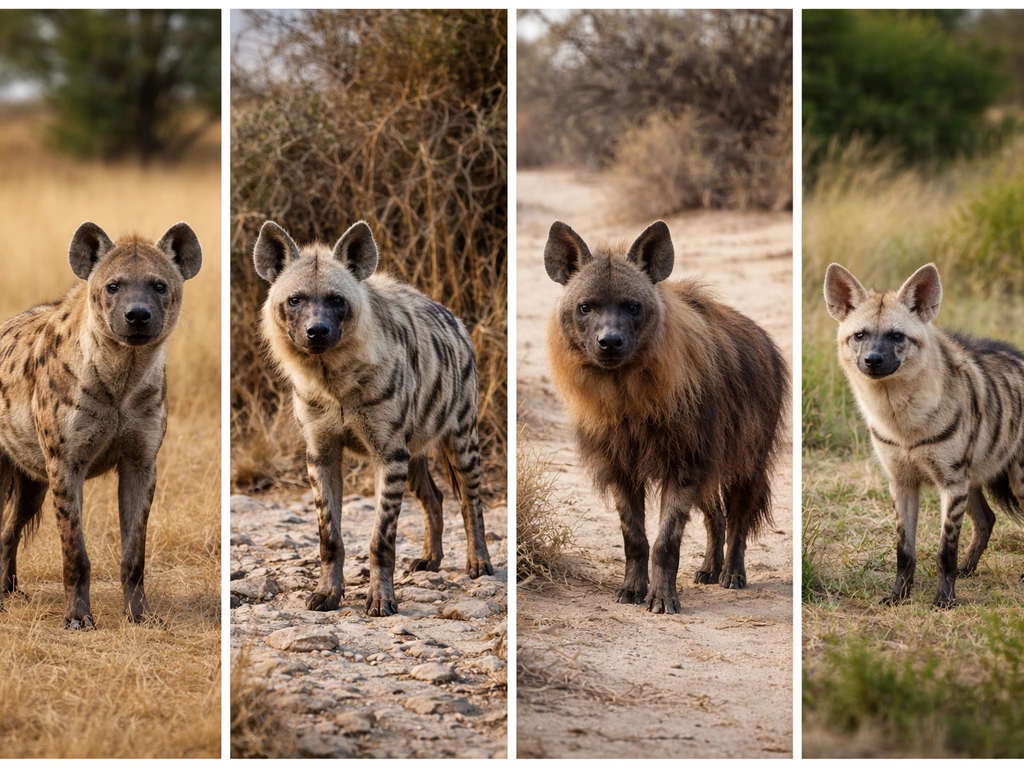
There are four living hyena species: the spotted hyena (Crocuta crocuta), the striped hyena (Hyaena hyaena), the brown hyena (Parahyaena brunnea), and the aardwolf (Proteles cristata). All four sit firmly within Class Mammalia. If you look up the spotted hyena on NCBI's Taxonomy Browser, its full lineage reads: Chordata → Mammalia → Theria → Eutheria → Carnivora → Feliformia → Hyaenidae → Crocuta → Crocuta crocuta. That last part, Feliformia, is worth noting because it means hyenas are more closely related to cats than to dogs, even though they look and behave a bit like dogs. People find that surprising, but it does not change the class-level answer: they are mammals.
Hyenas have all the defining mammal traits. They are covered in coarse fur, they give birth to live young, and those young are fed with milk from mammary glands. They also have the three tiny middle ear bones (malleus, incus, and stapes) that are a hallmark of mammals and are found in no other class of animal. None of these features overlap with birds in any way.
How to tell birds from mammals (and everything else)
This is where the practical checklist matters. Birds (Class Aves) and mammals (Class Mammalia) are both warm-blooded and both are vertebrates, which is where the similarities basically stop. When you want to sort an unfamiliar animal into the right category, check these traits side by side.
| Trait | Birds (Class Aves) | Mammals (Class Mammalia) |
|---|---|---|
| Body covering | Feathers | Hair or fur |
| Forelimbs | Modified into wings | Legs, arms, flippers, or paws |
| Reproduction | Hard-shelled eggs | Live birth (most); some lay eggs (monotremes) |
| Feeding young | Regurgitation or foraging | Milk from mammary glands |
| Teeth | None (toothless beak) | Present in most species |
| Middle ear bones | One (stapes only) | Three (malleus, incus, stapes) |
| Examples | Sparrow, penguin, ostrich, eagle | Hyena, lion, bat, whale, human |
The single fastest check is feathers. Every bird has them, no mammal has them, and no other living animal group has them. If the animal in question has feathers, it is a bird. If it has fur, it is a mammal. A hyena has coarse fur. Case closed.
Why someone might get confused about hyenas
The phrasing 'hyena is a bird or animal' suggests some genuine uncertainty, and it is worth taking that seriously rather than dismissing it. Yes, camel is a mammal, not a bird, so the classification stays with Class Mammalia. A few things about hyenas make people question their assumptions.
- The 'laughing' sound: Spotted hyenas make a distinctive cackling vocalization that sounds a bit like human laughter. Unusual animal sounds sometimes make people question what kind of creature they are dealing with, but sound production has nothing to do with class-level classification.
- The aardwolf confusion: The aardwolf is technically a hyena (Family Hyaenidae) but it eats termites rather than meat, looks somewhat different from other hyenas, and its name contains 'wolf.' People sometimes treat it as an entirely separate kind of animal, but it is still a mammal within the same family.
- Doglike appearance despite cat-like relatives: Because hyenas look like dogs but are classified with cats (Feliformia), people sometimes feel their intuitions about animal categories can't be trusted. That uncertainty can spill over into broader questions like 'wait, what even is a hyena?'
- Common name quirks: Animal common names in English are notoriously inconsistent. The 'flying fox' is a bat, the 'sea horse' is a fish, and the 'starfish' is not a fish. Someone who has encountered a few of those surprises might reasonably wonder whether a hyena could be something other than what it looks like.
None of these factors change the classification. Appearance, behavior, sound, and common names are not reliable guides to taxonomy. A Reddit discussion about "striped hyena or aardwolf" similarly highlights how common-name and look-alike assumptions can lead people to misidentify hyena-like animals common names can confuse readers even within hyena-like groups. The biological criteria are what count, and by every one of those criteria, hyenas are mammals.
Where birds fit in the animal kingdom

Understanding where birds actually sit in classification helps make the hyena question even clearer. All living things are organized into a hierarchy of ranks: Domain, Kingdom, Phylum, Class, Order, Family, Genus, Species. Both birds and hyenas are in Kingdom Animalia and Phylum Chordata (meaning they both have a backbone). After that, they split completely. Birds branch off into Class Aves, defined by feathers, wings, hard-shelled eggs, and a toothless beak. Britannica describes birds as having key characteristics such as feathers, being warm-blooded, having wings formed from forelimbs, hard-shelled eggs, and a four-chambered heart feathers, being warm-blooded, forelimbs modified into wings, hard-shelled eggs, and a four-chambered heart. Mammals branch off into Class Mammalia, defined by fur, mammary glands, and those three middle ear bones.
Birds evolved from theropod dinosaurs, which is a reptile lineage. Mammals evolved from a completely separate lineage called synapsids. These two groups have been on separate evolutionary paths for hundreds of millions of years. The Class level is where the split becomes decisive and permanent for classification purposes. A hyena is Class Mammalia. A sparrow is Class Aves. They are about as different in classification as two vertebrates can be while still both being vertebrates.
If you are curious about similar classification questions, the same logic applies to other African animals people sometimes misplace. A jackal, like a hyena, is a mammal. A camel is a mammal. The question is always: what class does the organism sit in, and what are its defining anatomical traits?
How to verify any animal's classification right now
If you want to confirm the category of any animal today, here is the practical process I use and recommend.
- Go to NCBI's Taxonomy Browser (search 'NCBI taxonomy' and enter the animal's name). It shows the full taxonomic lineage including the class. For any hyena species, you will see Class Mammalia. For any bird, you will see Class Aves.
- Check GBIF (the Global Biodiversity Information Facility). Its Backbone Taxonomy integrates names across databases and shows class-level placement clearly. Type the animal name in the search bar.
- Use ITIS (the Integrated Taxonomic Information System at itis.gov). Their advanced search returns a hierarchical taxonomic report including Kingdom, Phylum, Class, Order, Family, Genus, and Species.
- Apply the physical trait checklist: feathers mean bird, fur means mammal. That handles the vast majority of cases without needing any database at all.
- For borderline-sounding names (aardwolf, flying fox, starfish), always confirm via scientific name and class in one of the databases above rather than trusting the common English name.
These tools are free, fast, and authoritative. NCBI itself notes that its taxonomy database is a curated resource rather than a primary phylogenetic authority, so for any serious research purpose it is worth cross-checking with ITIS or the Mammal Diversity Database as well. For a casual fact-check, any one of them will give you a definitive class-level answer in under two minutes.
The takeaway
Hyenas are mammals, full stop. They have fur, nurse their young with milk, and share the same class-level designation as lions, wolves, and humans. They have zero bird traits: no feathers, no wings, no hard-shelled eggs, no beak. If you walked past a spotted hyena and a barn owl in a zoo and had to sort them into 'bird' or 'mammal,' the hyena's coarse fur coat is the immediate giveaway. The biology here is unambiguous, and any of the free taxonomy databases above will confirm it in seconds.
FAQ
Do hyenas lay eggs like some birds, or do they have live births?
Hyenas have live births. Like all mammals, they develop their young internally and nurse them with milk from mammary glands, so there is no egg-laying stage involved.
Are hyenas considered “cats” or “dogs,” since they look and act doglike?
Neither. They are mammals in the carnivore order, and within that they fall under a feliform lineage (more closely related to cats than to dogs). The “doglike” behavior is superficial and not the basis for taxonomy.
What if I only have a photo, no fur detail, and the hyena’s coat looks hard to see?
Use the strongest binary trait first: feathers vs fur. A hyena will be fur-covered, while birds have feathers. If feathers are clearly visible, it is a bird, but if you only see hair or fur, it is a mammal.
Could an animal that resembles a hyena be a bird instead?
Unlikely, because the class-defining traits are anatomical, not appearance-based. For a bird classification you would need feathers, wings, and bird-specific features. Many hyena lookalikes are mammals, but if you are uncertain, confirm using a taxonomy database rather than local names.
Do hyenas have the same ear structure that mammals have?
Yes. Mammals have three tiny middle ear bones (malleus, incus, stapes). Birds have different middle ear anatomy, so this is one reason the classification is not ambiguous at the class level.
Why do hyenas sometimes get mentioned in bird-related discussions or trivia?
Most of the time it is a misconception driven by common names, sound, or behavior. Those cues do not determine taxonomy, so you should ignore the trivia framing and return to defining traits like fur, mammary glands, and bird-specific structures.
If both hyenas and birds are warm-blooded and vertebrates, is there any gray area at all?
At the class level there is not. They both are vertebrates and warm-blooded, but they split permanently into Class Mammalia (fur, mammary glands, mammal ear bones) versus Class Aves (feathers, beaks, hard-shelled eggs).
How can I quickly confirm any “bird or animal” question without reading a long study?
Look up the organism’s class in a curated taxonomy source, then apply a one-step check: feathers indicate Class Aves, fur indicates Class Mammalia. For serious work, cross-check with at least two reputable databases (for example, NCBI plus ITIS or a mammal-focused database).
Does the hyena classification change for extinct hyena relatives?
The living hyena species are mammals, and closely related extinct species in the hyena line would also be placed by their defining anatomical evidence and lineage. The “bird” claim would still fail because the fundamental class traits for Aves versus Mammalia do not overlap.
Next Article
Is Cameroon a Bird? Meaning and How to Verify
Get a clear yes or no on whether Cameroon is a bird, plus steps to verify any Cameroon-named species.