Quick answer: what "Cameroon" usually means
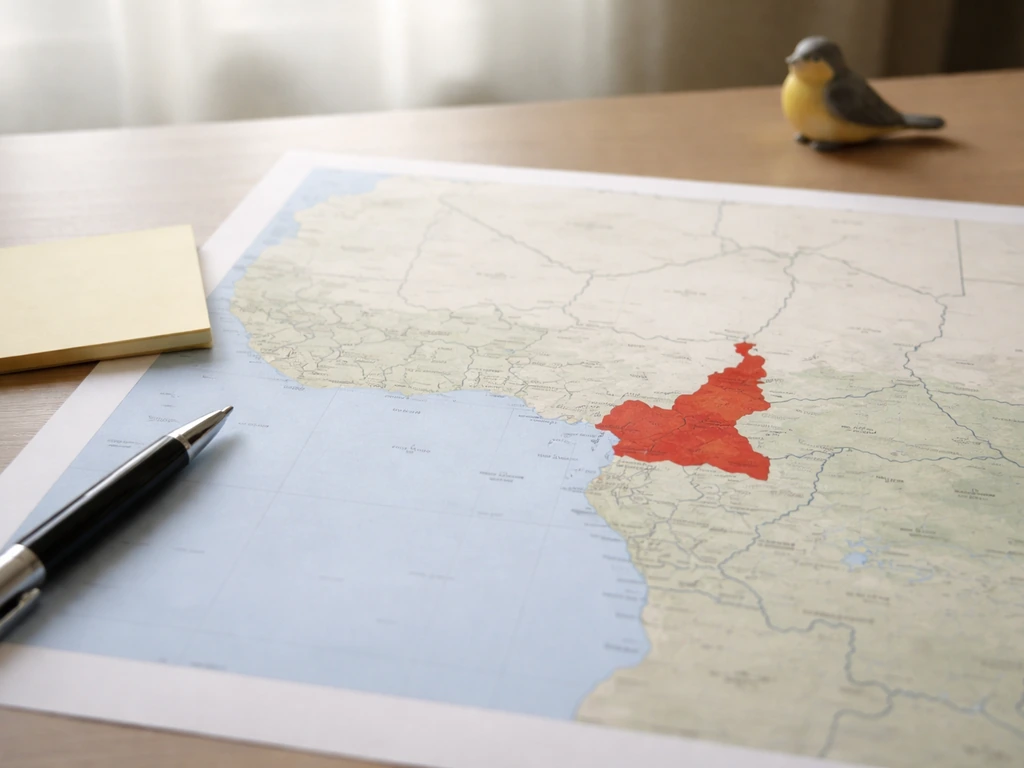
Cameroon is a country, not a bird. Every major dictionary and reference source defines it the same way: the Republic of Cameroon is a nation in Central/West Africa, bordered by Nigeria, Chad, the Central African Republic, and the Atlantic coast. When most people type "is Cameroon a bird," they are either genuinely curious whether the word doubles as an animal name, or they have heard a bird described as a "Cameroon [something]" and want to know what that means. Both questions are completely fair, and both have straightforward answers.
Is there any bird named "Cameroon"?
Yes, but with an important detail: "Cameroon" alone is not a bird. However, "Cameroon" appears as a geographic qualifier in the common names of at least two recognized bird species, both named after the country where they live or were first described. The two you will actually encounter in field guides and bird databases are:
- Cameroon Sunbird (scientific name: Cyanomitra oritis) — listed on eBird and classified in the family Nectariniidae, the sunbirds.
- Cameroon Olive Pigeon (scientific name: Columba sjostedti) — listed by both the U.S. Fish & Wildlife Service and the ITIS taxonomic database, placed in family Columbidae, the pigeons and doves.
So if someone asks whether there is "a bird called Cameroon," the technically precise answer is: no species is simply called "Cameroon," but several birds carry Cameroon in their full common name as a place-based label. Think of it the same way you would think of the African Fish Eagle or the American Robin. The geography tells you where the bird is from, not what kind of animal it is.
How to verify this yourself

The fastest check is to search the common name on eBird. Every species in eBird has both a common name and a scientific name in its standardized taxonomy, and the species page will also show the order and family, confirming classification at a glance. Search "Cameroon Sunbird" and you will land on a page confirming Cyanomitra oritis in order Passeriformes. Search "Cameroon Olive Pigeon" and you will see Columba sjostedti in order Columbiformes. Both pages take about 30 seconds to pull up.
Common-name vs scientific-name checks
Common names are informal and can be misleading. A "jellyfish" is not a fish. A "koala bear" is not a bear. Similarly, a bird called the "Cameroon Sunbird" could theoretically confuse someone who only sees the word "Cameroon" and does not know whether the full name refers to a country, a type of animal, or something else entirely. Scientific names cut through that confusion immediately.
Binomial nomenclature (the two-part Latin naming system used globally) gives every species a unique genus-plus-species label. "Cyanomitra oritis" cannot refer to anything except this specific sunbird. "Columba sjostedti" cannot refer to anything except this specific pigeon. When you are unsure whether a common name is pointing at a real species, or what kind of animal that species actually is, look up the scientific name. Field guides typically list both names side by side for exactly this reason. The IOC World Bird List (WorldBirdNames) is the authoritative source ornithologists use to standardize English common names alongside their scientific counterparts, and it is freely searchable online.
One practical tip: if a common name includes a place (Cameroon, African, Amazonian, etc.), that word is almost always a geographic tag, not a species descriptor. Strip it out and search the remaining word to identify the broader animal group. "Sunbird" tells you the bird group. "Olive Pigeon" tells you the bird group. "Cameroon" just tells you where it lives.
What actually makes something a bird
Birds belong to the class Aves, which is the formal biological classification grouping all bird species. Membership in class Aves is not determined by whether an animal can fly or looks like a typical robin. It is determined by a set of shared biological traits that evolution has preserved across all birds. The core ones to know are:
- Feathers: all birds have them, and no other living animal group does. Feathers are the single most reliable diagnostic feature.
- A beak (or bill): made of keratin (the same protein as your fingernails), beaks replace the teeth found in most other vertebrates. All birds have one; no bird has teeth.
- Vertebrate skeleton: birds have a backbone and, in most species, hollow or semi-hollow bones that reduce weight for flight.
- Warm-blooded metabolism: birds regulate their own body temperature internally.
- Egg-laying reproduction: all birds lay eggs with hard or leathery shells.
- Two wings (even if non-functional for flight, as in penguins and ostriches) and two legs.
The Cameroon Sunbird checks every one of these boxes. It has feathers, a slender curved beak adapted for sipping nectar, lays eggs, and is classified under Aves. The country of Cameroon, obviously, checks none of them. Countries are not animals.
Borderline look-alikes and name confusion
This kind of "is X a bird?" confusion happens all the time, and it is usually driven by one of two things: a place name that sounds like it could be an animal, or an actual animal that looks bird-like but is not classified as one. Cameroon falls firmly into the first category, but it is worth knowing the second category exists.
Take the hyena as a classic example. Hyenas are mammals, full stop, but people regularly search whether they might be birds, perhaps because of unusual calls or because they seem like an outlier in the animal kingdom. Similarly, people sometimes wonder is a jackal a bird, even though jackals are canids (related to dogs and wolves) with no bird traits whatsoever. These searches are not silly: they reflect genuine uncertainty about how animal classification works.
The camel is another good comparison. If you have ever wondered is a camel a bird, the answer is obviously no once you think through the bird checklist above: camels have no feathers, no beak, give birth to live young, and are mammals. But the question makes sense as a sanity check, especially on a site like this one where the whole point is nailing down classification. Cameroon works the same way: run it through the checklist, and it is clearly not an animal at all.
The more interesting confusion happens when animals are genuinely bird-adjacent. Bats fly and have a similar silhouette in the air, but they are mammals with fur and live birth. Pterosaurs (the flying reptiles of the Mesozoic era) also get mistaken for birds, but they belong to a completely separate lineage. Even within mammals, some animals prompt repeated classification questions. The question of is hyena a bird comes up enough to deserve its own direct answer: no, hyenas are carnivorous mammals in the order Carnivora, with no feathers, no beak, and no biological link to class Aves.
If you are specifically wrestling with whether a particular African animal is a bird or not, the same approach works every time: look for feathers first. If there are no feathers, it is not a bird. No exceptions. And if you are still puzzled by related questions, the broader topic of hyena is a bird or animal is a useful illustration of how to apply the bird checklist to a confusing case.
A quick comparison: Cameroon the country vs Cameroon-named birds
| Feature | Cameroon (the country) | Cameroon Sunbird | Cameroon Olive Pigeon |
|---|
| Scientific name | N/A (not an organism) | Cyanomitra oritis | Columba sjostedti |
| Animal class | Not an animal | Aves (birds) | Aves (birds) |
| Family | N/A | Nectariniidae | Columbidae |
| Has feathers | No | Yes | Yes |
| Has a beak | No | Yes (curved, for nectar) | Yes |
| Found in Cameroon | Is Cameroon | Yes (native range) | Yes (native range) |
| Is it a bird? | No | Yes | Yes |
Practical next steps: how to confirm and what to search
If you landed here because you heard or read about a "Cameroon bird" and want to track down the specific species, here is what to do:
- Search the full common name on eBird (ebird.org). Type "Cameroon Sunbird" or "Cameroon Olive Pigeon" and the species page will show you the scientific name, the taxonomic family, and a range map confirming it is indeed a bird found in Cameroon.
- Cross-check the scientific name on the IUCN Red List (iucnredlist.org). Search for "Cyanomitra oritis" or "Columba sjostedti" and you will see the official conservation status and full taxonomic classification.
- Use the IOC World Bird List (worldbirdnames.org) to confirm the standardized English name and its place in the current taxonomy. This is especially useful if the name you heard differs slightly from what eBird shows, since common names do get updated.
- If you only have a partial name (just "Cameroon" and a vague description), search for "Cameroon" in eBird's species search and filter results to narrow down the species.
- If the animal you are researching has no feathers or beak, stop and reclassify: it is not a bird, regardless of what its common name says.
The short version: Cameroon is a country in Central/West Africa and is not a bird. Two real bird species carry "Cameroon" in their common names (the Cameroon Sunbird and the Cameroon Olive Pigeon), both named for their geographic range. World Bird Names’ IOC-standardized page for the blank" rel="noopener noreferrer">Cameroon Sunbird links the English common name “Cameroon Sunbird” to the scientific name Cyanomitra oritis. If you need to verify any bird's classification quickly, eBird and the IOC World Bird List are the two most reliable free tools available today. BirdLife International is a major conservation and assessment authority that provides bird conservation information used in blank" rel="noopener noreferrer">IUCN assessments.