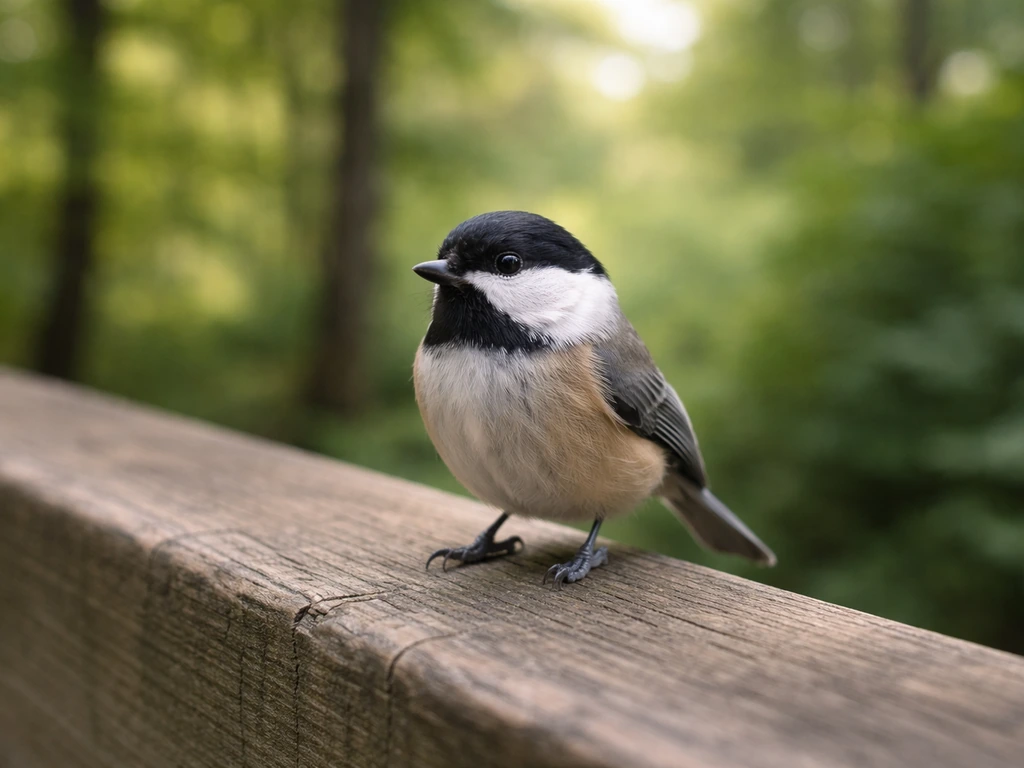
Most of the time, if you're squinting at something moving through the sky and asking this question, it actually is a bird. If you're still wondering, this guide helps you confirm whether it’s a bird or one of the common look-alikes is it a bird. If you are still wondering, double-check the motion and field marks, since it will help you decide whether it is a bird or another sky look-alike is it a bird.
What’s That in the Sky Is It a Bird? Quick ID Guide

Sarah Chen
15 Jun 2026
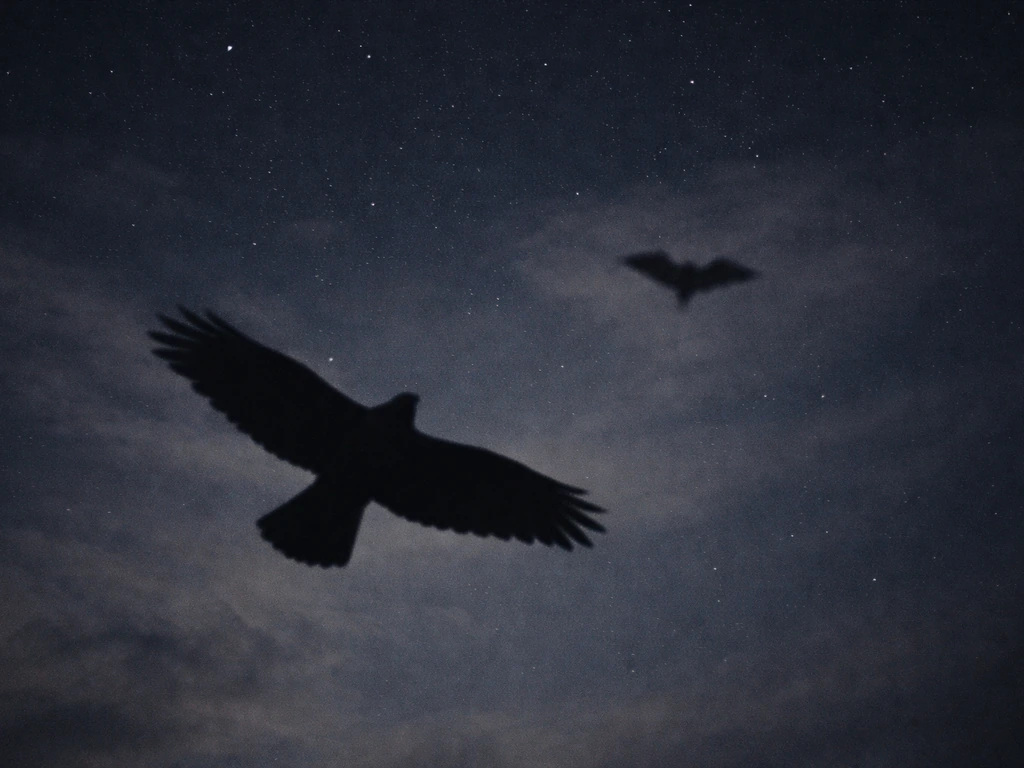
Birds are by far the most common flying objects most people see during daylight hours. But the visual clues that separate a bird from a bat, an insect, a drone, a balloon, or something stranger are surprisingly simple once you know what to look for. Here's how to figure it out fast.
Quick reality check: common sky look-alikes

Before you go deeper, it helps to know what the realistic candidates are. The list is shorter than you'd think, and most of them have obvious tells at a second glance.
| Flying object | Most common time seen | Key first impression |
|---|---|---|
| Bird | Daytime, dawn, dusk | Flapping or gliding, organic silhouette, variable speed |
| Bat | Dawn, dusk, night | Erratic looping flight, very fast wingbeats, silent |
| Large insect | Daytime, warm months | Tiny, hovering or darting, often near vegetation |
| Drone / UAV | Any time | Rigid, often hovering steadily, sometimes audible hum |
| Small aircraft | Any time | Fixed shape, steady heading, navigation lights at night |
| Weather balloon | Any time | Slow-moving or stationary, round, very high altitude |
| Satellite / ISS | Dawn, dusk, night | Steady bright point of light, no flicker, consistent speed |
| Atmospheric effect | Any time | No movement, or movement tied to wind/cloud patterns |
If it's daytime and moving with irregular, organic motion, start with bird. If it's dusk and looping wildly near trees or water, start with bat. If it's night and moving in a perfectly straight line at constant brightness, start with satellite.
Visual ID checklist: shape, wings, movement, speed, noise
Good bird identification always starts with field marks: the overall shape, structure, and behavior of what you're seeing. You don't need binoculars to run through this list mentally in about ten seconds.
- Shape: Does it have a distinct head, body, and tail? Birds have a recognizable tapered silhouette. Drones tend to look symmetrical and geometric. Balloons are round.
- Wings: Are there visible wings that change position? Bird wings flex and fold. Bat wings are broader relative to body size with a more curved trailing edge. Drone arms are rigid and unchanging.
- Wing movement: Is it flapping? Birds alternate between flapping bursts and gliding stretches. Bats flap almost constantly with very little gliding. Insects have a blur of rapid wing movement. Drones have spinning rotors, not flapping wings.
- Flight path: Is it following a curved, reactive path or a straight, mechanical one? Birds weave, soar, and adjust to thermals. Drones and aircraft hold steady headings.
- Speed and scale: Does the size feel consistent with the distance? A large bird like a vulture soaring high can look deceptively small and slow. A drone close up will look fast and abrupt.
- Noise: Can you hear anything? Birds produce calls, wing beats (in some species), or wind sounds. Drones produce a distinctive electric hum or buzz. Aircraft have engine sounds. Bats are essentially silent to the human ear during flight.
Behavior clues: flying patterns for birds vs bats vs insects vs aircraft
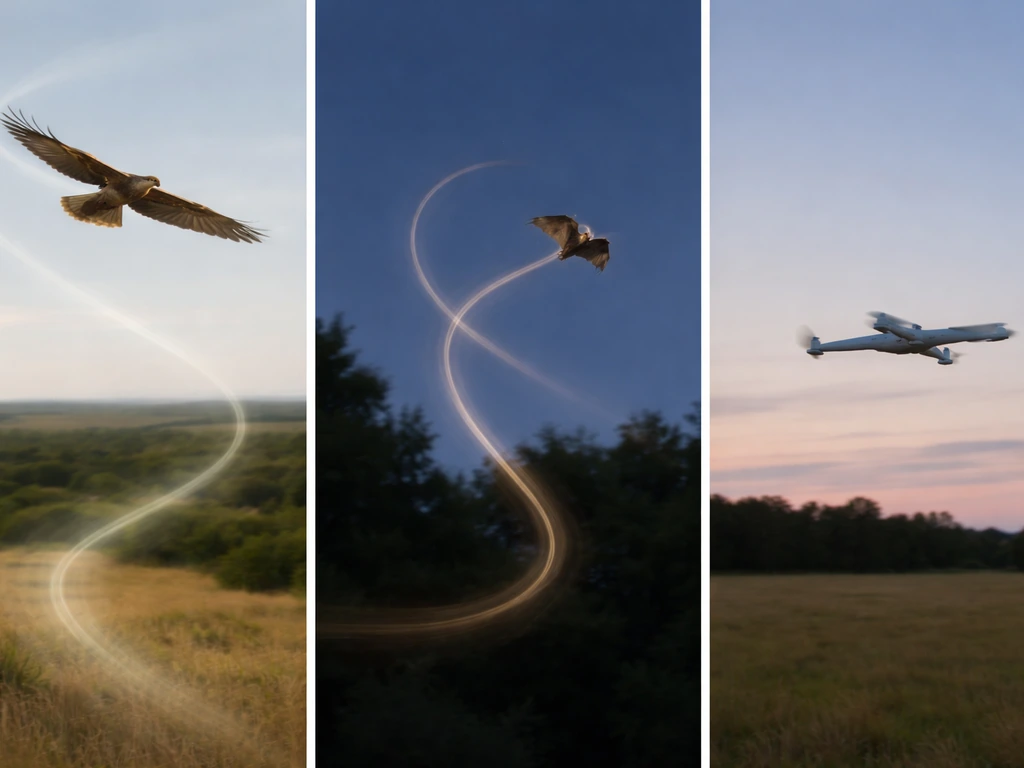
The single most useful clue is how the thing moves, not just what it looks like at one frozen moment.
Birds
Birds flap and glide in a rhythm that feels purposeful but natural. Large soaring birds like hawks, eagles, or vultures can hold perfectly still on a thermal for minutes. Songbirds move in an undulating wave pattern, dipping slightly between wing bursts. Shorebirds and waterfowl fly in loose or tight formations. The key word with birds is intention: they're going somewhere, reacting to the environment, and their path curves organically.
Bats
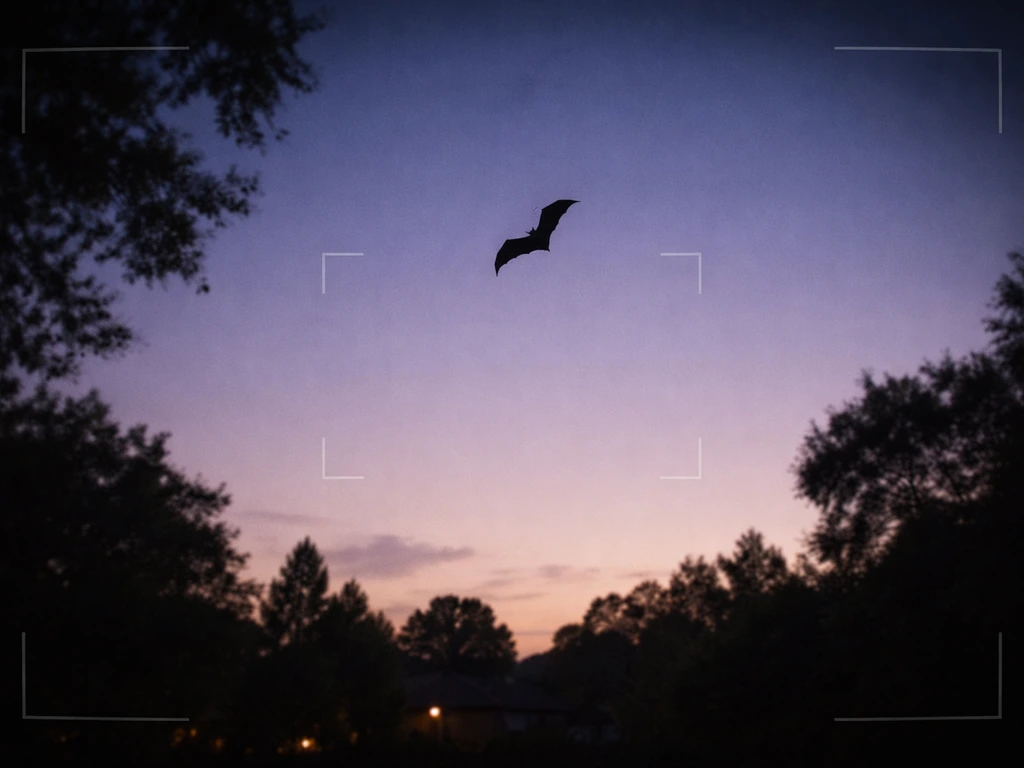
Bat flight is the one most often mistaken for a bird, especially at dusk. But bats move differently: they loop and double back sharply, chasing insects using echolocation. The Natural History Museum’s bat identification guide also discusses using flight silhouette and echolocation calls as species clues when accessible using echolocation. The flight looks almost random compared to a bird. Bats also tend to appear suddenly and vanish just as fast. Bat Conservation International describes seeing one as similar to a shooting star: a brief flash of motion across your field of view. If something is zipping in tight circles near a tree line or water surface around sunset, it's almost certainly a bat, not a bird.
Insects
Large insects like dragonflies or hawk moths can briefly trigger the same instinct, but they're almost always much closer to you than they appear. They hover, dart sideways, and change direction in ways no bird can match. If it's tiny and near flowers or a light source, it's an insect.
Drones and aircraft
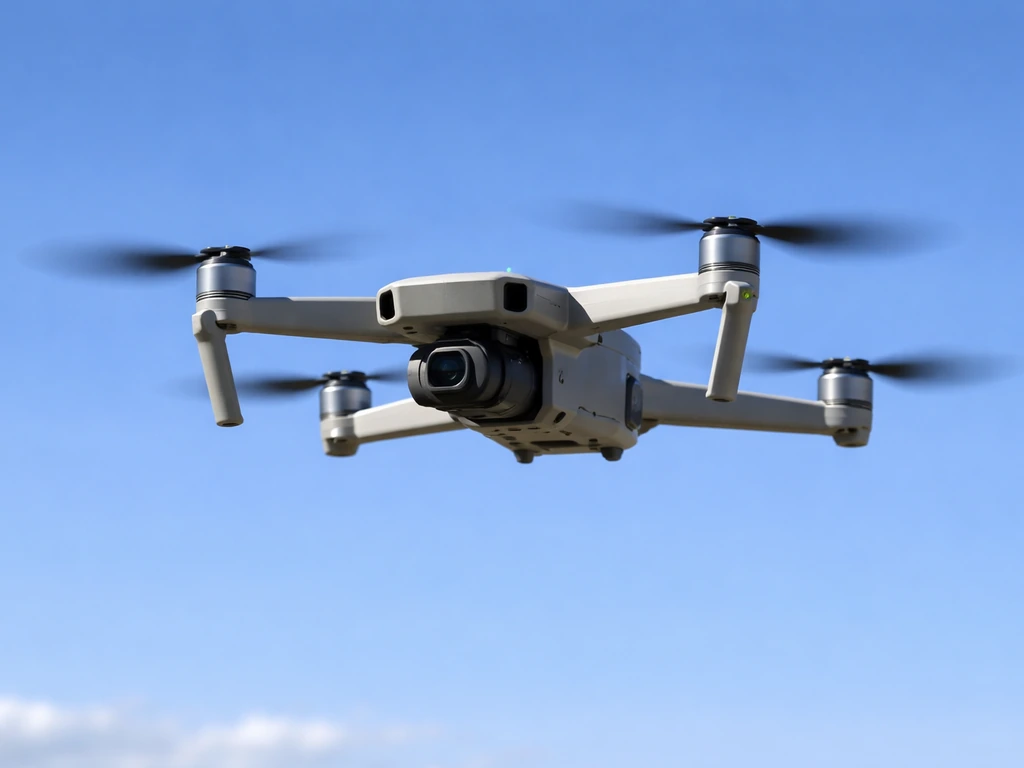
Consumer drones hover with mechanical steadiness, often holding a fixed position for seconds at a time before moving in straight lines. They can move in any direction including directly upward or sideways, which no bird does smoothly. Manned aircraft follow predictable headings and altitudes. At night, look for blinking navigation lights: the FAA requires them on all registered aircraft. A steadily glowing point of light with no flicker that moves at consistent speed across the sky is either a satellite or the ISS, not a drone.
Day vs night: what changes about what you're seeing
Time of day matters more than most people realize when identifying flying objects, because the candidates change significantly.
During the day, birds dominate the sky overwhelmingly. Soaring raptors use mid-morning thermals. Songbirds are active morning through late afternoon. If you see something large and organic moving in daylight, the odds heavily favor a bird.
At dawn and dusk, the mix shifts. This is prime bat time: bats are most active at these transitional moments, swarming insects that are also most active in low light. Some birds, like swifts and swallows, are also active at dusk and can look similar to bats in silhouette. The difference: swifts and swallows have more pointed wings and a less erratic flight path.
At night, birds mostly aren't flying (with notable exceptions like owls and migrating songbirds, which migrate at night but fly high and aren't easily visible). What you're seeing at night that seems to fly is likely a bat, an aircraft with lights, or a satellite. The ISS is one of the brightest objects in the night sky and moves steadily across in a matter of minutes before disappearing as it passes into Earth's shadow.
NASA's Spot the Station app tells you exactly when it will pass over your location if you want to confirm. Polar-orbiting weather satellites pass over the same spot twice daily, once in daylight and once at night, so a consistent bright point on a repeating track is a known phenomenon, not a mystery.
Borderline cases: why bats aren't birds (and other frequent confusions)
This is worth a moment because it comes up constantly. Bats fly, they're roughly bird-sized in many species, and they share airspace with birds. But a bat is a mammal, full stop. It has fur, not feathers.
It gives birth to live young and nurses them with milk. Its wings are made of a thin membrane of skin stretched between elongated finger bones, not the feather-covered, fused-bone structure of a bird wing. Birds belong to the biological class Aves and are defined by feathers, a beak (no teeth in modern species), hollow bones, and a specific skeletal structure that evolved from theropod dinosaurs.
Bats evolved flight completely independently, and according to Cornell researchers, their evolutionary path to flight is vastly different from birds, with no common flying ancestor between them.
Other things people sometimes mistake for birds in the sky: large butterflies or moths (insects, invertebrates with six legs and an exoskeleton), hang gliders and paragliders (humans in equipment), kites and paper lanterns (objects), and on rare occasions, pterosaurs come up in conversation. Pterosaurs were flying reptiles that went extinct roughly 66 million years ago. They are not birds and not the ancestors of birds, a common misconception this site addresses in more detail elsewhere.
The practical takeaway: if it has feathers and a beak, it's a bird. If it has fur and a skin membrane for wings, it's a bat. If it has neither and is flying tonight at dusk in erratic loops, it's almost certainly a bat regardless.
How to confirm fast today
You don't need expensive equipment to narrow this down quickly. Here are the practical steps you can take right now.
Use your phone
If you have a moment, open your camera and zoom in. Even a modest smartphone camera at 5x or 10x optical zoom can reveal whether something has flapping wings, rigid rotors, or a round balloon shape. If you can capture a photo or short video, you can run it through Merlin Bird ID, a free app from Cornell Lab of Ornithology that identifies birds from photos and even audio recordings.
Merlin Bird ID was introduced in 2014 as a free tool by the Cornell Lab of Ornithology and can identify birds from photos, along with other features like Sound ID and connections to eBird lists. If you still feel unsure, use tools like Merlin Bird ID to help narrow things down quickly.
Merlin was designed specifically to answer the question 'what bird did I just see? ' and it's remarkably accurate for North American species.
Binoculars
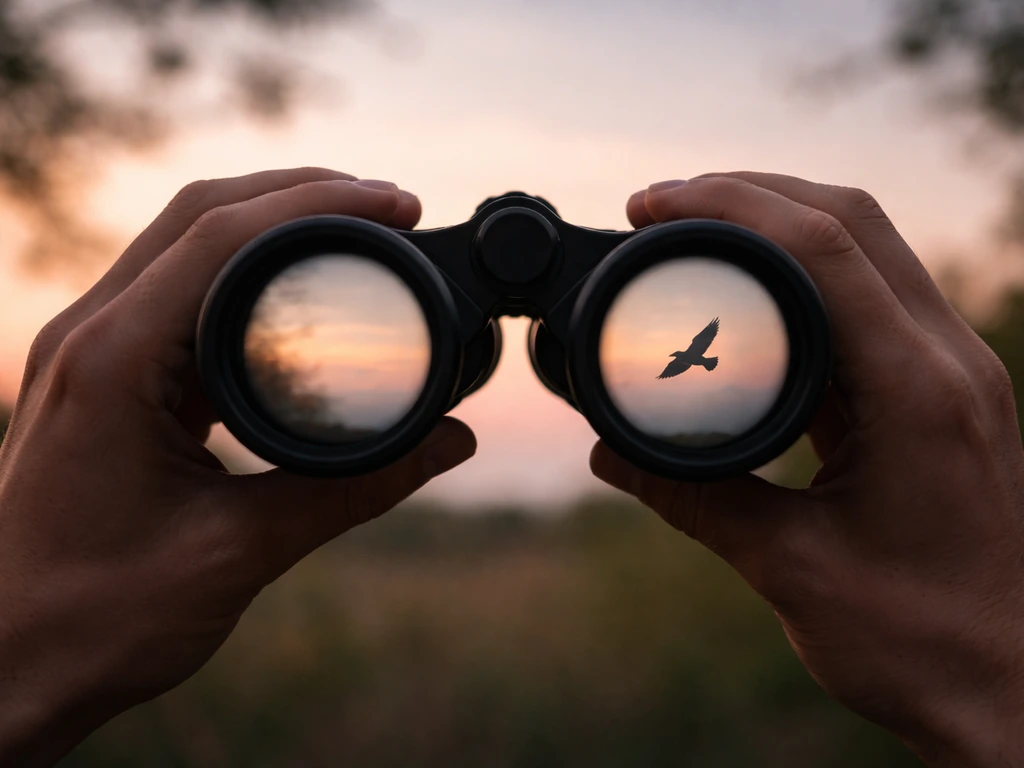
If you have binoculars handy, 8x42 is the standard birdwatching configuration and will resolve most identification questions quickly. Look for the field marks that matter: feathers versus fur or membrane, beak versus no beak, tail shape, and wing structure. A bird's wings connect to its body at a visible shoulder joint; a bat's wing membrane extends all the way to its hind legs.
Check local sighting reports
eBird, also from Cornell, shows real-time bird sighting reports in your area and is useful for knowing what species are actually present near you right now. If someone in your county reported a great blue heron yesterday, that large shape over the marsh is probably a heron, not something unknown. For satellites, NASA's Spot the Station app handles ISS confirmations directly. For weather events or unusual atmospheric effects, the NOAA interactive satellite maps show visible and infrared imagery updated regularly.
Document what you saw
If something is genuinely puzzling, jot down the basics immediately: time, location, direction of travel, altitude estimate, size relative to a known object (like a nearby building or tree), color, any sounds, and how long you watched it. This takes 60 seconds and makes any follow-up conversation far more useful.
When to escalate: safety, reporting, and avoiding misidentification
Most of the time, what you saw is a bird or a bat, and no action is needed beyond curiosity satisfied. But there are situations where reporting is appropriate, and it helps to know the thresholds.
Drones near airports or over restricted areas
If you see what is clearly a drone near an airport, report it immediately. The FAA is explicit that drone activity near airports creates serious hazards because it's difficult for manned aircraft pilots to see and avoid them. Your first call should be to local law enforcement, not a federal agency. If you believe a drone is being used to commit a crime, that's also a law enforcement call first. For drones that aren't following FAA rules in other contexts, you can contact your local FAA Flight Standards District Office. If you're unsure, document the time, location, and flight behavior before calling.
Unknown objects that concern you
CISA guidance for emergency communications emphasizes one important rule: do not approach an unknown drone or flying object if you don't know what it is. From a safe distance, document what you see, including its actions, any impacts on the surroundings, and how long it's present. If multiple people in an area are seeing the same thing, that increases the credibility of the sighting and makes reporting more useful.
When you can relax and move on
If your gut is saying 'probably just a bird' and the visual clues match (flapping wings, organic flight path, daylight hours, plausible local species), trust that. Misidentification goes both ways: calling in a bird as a drone wastes response resources. The goal is accurate reporting, not cautious over-reporting. Use the checklist above, run it through Merlin if you got a photo, and check eBird for local context. If you are trying to figure out a specific case like Jordan Gray: Is it a bird, use the same checklist and confirm with a photo or short video. In most cases, that's all you need.
FAQ
Can I tell what it is just by sound, even if the motion is hard to see?
Yes, but only in some cases. If you can hear wing beats, chirps, or a rustling sound, birds become more likely. Bats are often silent to the ear and are more noticeable by their distinctive fast, erratic looping flight, plus their sudden appearances and disappearances at dusk.
What if the lighting or weather makes the flight path look confusing?
Wind and glare can make birds look smoother or blur their wing rhythm, which can lead to overthinking. When lighting is poor, prioritize structural cues you can confirm from a phone photo or a stabilized short video (beak shape, wing tips, shoulder joint, and whether there is a membrane stretched between legs).
How long should I watch before I decide it’s a bird or something else?
A single frame can be misleading. Use a 5 to 10 second video if possible, then watch for repeatable patterns: birds curve organically and show purposeful going somewhere, bats loop and double back sharply while chasing, and satellites move in a consistent line with steady brightness.
Can swallows or swifts really be mistaken for bats?
It can happen, especially with swallows or swifts near dusk. The practical workaround is to look for wing shape and flight texture over time, pointed wings plus a more continuous, directional glide tends to fit these birds better, while tight circular chasing and abrupt reversals tends to fit bats.
What if it’s night and the object looks like a steady light, but I’m not sure it’s a satellite?
Yes, some aircraft can look like a “moving star” if you only catch a bright speck. The deciding detail is motion pattern: manned aircraft typically change headings and altitudes in a way that looks less perfectly uniform than satellites, and they may show stronger navigation lighting changes than a steady non-flickering point.
How can I confirm it’s the ISS instead of a drone or bird at night?
For the ISS, the easiest confirmation is timing rather than guesswork. Use Spot the Station (or any pass-time tool) and compare when it should be visible from your location, then check whether it moves across the sky in minutes before fading.
What if the bird seems to hover or stay still for a while?
Birds can be “steady” on thermals, which makes them resemble other candidates, but they are still not like a drone hover. If the object stays in exactly the same spot for seconds with mechanical stability, think drone first, and look for rigid rotors or an obviously held position relative to clouds or terrain.
How do I avoid confusing a close insect or nearby object with a bird?
Do not assume size based on how close the object seems, especially near trees, water, or streetlights. A small insect close to you can look big at a distance, so use a reference, like “relative to the height of that tree” or capture a photo with zoom to check whether it has legs and wings consistent with an insect.
What details should I write down if I think it’s a drone and want to report it?
Before reporting, collect basic evidence: a short video, exact location, time, direction of travel, and whether it’s hovering, moving in straight lines, or doing sharp loops. This reduces the chance you misidentify a bird as a drone, which wastes response resources.
When should I escalate beyond curiosity for a possible drone?
If it seems to be “only above the street” but it is clearly operating like a device (steady hover, consistent speed, repeated straight paths), it can be appropriate to contact local authorities. If you suspect it’s near an airport or affecting air traffic, report immediately using local law enforcement first.
Is it ever safe to get closer to an unknown flying object so I can identify it?
Don’t approach. Even if you’re trying to get a better look for ID, keep distance and prioritize documentation from where you are. Multiple observers can be very helpful if they see the same flight behavior at the same time.
How accurate is Merlin when the object is far away or the photo is blurry?
Merlin Bird ID is most reliable when the subject is actually a bird, and when the photo shows enough of the wing and body shape. If the object is too small, too blurry, or too backlit, Merlin may misread it, so try a short zoom video and check the motion criteria first.