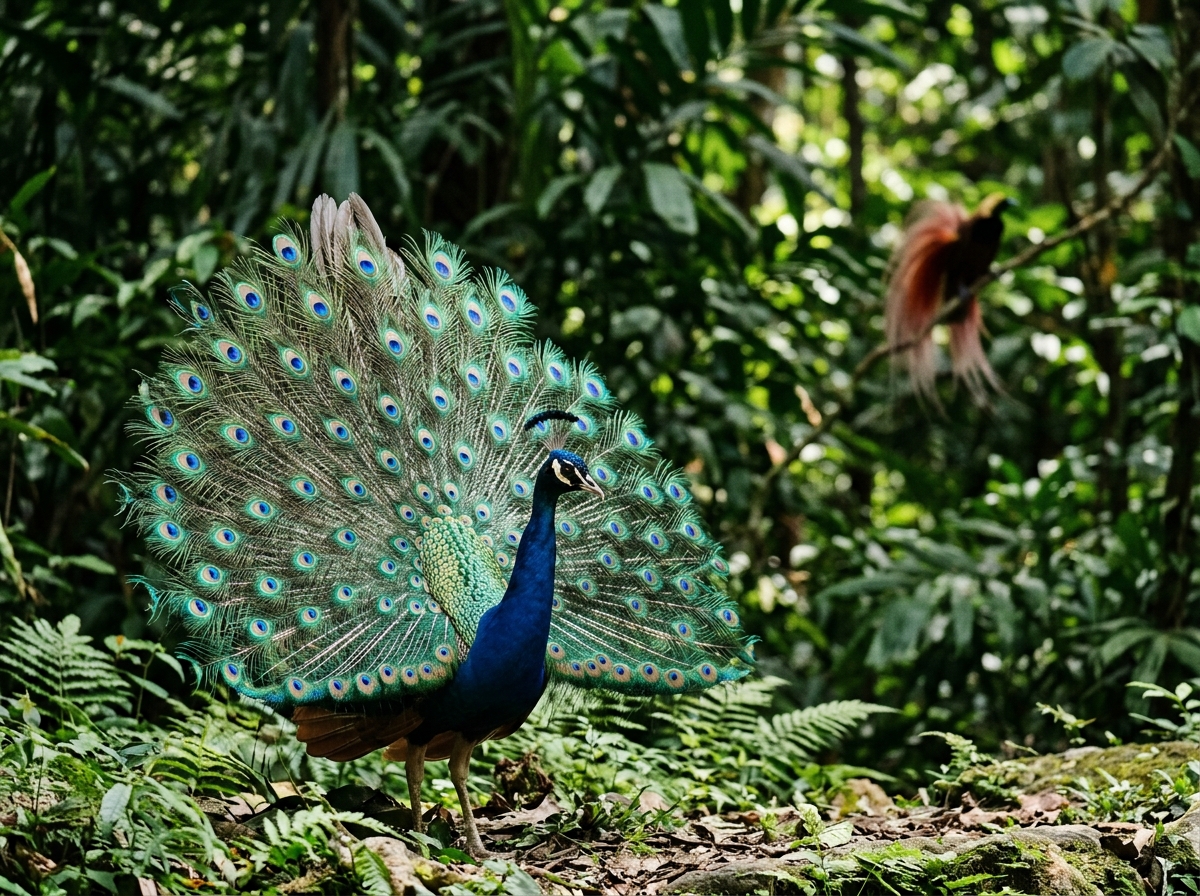
That said, the question gets genuinely tricky when you factor in animals that fly but aren't birds, birds that don't fly, and long-extinct creatures that looked a lot like birds. This guide walks you through each of those scenarios so you can work out a confident answer no matter what you're looking at.
Quick checklist to tell birds from other animals
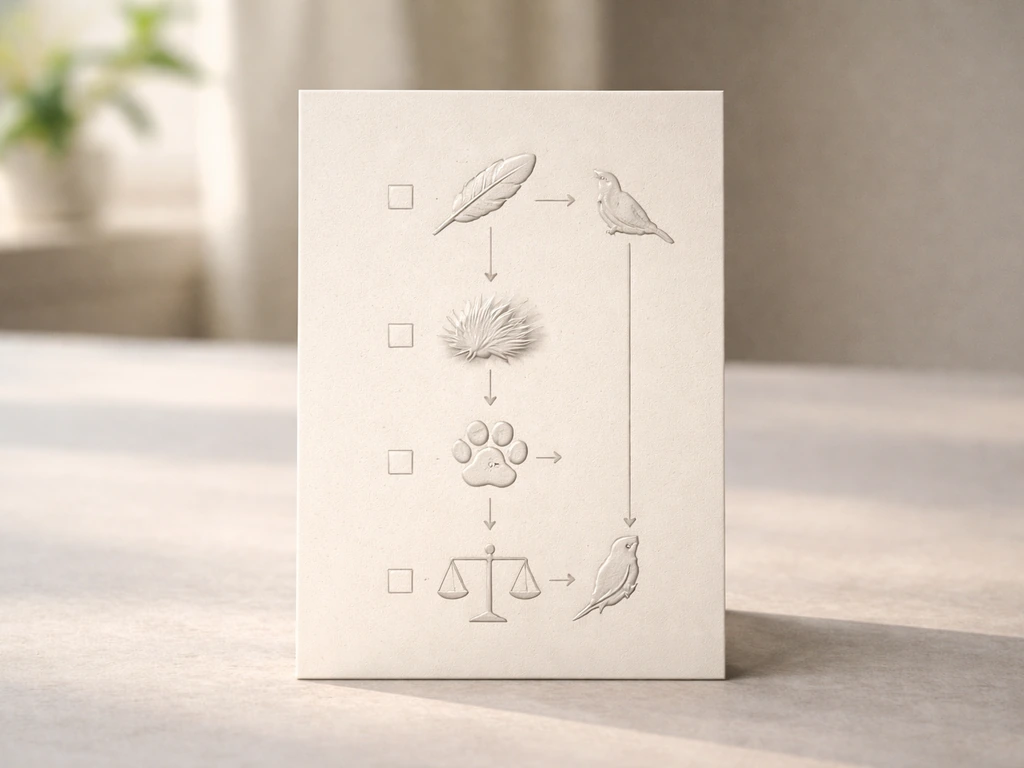
Run through these questions in order. You don't need all of them, just enough to rule things out.
- Does it have feathers? Yes = almost certainly a bird. No = keep going.
- Does it have fur or hair? Yes = it's a mammal, not a bird.
- Does it have scales covering its body without any feathers? Yes = likely a reptile or fish.
- Does it have moist, smooth skin and live part of its life in water, part on land? Yes = probably an amphibian.
- Does it have wings? Wings alone don't confirm a bird (bats have wings too), so pair this with feather presence.
- Does it lay hard-shelled eggs? That's a bird trait, though reptiles also lay eggs, so this alone isn't enough.
- Is it warm-blooded and covered in feathers? Both together = bird confirmed.
Reptiles can look bird-like, especially lizards with crests or frilled necks. The reliable separator is always the body covering: feathers on a bird, scales on a reptile. Amphibians (frogs, salamanders, axolotls) are easy to separate because their skin is moist and glandular, they can't regulate their own temperature the way birds do, and they look nothing like birds in body plan. Mammals are the trickiest group because bats genuinely fly and some whales have almost no visible hair, but the presence of fur, live birth, and nursing young are clear mammal markers.
Feathers, wings, and flight: what actually counts
Feathers are the single most diagnostic feature of modern birds. There are several types: contour feathers are the ones you see on the outside, giving the bird its shape and color. Down feathers sit underneath, closest to the skin, providing insulation. Then there are flight feathers, called remiges on the wings and rectrices on the tail. Remiges are asymmetric, with a shorter leading edge, which prevents the feather from twisting in the air during flight. That asymmetric design is a remarkably specific adaptation you won't find anywhere else in nature today.
Wings, however, do not automatically mean bird. Wings are just forelimbs adapted for generating lift or propulsion. Bats have wings (made of skin stretched across elongated finger bones). Insects have wings (made of chitin). Pterosaurs had wings (made of a membrane attached to an elongated fourth finger). None of those are feathered wings, which is the key distinction. A bird's wing is a forelimb covered in feathers, with flight feathers providing the aerodynamic surface.
And flight itself is not required to be a bird. A surprising number of birds don't fly at all. What's that in the sky might be your first instinct when spotting a fast-moving creature overhead, but if it's not flying, that tells you nothing about whether it's a bird. Focus on feathers, not flight.
The borderline cases people get wrong most often
Penguins and ostriches: birds that gave up the sky
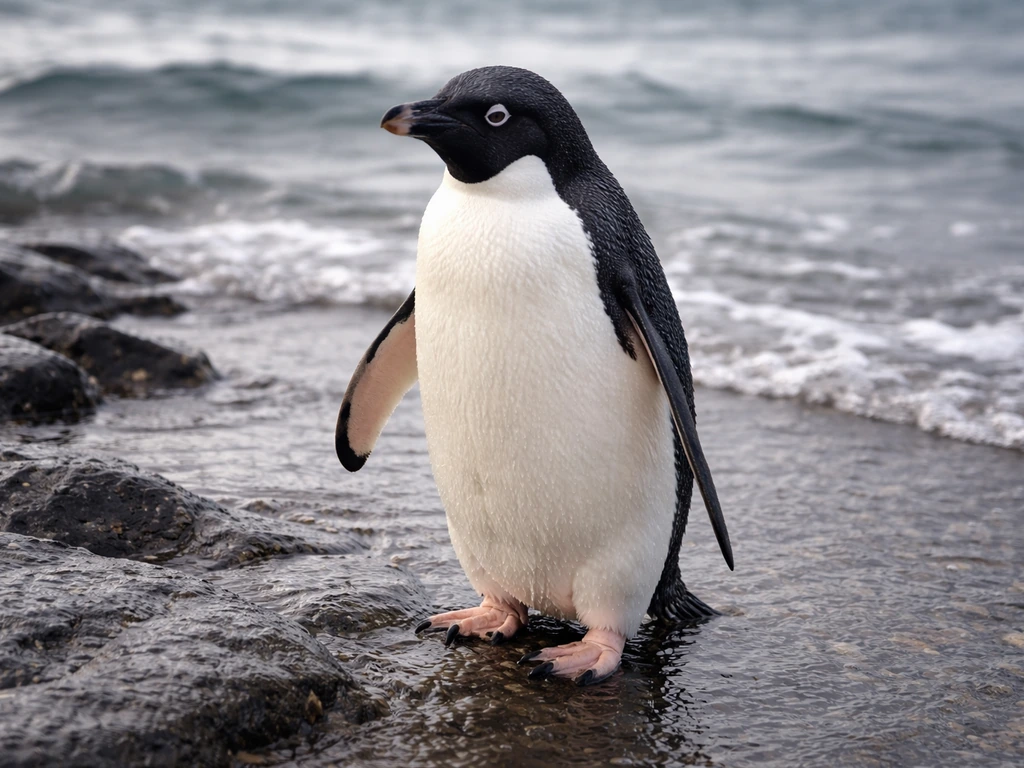
Penguins are birds. They sit in order Sphenisciformes, they have feathers (small, dense, and tightly packed for waterproofing), and they lay eggs. Their wings evolved into stiff, flipper-like structures used for underwater propulsion instead of aerial flight. Scientists sometimes describe it as "flying" underwater because the biomechanics are essentially the same stroke pattern, just through water instead of air. Penguins also have that characteristic countershading: dark on the back, white on the belly. None of that changes their classification. They are unambiguously birds.
Ostriches are the same story: feathers, wings (vestigial but present), hard-shelled eggs, warm-blooded physiology. They just can't fly. The inability to fly doesn't disqualify an animal from being a bird any more than the inability to swim disqualifies a human from being a mammal.
Bats: the flying mammal that fools everyone
Bats are mammals, not birds. They have fur, they give birth to live young, and they nurse those young with milk. Despite having wings and being active fliers, they share none of the defining bird traits. No feathers. No hard-shelled eggs. Their wings are patagium (a membrane of skin) stretched across elongated finger bones, which is completely different in structure from a feathered bird wing. If you spot something flying at dusk and you're unsure, look at the wing shape: bat wings look leathery and irregular, while bird wings show visible feather structure even in silhouette.
Pterosaurs and dinosaurs: the prehistoric confusion
Pterosaurs were flying reptiles, not birds and not dinosaurs, though they lived alongside both. They had wing membranes similar in concept to bats, not feathered wings. Some pterosaur fossils show filament-like structures that were initially interpreted as feather-like, which has caused ongoing debate. The Natural History Museum acknowledges this complexity: the evolutionary origins of feathers are still not fully resolved, and structures preserved in fossils may not be the same as true modern bird feathers. So while pterosaurs may have had some unusual integument, they were not birds.
Non-avian dinosaurs are another common source of confusion. Some theropod dinosaurs (like Velociraptor) had feather-like structures, and birds are technically avian dinosaurs that survived the mass extinction event. But feathers alone, even in the fossil record, aren't treated as a uniquely bird trait anymore, because feather-like structures appeared across multiple dinosaur lineages. What distinguishes modern birds from their non-avian dinosaur relatives is the full combination of traits: true feathers, the modified wing structure, the specific skeletal plan (including hollow bones and a keeled sternum in most species), and of course the fact that they're alive today.
A quick comparison
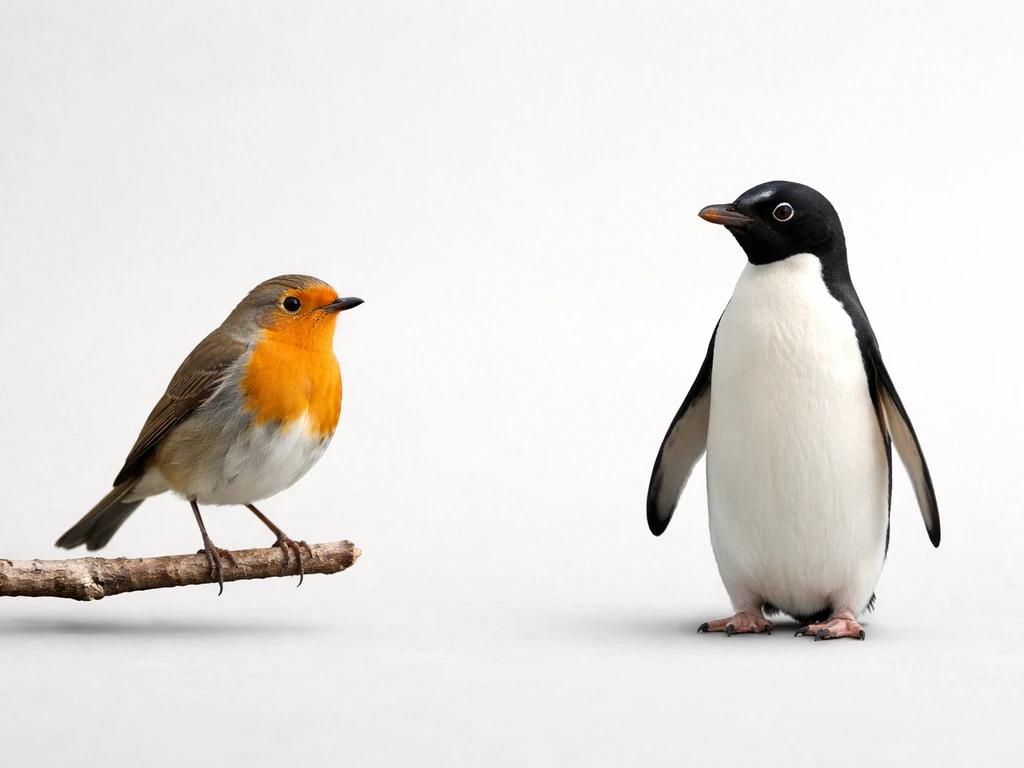
| Animal | Has Feathers | Lays Hard-Shelled Eggs | Warm-Blooded | Wing Type | Is a Bird? |
|---|
| Robin | Yes | Yes | Yes | Feathered forelimb | Yes |
| Penguin | Yes | Yes | Yes | Flipper (modified wing) | Yes |
| Ostrich | Yes | Yes | Yes | Vestigial feathered wing | Yes |
| Bat | No (has fur) | No (live birth) | Yes | Skin membrane | No — mammal |
| Pterosaur (extinct) | No (membrane wing) | Unknown/debated | Likely yes | Skin membrane | No — flying reptile |
| Velociraptor (extinct) | Feather-like structures | Yes (leathery) | Likely yes | Proto-wing | No — non-avian dinosaur |
Real-world clues you can use in the field
When you're looking at an animal in real life, you usually can't dissect it or check its DNA. Here's what to actually observe. Start with body size and overall shape. Birds have a distinctive body plan: a rounded or elongated torso, a neck, a head with a beak (not teeth or lips), two legs, and two forelimbs modified into wings. The beak is a key giveaway. All birds have beaks (also called bills), which are made of keratin, have no teeth in modern species, and come in a huge variety of shapes depending on diet. No other living animal group has a true beak combined with feathers.
Behavior is also a useful clue. Birds perch on branches, wires, and ledges with their feet. They walk, hop, or waddle on two legs. Many forage by pecking at the ground or probing into bark. They vocalize with songs and calls (sometimes surprisingly complex ones). If you hear a melodic repeated call coming from a bush or tree, it's almost always a bird. Bats are generally silent to human ears (they use ultrasonic echolocation), and most reptiles are silent or produce simple hisses.
Habitat context helps too. Birds are found in almost every environment on Earth: forests, deserts, oceans, cities, tundra, and wetlands. If you're near water and you see a diving creature with a sleek body and visible feathers, penguins or diving ducks might be possibilities depending on your geography. If it's flying erratically at dusk catching insects, it's more likely a bat or a swift. Location and time of day genuinely narrow the options.
How to confirm when you're still not sure
If you've observed the animal and you're still not certain, the most reliable next step is to get a photo and compare it against a species identification tool. Audubon's field guide approach recommends focusing on four things: overall body size and shape, bill structure, plumage patterns (head and body markings), and behavior. Those four categories are enough to narrow down most birds to a family or genus within minutes.
Apps like Merlin (from Cornell Lab) and the Audubon Bird Guide can identify birds from a photo or even from audio if you can record the call. That audio identification route is worth knowing about: if you can hear the animal but can't see it clearly, a call recording can be more conclusive than a blurry photo. Both tools are free and work well even for beginners.
If you want to go deeper with your observation records, bird identification in gaming contexts like OSRS shows just how far the "is it a bird?" question extends into popular culture, but for real-world confirmation, eBird is the most systematic tool available. The platform encourages you to report all species you were able to identify by sight or sound, and logging your observations with location and time builds a record you can cross-reference later. The best practice is straightforward: note where you were, when you were there, and what you observed, then submit a checklist.
For feather identification specifically (say, you found a feather on the ground and want to confirm it came from a bird), the U.S. Fish and Wildlife Service Feather Atlas is a free online tool that lets you match feather type, size, and structure to known species. Since feathers are the single most diagnostic bird trait, a confirmed feather identification is essentially a confirmed bird identification.
One last thing: don't overlook the cultural side of this question. The phrase "is it a bird?" has taken on a life of its own, from the Superman catchphrase to music. The band Elbow's connection to "is it a bird" and questions about Jordan Gray's association with the phrase (sometimes also searched as Jordan Grey is it a bird) are reminders that the question itself has become shorthand for wonder and surprise, not just taxonomy. But when you actually need a biological answer, the checklist above will get you there fast.
The short version you can use right now
If it has feathers, it's a bird. If it flies but has fur or a skin-membrane wing, it's not a bird. If it looks prehistoric and had wings but lived millions of years ago, it was probably a pterosaur or a non-avian dinosaur, neither of which are birds in the modern sense. For anything you can observe in person or photograph today, run the feather check first, look at the beak, note the behavior, and use a photo ID app to confirm. That process takes about two minutes and will give you a reliable answer almost every time.