What people mean by "Aflac bird"
When people search for "Aflac bird" or ask whether it's a duck or a goose, they're almost always referring to the white cartoon mascot that yells "AFLAC!" in the insurance company's TV commercials. That character has been front and center in Aflac's advertising for over two decades, and because it's a white, round, vaguely waterfowl-shaped bird, the duck-versus-goose debate comes up more often than you'd expect. The confusion is genuine, not silly. White domestic waterfowl can look surprisingly similar on screen, and marketing copy doesn't always get zoologically precise.
There's also a small twist that fuels the uncertainty: at least one internal Aflac document describes an illustration of the character as a "white duck/goose-like bird with orange beak and feet," which is the kind of vague phrasing that makes perfectly reasonable people second-guess themselves. But the official brand position is clear, and the biology is even clearer once you know what to look for.
Direct answer: it's a duck, not a goose
Aflac officially calls the mascot "The Aflac Duck." That name appears on the company's brand page, throughout its newsroom copy, and in its brand guidelines, which actually include specific design rules for how the duck's neck and outline should be rendered in logo form. There is no ambiguity on Aflac's end. The character was introduced as a duck, has always been promoted as a duck, and the company's visual identity is built around that duck concept.
And when you check the physical depiction against real bird field marks (more on those below), the duck reading holds up. The mascot has a compact, rounded body, a relatively short neck, and a wide, flat orange bill. Those are duck traits, not goose traits. So the confident answer is: the Aflac bird is a duck, portrayed as a white domestic duck, and the goose comparison is a case of understandable but mistaken visual impression.
Duck vs goose: quick visual identifiers
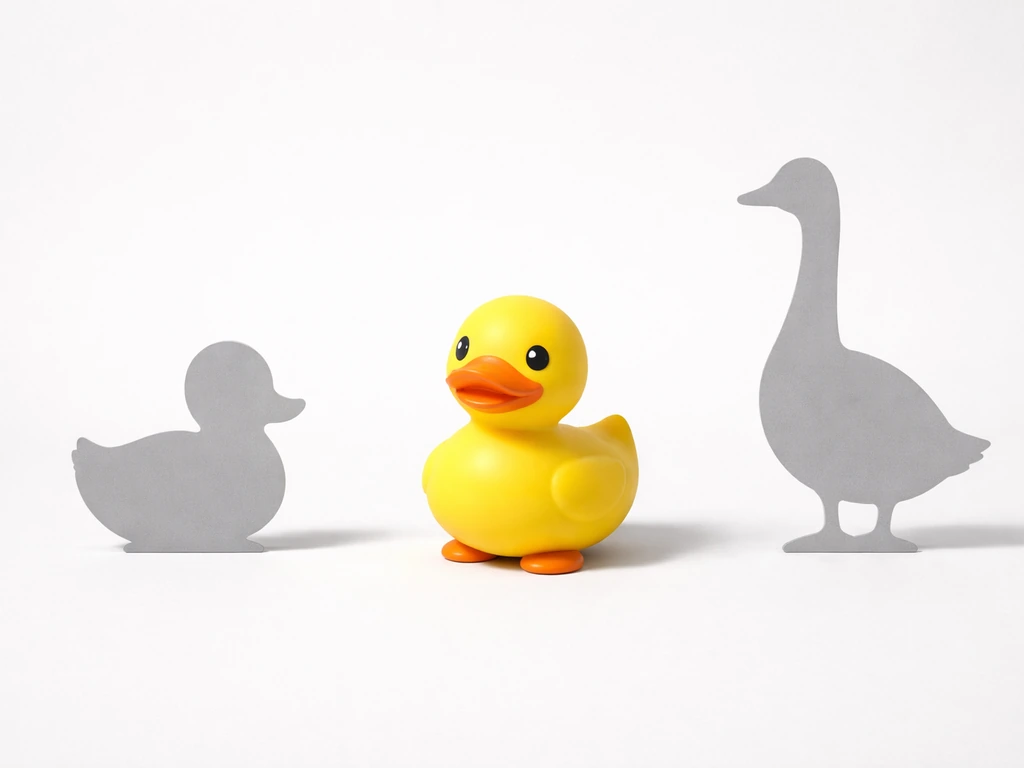
If you want to settle this kind of question for yourself, it helps to have a short mental checklist. Ducks and geese are both in the family Anatidae (the waterfowl family that also includes swans), but they differ in several reliable, visible ways. You don't need to be an ornithologist to spot them.
| Feature | Duck | Goose |
|---|
| Body size | Smaller, compact, rounded | Larger, heavier build |
| Neck length | Short to medium | Distinctly long |
| Bill shape | Wide, flat, spatula-like | Wider at base, often more tapered or serrated edge |
| Posture | Sits low, often horizontal | Upright, tall stance |
| Typical coloring (domestic/white) | White with orange bill and feet | White or grey with orange or black bill |
| Leg placement | Set toward rear, waddles | Set more centrally, walks more upright |
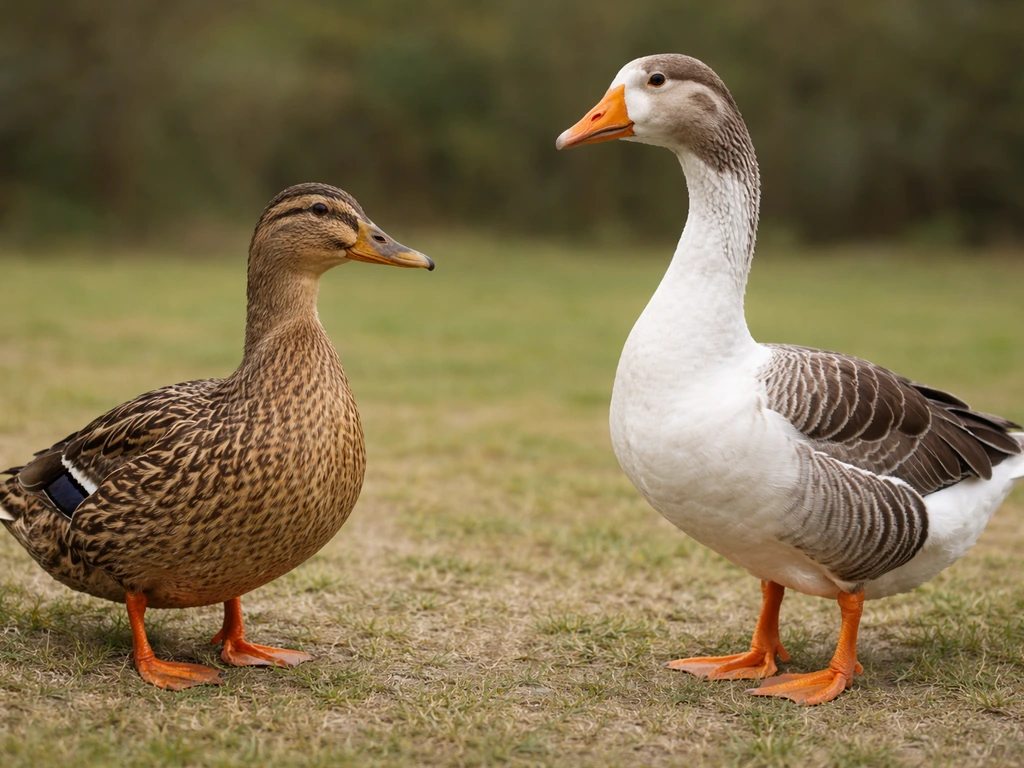
The neck length is the single fastest tell. Geese have a strikingly long neck, and when you see a Canada goose or a domestic white goose in person, the neck length is immediately obvious. Cornell Lab's All About Birds notes that [Canada Geese have a long neck](https://www. allaboutbirds.
org/guide/Canada_goose/id/ac), a key field mark for telling them apart from ducks. Ducks look almost neckless by comparison. The Aflac character has that short, stubby neck. The brand guidelines even specify how the duck's neck should extend off the background in logo usage, which is a design detail that reflects just how central that short-necked duck silhouette is to the character's identity.
Understanding whether a duck is a wading bird also helps here, because ducks wade and dabble rather than graze upright like geese, and that behavioral posture difference shows up in how each animal holds its body.
The bill is the second reliable check. A typical duck has a wide, flat bill built for filtering water. A goose's bill tends to be wider at the base and can look more triangular or slightly serrated along the edges (geese graze grass, so their bills are adapted for gripping). The Aflac mascot's bill is wide, flat, and orange, consistent with a domestic duck like a Pekin, not a goose.
How taxonomy explains the confusion
Here's why duck-vs-goose confusion happens at all: both animals belong to the same taxonomic family, Anatidae, which sits inside the order Anseriformes. That order covers ducks, geese, and swans collectively, and all of them share common ancestry. So when someone sees a plump white bird with webbed feet and an orange bill, their brain isn't wrong to jump to "some kind of waterfowl." The real question is which kind.
Within Anatidae, ducks and geese are genuinely close relatives. Whether a duck is better classified as a bird or fowl is another question that comes up precisely because of this shared waterfowl grouping. Biologically, all ducks are birds (class Aves), and they're also fowl in the loose vernacular sense, but the taxonomy puts them squarely in Anatidae alongside geese. The overlap in family is real, and that shared classification is the root of why a casual observer might not immediately commit to "duck" or "goose" when looking at a round white cartoon character.
If you want to go one level deeper: ducks tend to be placed in several different tribes and genera within Anatidae, while true geese (Anser and Branta) form their own distinct groupings. The physical differences between them, neck length, body mass, bill shape, reflect genuine evolutionary divergence, even within the same family. Taxonomy isn't just academic here. It's the reason those visual field marks exist and are reliable.
Are any "Aflac-like" traits misleading? Birds vs non-birds
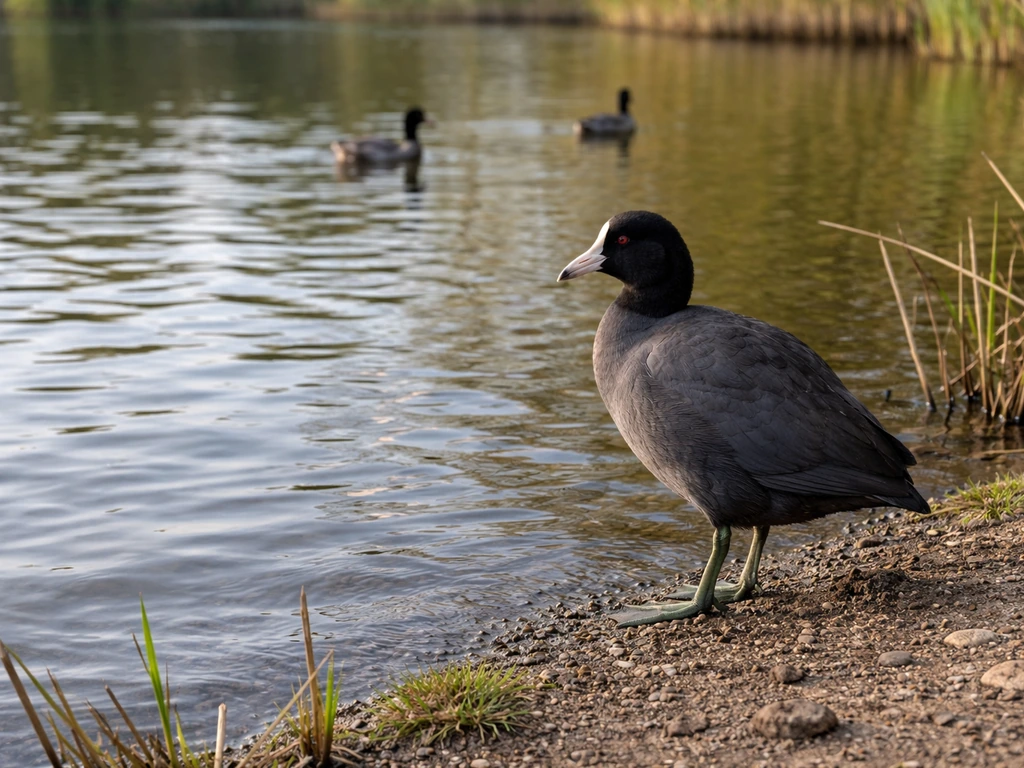
One thing worth noting, because this site focuses on exactly these kinds of misclassifications: not every animal that looks like a duck actually is one. This matters because people sometimes ask whether a duck is even a "real" bird at all, or they encounter duck-like animals and assume they're all in the same category. They're not always.
Take the coot. Whether a coot is a duck or a separate kind of bird is a surprisingly common question, and the answer is that coots are not ducks at all. They belong to the rail family (Rallidae), a completely different bird family, and they look duck-like only because they swim and have dark, rounded bodies. The confusion is the same type of mistake as the Aflac duck-vs-goose question: two animals look superficially similar, so people assume they're the same kind of thing.
People also sometimes ask whether a duck is a bird of prey, which it absolutely is not. Ducks are waterfowl, not raptors. And there's the classic confusion around whether a duck is an amphibian or a bird, which seems like an easy call but comes up because ducks live near water and swim, so younger learners sometimes associate them with frogs and salamanders. The answer is straightforward: ducks are birds (class Aves), warm-blooded, feathered, and egg-laying, nothing like an amphibian.
The broader point is that appearance alone is a weak classifier. The Aflac mascot is white and round and lives on TV, so people map it onto the nearest mental category (goose or duck) without having a reliable set of field marks to check. That's not a failure of intelligence. It's just what happens when you don't have a quick taxonomy anchor to reach for.
How to verify this yourself in a few simple steps
If you want to confirm the "duck, not goose" answer with your own eyes rather than just taking it on faith, here's a practical approach:
- Pull up any Aflac commercial or the official Aflac brand page and pause on the mascot. Check the neck: is it short and stubby, or long and swan-like? A goose neck would be dramatically longer relative to body size. The Aflac bird has a compact neck.
- Look at the bill shape. Is it wide, flat, and roughly the same width from base to tip? That's a duck bill. A goose bill is typically broader at the base and slightly more angular. The Aflac character's orange bill is wide and flat, matching a domestic duck like a Pekin.
- Check the body posture. Geese stand tall and upright. Ducks sit lower and look more horizontal. The Aflac mascot has that low, round, horizontal duck silhouette.
- Compare against a reference. Cornell Lab's waterfowl field guides describe the Canada goose as having a "long neck, large body, large webbed feet, and a wide, flat bill," with that neck length being the defining visual cue. Hold the Aflac character next to that description: the long neck simply isn't there.
- Search Aflac's official brand materials. The company explicitly names the mascot "The Aflac Duck" throughout its brand guidelines and newsroom. That's the authoritative source, and it matches the biological reading.
None of this requires deep ornithology knowledge. The three traits to remember are: short neck, wide flat bill, low rounded body. Those three together say "duck." All three are present in the Aflac mascot. None of them match a goose. Case closed, and you now have a repeatable method for settling this kind of waterfowl question any time it comes up.